Introduction: How One Nofollow Link Saved a Website From Trouble
A few years ago, I audited a website that looked fine on the surface.
Good traffic.
Decent rankings.
Clean design.
But something was off.
The site was linking out aggressively—to comments, forums, and sponsored content—without any control.
A manual action followed.
That’s when I learned the real importance of Nofollow Links.
After fixing the outbound links and applying the correct attributes, the site slowly recovered. Rankings stabilized. Trust was restored.
That experience made one thing clear: Nofollow Links are not weak links—they are protective signals, especially when combined with solid on page SEO.
What Are Nofollow Links?
Nofollow Links are hyperlinks that include a special attribute telling search engines not to pass link equity to the linked page.
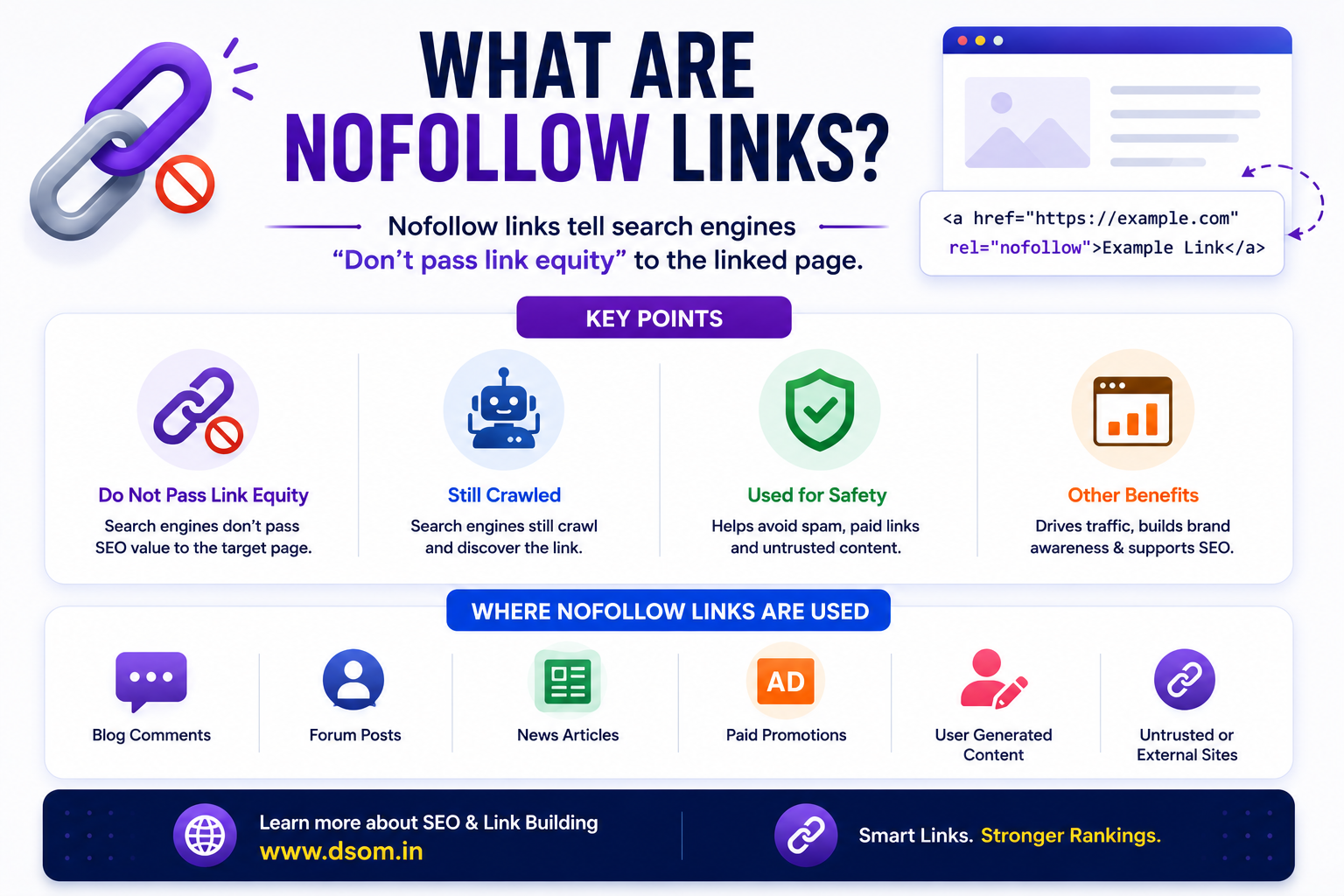
In simple terms, they say:
“You can see this link, but don’t count it as a vote of trust.”
These links are commonly used when you don’t want to endorse or transfer authority to another website.
Why Link Control Matters More Than You Think
Many people assume the nofollow attribute is useless.
That’s a mistake.
Nofollow Links play a crucial role in protecting your website from spam, penalties, and trust issues.
From an on page SEO perspective, they help you maintain a clean and natural linking profile—something search engines value heavily.
SEO isn’t just about gaining authority.
It’s also about controlling risk.
Types and Uses of Nofollow Links
This attribute is used in specific situations where trust or intent is unclear.
Common use cases include:
Comment section URLs
Sponsored or paid promotions
User-generated content
External references you don’t endorse
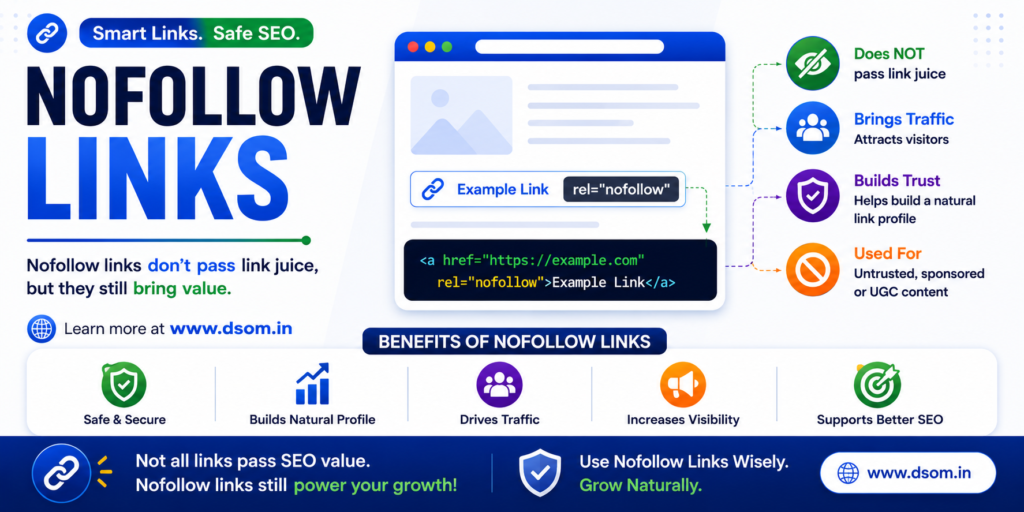
Each use case ensures Nofollow Links help safeguard your site’s credibility.
How Nofollow Links Work Behind the Scenes
Search engines crawl these links—but treat them differently.
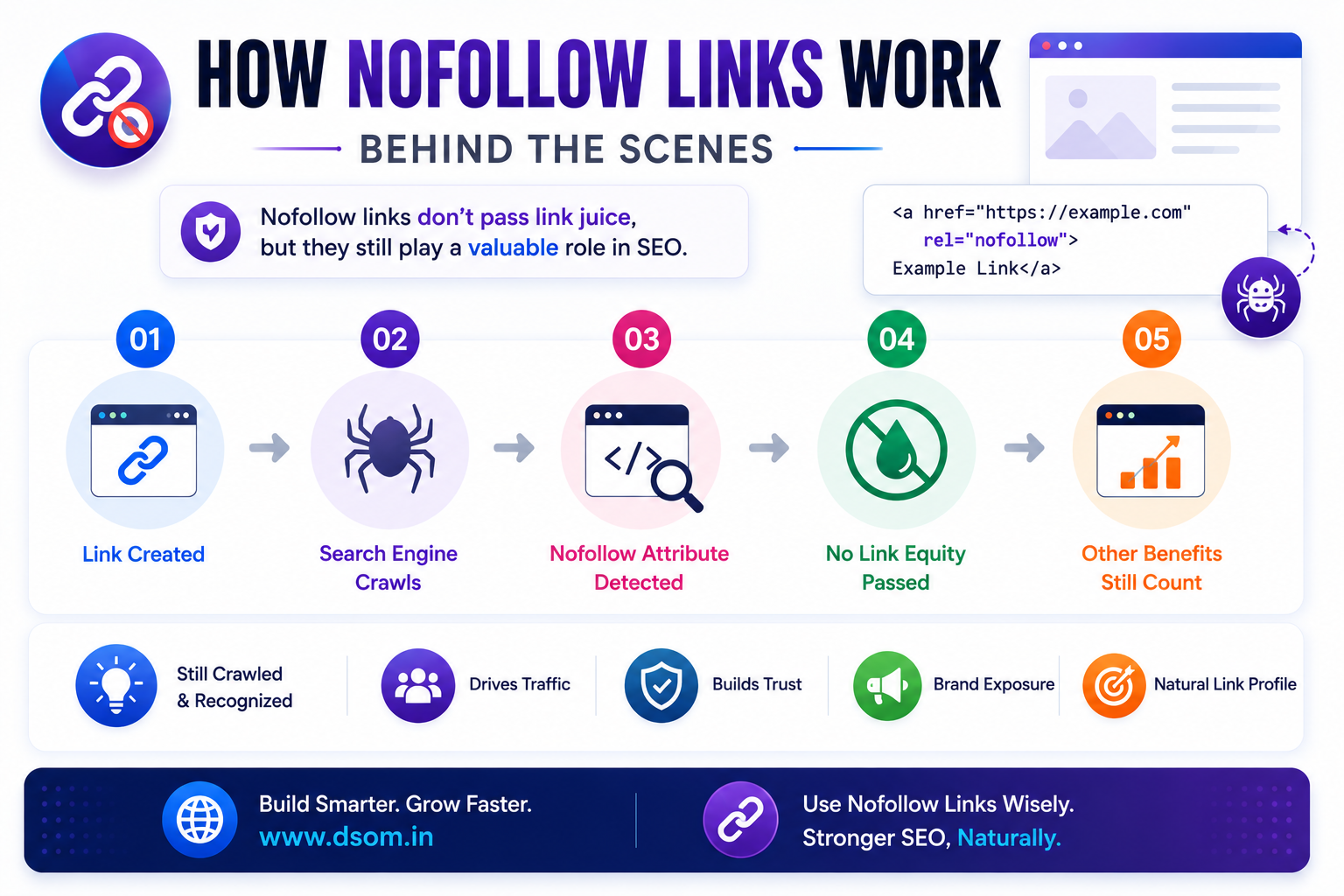
Instead of transferring authority, they simply acknowledge the connection.
This helps search engines:
Understand link intent
Identify paid or user-generated content
Prevent manipulation
That’s why Nofollow Links signal transparency, not weakness.
How to Use the Nofollow Attribute in SEO Strategy
Using this attribute strategically is a sign of mature SEO.
Best practices include:
Applying it to paid or sponsored content
Using it in comment sections and forums
Combining it with high-quality dofollow references
Avoiding overuse on editorial links
A balanced mix supports long-term on page SEO health.
Where These Links Are Typically Used
You’ll most often see Nofollow Links in places where control is limited.
Typical locations include:
Blog comments
Social media platforms
Advertisements and banners
Affiliate links
User profiles
These areas are prone to spam, making controlled linking essential.
Understanding the Role of Link Attributes in Trust
SEO is built on trust.
Search engines want to see that you’re responsible with your links.
By using Nofollow Links correctly, you signal that:
You understand linking intent
You’re not manipulating rankings
You protect users from misleading endorsements
That trust contributes indirectly to stronger on page SEO signals.
Nofollow vs. Dofollow: Strategic Link Usage
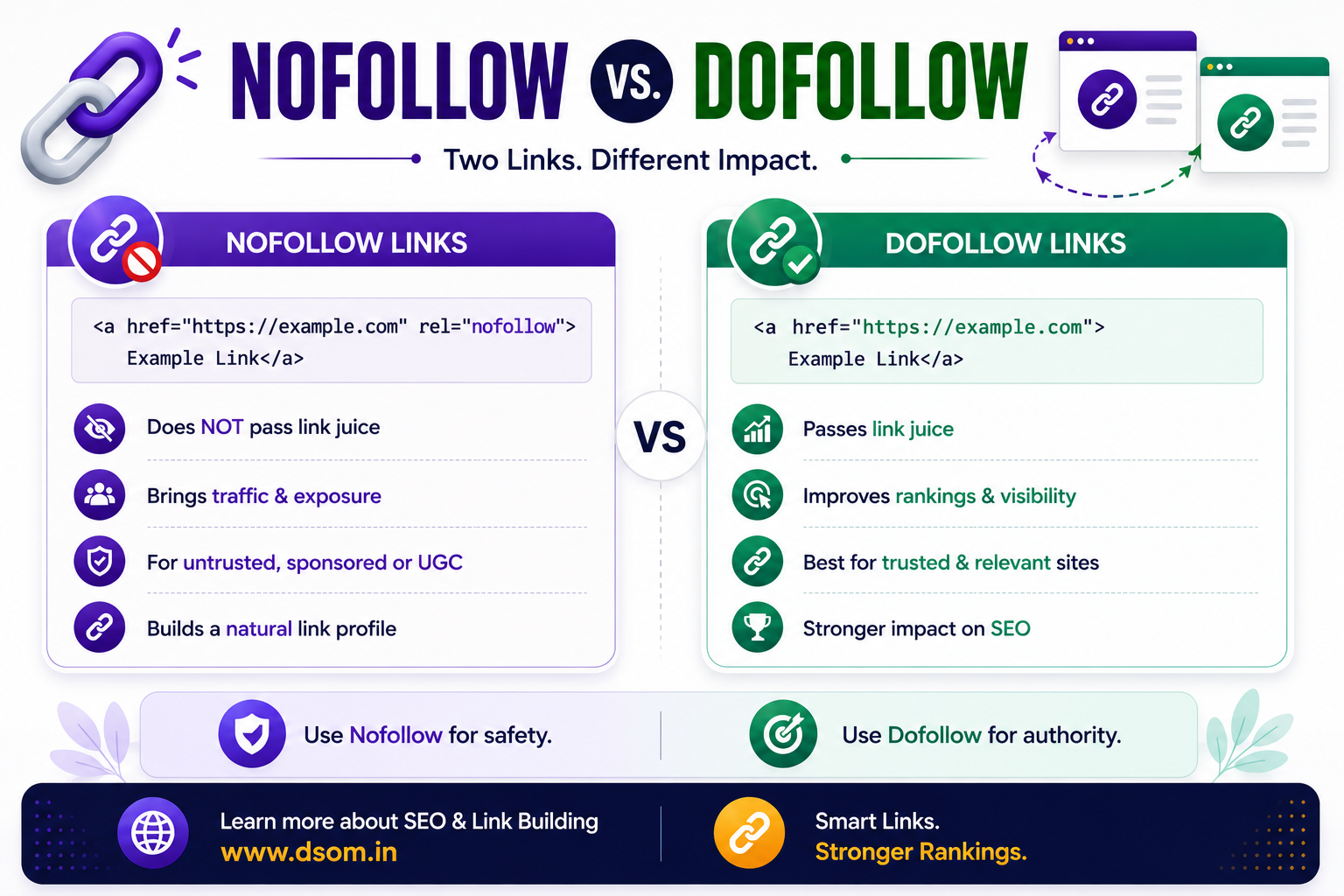
Both link types serve different purposes.
Nofollow Links control risk
Dofollow links pass authority
Use dofollow references when you trust and endorse content.
Use the nofollow attribute when:
The link is paid
The content is user-generated
You don’t fully trust the destination
Smart SEO isn’t choosing one—it’s knowing when to use each.
Are These Links Safe for SEO?
Yes—when used correctly.
Search engines expect natural usage of nofollow attributes.
Pages that never use Nofollow Links often look suspicious.
Used responsibly, they protect your site from penalties and improve long-term stability.
Final Thoughts: Control Is the Real SEO Advantage
Most people chase backlinks.
Smart SEOs manage links.
Nofollow Links give you control—over trust, authority flow, and risk.
They don’t weaken your SEO.
They protect it.
And learning how to balance nofollow and dofollow links correctly is exactly what DSOM (Dehradun School of Online Marketing) focuses on—training students to master on page SEO, ethical link strategies, and real-world optimization techniques that ensure sustainable growth, credibility, and long-term success.