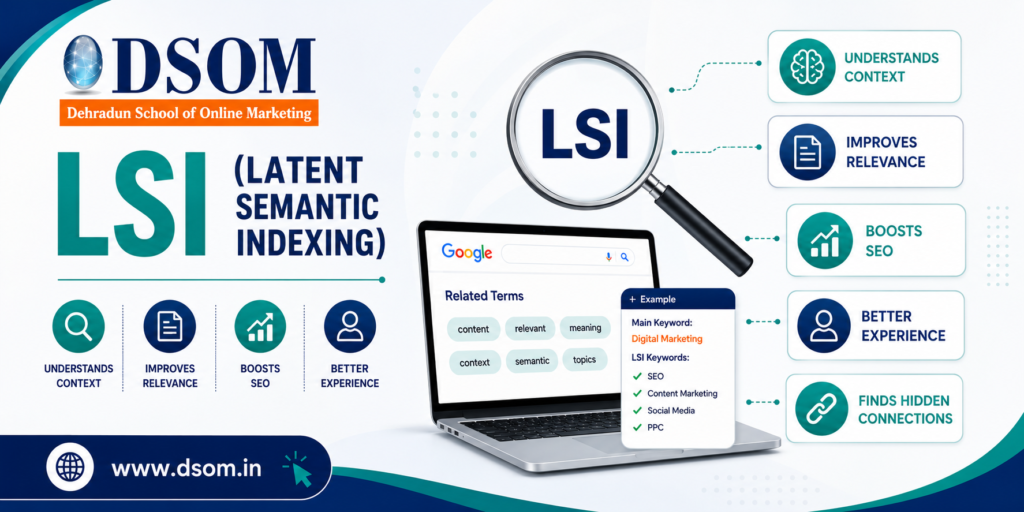
LSI: How Context Changed the Way My Content Ranked
LSI changed the way my content ranked—and I didn’t realize it at first.
A few years ago, I wrote a blog post that I thought was perfectly optimized.
The main keyword was everywhere.
The headings were structured.
The content was detailed.
Yet the page refused to rank.
It hovered on page two for months.
Then I noticed something important.
The article was repetitive—but not meaningful.
So I rewrote it using contextual principles.
- I reduced repetition.
- I expanded context.
- I focused on clarity.
Within weeks, rankings improved.
That’s when it clicked: LSI isn’t about stuffing related words—it’s about helping search engines understand meaning, especially when paired with strong on page SEO.
What Is LSI?
LSI (Latent Semantic Indexing) is a concept that focuses on understanding relationships between words and topics within content.
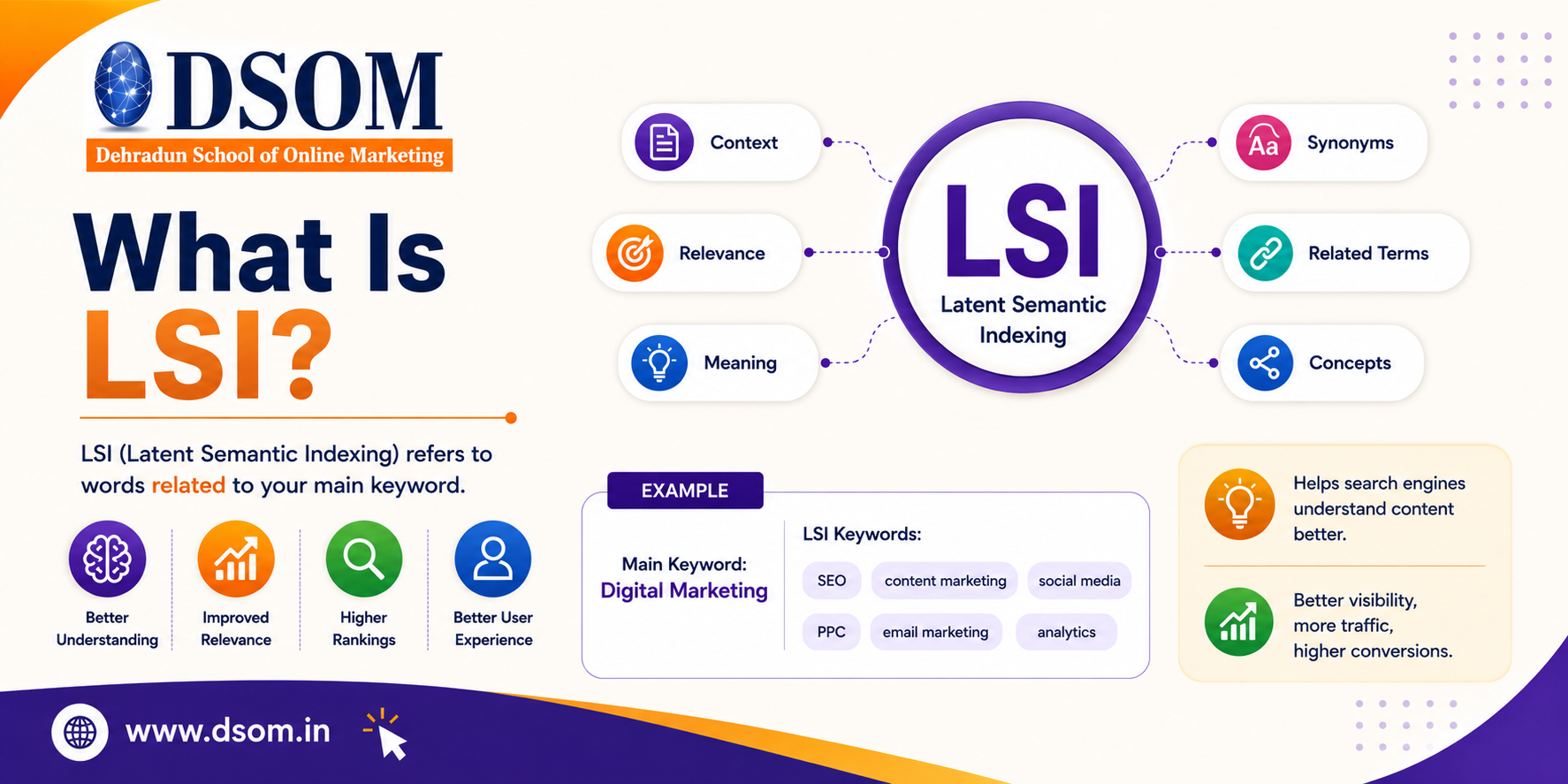
Instead of relying on exact keyword matches, it emphasizes context.
In simple terms, LSI helps search engines understand what a page is truly about, rather than what keyword appears most often.
Why Context Matters More Than Keywords Alone
Search engines no longer work like scanners.
They interpret meaning.
They analyze:
Topic coverage
Concept relationships
Search intent
This is where LSI becomes important.
From an on-page SEO perspective, contextual depth reduces keyword stuffing and increases relevance signals.
Types of Related Keywords and Their Applications
Contextual terms are not synonyms.
They are words and phrases that naturally appear within a topic.
Common categories include:
Topical Terms
Words commonly associated with the subject.
Co-Occurring Phrases
Terms that frequently appear together in trusted content.
Intent Modifiers
Words that clarify user purpose.
Supporting Concepts
Ideas that expand topic depth.
Using these correctly strengthens LSI signals without forcing optimization.
How to Use Contextual Keywords in Content
The biggest mistake people make is forcing related words unnaturally.
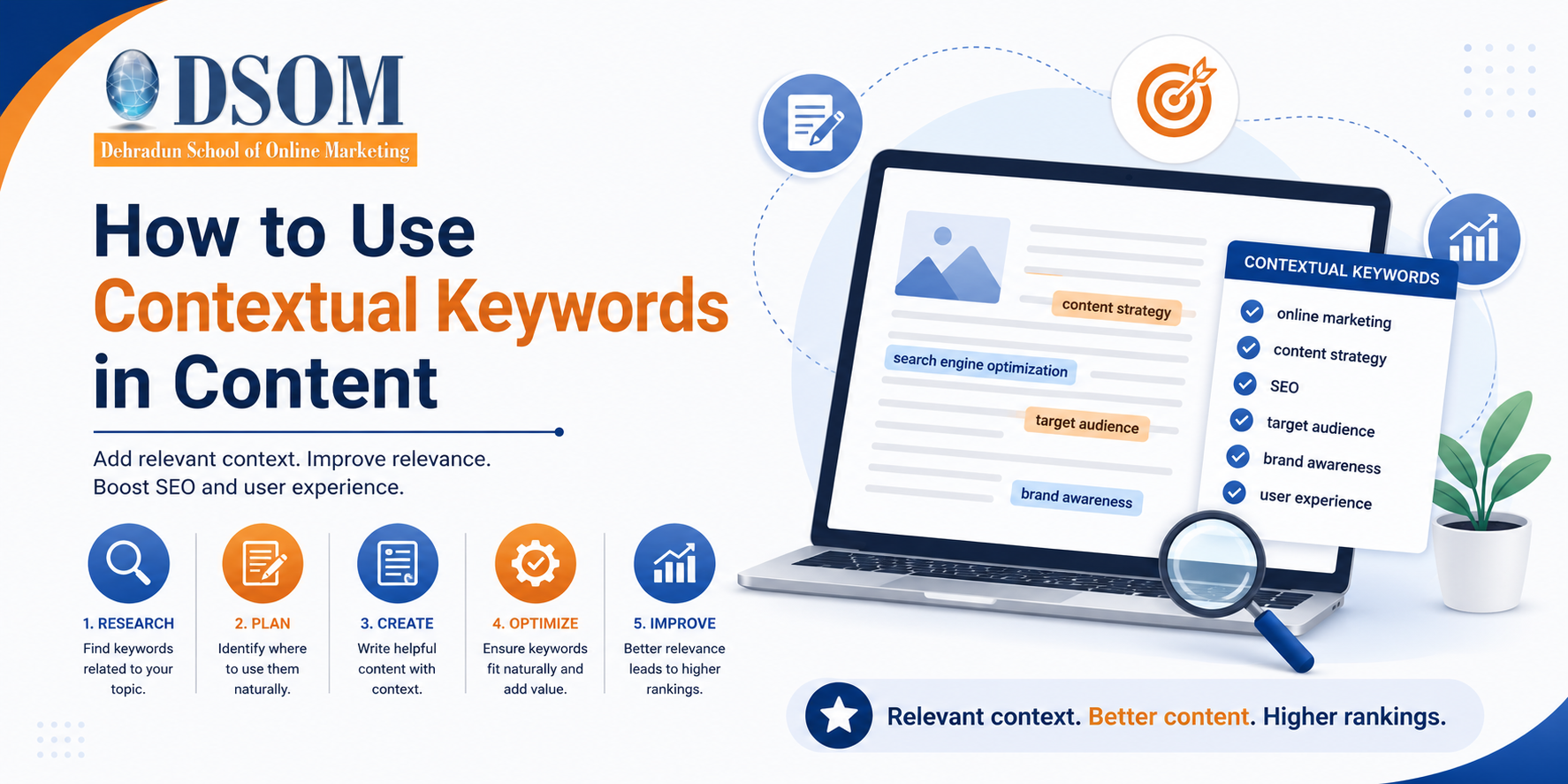
Here’s the correct approach:
Use them naturally in sentences
Add them where they improve explanation
Include them in examples
Avoid repetition for SEO purposes
When done right, LSI improves readability instead of hurting it.
Where Context Fits in SEO Strategy
Semantic understanding is not a standalone tactic.
It works alongside:
Keyword research
Content structure
Internal linking
Search intent
In a complete SEO strategy, LSI helps strengthen topical authority and ranking stability.
Context and On-Page SEO: The Real Connection
On page, SEO is not just about tags.
It’s about clarity.
When content covers ideas naturally and completely, LSI helps search engines connect the dots.
This leads to:
Better crawl interpretation
Stronger relevance
Improved ranking consistency
Going Beyond the Basics
At an advanced level, contextual optimization helps with:
Content expansion
Avoiding over-optimization
Ranking for related queries
Supporting semantic search
One well-written page can rank for multiple queries without duplication.
Enhancing Content Relevance Naturally
Relevance is the foundation of modern SEO.
When content answers questions thoroughly, search engines reward it.
LSI works quietly in the background by improving:
Engagement
Readability
User satisfaction
All of which support long-term on page SEO.
Common Misunderstandings
Let’s clear the confusion:
It’s not keyword stuffing
It’s not synonym replacement
It’s not a ranking hack
It’s about meaning and clarity
Understanding this prevents poor optimization decisions.
Do Search Engines Actually Use This Concept?
Search engines don’t use the academic version directly.
But they absolutely use semantic understanding.
When SEOs talk about LSI, they’re referring to how search engines interpret topic relationships in real-world content.
Final Thoughts: Meaning Always Wins
SEO has evolved.
Repetition no longer works.
Context does.
LSI helps content feel natural to readers and clear to search engines.
It improves depth, relevance, and long-term performance.
And learning how to apply contextual SEO correctly is exactly what DSOM (Dehradun School of Online Marketing) focuses on—training students to master on page SEO, content strategy, and real-world optimization techniques that lead to sustainable rankings and authority.