Most SEOs chase backlinks through guest posting, digital PR, or expensive influencer outreach. Few realize there is a quieter, white hat link building strategy that delivers consistently high-quality backlinks with a fraction of the rejection rate — and it works by helping the website you are pitching, not just asking for a favor.
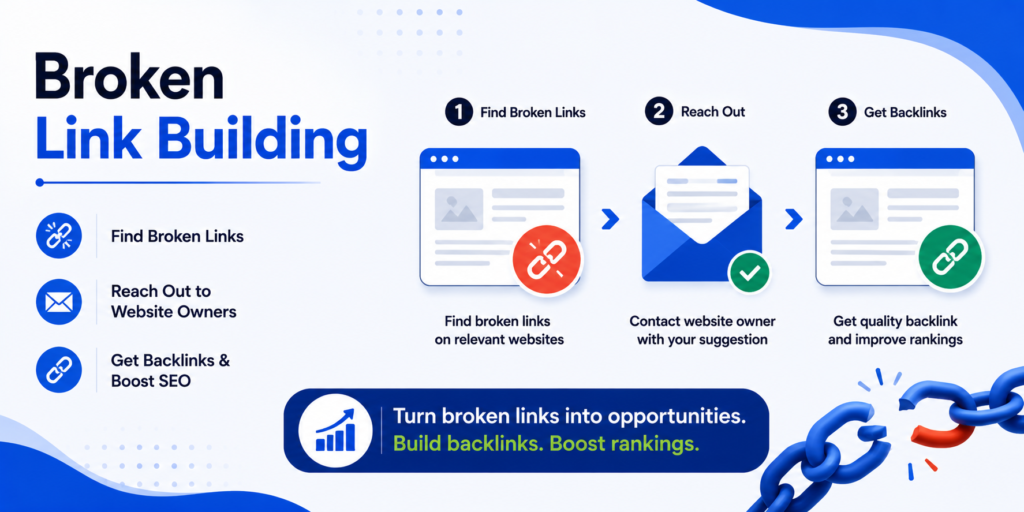
Broken link building is the practice of finding dead, broken links on relevant websites and reaching out to suggest your own content as a replacement. It is one of the oldest tricks in the SEO playbook — and despite years of marketers predicting its decline, this tactic remains one of the most effective and underused strategies available in 2026.
This guide explains exactly what the process is, why it works so well, and how to execute it step by step to earn genuine, high-authority backlinks for your website.
hat Is Broken Link Building?
Broken link building is an SEO outreach technique where you find broken (404) links on other websites, then contact the website owner or webmaster to suggest replacing the dead link with a working link to relevant content on your own site.
Key Definition: Broken link building is a white-hat link acquisition method that helps website owners fix dead links on their pages while earning you a high-quality backlink in return.
The reason this works so well comes down to incentive alignment. Broken links hurt the website that has them — they create poor user experience, waste link equity, and can even hurt that site’s own SEO rankings. When you point out a broken link and offer a relevant replacement, you are not asking for a favor. You are solving a real problem for them.
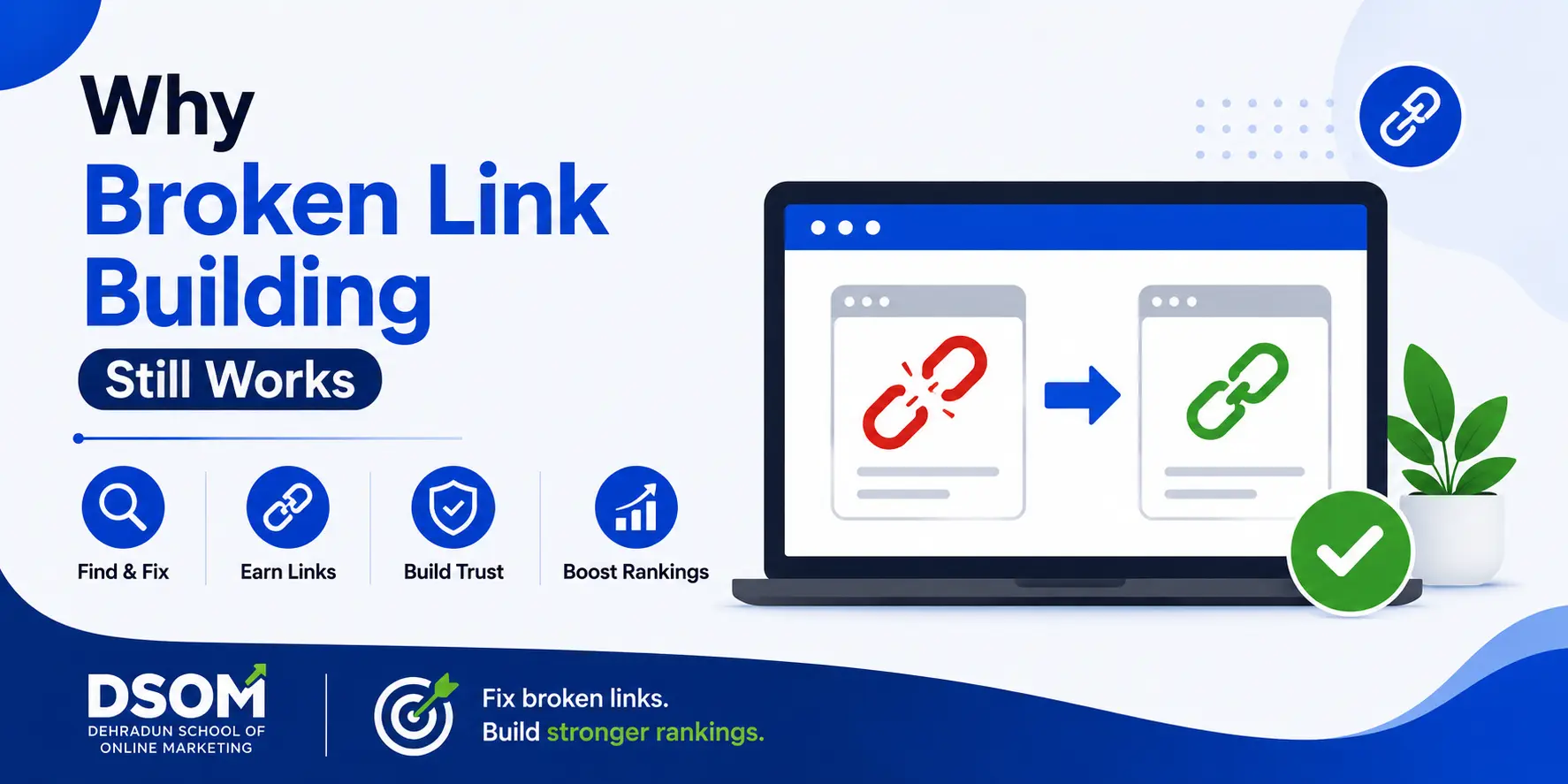
Why Broken Link Building Still Works in 2026
Despite years of SEOs declaring various tactics “dead,” this method has remained durable because it is grounded in genuine value exchange rather than manipulation.
| Reason | Why It Matters |
|---|---|
| Higher Acceptance Rates | You are helping, not asking — webmasters respond more positively |
| Naturally White-Hat | Fully compliant with Google’s guidelines — zero penalty risk |
| Scalable Process | Once systemized, it can be repeated across hundreds of prospects |
| High Relevance | You target pages already discussing your topic — built-in relevance |
| Low Competition | Most competitors overlook this tactic in favor of guest posting |
| Sustainable Long-Term | Websites constantly break links — fresh opportunities appear continuously |
How Broken Link Building Works: The Process
The mechanics of this strategy follow a consistent, repeatable structure. Here is the full process broken down.
Step 1: Find Relevant Websites in Your Niche
Start by identifying resource pages, guides, and articles in your industry that are likely to contain outbound links — “best tools for X,” “ultimate guide to Y,” resource roundups, and link directories are ideal targets. Search Google using operators like:
"resources" + your keyword
"useful links" + your keyword
intitle:"links" + your keyword
Step 2: Identify Broken Links Using a Dead Link Checker
Once you have a list of target pages, run them through a dead link checker tool to identify which outbound links are broken (returning 404 errors or other dead-link signals).
| Tool | Function | Cost |
|---|---|---|
| Ahrefs Broken Link Checker | Scans any domain for broken outbound links | Free tool + Paid platform |
| Check My Links (Chrome Extension) | Highlights broken links directly on any webpage | Free |
| Screaming Frog SEO Spider | Crawls entire sites to find broken links at scale | Free (limited) + Paid |
| Dead Link Checker | Simple, dedicated broken link scanning tool | Free |
| Semrush Site Audit | Identifies broken links as part of a full site audit | Paid |
Pro Tip: Ahrefs’ free Broken Link Checker is one of the fastest ways to find broken link building opportunities — simply enter any competitor or resource page URL and instantly see every dead outbound link.
Step 3: Create or Identify Replacement Content
Before reaching out, you need content on your own site that genuinely serves as a relevant replacement for the broken link. This is the step most marketers skip — and it is the most important one.
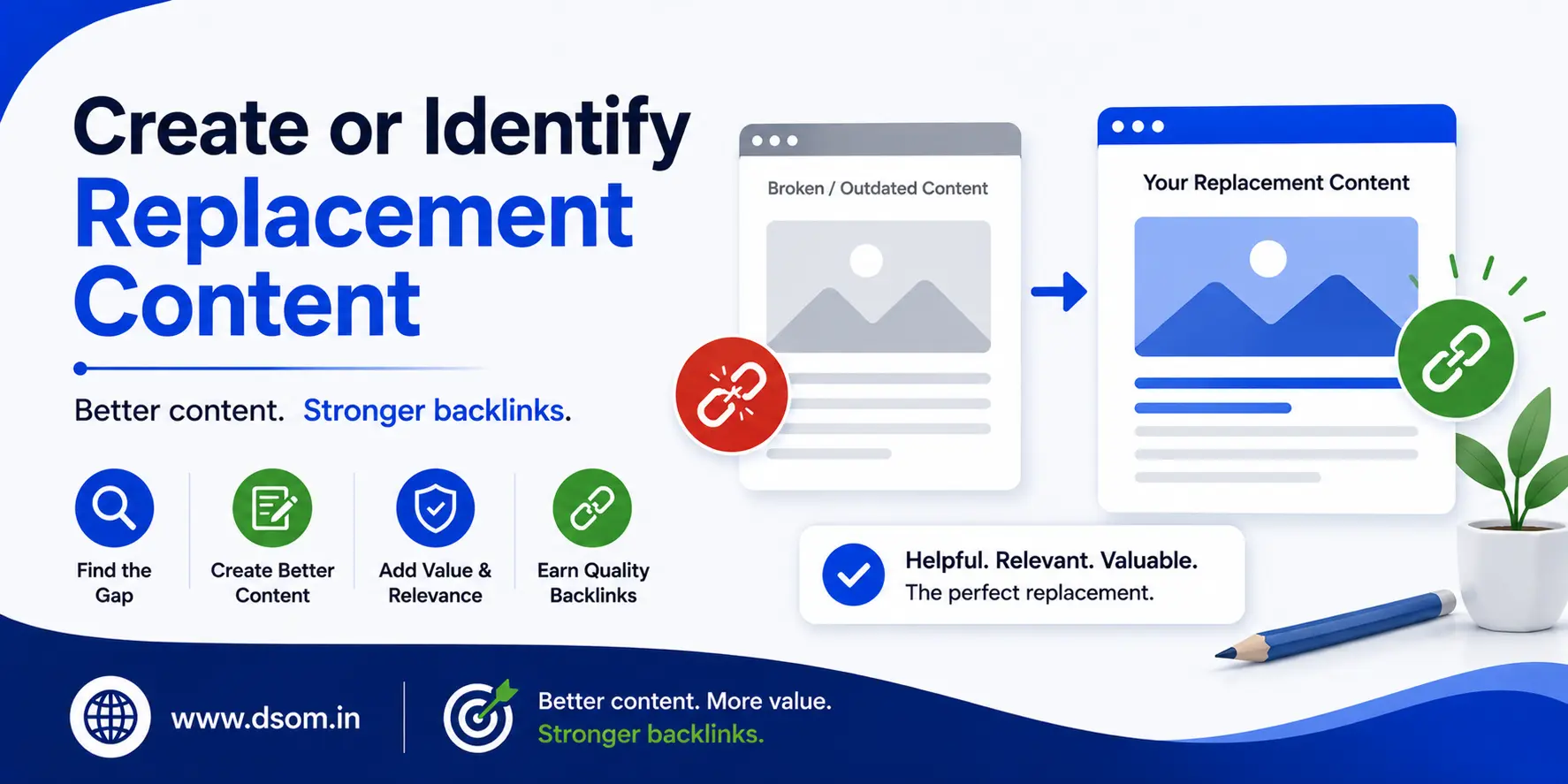
If the broken link pointed to “10 Best SEO Tools,” your replacement content needs to cover the same topic with equal or better depth. Sending an irrelevant link as a replacement suggestion will get ignored — or worse, damage your credibility with that webmaster for future outreach.
Step 4: Find the Right Contact
Identify the website owner, content manager, or webmaster responsible for the page. Check the “About” or “Contact” page, look for an author byline, or use tools like Hunter.io to find verified email addresses associated with the domain.
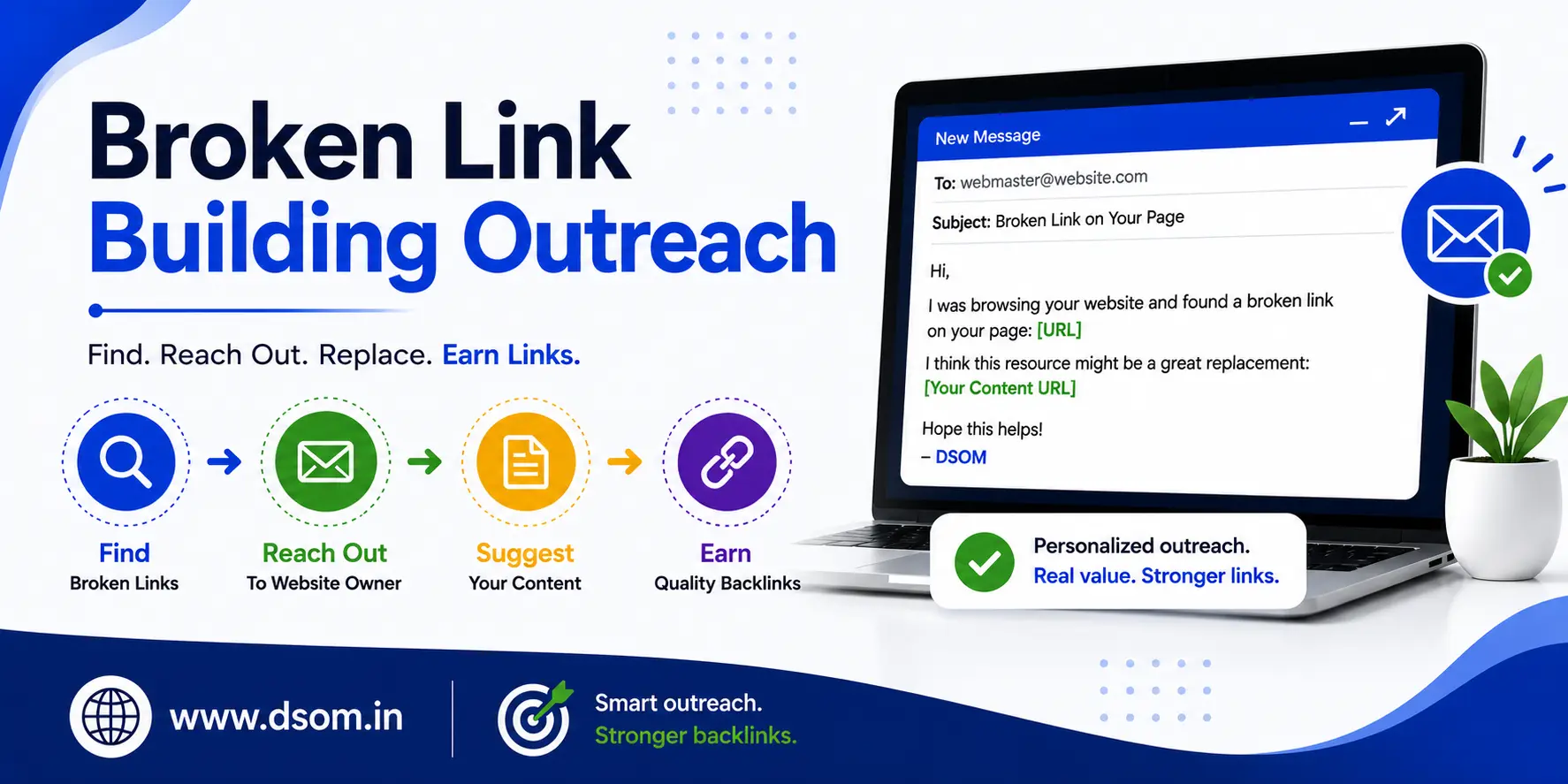
Step 5: Send a Personalized Broken Link Outreach Email
This is where most broken link building campaigns succeed or fail. A generic, templated email gets ignored. A specific, helpful one gets results.
Effective Broken Link Outreach Email Structure:
- Specific opener — mention exactly which page and which broken link you found
- Brief context — explain you noticed it while researching the topic
- The solution — suggest your content as a relevant replacement
- No pressure close — make it easy to say yes, with zero obligation
Example template:
Subject: Found a broken link on your [Page Name] page

Hi [Name],

I was reading your article on [topic] and noticed that the link to
[broken resource name] in the [section] section appears to be broken
(I got a 404 error).

I recently published a detailed guide on the same topic that might be
a useful replacement: [your URL]

Either way, thought you'd want to know about the broken link!

Best,
[Your name]
Broken Link Building Outreach: Best Practices
| Practice | Why It Matters |
|---|---|
| Personalize every email | Generic templates have dramatically lower response rates |
| Lead with the value, not the ask | Mentioning the broken link first builds trust before any request |
| Keep it short | Webmasters are busy — concise emails get read and acted on |
| Follow up once, politely | A single follow-up after 5–7 days can double response rates |
| Track every outreach attempt | Use a spreadsheet or CRM to avoid duplicate or missed follow-ups |
| Don’t over-pitch | One relevant link suggestion — not five — keeps the email focused |
Golden Rule: Never pitch a replacement link that is not genuinely as good as, or better than, the original broken resource. Reputation matters more than any single link.
Where to Find the Best Broken Link Building Opportunities
Not every broken link is worth pursuing. Prioritizing the right opportunities makes your link building strategy dramatically more efficient.
High-Value Target Types:
- Resource and “best of” pages — naturally link-heavy and frequently updated
- University and .edu pages — high authority, but require highly relevant content
- Industry directories and roundups — often outdated and full of broken links
- Competitor backlink profiles — find sites linking to competitors with dead resources
- Old blog posts and guides — content from 3+ years ago accumulates broken links naturally
How to Prioritize Opportunities:
| Factor | What to Check |
|---|---|
| Domain Authority | Higher DA sites pass more link equity |
| Topical Relevance | The page must genuinely relate to your content |
| Traffic Level | Pages with real traffic offer referral value beyond SEO |
| Link Placement | In-content links are stronger than footer or sidebar links |
| Outreach Difficulty | Some sites are easier to contact and more responsive than others |
Broken Link Building vs Other Link Building Tactics
| Tactic | Effort Level | Acceptance Rate | Scalability |
|---|---|---|---|
| Broken Link Building | Medium | High — you’re solving a problem | High |
| Guest Posting | High | Medium — requires full content creation | Medium |
| Digital PR | Very High | Variable — depends on newsworthiness | Low |
| Resource Page Link Building | Medium | Medium | Medium |
| Skyscraper Technique | High | Medium | Medium |
Broken link building consistently delivers one of the best effort-to-result ratios of any white hat link building tactic — particularly valuable for sites still building initial domain authority and unable to compete for expensive digital PR placements.
Common Mistakes in Broken Link Building
- Mistake 1: Pitching irrelevant content If your replacement does not genuinely match the original broken resource’s topic, webmasters will ignore — or worse, remember — your outreach negatively.
- Mistake 2: Sending mass, unpersonalized emails Generic templates that do not reference the specific broken link get deleted instantly. Personalization is non-negotiable.
- Mistake 3: Targeting low-quality or irrelevant sites Not every broken link is worth pursuing. Focus on relevant, authoritative sites — quality over volume always wins.
- Mistake 4: Giving up after one email A single polite follow-up significantly increases response rates. Most webmasters are simply busy, not uninterested.
- Mistake 5: Not tracking outreach Without a system to track who you have contacted and when, you risk duplicate emails or missed follow-up opportunities.
Final Thoughts
Broken link building remains one of the most underrated, high-value link acquisition tactics available to SEOs and marketers in 2026. At DSOM (Dehradun School of Online Marketing), we recommend making broken link building a consistent part of your SEO strategy to improve rankings, build authority, and earn sustainable backlinks over time.
It works because it is built on genuine value exchange — you help a website owner fix a real problem, and in return, you earn a relevant, high-authority backlink that directly strengthens your domain.
The Takeaway: Success in broken link building comes down to three things: finding genuinely relevant broken link opportunities, creating content that truly deserves the replacement spot, and sending personalized outreach that respects the recipient’s time.
Start small, build a repeatable process using the right dead link checker tools, and treat every outreach email as an opportunity to add real value — not just request a link. Done consistently, broken link building can become one of the most reliable, scalable components of your entire backlink strategy.