Free High DA PA Profile Creation Sites List 2026
Free Profile creation sites assist you to try and do the branding by yourself. Through proper identifying, you’ll be able to get each do-follow and no-follow quality backlinks. A number of the sites provide you with high quality do-follow backlinks, however, there are many other sites that also provide no-follow backlinks on profiles. Achieving a high search engine rank position is simply not that straightforward today because competition for profile backlinks is getting tougher day by day. To secure the highest rank on the webpage, we usually use several methods to achieve the highest position on the search engines. One of the strategies is to create free profiles on the websites with high domain authority and page authority. Why High DA PA? The creation of high-DA PA profiles can help your website rank higher and get more traffic if you use a good quality site. Do Profile Creation Sites help with search engine rankings? Yes, profile creation sites help in increasing your website ranking. It’s an off-page activity to link your website. Start by searching for the best profile creation sites on internet and start submitting or creating your profile on them. But there are a unit of rumors that tend to say that profile backlinks are meant to be bad and dead for the sake of SEO, however, it’s not true. Several SEO consultants say that if you get a link from the list of high-quality profile creation sites then it works best for you. Let’s suppose, I created my website with lots of blog posts and proper on-page SEO. Now I have to do off page SEO, right? And after 2 hours I found my Free DA PA Profile creation sites on Google. So, I will go there and make my first backlink over there. See, here we all are trying to rank high on Google’s results page, which can make this an intense competition. Google want high quality article and we are making top notch article. So, it’s a win-win case, therefore, why worry too much? How to create Profile Backlinks? Discover Websites: Search for sites that allow profile creation. These may include social platforms, discussion boards, company listings, or any site offering user profiles. Create an Account: Join these websites. Enter your info such as name, email, and pick a username and password. Fill Out Profile: Put all your details in your profile. Include your name, a short bio, a photo of yourself, and any other key info. Insert Your Site’s URL: Check for a place in your profile to put your website address. You’ll often find this in the bio or contact details area. Confirm Your Profile: Some sites might email you to confirm. Look in your inbox and click the link they send to verify. Get Involved on the Site: Take part in the site’s community. This could mean writing on forums leaving comments on posts, or becoming a member of groups. This helps your profile seem real. Keep an Eye on Backlinks: Try tools like Google Search Console or other SEO apps to watch your backlinks. Check that the links work and aren’t broken. Keep It Fresh: Make sure your profile stays up-to-date with new stuff, links, and details to keep it relevant and trustworthy. Play Fair: Don’t spam or make fake profiles. Put quality first, not numbers. As a result, you create valuable profile backlinks that help improve your website’s SEO. But remember to enter all of the essential details about the location or your site; you’ll stay closer to your audience, like said above play fair. This is a great alternative for [website] promoting. Profile creation sites can help your business but you need to choose the right sites to create profiles. There are many profile creation sites but not all of them gives effective site advertising. And to get the best results you should use profile creation sites with high domain authority (DA). Domain authority is the overall strength of a website. By choosing high DA profile creation sites for your site promotion, you will get better results. Creating profile backlinks or website profiles on high domain authority (DA) sites makes your blog or website popular. Profile creation has many benefits like SEO, traffic, brand awareness, rankings and conversions. These benefits are linked to high DA profile creation sites. If someone uses these sites to promote their website, they can get top rankings on internet and succeed. Is Profile Creation SEO Technique Working Today? Yes, using profile creation lists can help in increasing your website ranking. It’s a simple SEO technique. But finding good profile creation sites is not easy. I have added some quality profile creation sites where you can create your company profile and get links. Profile creation is good for your website authority. Give this famous link building technique a try. You can create “Do follow” or “No follow” links using this method. I suggest you provide your information while creating profiles on various websites. Free High DA PA Profile Creation Sites List You don’t need to search for the best websites for profile creation because we have a good list of free profile creation sites for you. Check the list below. Edit Website DA PA Spam Score https://www.freeadstime.org/ 36 44 7% https://alternativeto.net/ 87 41 1% https://dribbble.com/ 92 65 9% https://bandcamp.com/ 93 59 1% https://in.pinterest.com/ 85 94 7% https://list.ly/ 87 67 6% https://justpaste.it/ 87 67 6% https://www.anibookmark.com/ 36 30 4% https://creativemarket.com/ 90 41 1% https://digitalseo.bollywoodpasta.com/ 20 22 5% https://gab.com/ 82 37 10% https://mewe.com/ 39 66 10% http://ttlink.com/ 63 49 10% https://topsitenet.com/ 49 33 5% https://pinshape.com/ 37 65 3% https://www.wikihow.com/ 93 45 3% https://www.bitsdujour.com/ 70 35 7% https://ghurry.com/ 12 25 2% https://solo.to/ 64 49 1% https://app.zintro.com/ 58 34 1% https://desall.com/ 45 34 5% http://idea.informer.com/ 91 55 2% https://stackoverflow.com/ 92 43 10% https://www.princeclassified.com/ 28 32 1% https://www.provenexpert.com/ 64 38 1% https://www.graybookmarks.com/ 17 24 5% https://peatix.com/ 84 41 1% https://slides.com/ 81 37 1% https://productdiary.com/ 15 21 1% https://tobucket.com/ 15 21 1% https://bikre.com/ 15 21 1% https://axyza.com/ 15 22 % https://www.infragistics.com/ 61 34 1% https://kisza.com/ 16
Navigating the Online World: Where to Find Freelance Design Work

In today’s digital age, the freelance landscape is flourishing, particularly in creative fields like design. Whether you’re a graphic designer, web designer, or specialize in another area of design, there’s no shortage of opportunities waiting for you online. However, the challenge often lies in knowing where to look. With countless platforms and websites available, finding the right freelance design work can be overwhelming. But fear not! In this blog, we’ll navigate through the vast online realm and pinpoint some of the best places to find freelance design work. 1.Freelance Marketplaces: Platforms like Upwork, Freelancer, and Fiverr are well-known hubs for freelancers of all kinds, including designers. These sites allow you to create a profile showcasing your skills and portfolio, and then bid on projects posted by clients. The competition can be stiff, but with a compelling profile and a solid portfolio, you can stand out and win projects regularly. 2.Design-Specific Platforms: For designers looking for more specialized opportunities, there are platforms dedicated specifically to creative professionals. Websites like Dribbble, Behance, and DesignCrowd cater to designers and often feature higher quality projects. Additionally, these platforms allow you to showcase your work, connect with other designers, and even participate in design contests to showcase your skills. 3.Job Boards: Don’t overlook traditional job boards when searching for freelance design work. Websites like Indeed, Glassdoor, and SimplyHired often have freelance opportunities listed alongside full-time positions. You can filter your search to find remote or contract design gigs that match your skills and experience. 4.Social Media: Social media platforms aren’t just for connecting with friends and family; they’re powerful tools for networking and finding freelance work. Utilize platforms like LinkedIn, Twitter, and Facebook to showcase your work, connect with potential clients, and join design-related groups and communities where opportunities are often shared. 5.Industry-Specific Websites: Depending on your niche within the design industry, there may be specialized websites and forums where clients post freelance gigs. For example, if you’re a UI/UX designer, websites like UX Design Jobs or Smashing Magazine’s job board could be valuable resources for finding freelance work tailored to your expertise. 6.Networking and Referrals: Never underestimate the power of networking and word-of-mouth referrals. Let your friends, family, and professional contacts know that you’re available for freelance design work. Attend industry events, join online forums, and participate in design communities to expand your network and increase your chances of finding freelance opportunities through referrals. 7.Cold Pitching: If there’s a company you admire or a project you’re passionate about, don’t hesitate to reach out directly. Craft a personalized pitch showcasing your relevant experience and how you can add value to their project. While cold pitching requires some initiative and persistence, it can often lead to rewarding freelance opportunities. 8.Freelance Design Agencies: Consider partnering with freelance design agencies or studios that connect clients with freelance talent. These agencies often handle client acquisition, project management, and payment processing, allowing you to focus solely on your design work. While they may take a percentage of your earnings, they can provide a steady stream of projects and alleviate some of the administrative burdens of freelancing. In conclusion, finding freelance design work online requires a combination of strategy, networking, and perseverance. By leveraging the myriad platforms and resources available, showcasing your skills effectively, and actively seeking out opportunities, you can carve out a successful freelance career in the dynamic world of design. So, dive in, explore your options, and let your creativity and talent shine!
Top 10 Websites for Blog Submission in 2024
In the vast digital landscape of the internet, getting your blog noticed can be a daunting task. With millions of blogs competing for attention, it’s crucial to utilize every available avenue for exposure. One powerful strategy is to submit your blog to various platforms dedicated to showcasing and promoting quality content. Here, we present the Top 10 websites for blog submission in 2024, offering you a chance to expand your reach and attract a wider audience. 1.Medium Medium remains a favorite platform for bloggers due to its sleek interface, engaged community, and potential for virality. By publishing your blog on Medium, you tap into its vast network of readers and writers, increasing your chances of gaining traction and recognition. 2.WordPress As one of the most popular content management systems globally, WordPress offers a myriad of plugins and themes to customize your blog. By submitting your blog to WordPress’s directory or guest posting on established WordPress blogs, you can access its extensive user base and enhance your visibility. 3.LinkedIn Leveraging LinkedIn’s publishing platform can be advantageous, especially if your blog caters to a professional audience. By sharing your insights and expertise directly on LinkedIn, you can establish yourself as a thought leader in your industry and attract connections who may further promote your content. 4.Hacker News If your blog covers topics related to technology, startups, or programming, submitting your posts to Hacker News can expose them to a tech-savvy audience. However, keep in mind that Hacker News values quality and originality, so ensure your content is informative and engaging. 5.Reddit : With its vast array of communities (subreddits), Reddit offers a platform to share your blog posts with niche audiences interested in specific topics. Find relevant subreddits related to your blog’s content and engage with the community before sharing your posts to avoid being perceived as spam. 6.Quora Quora isn’t just a Q&A platform; it’s also an excellent place to share your blog posts, especially if they provide valuable insights or solutions to common questions. By answering questions related to your blog’s niche and linking back to your content, you can drive traffic and establish credibility. 7.Guest Blogging Platforms Numerous websites accept guest contributions, allowing you to reach new audiences while also building backlinks to your blog. Research platforms within your niche that welcome guest posts, and pitch your ideas to expand your reach and authority within your industry. 8.Flipboard : Flipboard curates content from various sources based on users’ interests, making it a valuable platform for blog submission. By adding your blog to relevant topics or creating your magazine, you can attract readers who are passionate about your chosen subjects. 9.Tumblr Although Tumblr’s popularity has waned in recent years, it still boasts a dedicated community of users who appreciate its visual-centric approach to blogging. Submit your blog to Tumblr and engage with other users by reblogging and commenting to increase your visibility. 10.Alltop Alltop aggregates top headlines from various blogs and websites, making it a convenient platform for discovering new content. Submit your blog to relevant categories on Alltop to increase its exposure to users seeking information within your niche. In conclusion, submitting your blog to these top 10 websites can significantly enhance its visibility and reach in 2024. However, remember that quality content and genuine engagement are key to sustaining and growing your audience over time. Experiment with different platforms, analyze your results, and refine your strategy to maximize the impact of your blog submissions. Happy blogging!
Mastering the Art of Color Combination in Creative Design: A Comprehensive Guide
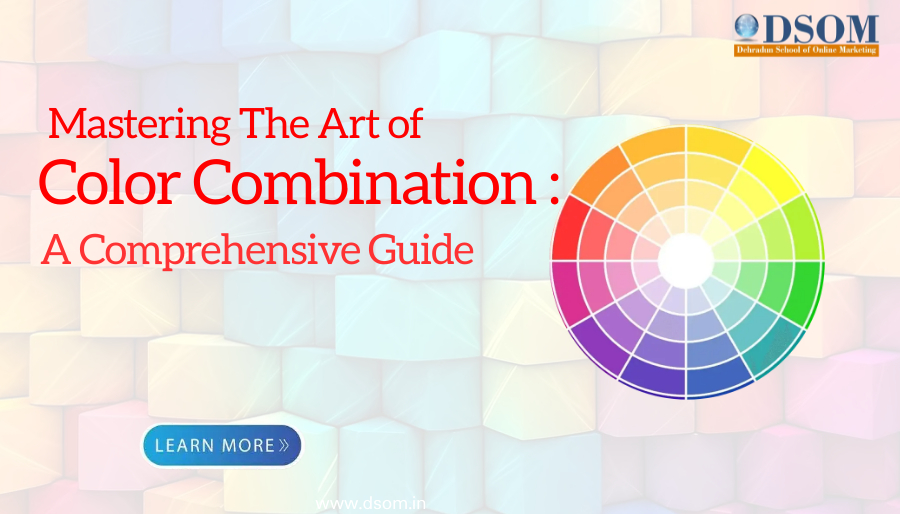
In the realm of creative design, color holds immense power. It has the ability to evoke emotions, convey messages, and captivate audiences. Whether you’re designing a website, creating a logo, or crafting a piece of artwork, selecting the right color combination is crucial. It can make or break your design, influencing how it’s perceived and remembered. In this guide, we’ll delve into the art of choosing color combinations in creative endeavors, exploring techniques and considerations that will help you master this essential aspect of design. Understanding Color Theory: Before diving into the process of selecting color combinations, it’s essential to have a basic understanding of color theory. Color theory provides a framework for understanding how colors interact and how they can be combined effectively. Here are some key concepts to keep in mind: 1.Color Wheel: The color wheel is a visual representation of the relationships between colors. It consists of primary colors (red, blue, yellow), secondary colors (orange, green, purple), and tertiary colors (the mix of primary and secondary colors). Understanding the relationships between these colors is fundamental to creating harmonious combinations. 2.Color Harmony: Harmony refers to the pleasing arrangement of colors in a design. There are several types of color harmony, including complementary (colors opposite each other on the color wheel), analogous (colors adjacent to each other on the color wheel), and triadic (three colors equidistant from each other on the color wheel). Each type of harmony creates a different visual effect and mood. 3.Color Psychology: Colors have psychological associations that can influence how they’re perceived. For example, red is often associated with passion and energy, while blue is associated with calmness and trust. Understanding these associations can help you choose colors that align with the message or mood you want to convey in your design. Choosing Color Combinations: Now that we have a foundation in color theory, let’s explore the process of choosing color combinations for creative projects. Here are some steps to follow: Define the Purpose and Audience: Before selecting colors, it’s essential to understand the purpose of your design and the audience you’re targeting. Is it a playful children’s website, a professional business logo, or a serene landscape painting? Consider the emotions and impressions you want to evoke in your audience. Research and Inspiration: Look for inspiration in various sources, such as nature, art, fashion, and design trends. Pay attention to color combinations used in successful designs and analyze why they work. Websites like Pinterest and design blogs can be valuable resources for finding inspiration. Experiment with Color Tools: There are many online tools and resources available to help you explore and experiment with color combinations. Websites like Adobe Color, Coolors, and Paletton allow you to create and preview color schemes quickly. Use these tools to generate ideas and refine your choices. Consider Context and Medium: Keep in mind the context in which your design will be used and the medium it will be presented in. Colors may appear differently on screen versus in print, so it’s essential to consider how they will translate across different mediums. Test your color combinations in various contexts to ensure they remain effective. Balance and Contrast: Aim for balance and contrast in your color combinations to create visual interest and hierarchy. Balance lighter and darker shades, warm and cool tones, and saturated and desaturated colors to achieve harmony in your design. Contrast can help certain elements stand out and draw attention where needed. Limit Your Palette: While it’s tempting to use a wide range of colors, limiting your palette to a few key hues can create a more cohesive and impactful design. Choose a primary color or two as the foundation of your palette, then add accent colors for variety and emphasis. Test and Iterate: Don’t be afraid to experiment and iterate on your color choices. Test different combinations and solicit feedback from peers or clients. Keep refining your design until you’re satisfied that the colors effectively convey the desired message and mood. Conclusion: Choosing the right color combination is a critical aspect of creative design. By understanding the principles of color theory, considering the purpose and audience of your design, and experimenting with different combinations, you can create visually compelling and impactful designs. Remember to stay open to inspiration, be mindful of context and medium, and strive for balance and harmony in your color choices. With practice and attention to detail, you’ll master the art of color combination and elevate your creative projects to new heights.
What Kanak says about DSOM Graphic Designing course ?
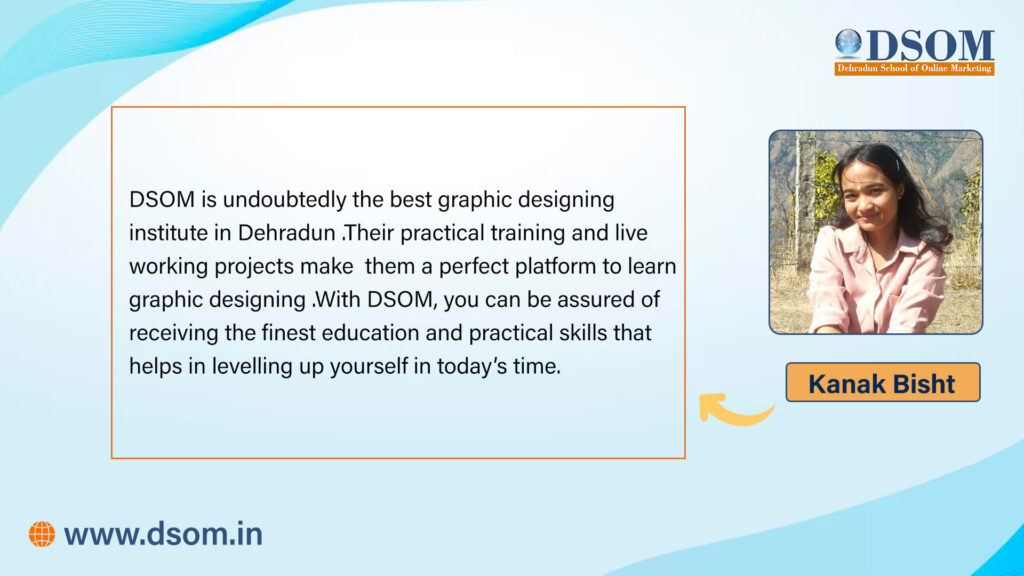
1.Welcome, Please introduce yourself to our readers? Ans. Hello my name is Kanak Bisht,I joined DSOM few months ago to pursue a graphic designing course.With DSOM’s graphic designing course, I gained practical knGowledge about graphic designing. 2.Please tell us, Why you decide to go for graphic Designing? Ans. Graphic designing is a rapidly growing industry .There are good career opportunities in graphic designing,so I decided to pursue a graphic designing course from here. 3. Why you decide to join DSOM? Ans. DSOM focuses more on practical training rather than just theoritical knowledge. 4.How was your experience with DSOM? Ans. The trainer at DSOM are very helpful and Cooperative,they provided me the assitance i always required for my growth and technical knowledge.Here we learn to work on live projects. 5.Tell the readers, how Graphic Designing helped in your Career? Ans. Graphic designing is a growing field,I learned a lot of things like making insta,facebook etc ADs banners. 6.How would you rate DSOM Training program on a scale of 1-10? Ans. I will give 10/10. 7. What would you say to graphic Designing aspirants ? Ans. I want to say to all the aspirants that they should update themselves about the trending skills in which they are interested,so that they can take out the best from their course and learn better according to their choice.
50+ Tools To Help You simplify Your Blog in 2024
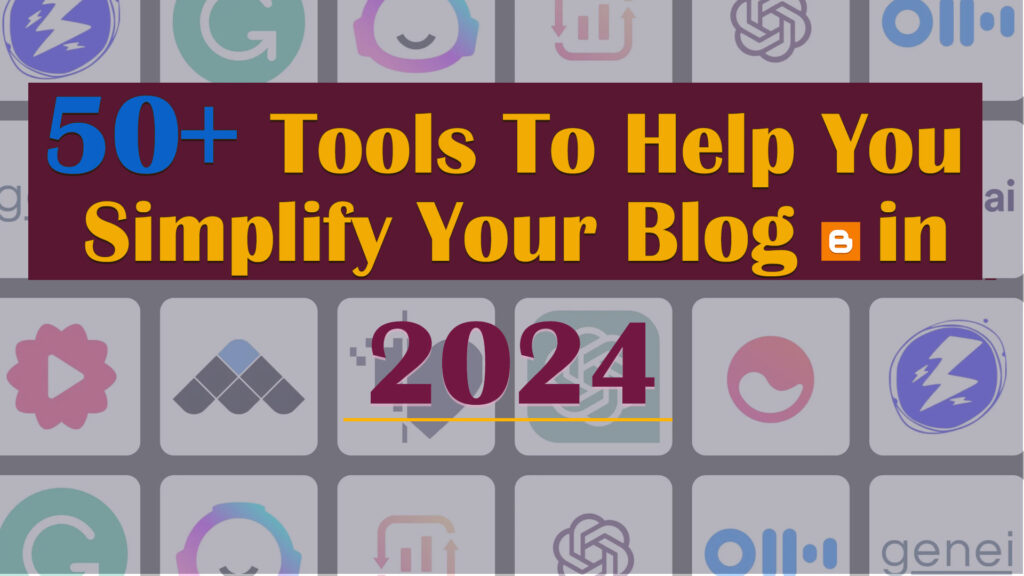
Welcome to the Ultimate Blogging Toolkit! Whether you’re an experienced blogger or just getting started, we’ve compiled a comprehensive list of tools to help you succeed. From AI-powered writing aids like Jarvis and Rytr to SEO optimisation tools like Yoast SEO and SEMrush, we’ve got your back. Find content idea generators, social media management platforms, website analytics tools, and more to help you organise your workflow and improve your content. Prepare to unleash your creativity, optimise your website, and engage your audience like never before. Let us take your blogging game to the next level! AI Writing Tools: 1.Jarvis, one Jarvis is an artificial intelligence (AI) writing tool that creates content through natural language processing. Based on user input, it helps bloggers by making recommendations, outlining articles, and even producing entire pieces. Jarvis can improve productivity and expedite the content creation process. Rytr Rytr is an AI writing tool made to help authors produce excellent material more rapidly. It gives users the option to alter the tone and voice of their material by providing a variety of templates and writing styles. Creating blog posts, social media material, and marketing text may be done more effectively with Rytr. Writesonic An AI tool called Writesonic assists bloggers and content producers in producing interesting and convincing content. Features including product descriptions, blog post creation, and ad authoring are available. Writesonic allows users to create content faster without sacrificing quality or relevancy. AI Video Tools: Lumen5 An AI-powered tool called Lumen5 turns blog articles into interesting movies. With its huge template library and easy-to-use interface, bloggers can easily produce movies that appear professional without requiring advanced editing knowledge. When it comes to adding visual narrative to blog content, Lumen5 is a useful tool. 5 In-Video With the use of artificial intelligence (AI), InVideo is a flexible platform for creating videos that streamlines the video production process. It offers an extensive editing tool set, elements that may be customised, and a library of pre-designed templates. With InVideo, bloggers may produce eye-catching videos that visually captivate their audience and enhance their textual material. Synthesia With the help of the AI video synthesis programme Synthesia, users may produce customised videos featuring movable avatars. By automating the avatar-based video creation process, it provides a novel approach to creating video content. For bloggers who want to inject some creativity and interactivity into their content strategy, Synthesia can be a very useful tool. WordPress Bloggers all around the world use WordPress, a well-liked open-source content management system (CMS). It has an easy-to-use interface, themes that can be customised, and a large selection of plugins for more features. WordPress makes it simple for bloggers to start and maintain their websites, post material, and interact with readers. Blogger Google offers Blogger, a free blogging tool with an easy-to-use interface and setup procedure. With a variety of layouts and design possibilities, users can create and personalise their blogs. Blogger enables connectivity with other Google services and is suited for novices. 9 Medium Medium is a well-known blogging platform that emphasises storytelling and has a simple aesthetic. It gives authors an easy-to-use interface to publish their work and interact with readers. To assist writers in reaching a larger audience, Medium also provides tools like partner programmes and curated collections. Content Idea Generation Tools: Portent’s Content Idea Generator A tool called “Portent’s Content Idea Generator” can assist in coming up with original and captivating content ideas. When a user enters a keyword or topic, the tool suggests headlines and offers explanations and samples. It’s helpful for generating ideas and coming up with blog post material. 11.AnswerThePublic “AnswerThePublic” is a tool for coming up with content ideas that assists users in finding questions people have about a particular subject. The search queries are visualised as “questions,” “prepositions,” “comparisons,” and “alphabeticals.” When producing information that is specifically aimed at an audience, “AnswerThePublic” is a useful tool to have. BuzzSumo A content research tool called “BuzzSumo” assists users in finding well-liked material within their field. Users may follow social media engagement data, discover key content authors, and analyse trending themes. “BuzzSumo” offers insightful information for competitive analysis and content brainstorming in the blogging space. Blog Post Title Tools: CoSchedule Headline Analyzer The “CoSchedule” Headline Analyzer is a tool used to assess a blog post’s effectiveness. Based on elements including word balance, length, sentiment, and keywords, it evaluates the quality of headlines. The tool offers recommendations for enhancing titles to raise engagement and click-through rates. Portent’s Content Idea Generator (again) In addition to offering ideas for original material, “Portent’s Content Idea Generator” also suggests attention-grabbing blog post titles. The application allows users to enter a keyword or topic and provides explanations, examples, and headline recommendations to help create interesting titles. Tools for Proofreading Grammarly “Grammarly” is an AI-powered writing tool that assists users in enhancing their writing’s style, grammar, and punctuation. It helps to improve the readability and clarity of blog articles by providing real-time suggestions and corrections while users type. There are desktop and browser extensions for “Grammarly” available. ProWritingAid A thorough writing tool called “ProWritingAid” provides readability analysis, style recommendations, and extensive grammatical checking. It offers thorough assessments outlining several aspects of writing, such as grammar, style, structure, and more, that want work. Blog writers who are searching for an extensive editing and proofreading tool might consider “ProWritingAid”. Hemingway Editor Hemingway Editor is a writing tool that emphasises the use of adverbs, complex phrases, and passive voice in order to improve readability. It provides advice on how to make writing more clear and simple sentences. A excellent tool for bloggers who want to write content that is clear and succinct for their audience is Hemingway Editor. Photo Editing Tools Canva A well-known online design platform, Canva provides a plethora of tools for graphic design, including blog picture creation. To create aesthetically pleasing visuals for blog articles, it offers text possibilities, customisable layouts, stock photographs, and icons. Canva is easy to use and appropriate for bloggers who don’t
What Shilpa says about DSOM Graphic Designing Course ?

1.Welcome, Please introduce yourself to our readers? Ans. Hello my name is Shilpa Rawat,I joined DSOM few months ago to pursue a graphic designing course.With DSOM’s graphic designing course, I gained practical knGowledge about graphic designing. 2.Please tell us, Why you decide to go for graphic Designing? Ans. Graphic designing is a dynamic growing industry .There are good career opportunities in graphic designing,so I decided to pursue a graphic designing course from DSOM. 3. Why you decide to join DSOM? Ans. DSOM focuses more on practical training rather than just theoritical knowledge. 4.How was your experience with DSOM? Ans.The trainer at DSOM are very helpful AND Cooperative,they provided me the assitance i always required for my growth and technical knowledge.Here we learn to work for clients. 5.Tell the readers, how Graphic Designing helped in your Career? Ans. Graphic designing is a growing field,I learned a lot of things like making insta,facebook etc ADs banner for social media marketing. 6.How would you rate DSOM Training program on a scale of 1-10? Ans. I will give 10/10. 7. What would you say to graphic Designing aspirants ? Ans. I want to say to all the aspirants that go through in detail about the course before joining so that you can take out the best from your course and learn better.
A Comprehensive Guide: How to Rank Your Website on Top
In the digital era, having a website is essential for any business or individual looking to establish an online presence. However, merely having a website isn’t enough; you need to ensure that it ranks well on search engine results pages (SERPs) to attract organic traffic and potential customers. Ranking your website on top requires a combination of strategic planning, optimization techniques, and consistent effort. In this comprehensive guide, we’ll delve into various strategies and best practices to help you rank your website effectively. Understanding Search Engine Optimization (SEO) Search Engine Optimization (SEO) is the process of enhancing your website’s visibility on search engines like Google, Bing, and Yahoo. By optimizing various elements of your website, you can improve its chances of ranking higher on SERPs for relevant keywords. SEO can be broadly categorized into on-page and off-page optimization. On-Page Optimization On-page optimization involves optimizing elements directly on your website. Here are some key factors to consider: Keyword Research: Conduct thorough keyword research to identify the terms and phrases your target audience is searching for. Use tools like Google Keyword Planner, SEMrush, or Ahrefs to discover relevant keywords with high search volumes and low competition. Quality Content: Create high-quality, relevant, and engaging content that addresses the needs and interests of your target audience. Incorporate your target keywords naturally within the content while ensuring readability and coherence. Meta Tags Optimization: Optimize title tags, meta descriptions, and heading tags (H1, H2, etc.) to include your target keywords. These elements provide search engines with information about your website’s content and help improve click-through rates (CTR) on SERPs. Optimized URLs: Ensure that your URLs are concise, descriptive, and contain relevant keywords. Avoid long, convoluted URLs that are difficult for both users and search engines to understand. Mobile Optimization: With the increasing use of mobile devices, optimizing your website for mobile is crucial. Ensure responsive design, fast loading times, and easy navigation across all devices. Off-Page Optimization Off-page optimization involves improving your website’s authority, relevance, and popularity across the web. Here’s how you can do it: Link Building: Acquire high-quality backlinks from authoritative websites in your industry. Focus on earning natural backlinks through guest blogging, content promotion, influencer outreach, and participation in relevant online communities. Social Media Presence: Build a strong presence on social media platforms relevant to your target audience. Share your content, engage with your followers, and encourage social sharing to increase visibility and drive traffic to your website. Online Reputation Management: Monitor and manage your online reputation by responding to reviews, addressing customer feedback, and maintaining a positive brand image. A good reputation not only improves user trust but also positively impacts search engine rankings. Local SEO: If you have a physical location or serve specific geographic areas, optimize your website for local search. Claim your Google My Business listing, ensure NAP (Name, Address, Phone Number) consistency across online directories, and solicit positive reviews from satisfied customers. Technical SEO Technical SEO focuses on optimizing the technical aspects of your website to improve its crawlability, indexability, and overall performance. Key technical SEO practices include: Site Structure: Ensure a clear and logical site structure with easily navigable internal links. Use XML sitemaps to help search engines discover and index your website’s pages effectively. Page Speed Optimization: Improve your website’s loading speed by optimizing images, minimizing server response times, leveraging browser caching, and employing content delivery networks (CDNs). Schema Markup: Implement schema markup to provide search engines with structured data about your website’s content. This can enhance your listings on SERPs and improve visibility for specific types of content, such as events, recipes, or products. HTTPS Security: Secure your website with HTTPS encryption to protect user data and gain a ranking boost from Google, which prioritizes secure websites in search results. Continuous Monitoring and Optimization SEO is an ongoing process that requires constant monitoring, analysis, and optimization. Regularly track your website’s performance using tools like Google Analytics, Google Search Console, and other SEO software. Monitor keyword rankings, organic traffic, backlink profiles, and user engagement metrics to identify areas for improvement and adjust your strategies accordingly. Conclusion Ranking your website on top of search engine results requires a multifaceted approach that encompasses on-page optimization, off-page optimization, technical SEO, and continuous monitoring and optimization. By implementing the strategies outlined in this guide and staying abreast of the latest SEO trends and best practices, you can improve your website’s visibility, attract more organic traffic, and ultimately achieve your business objectives in the competitive online landscape.
Top 10 Digital Marketing Updates You Need to Know for March 2024
The digital marketing landscape is constantly evolving, and staying ahead of the curve is essential for success. Here’s a breakdown of the top 10 updates from March 2024 that you can’t miss: 1.Google Ads Embraces AI with Gemini Integration: Performance Max campaigns are getting a major upgrade with the inclusion of Google’s Gemini AI models. This means even more powerful synergy between creative assets and AI, leading to better conversions and campaign performance. 2. Knowledge Reigns Supreme on LinkedIn: Gone are the days of viral content ruling LinkedIn. The platform’s algorithm now prioritizes “suggested posts” that demonstrate expertise and encourage sustained engagement. Time to focus on high-quality, informative content! 3. Structured Data Gets a Carousel Makeover: Google is beta testing structured data carousels for entities like hotels and products. This allows for a more dynamic and visually appealing showcase in search results, potentially boosting click-through rates. 4. Google Analytics 4 Simplifies Ad Reporting: Marketers rejoice! GA4 now offers a streamlined and integrated Google Ads report. This simplifies data analysis and helps optimize campaigns for maximum effectiveness. 5. Unveiling the Search Partner Network: Google is increasing transparency and control for advertisers within the Search Partner Network. This allows for more strategic targeting and potentially improves campaign performance. 6. Instagram Prioritizes Lead Generation: Businesses, listen up! Instagram has introduced a “Generate More Leads” option when boosting posts. This can be a game-changer for capturing valuable leads directly within the platform. 7. (Beyond March) The Continued Rise of GA4: While not a specific update for March, it’s crucial to remember the ongoing transition to GA4. With the sunsetting of Universal Analytics approaching, familiarizing yourself with GA4 is essential for future success. 8. The Power of Collaboration on LinkedIn: LinkedIn is embracing collaboration with its new “Collaborative Articles” feature powered by AI. This allows for co-creation of content, potentially leading to increased reach and engagement. 9. Encrypted DMs on Twitter: Privacy is paramount, and Twitter is prioritizing it with the upcoming rollout of fully encrypted direct messages. This could foster a more secure and trusting environment for users. 10. Innovation on the Horizon with Bluesky: The social media landscape might be getting a shake-up with the private beta launch of Bluesky, a decentralized alternative to Twitter. Keep an eye on this potential disruptor! By staying informed about these digital marketing updates, you can adapt your strategies and leverage the latest tools to stay ahead of the competition. Remember, the key is to be proactive and embrace the ever-changing digital marketing landscape!
DSOM Celebrates the Festival of Colors with Vibrant Holi Party
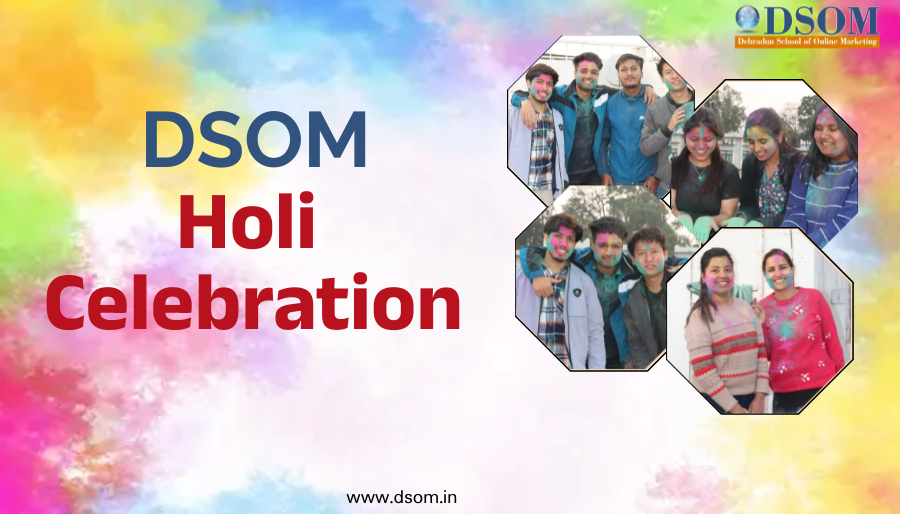
The Dehradun School of online Marketing (DSOM) is gearing up to celebrate the vibrant festival of Holi with a fun-filled party for its students and staff. Scheduled for 24 March 2024 the event promises to be a joyous occasion filled with colors, music, and delicious food. This annual tradition at DSOM fosters a strong sense of community and cultural exchange. Students and staff from all backgrounds come together to celebrate the triumph of good over evil, symbolized by the vibrant colors thrown during the festival. The Holi party will be held at DSOM. The highlight of the event, of course, will be the color throwing session, where participants can indulge in playful exchanges of vibrant powders and water guns. Organizers have ensured a safe and enjoyable environment for all. Dry and eco-friendly colors will be provided, along with designated areas for color play. The celebration will extend beyond the color throwing. The organizers have planned a series of engaging activities, delicious Food stalls serving a variety of treats, and lively music that will keep everyone entertained throughout the day. “Holi is a festival that brings people together, and we are delighted to host this event for our students and staff,” said Mr. Vikash Sharma, Director DSOM . “This is a wonderful opportunity to celebrate our diverse community, create lasting memories, and strengthen the bonds between students, faculty, and staff.” The DSOM Holi party is a much-anticipated event, and organizers expect a large turnout. It promises to be a day filled with laughter, joy, and the spirit of togetherness.