The Evolution of VFX in the Animation & Video Editing Industry
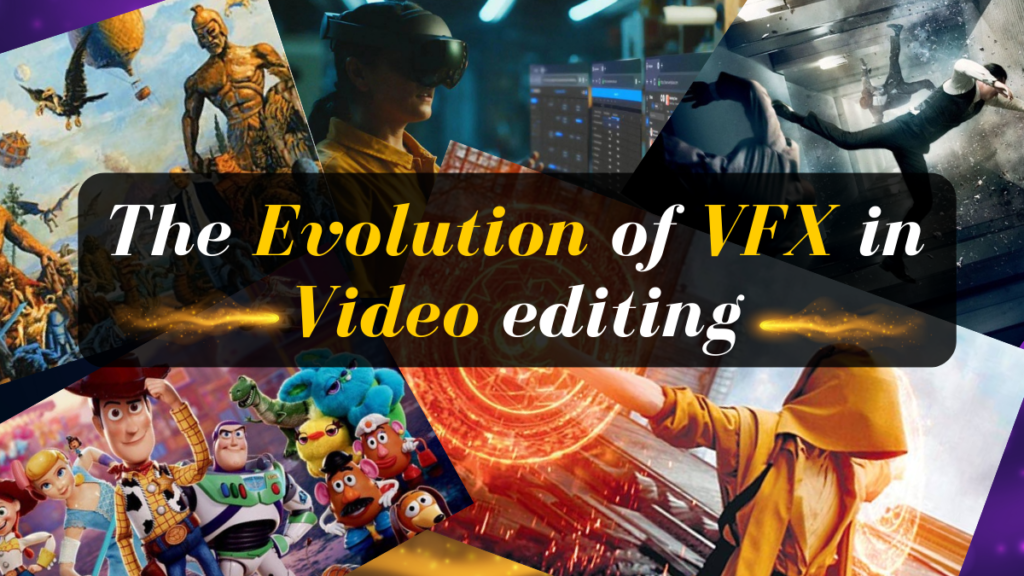
Introduction The Animation and Video Editing industry has undergone a seismic transformation over the years, primarily due to the rapid evolution of Visual Effects (VFX). VFX has become an integral part of the industry, enabling filmmakers and content creators to bring their creative visions to life in ways that were once considered impossible. In this blog, we’ll take you through the incredible journey of how VFX has evolved and revolutionized the animation and video editing industry. The Birth of VFX The origins of VFX can be traced back to the early days of filmmaking. One of the earliest examples of visual effects dates to the late 19th century with Georges Méliès, a French filmmaker renowned for his use of practical effects and stop-motion animation. Méliès’s “A Trip to the Moon” (1902) stands as a classic example of early VFX, featuring groundbreaking techniques that laid the foundation for future developments in the industry. The Emergence of Practical Effects In the early to mid-20th century, practical effects were the primary means of achieving visual effects in cinema. Innovations like matte paintings, miniatures, and rear projection techniques were employed to create fantastical worlds and scenes. A notable example is the work of Ray Harryhausen, who used stop-motion animation to bring mythical creatures to life in films like “Jason and the Argonauts” (1963). These practical effects showcased the creativity and dedication of early VFX artists. The Computer Revolution The true revolution in VFX came with the advent of computer technology. The late 20th century saw the emergence of computer-generated imagery (CGI), which completely transformed the animation and video editing industry. George Lucas’s “Star Wars” franchise is often cited as a game-changer in this regard, as it introduced groundbreaking CGI effects in films like “The Phantom Menace” (1999). Digital Tools and Software The development of specialized software and digital tools accelerated the evolution of VFX. Software packages like Adobe After Effects, Autodesk Maya, and Cinema 4D became essential tools for animators and video editors. These platforms allowed for greater precision and control in creating visual effects, from 2D animations to complex 3D renderings. The Rise of 3D Animation The evolution of VFX in animation was marked by the shift from 2D to 3D animation. Pixar’s “Toy Story” (1995) is often considered a watershed moment in this transition. With the use of 3D computer animation, filmmakers could create more lifelike characters and immersive worlds. This shift had a profound impact on the industry, leading to a renaissance in animated films and series. Realistic Characters and Motion Capture As technology advanced, VFX artists gained the ability to create realistic characters by incorporating motion capture technology. Films like “Avatar” (2009) demonstrated how motion capture could be used to translate an actor’s performance into a digital character. This technology not only enhanced the visual quality of animations but also allowed for more expressive and emotionally resonant characters. Simulations and Fluid Dynamics VFX is not limited to characters and environments; it also plays a crucial role in simulating natural phenomena. The development of fluid dynamics and physics simulations allowed for the creation of realistic water, fire, smoke, and other natural elements. These advancements contributed to the immersive quality of action sequences and fantasy worlds in films like “Pirates of the Caribbean” (2003) and “Interstellar” (2014). The Marvel Cinematic Universe The Marvel Cinematic Universe (MCU) is a testament to how VFX has become an essential part of modern filmmaking. The franchise features an array of superpowered characters, otherworldly settings, and epic battles, all made possible through the integration of VFX. Films like “The Avengers” (2012) and “Doctor Strange” (2016) showcase the complexity and impact of VFX in contemporary cinema. The Fusion of Practical and Digital Effects Modern VFX is not limited to purely digital creations. Filmmakers often combine practical and digital effects to achieve the desired result. Christopher Nolan’s “Inception” (2010) is a prime example of how the blending of practical stunts with computer-generated environments can create mind-bending visuals. VR and AR in VFX Virtual Reality (VR) and Augmented Reality (AR) technologies have begun to shape the future of VFX. These immersive technologies offer new ways to engage audiences and create interactive experiences. VR allows viewers to step inside virtual worlds, while AR enhances real-world environments with digital elements. This expansion of VFX into the realm of immersive technologies is an exciting development that opens up endless creative possibilities. Conclusion The evolution of VFX in the animation and video editing industry has been a remarkable journey, marked by technological breakthroughs and creative innovation. From the early days of practical effects to the rise of CGI, 3D animation, and the integration of VR and AR, VFX has continually pushed the boundaries of what’s possible in storytelling and visual spectacle. As technology continues to advance, we can only imagine the stunning and imaginative VFX that the future holds for the industry.
The Power of Social Media Marketing: Strategies That Drive Results
Social media has completely changed how companies interact with their target market. The potential for reaching and engaging customers has never been higher thanks to the billions of active users across numerous platforms. This article will examine the effectiveness of social media marketing and the approaches that can help businesses achieve measurable success. We will explore tried-and-true strategies that can take your social media marketing efforts to new heights, from building a strong online presence to utilising user-generated content. Establish Your Goals and Target Audience: Prior to engaging in social media marketing, it’s critical to establish your objectives and pinpoint your target market. Whether your goal is to raise brand awareness, increase website traffic, or increase sales, having specific objectives will help you plan your strategy. You can effectively create content that resonates with your target audience by understanding their demographics, interests, and behaviours. Establish a Consistent Brand Identity: Social media marketing relies heavily on consistency. Building recognition and trust through a consistent brand identity across all of your social media profiles is beneficial. Consistently use brand elements like logos, colours, and voice. Create compelling bios and visually appealing profile pictures that reflect the character and values of your brand. You can increase your credibility and draw customers who identify with your brand by presenting a consistent brand image. Engage and Interact with Your Audience: Social media is a place for meaningful interactions, not just a platform for broadcasting information. Engaging with your audience increases loyalty and fosters a sense of community. React quickly to remarks, messages, and mentions. By asking questions, conducting surveys, and requesting feedback, you can promote conversation. Engage in relevant industry discussions and establish connections with influencers and thought leaders. You can develop stronger relationships with your audience and turn them into brand evangelists by encouraging engagement. Produce Useful and Shareable Content: The foundation of social media marketing is content. Create valuable, high-quality content for your target audience that solves problems or entertains, informs, or inspires them. Use a variety of media types, such as in-depth articles, captivating images, videos, and infographics. Put your efforts into producing content that is compatible with the tastes and interests of your audience. Incorporate social sharing buttons and CTAs into your content to further promote social sharing. Reach, engagement, and brand exposure may all increase when your audience finds your content to be valuable and shareable. Utilise Influencer Marketing’s Power: Influencer marketing is now a potent tool for social media promotion. Working with influencers who support your brand can greatly increase your credibility and reach. Find industry or niche influencers who genuinely connect with your target audience. Work together to develop genuine sponsored content or implement takeover campaigns. Your brand’s message can be amplified and conversions can be increased by utilising influencers’ existing following and their knowledge. To maintain authenticity, make sure the influencer’s values and content strategy coincide with those of your brand. Utilise Analytics and Data: Social media platforms offer a wealth of analytics and data that can be used to improve your strategies. Track important metrics like engagement, reach, click-through rates, and conversions using social media analytics tools. Examine the data to spot trends, comprehend the preferences of your audience, and adjust your content strategy as necessary. Make data-driven decisions and boost the efficiency of your social media marketing campaigns by continuously monitoring and changing your strategy based on the insights you learn from analytics. In conclusion: social media marketing provides businesses with unmatched chances to connect with their target market. Clear objectives, a unified brand identity, audience engagement, the delivery of valuable content, and the use of influencers
Nurturing Digital Well-being: Understanding the Psychology and Overcoming Challenges
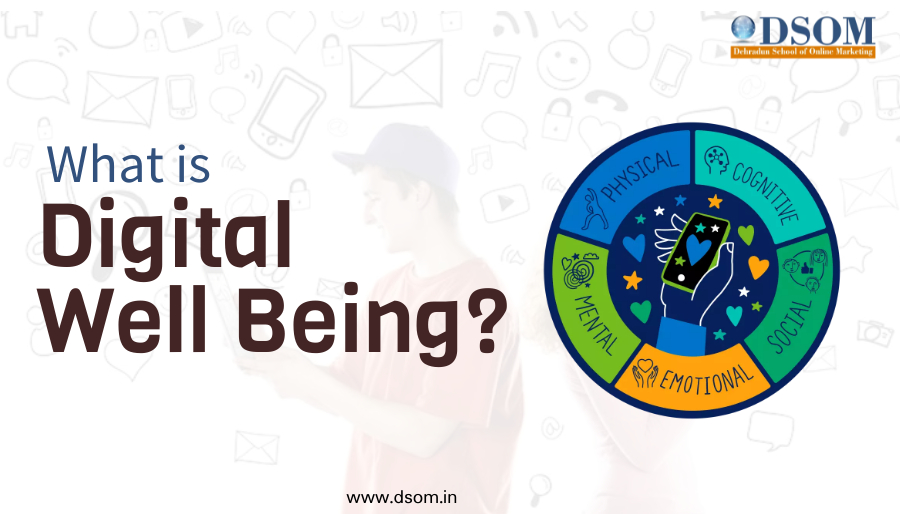
In an age where our lives are intricately interwoven with technology, achieving and maintaining digital well-being has become an essential aspect of our overall health. From smartphones to laptops, social media to streaming services, our reliance on digital devices has significantly impacted our daily lives Yet, the psychological implications and challenges related to digital well-being often go overlooked. Understanding the psychology behind digital well-being and learning how to overcome its challenges are crucial for fostering a healthier relationship with technology. What is Digital Well-Being ? Digital Well-being refers to the state of your overall health and happiness in relation to your digital or online life. It involves managing your use of technology in a way that promotes a healthy balance between the time you spend online and offline, ensuring that technology enhances your life rather than causing stress or negative effects on your mental or physical health. It involves being mindful of screen time, setting boundaries, and using technology in a way that supports your well-being. The Psychology Behind Digital Well-being 1. Instant Gratification and Dopamine Response: Our interaction with technology often triggers the brain’s reward system. Likes on social media, notifications, and quick access to information create a cycle of instant gratification, releasing dopamine—the feel-good neurotransmitter. This cycle can lead to addictive behaviors and compulsive device usage. 2. Fear of Missing Out (FOMO): The fear of missing out drives constant engagement with digital platforms. Social media feeds and the constant stream of updates create a sense of urgency, compelling individuals to stay connected, often at the expense of their well-being. 3. Comparison and Self-Esteem: The curated nature of online content can contribute to feelings of inadequacy and low self-esteem. Constant exposure to idealized images and lifestyles can foster unhealthy comparisons, affecting mental health. 4. Information Overload and Cognitive Overwhelm: The flood of information from various sources can overwhelm cognitive abilities, leading to reduced focus, increased stress, and difficulty in decision-making. Overcoming Challenges for Digital Well-being 1. Establishing Boundaries: Set clear boundaries for technology use. Designate tech-free zones or specific times for device usage to maintain a healthy balance between online and offline activities. 2. Mindful Consumption: Practice mindful tech consumption by consciously engaging with digital content. Be aware of your emotions and reactions while using technology. Take breaks and evaluate the impact of your online activities on your well-being. 3. Digital Detox and Unplugging: Periodically disconnect from digital devices to recharge mentally. Engage in activities that don’t involve screens—exercise, hobbies, or spending quality time with loved ones—to rejuvenate your mind. 4. Curating Online Presence: Curate your online environment by unfollowing accounts that negatively impact your self-esteem. Limit exposure to content that triggers stress or anxiety. 5. Prioritizing Human Connections: Foster meaningful offline connections to counterbalance digital interactions. Invest time in face-to-face interactions, deep conversations, and shared experiences. 6. Tech Use Reflection: Regularly reflect on your tech usage patterns. Use tools or apps that track screen time and offer insights to help you make informed decisions about your digital habits. Conclusion Digital well-being is not just about reducing screen time; it’s about fostering a healthy relationship with technology. Understanding the psychological impacts of our digital interactions and implementing strategies to mitigate negative effects are crucial steps toward achieving a balanced and fulfilling life in today’s digitally immersed world. By prioritizing mindful consumption, setting boundaries, and nurturing offline connections, we can cultivate a harmonious relationship with technology that enhances our well-being rather than compromising it.
The Impact of AI on the Future of Digital Marketing
1. Enhancing Personalization and Customer Experiences One of the most remarkable aspects of AI lies in its ability to analyze vast amounts of data in real-time, allowing marketers to gain deep insights into consumer behaviour and preferences. AI-powered algorithms can process user interactions, purchase histories, and online behaviours to create detailed customer profiles. This wealth of information enables marketers to craft highly personalized and relevant content, ads, and recommendations, leading to improved engagement and conversion rates. Imagine a scenario where a potential customer visits an e-commerce website. Through AI, the website can instantly analyze the user’s past interactions, understand their preferences, and display product recommendations tailored to their individual tastes. This level of personalization not only enhances user experience but also increases the likelihood of making a sale. 2. Precision Targeting and Audience Segmentation Gone are the days of casting a wide net and hoping for the best. AI-driven tools empower marketers to refine their targeting strategies with unparalleled precision. By analyzing data from various sources, including social media, search patterns, and demographic information, AI can identify distinct audience segments and create hyper-targeted campaigns. For instance, a fitness apparel brand can utilize AI to identify specific segments within their larger audience, such as fitness enthusiasts, yoga practitioners, or marathon runners. This allows them to tailor their marketing messages to resonate with the unique interests and motivations of each group, resulting in higher engagement and conversion rates. 3. Data-Driven Insights and Decision Making In the age of information, data is king. AI equips digital marketers with the tools to extract actionable insights from complex datasets, enabling data-driven decision-making. Marketers can analyze trends, patterns, and correlations across various channels to optimize their strategies continually. Consider a scenario where a software company is launching a new product. By harnessing AI-powered analytics, they can track the performance of different marketing channels in real-time. If they notice that a particular social media platform is driving the most engagement and conversions, they can allocate more resources to that channel, ensuring maximum ROI. 4. Streamlining and Automating Routine Tasks AI-powered automation is a game-changer for digital marketers. Mundane and repetitive tasks such as email marketing, social media posting, and ad optimization can be efficiently handled by AI-driven tools. This liberates marketers from time-consuming chores, allowing them to focus on high-level strategy and creativity. Picture a scenario where a marketing team needs to schedule multiple social media posts across various platforms. Instead of manually logging in and posting each update, AI can schedule and publish posts at optimal times, ensuring maximum visibility and engagement. 5. Predictive Analytics for Effective Campaigns The predictive power of AI is a true marvel. By analyzing historical data and identifying patterns, AI can forecast future trends and outcomes. This capability is a game-changer for campaign planning and resource allocation. Imagine a fashion retailer gearing up for a seasonal sale. Through predictive analytics, AI can anticipate the products likely to be in high demand based on previous sales trends, enabling the retailer to stock up on those items and create targeted promotional campaigns to maximize revenue. 6. AI can forecast future The rise of voice-activated devices has ushered in a new era of search behaviour. AI plays a pivotal role in optimizing content for voice search, which often differs from traditional text-based queries. Marketers need to adapt their strategies to ensure their brands remain visible in this voice-activated landscape. With AI, marketers can analyze voice search patterns to identify common phrases and conversational tones used by users. By integrating these insights into their content and SEO strategies, brands can position themselves as authoritative sources for voice searches, driving valuable organic traffic. 7. Revolutionizing Content Creation AI is not only a tool for analysis; it’s also a creator. AI-powered tools can generate content, including articles, social media posts, and product descriptions. While human creativity remains essential, AI can assist in generating consistent, high-quality content at scale. Consider a scenario where a travel company needs to produce travel guides for various destinations. AI can assist in generating the initial drafts by gathering information from reputable sources and creating structured content. Human editors can then refine and enhance the content, ensuring it aligns with the company’s voice and style. At last what we could expect from Ai, Digital Marketing collaboration? The future of digital marketing is undeniably intertwined with the growth of Artificial Intelligence. From enhancing personalization and customer experiences to revolutionizing content creation and optimizing campaigns, AI is reshaping the industry landscape in ways that were once unimaginable. As marketers embrace AI-powered technologies, they position themselves at the forefront of innovation, ready to harness the full potential of this transformative force. The integration of AI into digital marketing strategies holds immense promise. As the technology continues to advance, marketers who leverage its capabilities are poised to outperform competitors, create meaningful connections with their audience, and achieve remarkable results across the digital landscape. Embracing AI is not just an option—it’s a strategic imperative for any business looking to thrive in the future of digital marketing.
The Rise of Video Editing: A Crucial Skill in 2026
In 2026, video editing has emerged as one of the most sought-after skills in the digital landscape. With the proliferation of video content across social media, streaming platforms, and corporate communications, the demand for skilled video editors has skyrocketed. This article delves into why video editing is an essential skill in 2026, who can learn it, the prerequisites for starting a course, the ideal laptop configuration for video editing, considerations before joining an institute, and the salary prospects for video editors in India. Why Video Editing is an Emerging Skill in 2026 The digital age has transformed how we consume content, with video becoming the dominant medium. From YouTube and TikTok to corporate training videos and online courses, video content is everywhere. This surge video content has created a massive demand for skilled video editors who can craft compelling narrating visually appealing content. It is not just about cutting and splicing footage; it involves storytelling, creativity, and technical expertise. As businesses and individuals strive to create engaging content, the role of a video editor has become indispensable. Who is Eligible to Learn Video Editing? It is a versatile skill that can be learned by anyone with a passion for storytelling and creativity. There are no strict eligibility criteria, but having a background in media, communication, or graphic design can be advantageous. Students, professionals, and hobbyists can all benefit from learning video editing. Whether you are a content creator, marketer, filmmaker, or someone looking to enhance your digital skills, It can open up numerous opportunities. Requirements Before Starting a Video Editing Course Before embarking on a video editing course, there are a few prerequisites to consider: Basic Computer Skills: Familiarity with operating systems, file management, and basic software applications is essential. Understanding of Film and Media: A basic understanding of film and media concepts can be helpful, though not mandatory. Creative Mindset: It requires a creative approach to storytelling and visual composition. Technical Aptitude: Comfort with learning new software and tools is crucial, as video editing involves using specialized software like Adobe Premiere Pro, Final Cut Pro, and Avid Media Composer. Ideal Laptop Configuration for Video Editing It is a resource-intensive task that requires a powerful laptop. Here are the recommended specifications for a video editing laptop in 2026: Processor: Multi-core processors like Intel Core i7/i9 or AMD Ryzen 7/9 for efficient rendering and multitasking. RAM: At least 16GB of RAM, preferably 32GB, to handle large video files smoothly. Graphics Card: Dedicated graphics cards such as NVIDIA GeForce RTX for enhanced rendering speeds and playback quality. Storage: Minimum 1TB SSD with NV Me technology for fast read/write speeds. Display: High-resolution displays (4K or 2.8K) with wide color gamut for accurate color representation. Battery Life: Aim for 8-10 hours of battery life to keep you editing on the go. Considerations Before Joining a Video Editing Institute Choosing the right video editing institute is crucial for your learning journey. Here are some factors to consider: Curriculum: Ensure the institute offers a comprehensive curriculum that covers both basic and advanced video editing techniques. Faculty: Look for experienced instructors with industry expertise. Facilities: Check if the institute provides access to high-end editing software and equipment. Placement Support: Institutes with strong industry connections and placement support can help you secure job opportunities. Reviews and Reputation: Research the institute’s reputation and read reviews from former students Salary Package of a Video Editor in India The salary of a video editor in India varies based on experience, skills, and location. On average, a video editor can earn between ₹3 LPA to ₹9 LPA. Entry-level video editors with less than one year of experience can expect to earn around ₹2.39 LPA, while experienced editors with over five years of experience can earn up to ₹8.92 LPA. Conclusion In conclusion, it is a dynamic and rewarding skill that is gaining prominence in 2026. With the right training and equipment, anyone can learn video editing and tap into the vast opportunities it offers. Whether you are looking to enhance your career prospects or pursue a creative passion, it is a valuable skill to have in today’s digital world.
Top 10 Free Paraphrasing Tools for Writers & SEO Experts 2023

Whether you are a content writer that needs to write an article daily or an SEO expert that need to rank their website with different backlinks, they always face a difficulty to say same thing with new prospective or words is always challenging. So, this article helps you rephrase or generate new, unique content quickly and easily. There are now plenty of free paraphrasing tools for SEO Experts. So, if you are stuck in some ideas, or want new ideas, you can use any of the tool for free. How Paraphrasing Tools Work? Paraphrasing tools has AI function that work on advance Algorithms to generate new versions of existing text. Paraphrasing tool scan the original content and rephrase them with new text and phrases, they also have an inbuild feature that helps your content to find grammatical errors, spelling checks and find new synonyms for the current word. Using one of them is very easy – you just have to place the content in input window and click on regenerate. It will rephrase your all content, and the magic is done. You only want to copy the content read it just once and paste it on the relevant sites. Lets have an look on the best 10 Paraphrasing tools. 1.Quillbot QuillBot is an AI writing assistant that helps users improve their writing in a variety of ways. Features of Quillbot: Paraphrasing tool: With the help of AI, Quillbot’s rewrite the text in more clear and concise format. Because of the advance AI, it can detect the key points of the content and rephrase it with more attractive and engaging text. Grammar checker: The another feature of Quillbot is Grammar check, it helps the user to identify the correct grammar, spelling and punctuation errors in the text. Plagiarism checker: Quillbot also act as a plagiarism checker, it identifies and prevent the content from Plagrism. Summarizer: QuillBot’s summarizer can quickly and easily summarize long pieces of text into shorter, more concise versions. This is a great way to get the main points of a text without having to read the entire thing. Advantages of using QuillBot: It is easy to use and has a user-friendly interface. It is affordable, with a free plan that offers basic features and paid plans that offer more features and functionality. It is accurate and reliable, with a high degree of accuracy in its paraphrasing and grammar checking. It is versatile, with a variety of features that can be used for different types of writing. It is constantly being updated and improved, with new features and functionality being added all the time. 2.WordAI Word AI is an advanced and popular tool for paraphrasing among the content writers. With Advanced algorithms and AI generated capability, it can easily rephrase the content, that is meaningful and grab readers attention. Features of Word AI: Grammar and spell checking: First and foremost feature of Word AI is Grammar and Spell check, it helps you to identify the spelling errors and rectify them with correct grammar. Sentence rewriting: Word AI also helps the writers to improve the content readability, fluency and conciseness, it also helps to avoid clinches and overused phrases. Tone suggestion: It also help us to suggest tone whether you want the text in formal way or informal or persuasive, not only this it also helps the writer to choose the tone when you are not clear about the content tone. Conciseness: It help us to remove the overused phrases and make the content simple and clear that can be easily understand by the reader. Summarization: Word AI can summarize your document into a shorter, more concise version. This can be helpful if you need to provide a brief overview of your document to a busy reader. Spinbot: Spinbot is a powerful paraphrasing tool that can help you to create unique, readable, and grammatically correct content. It is a great option for personal and commercial users who are looking for a free and easy-to-use tool. Features of Spinbot: Instant spinning: Spinbot can quickly spin or rephrase the text up to 10,000 characters in length. This makes it a great tool when you are generating a fresh Content for your website, blog or other Digital platforms. Grammar accuracy: Spinbot is a powerful grammar checker to ensure that your content is Grammatically correct. This helps you to improve the readability and overall quality of your content. Paraphrasing mode: Spinbot’s paraphrasing mode allows you to set the preferred length (shorter/longer/random) for any paraphrased content. This is a great way to control the length of your content and make sure it’s tailored to your specific needs. API: Spinbot provides a robust API that allows you to integrate it with other websites and applications. This makes it a powerful tool for businesses and organizations that need to automate their content creation process. Free to use: Spinbot is completely free to use for personal and commercial purposes. This makes it a great option for budget-minded users who need a powerful paraphrasing tool. Synonym replacement: Spinbot can replace words in your text with synonyms, which helps to make your content more unique and readable. Sentence shuffling: Spinbot can shuffle the order of sentences in your text, which can help to create a more engaging and interesting read. Multi-language support: Spinbot supports a variety of languages, including English, French, German, Spanish, and Portuguese. This makes it a great tool for content creators who need to translate their content into multiple languages. Chimp Rewriter Chimp Rewriter is an AI-powered article rewriter that can help you create high-quality, original content in a fraction of the time. Here are some of its features: AI-powered rewriting: Chimp Rewriter uses artificial intelligence to rewrite your content, ensuring that it is both original and grammatically correct. Multiple languages: Chimp Rewriter can rewrite content in 12+ languages, making it a great tool for multilingual content creators. API integration: Chimp Rewriter can be integrated with a variety of other tools, such as content management systems, blogging platforms, and SEO software. This allows you to automate your
The Rise of Voice Search and its Impact on SEO

Voice search has been a ground-breaking trend in recent years, revolutionizing how people interact with technology and obtain information. As smart speakers, virtual assistants, and other voice-enabled devices proliferate, more and more consumers are choosing voice search as a hands-free way to locate information and seek solutions. he rise in voice search usage has substantial effects on search engine optimisation (SEO), changing established SEO tactics and forcing companies to adjust to this new way of doing things. This blog will examine the development of voice search and how it affects SEO. Understanding the Surge in Voice Search Because it is quick, convenient, and has a conversational tone, voice search has become increasingly popular. The ability of technology to interpret human speech has significantly advanced, making it simpler for consumers to connect with devices naturally. People now rely on voice assistants like Siri, Google Assistant, Amazon Alexa, and others for everything from weather updates to grocery shopping. Voice search’s increasing popularity is closely related to the growing use of smart speakers. These voice-activated appliances, which offer instant access to information, entertainment, and smart home control, have become typical household items. The number of smart speaker owners in the US surpassed 60 million in 2020, according to a survey by NPR and Edison Research, demonstrating the quick expansion of voice-enabled devices. The Impact on SEO The rise in voice search usage is changing SEO strategies since it presents new opportunities and difficulties for companies looking to increase their online presence. Here are some significant effects voice search has on SEO: Long-tail Keyword Emphasis: Voice searches are typically longer and more conversational than conventional text-based searches. Natural language questioning by users makes it essential to optimise for long-tail keywords and phrases. Including frequently asked queries and expressions about your company or sector might increase the likelihood that voice search results will include your website. Featured Snippets and Position Zero: Featured snippets, which are succinct, direct responses to user inquiries displayed at the top of search engine results, are frequently read aloud by voice assistants. Businesses strive to get to “Position Zero” (the featured snippet), since it boosts their chances of being chosen by voice assistants to respond to voice queries. Local SEO Optimisation: Voice searches, such as “near me” searches, are widely used for local queries. Local businesses must therefore give local SEO efforts top priority if they want to guarantee that their websites show up in voice search results for location-based queries. Structured Data and Schema Markup: Search engines may better interpret and feature relevant material in voice search results by using structured data and schema markup to provide them additional context about your content. Mobile optimisation: Mobile devices are the most common platform for voice searches. Improving user experience and SEO performance requires that your website load quickly and be mobile-friendly. Produce information in Natural Language: Producing information in the natural language of voice searches can increase your likelihood of appearing in voice search results. Use language that addresses typical user queries and offers succinct, unambiguous solutions. Contextual Relevance: Voice search queries must take context into account. You can increase your chances of showing up in voice search results by comprehending user intent and offering thorough, contextually relevant material. Adapting to the Voice Search Revolution Businesses and marketers need to reconsider their SEO tactics in order to adapt to the rise of voice search and take advantage of its potential. Here are some practical strategies to voice search optimisation: Research Voice Search Queries: Perform research to find frequent voice search terms pertaining to your field and intended audience. Concentrate on queries and long-tail keywords that are conversational. Optimize for Featured Snippets: To improve your chances of appearing in the much sought-after Position Zero, organise your material to offer clear, succinct responses to frequent questions. Create Natural Language Content: Create material that adheres to natural language and responds to user intent. Prepare frequent inquiries your audience might have, then respond to them. Emphasize Mobile Optimization: Make sure your website is responsive to mobile devices, loads quickly, and provides a seamless user experience. Leverage Local SEO: If your company has a physical location, concentrate your local SEO efforts to draw customers using voice search who are looking for nearby services or goods. Implement Structured Data: To give search engines context and increase your chances of appearing in voice search results, use structured data and schema markup. Conclusion The emergence of voice search is changing the SEO landscape and posing a challenge to companies to modify their tactics to match the needs of this new technology. To succeed in the voice search revolution, you must emphasise long-tail keywords, optimise for featured snippets, prioritise mobile, and produce content in natural language. Businesses may effectively position themselves in the era of speech-powered search engines and voice assistants by understanding the effects of voice search on SEO and taking proactive steps to optimise for it, grabbing a larger audience and staying ahead of the competition.
10 Effective Tips to grow your YouTube Channel in Hindi
अपने YouTube चैनल को प्रमोट करने के 10 प्रभावी टिप्स ( 10 Effective Tips to grow your YouTube Channel in Hindi) YouTube एक बहुत ही महत्वपूर्ण और अद्वितीय माध्यम है जिसका उपयोग वीडियो कंटेंट साझा करने और अपने दर्शकों से जुड़ने के लिए किया जा सकता है। अगर आपके पास एक YouTube चैनल है और आप चाहते हैं कि आपके वीडियो को और अधिक लोग देखें और सब्सक्राइब करें, तो हम आपके लिए लाए हैं “YouTube चैनल को प्रमोट करने के 10 प्रभावी टिप्स”। इस लेख में हम आपको वो रहस्यमय तरीके दिखाएंगे जिनका उपयोग करके आप अपने YouTube चैनल को आगे बढ़ा सकते हैं और एक बड़े दर्शक समूह को आकर्षित कर सकते हैं। तो चलिए, जानते हैं कि कैसे आप अपने YouTube चैनल का प्रमोशन कर सकते हैं और अपने माध्यम से वीडियो कंटेंट को बढ़ावा दे सकते हैं। 1.संवेदनशील ब्रांडिंग (Consistent Branding): अपने चैनल के लिए एक अद्वितीय और यादगार ब्रांड पहचान बनाएं। इसमें एक आकर्षक लोगो डिज़ाइन करना, एक दृष्टिकर्षक बैनर बनाना, और एक संवेदनशील रंग योजना का उपयोग करना शामिल है। एक स्पष्ट ब्रांड दर्शकों के लिए आपके चैनल को तुरंत पहचानने में मदद करेगा। 2.उच्च गुणवत्ता की सामग्री (High-Quality Content): बढ़िया सामग्री ( content) से बढ़कर कुछ नहीं. उच्च गुणवत्ता वाले उपकरणों में निवेश करें | वीडियो संपादन तकनीकों को सीखें, और मूल्यवान और आकर्षक सामग्री बनाने पर ध्यान केंद्रित करें जो आपके लक्ष्य दर्शकों की रुचियों को पूरी करती है। सामग्री की गुणवत्ता में स्थिरता दर्शकों को और ज्यादा आकर्षित करेगी और उन्हें और आकर्षित करेगी। 3.वीडियो शीर्षक और विवरण को अपग्रेड करें ( Optimize Video Titles and Descriptions): आकर्षक वीडियो शीर्षक और जानकारीपूर्ण विवरण बनाएं। खोज इंजन अपवादन (SEO) को बेहतर बनाने और दर्शकों को अपने वीडियो को आसानी से खोजने में मदद करने के लिए संबंधित कीवर्ड्स (keywords) शामिल करें। क्लिक को प्रोत्साहित करने और फिर भी आपकी सामग्री को सटीकता से वर्णन करते हुए मोहक भाषा का उपयोग करें। 4.अपने दर्शकों के साथ जुड़े रहें (Engage with Your Audience): टिप्पणियों का उत्तर दें, सोशल मीडिया पर अपने दर्शकों के साथ जुड़ें, और लाइव क्यू एंड ए कार्यशाला या टिप्पणी पठन वीडियो का होस्ट करने का विचार करें। अपने दर्शकों के साथ मजबूत जड़ बनाने का प्रयास करने से ज्यादा रेटेंशन दरें और बढ़ी हुई वफादारी के साथ जुड़ सकती है। 5.दूसरों के साथ सहयोग करें (Collaborate with Others): अपने ताक (niche)के फेलो (fellow) यूट्यूबरों के साथ मिलकर काम करें। सहयोग आपके चैनल को एक बड़े दर्शकों के सामने ला सकता है और ताजा दृष्टिकोण प्रदान कर सकता है। अपने सहयोग को आपकी सामग्री और मूल्यों के साथ मेल करने के लिए सुनिश्चित करने के लिए चुनौतीपूर्ण बनाएं। 6.सोशल मीडिया का उपयोग करें (Leverage Social Media): अपने वीडियो को अलग-अलग सोशल मीडिया प्लेटफार्मों पर प्रमोट करें, जैसे कि Instagram, Twitter, Facebook, । टीज़र साझा करें, पर्दे के पीछे की सामग्री साझा करें, और अपने फॉलोवर्स के साथ जुड़ें। सोशल मीडिया आपके YouTube चैनल पर ट्रैफ़िक ड्राइव कर सकता है और आपके दर्शकों के साथ गहरे संबंध बनाने में मदद कर सकता है। 7.आंखों को आकर्षित करने वाली थंबनेल बनाएं (Create Eye-Catching Thumbnails): ऐसी थंबनेल्स डिज़ाइन करें जो दृश्य के संवादिक अंश के रूप में होती है और आपके वीडियो के संवादिक सामग्री के साथ मेल खाती है। थंबनेल्स खोज परिणामों और सिफारिशों में बाहर आने के लिए उभरने के रूप में काम करती हैं। दर्शकों को खींचने के लिए विरोधात्मक रंग, बड़े पाठ, और आकर्षक चित्रों का उपयोग करें। 8.स्थिर तारीख़ों का पालन करें (Consistent Posting Schedule): एक स्थिर पोस्टिंग तारीख़ का निर्धारण करें ताकि आपके दर्शकों को जुड़े रहने और सूचित करने में मदद मिल सके। चाहे यह हफ्ते में एक बार हो या हफ्ते के कई बार, अपने तारीख़ों का पालन करके अपने दर्शकों के बीच उत्सुकता और विश्वास को बढ़ावा देने में मदद मिलेगा। 9.YouTube समुदायों में शामिल हों (Join YouTube Communities): संबंधित YouTube समुदायों और मंचों में भाग लें। विचार विमर्शों में भाग लेने, अपने विशेषज्ञता को साझा करने, और सहायक दृष्टिकोणों को प्रदान करने से आप प्रदर्शन और प्रतिष्ठा को बढ़ा सकते हैं। 10.गैर-प्रत्यास्थता करें (Monitor Analytics): अपने YouTube एनालिटिक्स का पर्यावलोकन रखें ताकि आप समझ सकें कि क्या काम करता है और क्या नहीं। अपने दर्शकों के व्यवहार में पैटर्न श्रेणीबद्ध करें, वीडियो प्रदर्शन को ट्रैक करें, और अपनी रणनीति को अनुकूलित करें। इस डेटा-मूलित दृष्टिकोण से आप अपने सामग्री और प्रमोशनल प्रयासों को सवांचित करने में मदद करेंगे। निष्कर्षण (Conclusion): आपके YouTube चैनल की दृश्यता बढ़ाने और एक बड़े दर्शकों तक पहुँचने के लिए अपने चैनल को प्रमोट करना महत्वपूर्ण है। उच्च गुणवत्ता की सामग्री का निरंतर निर्माण करके, अपने दर्शकों के साथ संवाद करके, और इन दस सुझावों का उपयोग करके आप अपने YouTube चैनल की दृश्यता बढ़ाने में सफलता प्राप्त करने के लिए कहीं न कही जा रहे हैं। ध्यान दें कि YouTube पर सफलता पाने में समय और समर्पण चाहिए, इसलिए अपने प्रयासों में सब्र और सहयोगी बने रहें।
The Future of Digital Advertising: What You Need to Know
Introduction The digital advertisement industry is rapidly transforming through the updating of technologies and how human beings adapt to changing preferences with strong regulation of data privacy. For 2026, money spent on digital ads in the world is expected to cross over $700 billion, growing 10% more compared to last year, 2025. This growth happens for three fundamental reasons: More Online Platforms: The number of websites, apps, and social media platforms supporting advertising is growing. This provides more opportunities for advertisers to reach out to their audiences. Video Content Popularity: Engagement wise, short videos, especially those on Instagram and YouTube, have received the most attention. As it attracts masses more than text or pictures, companies are serving up short videos in greater numbers. AI Advancements Artificial intelligence: is helping businesses get to know customer preferences better, create customized ads, and determine where and when such ads will be made for optimal effects. Companies must adopt these changes and come up with innovative ways to go about advertising to stay ahead of the already crowded trends. The Shift Toward Privacy-Friendly Ads Against the backdrop of third-party cookies’ demise, privacy becomes a new bedrock upon which digital advertising now stands. Google and Apple’s services have moved toward even more austere measures in managing information on users, and advertisers are moving toward a privacy-first approach. For example, Google’s Privacy Sandbox, launching in 2026, will not just eliminate cookies; it will also substitute for them with privacy-compliant tracking through cohort-based models. It is no longer about compliance but about trust on the consumer’s part. Major Events in 2026 Contextual Targeting: The ad will appear based on the content a page contains instead of user behavior-less intrusive. First-Party Data: Under this, companies incur highly expensive capabilities to obtain first-party data directly from customers through a company website, application, or loyalty programs. For Example: A skincare brand will use contextual advertisements to place anti-aging cream ads on wellness blogs. Unlike traditional methods, these ads align with the content, enhancing relevance without tracking user data. Video Advertising Dominance Video advertising is most powerful in 2026, with more than 40% of total digital ad spending. For example, YouTube and Instagram are the first source of engagement with short-form videos that incite quite high engagement rates. Why Video Works High Engagement: Videos capture attention more effectively than static ads, with completion rates exceeding 80% for engaging content. Multi-Platform Integration: Short-form videos are adaptable to various platforms, making them ideal for cross-channel campaigns. Example: Coca-Cola’s “Real Magic” campaign utilized YouTube and Instagram Reels to deliver short, emotionally resonant stories. The campaign achieved millions of views and significantly boosted brand recognition. Native Advertising in 2026 Native advertising is on the increase because audiences want to be less bothered by annoying ad experiences. Brands can engage users without disrupting their browsing through seamless integration of ads and content. By 2026, native ads are likely to grow by 14%, beating traditional display ads both on click-through and conversion rates. Benefits of Native Ads Trust and Credibility: Native ads appear more like editorial content, reducing resistance from viewers. Higher Engagement: Blended ads encourage users to interact more frequently than standalone ads. Example Spotify’s sponsored playlists allow subtle inclusions of brands into the listening experiences of users, thereby not breaking immersion and basically promoting products. Augmented Reality (AR) in Ads AR is revolutionizing advertising in 2026, creating immersive experiences that have never been so engaging among consumers. With more than 1 billion AR-enabled devices worldwide, campaigns that had not previously been possible have now become available, and brands have a new opportunity to showcase product in interactive ways. How AR Enhances Participation Try-Before-You-Buy: Virtual fitting rooms and makeup try-ons give consumers confidence in their purchases. Interactive Storytelling: AR ads invite users to participate, transforming passive viewing into active exploration. Example These include brands such as Nike’s AR-powered app, where the virtual try on of shoes applies the augmented reality capabilities to let customers point their smartphone camera at the feet and shows what different models would look on them. Such advancements not only enrich shopping experience but also help make customers better confident while purchasing, which in turn boast up revenues and steadily bring down return rates. How to Optimize Your Ad Spend? ROI maximization in a competitive market needs strategic planning and data-driven decisions. For 2026, AI, automation, and analytics are used by advertisers to fine-tune their campaigns to come to a better outcome. Tips for 2026 Embrace AI Tools: his is actually made better by AI platforms. Like Google’s Performance Max campaigns that use machine learning to suggest ads that work best when shown across multiple surfaces. Invest in High-ROI Formats: that is, keep video and native advertising, as they consistently have higher ROI. Experiment with Programmatic Ads: Automated ad buying saves time and ensures placement on the most relevant platforms. Example Small Business Up 30% in ROI with AI Tools to Analyze Customer Data; Builds on Personalized Email Campaigns. Conclusion Innovation and adaptability are the buzzwords that frame the digital ad landscape in 2026. As an industry, innovation in consumer-centric and privacy-friendly approaches to AR-powered campaigns makes it craft experiential solutions par with the expectations of consumers and regulators alike. Learning without execution is nearly useless today. Do this today. Learn these strategies in our coaching program. Get upfront access to cutting-edge techniques and transform your advertising game. Make 2026 the best year ever!
Unlocking Success: Effective Ways to Boost Your Website’s Ranking

In the ever-evolving landscape of the internet, ensuring your website ranks high on search engine results pages is crucial for attracting organic traffic and reaching your target audience. Search Engine Optimization (SEO) is the key to unlocking this success. In this blog, we’ll explore effective strategies to enhance your website’s ranking and visibility. 1. Content is King: Quality over Quantity The foundation of any successful SEO strategy is high-quality content. Regularly update your website with relevant, valuable, and engaging content that addresses the needs and interests of your audience. Google and other search engines prioritize websites that provide informative and fresh content. 2. Keyword Optimization: Know Your Audience Conduct thorough keyword research to understand the terms and phrases your target audience is using in search queries. Integrate these keywords naturally into your content, titles, headings, and meta descriptions. Strive for a balance between optimization and readability. 3. On-Page SEO: Fine-Tune Your Elements Optimize on-page elements such as title tags, meta descriptions, and headers. Craft compelling and concise meta descriptions that encourage clicks. Keep your URL structure clean and include relevant keywords. Ensure images have descriptive alt tags for accessibility and SEO. 4. Mobile Optimization: Cater to the Mobile Audience Given the rise of mobile internet usage, ensure your website is mobile-friendly. Google prioritizes mobile-responsive sites, and a positive mobile experience contributes significantly to your overall SEO performance. 5. Speed Matters: Optimize Page Load Time Improve your website’s loading speed. Users and search engines favor fast-loading pages. Compress images, leverage browser caching, and consider a Content Delivery Network (CDN) to distribute content efficiently. 6. Backlink Building: Quality Over Quantity Build a strong backlink profile by acquiring high-quality links from reputable websites. Create shareable content that naturally attracts backlinks. Foster relationships within your industry to collaborate on content and gain exposure. 7. User Experience: Keep Visitors Engaged Enhance user experience by ensuring easy navigation and a clean, user-friendly design. Reduce bounce rates by providing valuable content and a clear call-to-action. A positive user experience is not only appreciated by visitors but also recognized by search engines. 8. Social Signals: Leverage the Power of Social Media Engage with your audience on social media platforms. Share your content, encourage social sharing, and participate in relevant discussions. Social signals play a role in search engine algorithms and can contribute to improved rankings. 9. Technical SEO: Ensure a Smooth Crawl Optimize your website for search engine crawlers. Use a robots.txt file and sitemap.xml to guide crawlers efficiently. Fix broken links, implement proper redirects, and regularly audit your website’s technical elements. 10. Local SEO: Connect with Your Local Audience If your business has a local presence, optimize for local search. Claim and update your Google My Business listing, encourage customer reviews, and ensure accurate business information across online directories. 11. Content Marketing: Strategy for Success Develop a robust content marketing strategy. Consistently produce valuable, shareable content that aligns with your audience’s interests. Consider guest posting on reputable websites in your industry to build authority and attract a wider audience. 12. Analytics and Monitoring: Stay Informed Utilize tools like Google Analytics to monitor your website’s performance. Analyze user behavior, track key performance indicators, and adapt your SEO strategy based on data insights. Regular monitoring is crucial for staying ahead in the dynamic world of SEO. In conclusion, achieving a higher website ranking involves a multifaceted approach. By focusing on content quality, optimizing technical elements, and staying attuned to user needs, you can steadily climb the search engine ranks. Keep abreast of industry trends, algorithm updates, and user preferences to refine your strategy and enjoy sustained online success.