Aniket (DSOM Student) – To DSOM’s Trainer I will give 10/10

Q1. Welcome, Please introduce yourself to our Readers? Hi ! I am Aniket Sharma. I am from Himachal Pradesh. I was pursuing BA from Paonta Sahib. Q2. Please tell us, why you decide to go for Digital Marketing? I was pursuing BA from Paonta Sahib. But I didn’t find my interest in it. I was scrolling through the internet and found some fascinating courses and from there I came to know about digital marketing. Q3. Why did you decide to join DSOM? I started searching on Google for the institute right away. Then I came accross DSOM. Q4. How was your experience with DSOM? This institute offered us every facility that a student requires. One of them is, a great and experienced teaching faculty. In this institute, every teacher initiates a good bond with all the students which provides a beneficial and healthy learning environment. Q5. Tell us the readers, how Digital Marketing helped in your career? Digital marketing has played a pivotal role in my career by significantly expanding my reach and visibility. By leveraging various digital channels and strategies, such as search engine optimization (SEO), social media marketing, email marketing, and content creation, I have been able to connect with a wider audience and effectively promote my skills and services. Q6. How would you rate DSOM Training Program on a Scale of 1-10? 10/10 Thank You DSOM for providing me with every skill that is required for my profession Q7. What would you say to Digital Marketing Aspirants? Embrace the power of digital marketing and unlock endless possibilities for your career.
The Evolution of Google’s Algorithm: From Hummingbird to BERT and Beyond
With billions of search requests processed daily, Google dominates the search engine industry. Google’s algorithm continually changes in the background to provide more relevant and accurate search results. Numerous recent updates have changed how Google interprets and ranks site content. We shall examine the development of Google’s algorithm in this blog post, from the debut of Hummingbird through the ground-breaking innovations of BERT and beyond. Understanding the Context of the Hummingbird (2013) Google’s Hummingbird upgrade, which debuted in 2013, signified a significant change in search engine optimisation (SEO). With Hummingbird, Google attempted to comprehend search queries more thoroughly, concentrating on the search intent rather than just specific keywords. More conversational and natural language searches are now possible thanks to this update, improving user experience by providing more accurate results. Rank Brain: Embracing Artificial Intelligence (2015) When Rank Brain was announced in 2015, it marked a significant improvement in Google’s algorithm. It was an AI-powered algorithm that used machine learning to decipher difficult and ambiguous search terms. Google was able to respond to previously unheard inquiries with more pertinent results because of RankBrain, which examined patterns and comprehended the connections between words. It was vital in understanding user intent and enhancing search quality. Mobilegeddon: Mobile-Friendly Websites (2015) Given the explosive increase in mobile devices, Google recognised the value of delivering a seamless user experience on mobile platforms. The Mobilegeddon update favoured mobile-friendly websites in search ranks, and was implemented in 2015. Users’ mobile browsing experiences were enhanced due to this update’s encouragement for website owners to embrace responsive design and optimise their sites for mobile use. The Rise of Featured Snippets (2017) In 2017, “featured snippets,” usually called “position zero,” became more popular. These snippets on the search results page offer succinct responses to users’ questions, providing rapid information without requiring a click-through. It is crucial for website owners to structure their content so that it appears as featured snippets and increases visibility because Google’s algorithm has gotten better at extracting pertinent snippets from web pages. BERT: Natural Language Processing (2019) A major development in search-related natural language processing (NLP) occurred in 2019 with the introduction of BERT (Bidirectional Encoder Representations from Transformers). With the use of BERT’s sophisticated machine learning methods, Google was better able to interpret more complicated inquiries since it could now perceive the context and subtleties of words within sentences. This modification significantly affected the search results, especially for long-tail and conversational inquiries. Core Updates: Regular Algorithm Improvements In addition to significant upgrades, Google frequently publishes fundamental improvements to improve its algorithm. These changes will enhance search quality, stop spamming, and honour excellent material. Core modifications frequently cause changes in search rankings, which motivates website owners to concentrate on producing quality, reliable, and user-focused content. Conclusion: Since its inception, Google’s algorithm has advanced significantly. Google keeps improving its algorithm to deliver the best search results, from the launch of Hummingbird, which placed an emphasis on understanding user intent, to the transformative potential of BERT’s natural language processing. In order to maintain their content’s relevancy and visibility in search results, digital marketers and website owners must keep up with these algorithm adjustments. We can anticipate new developments that prioritise the user experience and give even more precise and individualised search results as Google continues to improve its algorithm.
The Future Unveiled: The Role of Artificial Intelligence in Digital Marketing
Introduction: The synergistic relationship between artificial intelligence (AI) and digital marketing is poised to transform how organizations interact with their consumers as the digital era progresses. The world of digital marketing is changing as a result of AI’s capacity to process enormous volumes of data, identify trends, and make wise conclusions. In this essay, we will examine the critical part that AI will play in the development of digital marketing. Enhanced Customer Insights: AI(Artificial Intelligence) gives digital marketers the potential to quickly and effectively glean insightful information from massive volumes of data. AI algorithms can offer profound insights into specific client journeys by examining consumer behaviour patterns, preferences, and purchase histories. By personalizing their campaigns, adjusting their messaging, and providing hyper-targeted experiences, marketers are able to boost consumer happiness and conversion rates. Precise Audience Targeting: The era of bland advertising is over. With the use of AI(Artificial Intelligence), digital marketers can use cutting-edge algorithms to segment their audience with unmatched accuracy. AI algorithms are able to pinpoint the audience segments that are most appropriate for particular marketing initiatives by taking into account a variety of data points, including demographics, interests, online behaviour, and social connections. This focused strategy reduces ad waste, increases campaign efficacy, and raises ROI. Intelligent Chatbots and Virtual Assistants: Virtual assistants and chatbots powered by AI are becoming more and more common in digital marketing. These smart conversational interfaces may interact with clients in real-time, offering prompt assistance, responding to inquiries, and assisting users as they move through the buying process. Chatbots and virtual assistants may imitate human-like conversations using natural language processing (NLP) and machine learning, providing individualized recommendations and smooth client experiences round-the-clock. Automated Campaign Optimization: AI(Artificial Intelligence) automates campaign optimization by continuously assessing data and taking action based on that data. AI can improve a number of elements of digital marketing efforts, such as ad targeting, bidding schemes, and content personalization, through machine learning algorithms. By automating these procedures, marketers are free to concentrate on higher-level strategy while AI handles the challenging chore of maximizing the effectiveness of campaigns. Predictive Analytics: Marketing professionals can effectively predict consumer trends and behaviour thanks to AI’s predictive analytics capabilities. AI algorithms may find trends, anticipate client preferences, and forecast future behaviour by looking at historical data. With the help of this priceless information, marketers can proactively plan and carry out campaigns based on expected client demands, giving companies an advantage over the competition by sending the appropriate message to the appropriate audience at the appropriate time. Content Creation and Curation: AI is changing the way content is created and helping marketers create valuable and interesting content. Algorithms for natural language generation (NLG) can examine data, draw conclusions, and then turn those ideas into logical, persuasive writing. AI is also capable of curating content from many sources, giving marketers a lot of pertinent data to share with their audience. These AI-powered content solutions boost productivity, assure unified messaging across channels, and save time. Conclusion: AI’s influence on digital marketing will only grow as the technology develops. AI(Artificial Intelligence) is changing how companies interact with their customers, from improved customer insights and accurate audience targeting to intelligent chatbots, automated campaign optimization, predictive analytics, and content production. Adopting AI-powered solutions will enable digital marketers to provide individualized experiences, enhance campaign effectiveness, and spur growth in a more cutthroat environment. Businesses can stay ahead of the curve and open up new opportunities for digital marketing in the future by utilizing AI(Artificial Intelligence).
Graphic Design Trends 2026: A Look at the Future of Design

The world of graphic design is constantly evolving, and 2026 is no exception. There are a number of exciting new trends emerging that are sure to shake up the industry. Here are some of the top graphic design trends to watch for in 2026 Y2K nostalgia: The early 2000s are back in a big way, and this is reflected in the latest graphic design trends. We’re seeing a resurgence of bright colors, bold fonts, and geometric shapes. This trend is perfect for brands that want to tap into a sense of nostalgia and playfulness. Maximalism: Maximalism is another big trend in graphic design for 2026. This trend is all about excess and overstimulation. We’re seeing designs that are packed with details, patterns, and textures. This trend is perfect for brands that want to make a bold statement. Experimental fonts: Experimental fonts are also on the rise in 2026. These fonts are unique and unexpected, and they can add a lot of personality to a design. We’re seeing a lot of use of handwritten fonts, 3D fonts, and fonts that are inspired by nature. Handmade illustrations: Handmade illustrations are another trend that is gaining popularity in 2026. These illustrations are imperfect and organic, and they add a touch of human warmth to a design. This trend is perfect for brands that want to connect with their audience on a more emotional level. 3D elements: 3D elements are becoming increasingly popular in graphic design. These elements can add a sense of depth and realism to a design. We’re seeing 3D elements used in everything from logos to packaging to website design. Holographic design: Holographic design is a new trend that is sure to make a big impact in 2026. This trend uses holographic effects to create designs that are eye-catching and futuristic. Holographic design is perfect for brands that want to stand out from the crowd. These are just a few of the top graphic design trends to watch for in 2026. As the year progresses, we’re sure to see even more exciting new trends emerge. So stay tuned, and be prepared to be inspired! How to use these trends in your own designs. If you’re looking to incorporate graphic design trends into your own designs, there are a few things you can keep in mind. First, it’s important to choose the right trends for your brand. Not every trend will be a good fit for every brand. Second, you need to use the trends in a way that is consistent with your brand’s overall identity. Finally, you need to be creative and experiment with the trends to see how you can use them in new and innovative ways. With a little creativity and experimentation, you can use these trends to create designs that are both stylish and effective. So what are you waiting for? Start exploring the latest graphic design trends today!
Unraveling the Mystery of Google Fred: Understanding Its Impact on Websites

In the ever-changing world of search engine algorithms, Google constantly updates its ranking criteria to deliver the best possible results to users. One such enigmatic update that took the SEO community by storm was “Google Fred.” Since its rollout in March 2017, many website owners have scratched their heads as they witnessed significant fluctuations in their search rankings. In this blog, we’ll dive into the details of Google Fred, explore its impact on websites, and provide actionable insights for optimizing your site to stay ahead of the game. What is Google Fred? Google Fred is not an official name given by Google; it is a nickname coined by webmasters and SEO experts to refer to a series of algorithm updates that affected many websites. The updates mainly targeted websites with low-quality content and a heavy focus on aggressive advertisements. The goal of Google Fred SEO was to ensure that websites offering little to no value to users wouldn’t rank highly in search results. This aligns with Google’s primary objective of enhancing user experience and providing relevant content. Understanding the Impact Content Quality Matters: Google Fred emphasized the importance of high-quality, valuable content. Websites with thin, irrelevant, or duplicate content were adversely affected, experiencing drops in rankings and traffic. Ad-heavy Websites: Websites that overwhelmed users with excessive and intrusive ads were also impacted. These sites often sacrificed user experience for ad revenue, leading to a loss in rankings. Unnatural Link Building: Websites that employed black-hat link-building tactics to manipulate rankings also faced penalties under Google Fred. Natural and organic backlinks became crucial for maintaining a healthy online presence. Affiliate Marketing Sites: Some affiliate marketing websites were hit hard by Google Fred, especially those prioritizing monetization over content quality. Tips for Adapting to Google Fred Focus on Quality Content: Create valuable, relevant, and engaging content for your audience. Conduct keyword research to understand your target audience’s search intent and deliver content that meets their needs. Optimize Ad Placement: If you rely on ad revenue, balance ads and content. Ensure that your ads are not obtrusive or disruptive to the user experience. Eliminate Low-Quality Pages: Identify and remove thin or duplicate content from your website. Consolidate pages with similar content to avoid keyword cannibalization. Build Organic Backlinks: Focus on earning high-quality backlinks naturally through content marketing, outreach, and building relationships with other websites in your niche. Regular Site Audits: Perform periodic site audits to identify issues that may negatively impact your rankings. Use tools like Google Search Console to monitor your site’s performance and resolve any potential issues promptly. Conclusion Google Fred’s algorithm served as a reminder that search engine optimization is not about finding loopholes in algorithms but rather about delivering exceptional user experiences through valuable content and ethical practices. Websites that prioritize user needs, offer high-quality content, and maintain a seamless user experience are more likely to thrive in the dynamic world of search rankings. As Google continues to refine its algorithms, it is essential for website owners and SEO professionals to stay updated and adapt their strategies accordingly. By embracing Google’s guidelines and focusing on user-centric practices, you can navigate the ever-changing SEO landscape and ensure your website remains visible and competitive in the search results.
Celebrating 7 Years of DSOM: A Journey of Growth and Excellence

Today is a historic day for DSOM since it signifies the end of seven amazing years on this amazing path of development, learning, and achievement. We can’t resist experiencing an intense sense of pride in the accomplishments and turning points that have shaped our journey as we look back on the previous years. Milestones in the always changing field of education are symbols of commitment, development, and success as well as time. We are about to commemorate a major milestone in our journey: DSOM (Dehradun School of Online Marketing) will have completed seven incredible years. This event honours the steadfast dedication to quality that has made DSOM the vibrant organization it is today, not just the passing of time. It’s a good idea to take a minute to stop, think back, and recognize the numerous successes and life-changing events that have shaped the past seven years for DSOM as we start this retrospective trip. The story of DSOM’s development from modest beginnings to a shining example of educational distinction is one of tenacity, creativity, and an unwavering quest of academic greatness. Join us as we explore the core of DSOM’s seven-year history and experience the pleasure and joy that accompany each success. It’s a celebration of the community spirit that has propelled DSOM’s expansion and achievements as well as the organization. Here’s to the past, the present, and the potential future as DSOM continues to inspire, educate, and shape the leaders of tomorrow. The Beginning: When DSOM was first established seven years ago, it was only a dream, driven by a strong desire to offer high-quality education. It now serves as a monument to the commitment and labour of all those involved in this amazing journey. The journey started with a simple idea: to establish an institution that fosters people’s holistic growth in addition to imparting knowledge. As a country, we have given women so much authority that they have made names for themselves both domestically and internationally. There are countless instances of these achievers all around us, and one of them is Mrs. Roopali Thapliyal, who demonstrated that women are capable of being successful leaders and business owners in addition to males. An excellent illustration of a digital marketing specialist is Roopali Thapliyal. The Dehradun School of Online Marketing (DSOM) was founded by her. With the collaboration of her husband, Mr. Vikash Sharma, and wife, Mrs. Roopali Thapliyal, DSOM was established in 2017. They both decided to pursue entrepreneurship after quitting their professions because they were interested in starting a business in education’s the founding of DSOM with just three students, they have educated over 1500 pupils. Students at DSOM are given access to a program that helps them obtain employment while also enhancing their skill set. During the COVID-19 pandemic, DSOM provided online digital marketing training to help many regain their abilities while others lost their jobs. Growth and Achievements: DSOM has expanded in a number of ways over time. We’ve added new programs, hired outstanding faculty, and seen innumerable student success stories come to fruition. Our dedication to greatness has brought us honours and recognition, which inspires us even more to aim even higher. The quality of DSOM’s faculty has a direct impact on the school’s progress. The school has drawn and kept outstanding instructors and business executives over the years. These people add to the DSOM reputation for academic rigor and practical relevance in the classroom by bringing a multitude of knowledge, experience, and enthusiasm to the classroom. The dedication of DSOM to quality has not gone ignored. The organization has received praise and recognition for its services to education over the years. These honours serve as inspiration to keep pushing the limits of innovation and academic distinction in addition to validating DSOM’s quest of excellence. Beyond academic brilliance, DSOM’s aim includes its students’ overall growth. With an emphasis on leadership and teamwork, as well as creating a dynamic extracurricular atmosphere, DSOM is dedicated to developing well-rounded people who are equipped to take on the challenges of a globalized world. Impact on Students: We must consider the influence DSOM has had on its students as we commemorate this accomplishment. We take great satisfaction in moulding not only professionals but also well-rounded people who are equipped to handle the challenges of the real world. Beyond the classroom, the knowledge, principles, and experiences acquired at DSOM equip our students for a world of opportunities. Empowering Skill Development: The emphasis that DSOM places on skill development is indicative of its dedication to offering a holistic education. Students have developed the practical skills necessary for success in their industries during the previous seven years in addition to their academic understanding. Students have a varied skill set thanks to the institution’s emphasis on experiential learning, case studies, and industry exposure. Nurturing Leadership and Teamwork: DSOM acknowledges that true success in the professional realm extends beyond individual successes. The organization has made a conscious effort to create a culture that values teamwork and leadership. Through group projects, leadership training, and cooperative assignments, DSOM students have acquired the interpersonal skills necessary to succeed in a global, cooperative corporate environment. Industry-Relevant Exposure: DSOM has positioned itself as a link between university and industry in a constantly changing labour market. Due to the institution’s dedication to provide practical experience through seminars, internships, and industry partnerships, students have been able to learn about the real-world applications of their chosen subjects. Their employability is improved by this exposure, which also gives them a better understanding of the dynamics of the sector. Cultivating Values and Ethics: Teaching ethics and values to its pupils is a top priority at DSOM. Integrity, accountability, and moral judgment are ingrained in the culture of the organization. Alumni of DSOM bring a solid ethical base with them when they enter the workforce, making valuable contributions to both the advancement of their companies and society as a whole. Building a Supportive Community: DSOM has an effect outside of the classroom. The university has created a close-knit community in
Beyond Keywords: The Art of Semantic SEO for Better Content Relevance
In the ever-evolving world of SEO, staying ahead of the game is essential. With search engines becoming increasingly sophisticated, it’s crucial to move beyond traditional keyword-centric strategies and embrace the art of semantic SEO. Semantic SEO is not just about keywords; it’s about understanding and optimizing for the context and intent behind those keywords. In this blog, we’ll explore the concept of semantic SEO, its importance, and how it can improve content relevance and boost your search engine rankings. The Evolution of Search Engines Search engines have come a long way since the early days of the internet. They’ve shifted from merely matching keywords to delivering more accurate, context-aware results. This shift is driven by the need to provide users with the best possible answers to their queries. Google, for instance, has adopted various algorithms, like RankBrain, that use artificial intelligence to understand the meaning behind words. It now takes into account user intent and the context of a search query to offer more relevant results. This evolution in search engines has made semantic SEO a necessity. What Is Semantic SEO? Semantic SEO is an advanced search engine optimization technique that focuses on the meaning of words, phrases, and the context in which they are used. It’s about understanding user intent and providing content that best matches that intent. Semantic SEO takes into account the following key elements: 1.Latent Semantic Indexing (LSI) Keywords LSI keywords are semantically related words and phrases that help search engines understand the content’s context. They’re not just synonyms but words that are often used together. For instance, in an article about “coffee,” LSI keywords might include “brewing,” “beans,” and “caffeine content.” 2.Natural Language Processing (NLP) NLP is a field of AI that helps search engines understand the natural language, enabling them to interpret user queries more accurately. For instance, Google’s BERT algorithm uses NLP to understand the context of words like “to” and “for” in a sentence, which can completely change the meaning. 3.User Intent Understanding the intent behind a user’s query is essential for semantic SEO. User intent can be categorized into informational, navigational, and transactional. By creating content that aligns with these intents, you can better serve your audience. 4.Structured Data and Schema Markup Structured data markup provides search engines with more information about the content on your page. This helps them display rich snippets in search results, which can increase click-through rates. Why Semantic SEO Matters Semantic SEO offers several benefits that can significantly improve your website’s performance: 1.Improved Search Rankings By providing search engines with contextually relevant content, you increase your chances of ranking higher in search results. When your content aligns with user intent, search engines will recognize your page as a valuable resource. 2.Enhanced User Experience Semantic SEO isn’t just about pleasing search engines; it’s about delivering what your audience is looking for. This, in turn, improves the user experience, encourages longer stays on your website, and reduces bounce rates. 3.Voice Search Optimization As voice search becomes more prevalent, understanding the intent behind spoken queries is crucial. Semantic SEO ensures that your content is voice search-friendly. 4.More Accurate Analytics With better keyword context and user intent understanding, your analytics can provide more accurate insights into user behavior, allowing you to refine your content and marketing strategies. How to Implement Semantic SEO Now that we understand the importance of semantic SEO, let’s explore how to implement it effectively. 1.Content Strategy Your content should be created with a deep understanding of your target audience’s needs. This involves comprehensive research on what they’re searching for, their pain points, and their language. Address their questions and provide solutions in a contextually relevant manner. 2.Use LSI Keywords Incorporate LSI keywords naturally within your content. Tools like LSIGraph and SEMrush can help you identify these keywords. However, avoid keyword stuffing; the goal is to provide context, not to overoptimize. 3.Optimize for Mobile With the increasing use of mobile devices, ensure that your website and content are mobile-friendly. This is crucial for voice search and on-the-go users. 4.Structured Data Implement structured data using Schema.org markup to provide search engines with additional information about your content. This can result in rich snippets in search results, increasing visibility and credibility. 5.Monitor and Adapt Regularly monitor your website’s performance using tools like Google Analytics and Search Console. Pay attention to user engagement metrics, and adapt your content and strategies as needed. Case Study: The Impact of Semantic SEO Let’s take a look at a hypothetical case study to see how semantic SEO can make a difference. Case Study: XYZ Health Blog XYZ Health Blog, a website focusing on health and wellness, decided to implement semantic SEO strategies. They optimized their content by including LSI keywords, addressing user intent, and using structured data markup. Over six months, they saw the following results: Improved Rankings: Their articles began to rank higher in search results, with a 15% increase in average position. Increased Traffic: Organic traffic increased by 30%. Lower Bounce Rates: Bounce rates decreased by 20% as users found the content more relevant. Higher Engagement: Users spent 25% more time on their website. Conclusion Semantic SEO is the future of search engine optimization. By moving beyond keywords and focusing on the context and intent behind those keywords, you can create content that is more relevant, engaging, and valuable to your audience. This not only improves your search engine rankings but also enhances the user experience and drives more traffic to your website. In a world where search engines are becoming smarter, embracing semantic SEO is a strategic move that can set you apart from the competition. It’s time to adapt to the changing landscape of SEO, and semantic SEO is the key to staying at the forefront of search engine rankings and user satisfaction
Really Impressed with DSOM
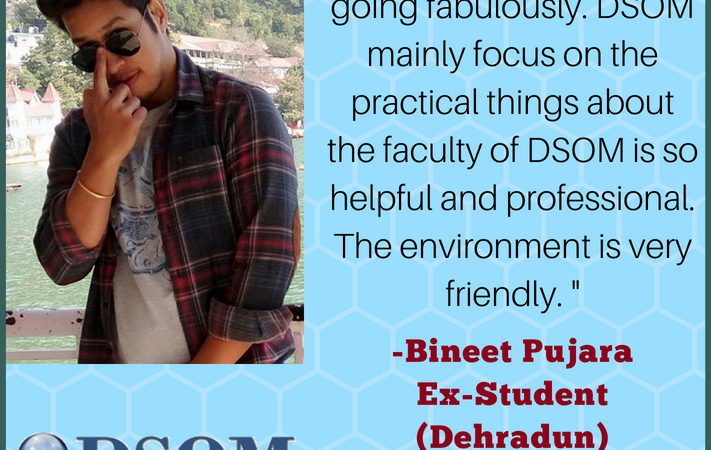
DSOM is Digital Marketing Institute Bineet Pujara An interesting session with Bineet Pujara, DSOM’s Ex-trainee. Read on the complete interview to know how DSOM helped him to understand progress in the digital marketing world. Q1. Welcome, BINEET! Please introduce yourself to our readers? Ans. Hello, I am Bineet I lived in Dehradun and I have done MCA from IMS Dehradun. Now I join DSOM for digital marketing training. Q2. Please Tell Us, why you decided to go for Digital Marketing? Ans. Good career opportunity Because of the Digital revolution. Digital marketing is growing and wide filed and it is the best in the future. Q3. Why did you decide to join DSOM? Ans. Because they are best in his job the reputation of this institute and heard a lot of good things about this institute. Their focus is in practical knowledge more than theory. Q4. How was your experience with DSOM? Ans. My journey of DSOM going fabulous. DSOM mainly focus on the practical things. About the faculty of DSOM is so helpful and professional. The environment is very friendly. I gain lots of knowledge from there. Q5. Tell us the readers, How Digital Marketing helped in your Career? Ans. I am the IT student. Digital Marketing helped me a lot to improve my skill . it gives me numbers of way how to earn money online. Q6. How would you rate DSOM’s training program on a scale of 1-10? Ans.9/10 Q7. What would you say to Digital Marketing Aspirants? Ans. If you want to learn Digital Marketing, you must join DSOM they are the best in his job. They focus on practical.
The Powerful Impact of UX and UI on Website
In today’s digital age a website’s performance has the power to make or break its success. Along with other options available to users, it is very important for websites to prioritize UX (User Experience) and UI(User Interface) design. The seamless integration of UX and UI not only enhances overall user experience but also improves website performance. Now let’s talk about some significant benefits that UX and UI adds on to any website’s performance. 1.Enhanced User Engagement: The paramount goal of a website is to engage visitors and capture their interest. UX and UI serve as vital catalysts in achieving this objective. By crafting an intuitive and user-friendly interface, UX and UI designs facilitate effortless navigation, making it a breeze for users to find what they seek. When visitors enjoy a positive experience while interacting with a website, they are more inclined to stay longer, delve deeper into content, and actively engage with calls to action. 2.Optimized Usability: UX and UI designs that prioritize usability empower users to accomplish their goals with ease. Intuitive navigation, a clear information hierarchy, and strategic placement of interactive elements contribute to a seamless user experience. By minimizing user frustration and simplifying complex tasks, UX and UI designs optimize a website’s usability, resulting in improved performance metrics such as reduced bounce rates and increased conversion rates. 3.Heightened Conversion Rates: Conversions, whether they involve purchases, form submissions, or service subscriptions, serve as the ultimate measure of a website’s success. UX and UI wield considerable influence over user behavior and decision-making processes. A visually captivating UI design, combined with a streamlined user flow, effectively guides visitors towards conversion points, ultimately bolstering conversion rates. By reducing friction and enhancing the overall user experience, UX and UI designs create an environment that fosters conversions. 4.Diminished Bounce Rates: Bounce rates reflect the percentage of visitors who leave a website after viewing only a single page. High bounce rates can hamper a website’s performance and suggest a misalignment between user expectations and the website’s offerings. UX and UI designs tackle this challenge head-on by creating engaging and immersive experiences that entice visitors to explore further. By ensuring fast loading times, implementing responsive design, and enabling easy navigation, UX and UI designs can significantly reduce bounce rates, thus increasing user retention and engagement. 5.Customer Satisfaction and Loyalty: A positive user experience breeds satisfied users who are more likely to become loyal customers. UX and UI designs place a strong emphasis on understanding user needs and tailoring the website experience accordingly. By delivering a seamless and enjoyable experience, websites foster customer satisfaction and cultivate brand loyalty. Satisfied customers not only return to the website but also become advocates, spreading positive word-of-mouth and attracting new visitors. 6.Mobile-Friendly Experience: The advent of mobile devices has revolutionized how users access the internet. Responsive design, a core element of UX and UI, ensures that websites are optimized for various screen sizes and devices. A mobile-friendly experience enables websites to reach a wider audience and guarantees consistent performance across platforms. By adapting to the preferences of mobile users, UX and UI designs significantly contribute to increased website performance and heightened user engagement. To wind up, we can say that UX and UI are indispensable elements that helps to enhance websites overall performance. By prioritizing needs of user, optimizing the usability and creating interfaces that are visually appealing, UX and UI designs creates a positive user experience that results in better conversions, increased engagement, customer satisfaction and goodwill. Therefore, we can say that investing in UX and UI can be a great strategic decision that empowers website to outperform competitors, and achieve long term success for your business.
The Rise of Graphic Designing in 2026: A Career Guide.
What is Graphic Designing? Graphic designing is the art of creating visual content to communicate messages effectively. It combines creativity, technology, and problem-solving to design visuals that engage audiences. Graphic designers use typography, images, colors, and layouts to produce designs for branding, marketing, web design, social media, packaging, and more. It plays a crucial role in businesses by enhancing their visual appeal and helping them connect with their target audience. Why is Graphic Designing Popular in 2025 In 2025, graphic designing has gained immense popularity due to several reasons: Digital Transformation: With businesses shifting online, there is a higher demand for visually appealing content for websites, social media, and digital marketing. Growing E-commerce Industry: Online stores require engaging product designs, banners, and advertisements to attract customers. Social Media Influence: Platforms like Instagram, Facebook, and LinkedIn rely heavily on graphic design to create brand awareness and engagement. AI & Automation Integration: Advanced AI tools assist designers in streamlining their workflow, allowing for greater creativity and efficiency. Freelancing Opportunities: The gig economy has opened doors for freelancers, enabling designers to work independently and earn globally. Branding & Marketing Needs: Companies recognize the importance of strong visual identities, increasing the need for skilled graphic designers. Metaverse & AR/VR Growth: With the rise of virtual experiences, designers are needed to create immersive digital environments and interactive visuals. Essential Software to Learn for a Job in Graphic Designing To secure a job in a reputed company, mastering essential graphic design software is a must. The most important tools include: Adobe Photoshop: Used for image editing, manipulation, and digital painting, it’s an industry-standard tool for graphic designers. Adobe Illustrator: Ideal for vector-based designs, logos, and illustrations, widely used in branding and print media. Adobe InDesign: Essential for creating layouts for magazines, brochures, books, and other print materials. CorelDRAW: A popular alternative to Illustrator, mainly used for vector graphics and branding. After Effects & Premiere Pro: Essential for motion graphics and video editing in marketing and content creation. Salary Growth in Graphic Designing The salary in graphic designing varies based on experience, skills, location, and industry. Below is an approximate salary structure in 2025: Entry-Level (0-2 years): ₹2.5 – ₹5 LPA (India) / $30,000 – $50,000 (International) Mid-Level (3-5 years): ₹5 – ₹10 LPA (India) / $50,000 – $80,000 (International) Senior-Level (6+ years): ₹10 – ₹20 LPA (India) / $80,000 – $120,000+ (International) Freelancers & Entrepreneurs: Earnings depend on clients and projects, with some earning over ₹25 LPA or $150,000 annually. Points to Remember While Choosing an Institute for Graphic Designing Choosing the right institute is crucial for learning graphic designing and securing a promising career. Here are some key factors to consider: Accreditation & Reputation: Ensure the institute is well-recognized and has a strong reputation in the industry. Experienced Faculty: Trainers should have real-world experience and industry exposure. Updated Curriculum: The syllabus should cover the latest software, trends, and industry practices. Practical Learning: Look for institutes that focus on hands-on training, live projects, and internships. Industry Connections: A good institute should have tie-ups with companies for job placements. Portfolio Development: The institute should help students build a strong portfolio showcasing their best work. Placement Support: Check the past placement records and alumni success stories. Flexible Learning Options: Online and offline courses should be available to suit different learning preferences. Affordable Fee Structure: Compare fees and check for installment or scholarship options. Additional Certifications: Some institutes provide globally recognized certifications that enhance job prospects. Conclusion Graphic designing is an ever-evolving field with immense career opportunities in 2025. With digital trends, AI integration, and growing online businesses, the demand for skilled designers is at an all-time high. Learning essential software and choosing the right institute can set the foundation for a successful career. Whether working in a reputed company or freelancing, graphic designers can achieve financial growth and creative satisfaction in this dynamic industry.