Guest Posting: 10 Powerful Ways to Boost Digital Marketing (A Positive SEO Boost)

Digital Marketing: Why Guest Posting Still Dominates Off-Page SEO in 2026? Digital marketing keeps evolving—but pause for a moment. What’s one strategy that still gets more traffic, authority, and trust than most modern tactics? Yes… Guest Posting is still effective. But why does it continue to move the needle in off-page SEO when hundreds of marketers are chasing trends? What makes it so powerful? And how do you use it the right way? Let’s break it down step by step. What is Guest Posting in SEO? – A Complete Breakdown If you’re doing digital marketing in 2026, you already know one thing: Google loves authority. But how do you build authority when you’re new or trying to scale? That’s where Guest Posting comes in. It simply means writing and publishing a blog post on another website to get: A backlink Referral traffic Brand visibility Trust & credibility But wait… isn’t it old? Yes, it’s old. But so is email marketing—and both still work brilliantly. Why? Because guest posting taps into something that will never change: People trust websites that already have audiences. When you publish on authority sites, that trust transfers to you. That’s why it remains a powerful pillar of off-page SEO, especially in digital marketing. Why Guest Posting Matters in Digital Marketing Today Here’s a simple truth: Without authority, your digital marketing efforts struggle. Guest posting builds the authority your brand needs. Guest posting solves this by: Building high-authority backlinks Helping Google understand your niche Sending real traffic from relevant blogs Strengthening your brand identity Positioning you as an expert Think about it… Isn’t it easier to convince someone when you already have credibility? That’s what it does for your SEO and brand. How to Find and Select Blogs for Guest Posting Finding guest posting sites isn’t tough—but finding quality ones? That requires strategy. Here’s how you do it. 1. Start with Google Search Operators Use these queries: “Your niche” + write for us “Your niche” + guest post guidelines “Your niche” + submit article “Your niche” + become a contributor Example: digital marketing writes for us SEO guest post guidelines These pages usually show high-quality sites actively accepting guest posting submissions. 2. Check Authority and Traffic Never write for weak websites. Evaluate a blog using tools like Ahrefs or Semrush: Domain Authority (DA) Organic traffic Backlink profile Spam score A strong blog gives you stronger SEO value. 3. Analyze Content Quality Ask yourself: Does the site publish well-researched, updated, and valuable content? If yes, it’s a good fit. If not, stay away. Low-quality sites can hurt your off-page SEO. 4. Check Niche Relevance Relevance matters more than DA. A backlink from a niche-related blog boosts your digital marketing results faster than a link from an irrelevant blog. For example: If you’re writing about digital marketing, don’t publish on a food or travel site. Google values relevancy—always. 5. Observe Engagement Look for: Real comments Social shares Reader activity Community interaction Blogs with active readers send better referral traffic. Types of Content for Effective Guest Posting Not all guest posts perform equally. Some attract hundreds of backlinks and thousands of readers… while others barely get noticed. So, what works best? Let’s break down the top-performing content types for guest contributions in digital marketing. The right content makes guest posting unstoppable. 1. How-To Guides People love problem-solving content. Example topics: How to improve Off-Page SEO in 30 days How digital marketing beginners can build authority fast These posts build trust and offer value instantly. 2. Ultimate Guides These are long, detailed, and actionable. Why do they work? Because blogs want valuable content… and readers love in-depth, practical tutorials. Example: The Ultimate Guide to guest contributions for Digital Marketing 3. Case Studies Case studies attract attention because they show real results. Ideas: How we increased organic traffic by 300% using guest contributions How digital marketing brands use Off-Page SEO to rank faster Readers and editors both love case studies. 4. Expert Roundups You can contribute expert tips to popular roundup posts. This is great because: It takes less effort You get exposure You get an authority backlink You build relationships 5. Thought Leadership Articles These position you as an expert. Topics like Future of digital marketing Why it will matter even more in 2025 Thought leadership builds your brand identity. 6. Listicles Simple. Shareable. Easy to write. Examples: 10 Tips for Digital Marketers 15 Off-Page SEO Strategies to Boost Rankings Listicles often perform extremely well. How to Write a High-Quality Guest Post Once you find the right blog, your content MUST stand out. Here’s what to keep in mind: 1. Follow the Blog’s Guidelines Editors reject most submissions because authors ignore instructions. Always read: Word count Tone Formatting Linking rules 2. Research Their Top-Performing Posts Understand: What style they use What topics performed well How they structure articles Mirror their tone, but add your own value. 3. Provide ORIGINAL Insights Don’t rewrite existing content. Ask yourself: What unique angle can I offer? What personal experience can I add? Originality = Approval + Better SEO. 4. Add Actionable Steps Readers want results, not theory. Make your content: Practical Step-by-step Easy to apply 5. Add Relevant Internal Links Most sites require you to link to their existing articles. Do it naturally. This increases your acceptance rate. 6. Add Your Author Bio Smartly Keep it: Short Clear Benefit-focused Include one backlink to your website—your most important page. Things to Keep in Mind While Guest Posting Guest posting works beautifully… but only when done right. Avoid these mistakes: 1. Don’t Buy Links Buying guest posts can: Get your site penalized Lead to spammy backlinks Hurt your digital marketing strategy Always earn links through quality. 2. Don’t Post on Low-Quality Sites Sites with: No traffic High spam score Duplicate content Irrelevant niche …will harm your off-page SEO. 3. Avoid Over-Optimized Anchors Don’t use forced anchor texts. Use natural variations like Read more here Learn about Guest Posting Understand digital marketing better This is safer for long-term SEO. 4. Be Consistent One guest
Profile Backlinks: 9 Powerful Ways to Boost Your Digital Marketing Rankings Fast

Introduction Want your website to rank faster and crush the competition? Then you need to pay attention to something most marketers overlook: profile backlinks. Here’s the truth: Google doesn’t just look at your website content. It looks at who’s linking to you and how trustworthy those links are. That’s why even a small backlink from a high-authority profile can have a bigger impact than dozens of low-quality links scattered across the web. Profile Backlinks are different from regular backlinks. Instead of relying on guest posts or blog comments, you create links through your profiles on social media sites, forums, professional communities, and business directories. Each profile you build is a signal to Google that your brand exists, is credible, and is trusted by real communities. In this guide, we’re going to show you exactly what Profile Backlinks are, why they matter, and how to build them the right way. No fluff. No shortcuts. Just proven strategies that actually work in 2025. By the time you finish reading, you’ll have a step-by-step blueprint to strengthen your off-page SEO, boost your rankings, and create a digital footprint that Google can’t ignore. Digital Marketing: How Profile Backlinks Strengthen Your Off Page SEO Strategy Ever wondered why some websites rank insanely fast while others struggle for months? In digital marketing, one small but powerful tactic silently fuels higher rankings: Profile Backlinks. Yes, those simple profile links you create on trusted platforms can dramatically elevate your authority — if you use them the right way. But what exactly are these backlinks? How do you build them effectively? And which platforms give the best results? Let’s break everything down step-by-step. What Are Profile Backlinks? – A Basic Understanding If you’re serious about digital marketing, understanding Profile Backlinks is non-negotiable. But what are they? Profile Backlinks are links that you place inside user profiles on various platforms — such as forums, business directories, Q&A sites, social networks, and professional communities. Whenever you sign up on a website and fill out your personal or business profile, you usually get an option to add your website URL. This URL becomes a backlink pointing directly to your site. Sounds simple, right? But here’s what makes profile backlinks important: 1. They Help Build Trust Instantly Google values websites that appear in trusted communities. When your brand consistently shows up across verified platforms, it sends a strong trust signal. 2. They Increase Online Visibility More profiles = more visibility. Users searching for your services may discover your brand from multiple sources. 3. They Support Your Off-Page SEO Structure Profile backlinks add diversity to your backlink profile—an important part of off-page SEO. 4. They Lay the Foundation for Future Link Building Many platforms allow posting, commenting, and community engagement. Your profile link becomes your identity. So, are Profile Backlinks alone enough to rank a site? Not always — but they provide an excellent starting point in your digital marketing strategy. How to Create Effective Profile Backlinks Creating profile backlinks isn’t rocket science. But creating effective, high-quality, and SEO-friendly ones? That’s where most people go wrong. Here’s a step-by-step blueprint to help you build strong profile backlinks for off-page SEO. 1. Start With High-Authority Platforms Ask yourself: “If this platform shut down tomorrow, would it affect thousands of users?” If the answer is yes, it’s a good platform. Only use profile creation websites that: Have high domain authority (DA) Are trusted by Google Have real users Are active communities Examples include: Medium Reddit Quora Behance Crunchbase GitHub These platforms pass better trust signals. 2. Use Complete Profile Information Why do most profile backlinks fail? Because users leave profiles half-filled. A complete profile looks trustworthy and sends a positive signal to both platforms and search engines. Fill in everything: Full name or brand name Profile picture Bio Social links Website URL Location Skills or expertise Search engines treat complete profiles as authentic sources. 3. Add Your Focus Keywords Naturally in Your Bio You’re doing digital marketing, so why skip keyword optimization? Include terms like: digital marketing SEO expert content strategist online marketing specialist off-page SEO professional A keyword-optimized profile sends topical relevance to Google. 4. Use Branded URLs Instead of Exact-Match Keywords Avoid spammy URLs like Best-digital-marketing-services-cheap.com Buy-SEO-now.com Instead, use clean branded URLs. Search engines trust brands more than keyword-stuffed domains. 5. Ensure Profiles Are Public Many platforms allow you to hide your profile. If Google cannot crawl the page, the backlink becomes useless. Always check if the profile is: Public Indexed Visible without login This single step can double your SEO value. 6. Don’t Create Too Many Profiles in One Day You’ve seen people create 200+ profile links overnight. Is it smart? Absolutely not. It looks spammy and unnatural. Stick to this safe pattern: 5 to 10 profile backlinks per week Spread activity across different platforms Avoid footprints (same bio everywhere) Slow and steady wins the SEO race. 7. Use Real Information—Not Fake Data Fake names, fake images, fake bios? Google hates fake signals. Authenticity wins. Even if you’re using a brand name, keep details real and consistent. 8. Track Your Profiles Using a Single Sheet Too many profiles? You’ll forget where you created them. Maintain a simple spreadsheet including: Website name URL of your public profile Login email Password DA of platform Indexed status Organization is part of digital marketing excellence. 9. Build Contextual Trust by Engaging on the Platform Many platforms allow: Community engagement Posting content Asking questions Sharing opinions The more active you are, the stronger your profile authority becomes. And stronger profiles = more powerful profile backlinks. Where to Build Profile Backlinks for Best Results Want to know the million-dollar secret? Not all profile backlinks are equal. Some platforms move rankings faster because they’re extremely trusted by Google. Here’s a carefully curated list of categories and platforms to build high-impact profile backlinks. Build profile backlinks where Google already trusts. 1. Social Platforms Social sites have strong authority and trust by default. Examples: Facebook LinkedIn Twitter (X) Pinterest Instagram YouTube Don’t underestimate these links—they boost online visibility significantly. 2. Business Directories Great for
Classified Submission: Top 10 Benefits for Digital Marketing Success in 2026
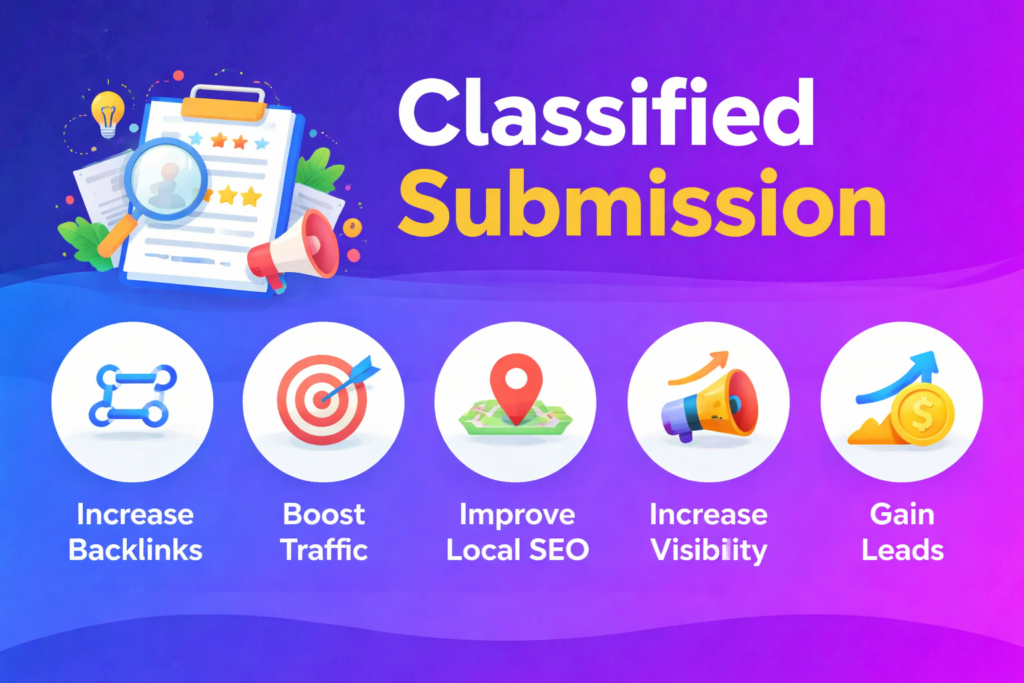
Introduction Digital marketing keeps evolving every year… but here’s a surprising truth most marketers ignore: some of the simplest off-page SEO techniques still deliver the strongest results. And Classified Submission is one of them. But wait—aren’t classified ads old-school?Aren’t people more focused on Instagram ads, Google Ads, and AI-powered SEO tools? Yes, and that’s exactly why classified ads work so well in 2026. While the world is chasing complex strategies, classified websites quietly attract millions of real users every month—people who are actively searching for services, offers, jobs, rentals, courses, or solutions. In other words, your ideal customers. That’s why smart digital marketers still use Classified Submission to boost visibility, strengthen their backlink profile, and bring consistent organic traffic without spending a rupee. In this guide, you’ll learn exactly how classified ads work, where to submit them, how to write high-converting listings, and which mistakes to avoid so your off-page SEO gets maximum impact with minimum effort. How Classified Submission Helps You Get More Traffic & Leads Digital marketing has countless off-page SEO techniques—but Classified Submission remains one of the simplest, fastest, and most underrated strategy to drive real traffic. But what makes it so effective in 2026? Why do marketers still rely on classified ads when social media and paid ads dominate the landscape? What is Classified Submission in Digital Marketing? – The Complete Breakdown If you know even the basics of digital marketing, you already understand the power of visibility. Classified submission is exactly that—a strategy where you publish short advertisements on classified websites to promote your offers, services, or content. But here’s the question: Why do classified sites still get massive traffic even today? Simple. Millions of users visit classified portals daily looking for services, jobs, rentals, products, and offers. Your business advertisement appears right in front of people who are already searching for something relevant. So, what exactly does Classified Submission do? It helps you: Increase website traffic Build brand visibility Improve Off-Page SEO Get powerful backlinks Generate leads quickly Boost local SEO Expand reach without ad costs Classified Submission is basically a free promotion engine inside your digital marketing strategy. How to Effectively Create Classified Ads That Rank & Convert So how do you create ads that get clicks instead of getting buried in millions of listings? 1. Start With a Powerful Headline Your headline must immediately grab attention. Example: “Best Digital Marketing Course in Dehradun—Enroll Today” “Affordable SEO Services for Small Businesses | Starting ₹999” Ask yourself: Would I click on this headline? If not, rewrite it. 2. Add a Compelling Description Your description should be short, value-packed, and action-oriented. Include: What you offer Why you’re the best option A strong call-to-action Keywords (naturally) Never write long, boring blocks of text. Use 3–4 short paragraphs max. 3. Include Your Focus Keyword Naturally Since this is part of your digital marketing strategy, keyword placement matters. Don’t stuff. Keep it natural. Aim for 1% density. Example: “We provide professional digital marketing solutions designed for businesses looking to grow online.” 4. Add High-Quality Images Most marketers skip this step—and lose 50% of clicks. Why? People connect with visuals. Classified ads with images get more views, more clicks, and more conversions. 5. Add Contact Info Clearly Include: WhatsApp number Email Website Location (if relevant) Never make users search for your details. Make it easy. 6. Add Relevant Categories & Tags Classified sites rely heavily on categories. Choose the correct ones: Services Business Education Real Estate Jobs Local Ads This ensures your ad reaches the right audience. Where to Submit Classified Ads for Maximum Reach This is where most people get stuck. Which classified sites actually help your digital marketing game? Which ones are worth your time? Here are the top classified submission sites for off-page SEO: 1. addressguru.in One of the biggest marketplaces. Great for services, local businesses, and product listings. 2. OLX.in Free classifieds in India, Buy and Sell for free anywhere in India. 3. Quikr.com Perfect for Indian businesses. High traffic, fast approval, and good SEO value. 4. Locanto.com Offers global reach. High engagement and solid backlink benefits. 5. Classifiedads.com No registration required. Quick posting and strong domain authority. 6. Freeadstime.org Popular among digital marketers for off-page SEO. 7. Click.in Ideal for local promotion, especially in India. 8. Oodle.com Good for backlink building and international exposure. 9. Justdial.com (Business Listings) Not fully classified but acts like one—excellent for local SEO. 10. Sulekha.com Great for service-based businesses, education centers, training institutes, and tutors. Types of Classified Submission Sites Not all classified sites are the same. In digital marketing, you must choose the right type of classified portal for your goals. Here are the main categories: 1. Free Classified Submission Sites These are the most used by beginners in digital marketing. Benefits: No cost Easy approval High-volume traffic Example: addressguru, OLX, Click.in, Quikr 2. Paid Classified Submission Sites These give higher visibility and premium slots. Benefits: Faster ranking Higher ad placement More targeted audience Example: Craigslist paid listings 3. Local Classified Sites Perfect for businesses targeting a specific city or region. Benefits: Strong local SEO Better lead quality High conversions Example: Justdial, Sulekha, IndiaMart 4. Niche-Based Classified Sites Specialized sites for: Jobs Real estate Automobiles Education Services These convert the best because the audience is already interested. Why Classified Submission Still Matters in Off-Page SEO (2026) You might wonder: Do classified ads still help in off-page SEO when Google focuses more on quality backlinks? Answer: Yes—if done correctly. Here’s why. 1. Classified Ads Provide High-Engagement Backlinks Even if most links are nofollow, they help in: Indexing Brand mentions Traffic signals Visibility Google loves real-world engagement. 2. They Drive Real Users, Not Just Crawlers Most off-page SEO techniques focus on crawlers. Classified Submission attracts real humans actively searching for services. 3. They Strengthen Local SEO Signals If you include: City name Business location Local keywords Google trusts your business more. 4. They Create Strong Brand Visibility More listings = more mentions = stronger online presence. This indirectly boosts search ranking. 5. They Increase Click-Through Rate (CTR) High CTR is a ranking factor. Classified
Off-Page SEO Overview: Boost Your Rankings Beyond the Website

What is Off-Page SEO? When most people think of SEO, they imagine tweaking titles, optimizing meta tags, or adding keywords—but that’s only half the game. The real power of SEO comes from what happens outside your website—that’s off-page SEO. In simple terms, off-page SEO refers to all the activities you do beyond your website to improve your search engine rankings. It’s how you build your website’s reputation, authority, and trust across the internet. Search engines like Google look at off-page signals to decide if your site deserves to rank higher. Think of it as online word-of-mouth—the more other reputable sites talk about you (through backlinks, mentions, or shares), the more credible your site appears. Why Off-Page SEO Matters Here’s the truth: You can have the best on-page SEO in the world, but without strong off-page signals, you’ll rarely reach page one. Off-page SEO tells Google three important things: Trustworthiness: Are other credible sources linking to you? Authority: Are you seen as an expert in your field? Popularity: Are people talking about your brand online? In the world of digital marketing, this makes off-page optimization an essential pillar—not just for rankings, but for long-term brand growth and credibility. Where to Implement Off-Page Techniques—Identifying Key Areas While on-page SEO focuses on your own website, off-page SEO builds your presence elsewhere. Let’s look at the most effective channels for implementing off-page strategies. 1. Backlink Sources Backlinks are still the backbone of off-page SEO. When authoritative websites link to your pages, it signals Google that your content is trustworthy and valuable. Where to get backlinks: Guest Blogging: Write high-quality posts for reputable blogs in your niche. Business Directories: Submit your website to relevant directories (like Clutch, Justdial, or Google Business Profile). Resource Pages: Get listed on curated “best tools” or “useful resources” pages. Broken Link Building: Find dead links on authority sites and suggest your relevant page as a replacement. Pro Tip Don’t chase quantity. A single link from a top authority site (like HubSpot or Moz) is worth more than 100 low-quality backlinks. 2. Social Media Platforms Social media doesn’t directly boost rankings, but it helps you earn brand exposure, engagement, and indirect links. Key platforms for off-page SEO include: LinkedIn (for professional credibility) Instagram (for brand personality) Facebook Groups (for community engagement) X/Twitter (for authority sharing) Pinterest (for visual traffic) Each share, mention, or save tells Google your content is popular and relevant—signals that indirectly support your ranking. 3. Forums and Online Communities Platforms like Reddit, Quora, and niche-specific forums can drive powerful off-page results. Engaging genuinely in discussions and linking your resources (where relevant) builds both traffic and authority. Example: If you’re into digital marketing, answering SEO-related questions on Quora with detailed insights and linking back to your blog builds credibility and referral traffic. 4. Influencer Collaborations Influencer marketing has evolved into an essential off-page channel. Partnering with niche influencers—whether on YouTube, LinkedIn, or Instagram—helps your content reach new audiences and increases brand mentions (a key ranking factor). Tip: Prioritize influencers with trust and engagement, not just big follower counts. 5. Brand Mentions and Citations Even when someone mentions your brand without linking, Google takes notice. These unlinked mentions act as trust signals for your site’s reputation. You can track brand mentions using tools like Google Alerts Ahrefs Alerts Brand24 The more your brand is mentioned across the web, the stronger your digital footprint becomes. 6. Content Syndication & PR Republishing your articles or stories on platforms like Medium, LinkedIn Articles, or news sites helps expand visibility. Press releases on credible news platforms can also boost off-page signals—especially when they include backlinks to your primary pages. Types of Off-Page SEO Strategies—Exploring Different Approaches Let’s break down the major off-page SEO strategies that can transform your digital marketing game in 2026. 1. Link Building The classic—and still king of off-page SEO. Link building means getting other websites to link to your pages. But in 2026, quality and relevance matter more than ever. Popular techniques: Guest posting HARO (Help a Reporter Out) for media mentions Skyscraper Technique (update and improve existing popular content) Podcast Guesting for authority backlinks Niche Edits (adding links to existing high-authority articles) 2. Social Media Engagement Social signals like shares, likes, and comments may not be direct ranking factors, but they amplify your reach. The more people engage with your content, the more likely it is to earn backlinks and organic mentions. Create “share ”triggers”—emotionally resonant or highly practical content that people naturally want to share. 3. Local SEO & Citations For businesses, local visibility is everything. Citations (mentions of your business name, address, and phone number) on platforms like Google Business Profile, Yelp, and Justdial help your local SEO. Ensure NAP consistency (Name, Address, Phone number) across all listings to improve trust and ranking. 4. Content Marketing Content isn’t just for your own website. Publishing valuable, sharable, and insightful content on other platforms builds backlinks, credibility, and visibility. Formats that work well: Data-driven blog posts Infographics Case studies Industry reports Interactive tools or templates 5. Influencer & Blogger Outreach Collaborate with niche influencers and bloggers to review, share, or link to your product, course, or tool. This strategy merges PR, trust-building, and SEO power—all in one move. 6. Forum & Community Marketing By offering genuine advice (not spamming links), you position yourself as an expert. That’s exactly how Backlinko’s founder, Brian Dean, built early authority—by adding value in SEO communities. 7. Video & Podcast SEO Platforms like YouTube and Spotify are goldmines for off-page growth. Optimized video and podcast descriptions with backlinks to your main site can send referral traffic and enhance authority. How to Evaluate Off-Page SEO Success – Measuring Impact You’ve implemented your off-page strategies—now, how do you know if they’re working? Here’s how to measure off-page SEO performance effectively. 1. Domain Authority (DA) and Domain Rating (DR) Use tools like Ahrefs, Moz, or SEMrush to track your site’s authority score. A steady increase means your off-page signals are strengthening. 2. Backlink Profile Growth Analyze:
Top 7 Directory Submission Secrets in Digital Marketing (Powerful SEO Guide)

What if I told you that one of the oldest off-page SEO strategies—something almost everyone knows about but very few truly understand—is still one of the most underrated weapons in digital marketing today? And what if I said that a simple, almost effortless technique called directory submission could quietly strengthen your website’s authority, boost your online visibility, and give your entire digital marketing strategy the powerful push it’s been missing? Sounds too simple to be effective, right? Yet that’s exactly where most people go wrong. Yes, directory submission is still relevant in 2025.But here’s the catch… it only works when you do it strategically—with precision, relevance, and consistency. So ask yourself:If search engines love credibility…If backlinks still influence rankings…If online visibility still drives business… Then why wouldn’t a trusted, high-quality directory link matter? And that brings us to the real question: What makes directory submission so important in digital marketing in 2026—and why are top SEO experts still using it when so many others ignore it? Let’s dive deeper and uncover the truth. What Is Directory Submission in Digital Marketing? If you’re in the world of digital marketing, you already know that online visibility is everything. But how do you increase that visibility without burning money on paid ads? Enter: Directory Submission. Directory submission is the process of submitting your website to online directories to build high-quality backlinks, increase visibility, and improve off-page SEO. Think of directories as digital phonebooks. But instead of listing numbers, they list websites—categorized, niche-based, and geographically sorted. Why does this matter for digital marketing? Because Google still respects organized, niche-relevant, spam-free directories. And when you’re trying to boost your off-page SEO game, these directory links help: Improve domain authority Increase brand exposure Bring referral traffic Strengthen online trust signals But here’s the catch… Not all directories are good for SEO. So how do you choose the right ones? How to Choose Directories for Submission If you submit your website everywhere, you’ll damage your off-page SEO. If you submit it strategically, you win. So how do digital marketing pros choose directories? Let’s break down the rules. 1. Choose High-Authority Directories Would you trust a website with DA 10? Probably not. Google thinks the same. Always pick directories with good domain authority to increase link value. 2. Check Relevance Submitting a digital marketing website to a “pet food directory” makes zero sense. Choose: Niche directories Industry directories Local directories Professional business directories Relevance matters more than quantity. 3. Look for Manual Review Directories If a directory approves submissions instantly → be careful. Manual review directories filter spam, which boosts link credibility. 4. Avoid Directories with Excessive Outbound Links If a directory links to thousands of low-quality websites, run away. Too many outbound links = diluted link value. 5. Ensure HTTPS Secure Domains A directory without SSL is a red flag for digital marketing and off-page SEO. Google prefers secure sources. 6. Avoid Paid Directories Unless They Are High-Quality Some paid directories are worth it (DMOZ alternatives, business associations). But only pay for trusted ones. 7. Check Indexing Status If Google never indexed the dire story, your link is worthless. Always verify indexing before submitting. Types of Online Directories for SEO (Which Ones Should You Use?) Not all directories serve the same purpose. Different types help boost different areas of off-page SEO. Let’s explore the ones digital marketers rely on the most. 1. General Web Directories These directories list businesses across all industries and categories, making them great for building your first layer of backlinks. They help search engines discover your website faster and improve basic online visibility. Examples: Hotfrog AboutUs Spoke Good for building foundational backlinks. 2. Niche Directories These are industry-specific directories focused on one niche, giving you highly relevant and powerful backlinks. Because the audience is targeted, niche directories boost credibility, authority, and ranking potential much faster. Examples: Marketing directories Tech directories E-commerce directories Niche links = maximum relevance. 3. Local Business Directories Want local visibility? Local directories help your business appear in location-based searches and strengthen local SEO signals. They improve visibility for “near me” searches and attract local customers who are ready to act. Examples: Google Business Profile Yelp JustDial IndiaMart Essential for local SEO. 4. Social Bookmarking Directories These platforms allow users to save, share, and promote links, helping you gain fast indexing and high referral traffic. They are powerful for digital marketing because they increase engagement, visibility, and social signals. Examples: Scoop.it Reddit Mix Slashdot Social bookmarking is a strong off-page SEO asset. 5. Business Listing Directories These boost brand trust and verification. These directories verify your business details, showcase reviews, and build trust among customers They are especially beneficial for brands and agencies aiming to strengthen credibility and attract high-quality leads. Examples: Clutch G2 Trustpilot Especially powerful for agencies and service providers. 6. Article Directories These allow guest posts, articles, and content submissions. These platforms allow you to publish articles, guides, and insights to gain authoritative backlinks. They help you build topical authority, improve brand awareness, and drive long-term organic traffic. Examples: Medium EzineArticles Great for brand authority. 7. Classified Directories Used for promoting products, services, offers, or local deals, these directories bring quick visibility and targeted traffic. They are ideal for short-term promotions and increasing reach without spending money. Examples: OLX ClickIndia Good for visibility and clicks. Why Directory Submission Still Matters in Digital Marketing Is directory submission outdated? Not at all. In fact, modern SEOs use it to: Build foundational backlinks Strengthen link diversity Improve off-page SEO signals Increase local visibility Drive real user traffic And here’s the interesting part… Google LOVES natural links. Directory submission provides exactly that. How to Do Directory Submission the Right Way Want results? Follow this proven digital marketing approach. Step 1: Prepare Your Business Details Include: Business Name Website URL Description Social links Email Phone Number Logo Keep information consistent everywhere. Step 2: Choose the Best Directories Use the selection criteria we discussed. Step 3: Submit to Niche and Local Directories First These bring the highest SEO
Social Bookmarking: A Smart Way to Grow Your Digital Marketing in 2026
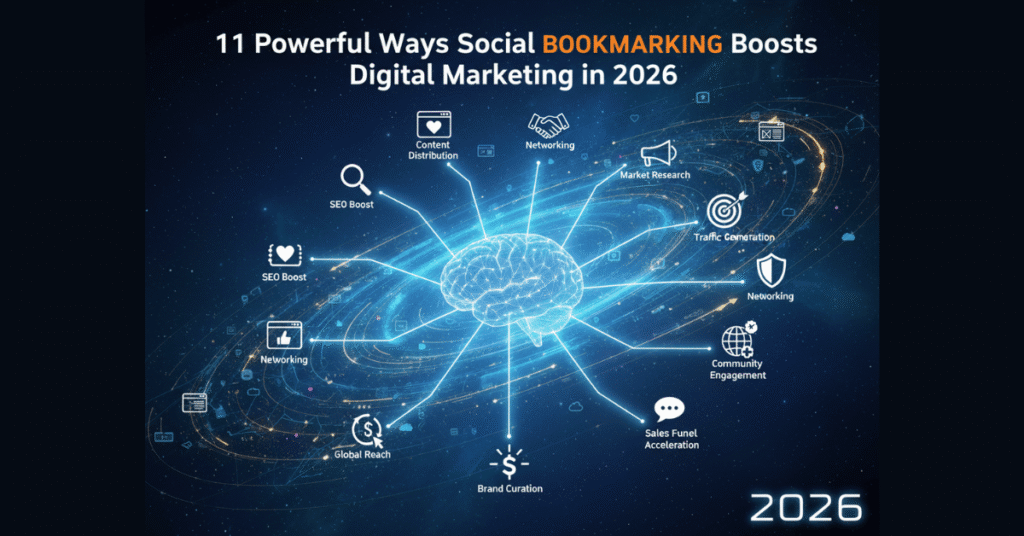
Digital Marketing in 2026: How Social Bookmarking Still Boosts Off-Page SEO If you’re into digital marketing, you already know one thing: Google loves authority.But here’s the real question… How do you build authority fast—without spending a fortune on paid ads or complex campaigns? The answer?Social Bookmarking. Yes, that simple off-page SEO technique you might have ignored can skyrocket your visibility, bring consistent referral traffic, and strengthen your backlink profile. But why does social bookmarking still matter in 2026?And how do you use it the right way? Let’s dive deep. What Is Social Bookmarking? Imagine saving your favorite websites in one place—publicly.That’s the simplest way to explain social bookmarking. It refers to platforms where users save, organize, share, and manage web pages or articles they find valuable.Instead of saving URLs in your browser, you save them on websites like Reddit Mix Flipboard Pocket Pinterest Slashdot Scoop.it But here’s the twist… These sites aren’t just “bookmark managers.”They’re online communities with massive user engagement, which makes them powerful for digital marketing, content distribution, and off-page SEO. Why does Google care about social bookmarking? Because when people share, save, vote, or comment on your content, Google sees it as: authority relevance freshness user value signals In short, bookmarking is a shortcut to getting your content discovered. Why Social Bookmarking Is Still a Big Deal in Digital Marketing You might be wondering… Does social bookmarking still work in 2026?Absolutely. Here’s why: Fast Indexing Submit your link → get indexed faster. Search engines frequently crawl popular social bookmarking sites, which means your submitted URLs get discovered much faster. When you bookmark a new blog post, Google often indexes it sooner than waiting for normal crawling. This helps your content appear in search results quickly. Instant Traffic Platforms like Reddit, Flipboard, and Mix can drive a sudden surge of visitors within hours of posting. If your bookmark gets upvoted or featured, you may see consistent traffic spikes. This makes bookmarking an easy way to attract real, engaged users instantly. Boost to Off-Page SEO Every bookmark helps build online visibility, strengthens your brand mentions, and improves your authority footprint. These signals support your overall off-page SEO strategy and can even lead to natural backlinks from users who discover your content. It creates a healthier backlink profile for ranking. Audience Trust People trust what other people save or recommend.That boosts credibility in your niche. As a result, more people engage with and share it further. Content Distribution Your blog posts reach more audiences without paid marketing. Bookmarking remains one of the easiest and fastest off-page SEO tactics for small and big businesses alike. This expands your organic reach and boosts long-term visibility. How to Use Social Bookmarking Sites for SEO Let’s go practical. How can you use social bookmarking to strengthen your digital marketing strategy? Here’s a step-by-step framework. 1. Choose High-Authority Bookmarking Sites Not all bookmarking sites are equal.Some pass more trust, traffic, and engagement. Focus on: Reddit Mix.com Slashdot Pinterest Scoop.it Diigo Flipboard Tumblr MetaFilter Plurk These provide strong SEO signals and trust factors. 2. Create Value-Based Titles & Descriptions Don’t post your link randomly.Write a description that: includes your focus keyword is click-worthy adds value Example: “Top 7 Digital Marketing Strategies You Can’t Ignore in 2026” 3. Use Relevant Categories & Tags Most bookmarking sites categorize content.Using the correct category increases visibility. Tags also help the platform recommend your content to relevant users. 4. Submit Only High-Quality Content Bookmarking low-quality, thin, copied, or spammy content hurts your SEO. Ask yourself before submitting: Would I bookmark this if I didn’t own the website?If not, don’t submit it. 5. Add Images, Thumbnails & Short Summaries Visual content performs 2X better on platforms like: Pinterest Mix Flipboard Make your content visually appealing to increase clicks and shares. 6. Stay Active and Engage with the Community Bookmarking is not only about posting your links.Comment on other content.Upvote.Share. The more you engage, the more authority your profile builds. Google trusts active profiles more, resulting in stronger off-page SEO signals. 7. Don’t Overdo It A common mistake? Over-submitting the same link. Keep a balanced strategy: Submit 1–2 new links per week Mix in other people’s content Use different titles/descriptions This avoids algorithm flags. Types of Social Bookmarking Platforms This is where most people get confused.There isn’t just one type of bookmarking platform. Let’s break them down. 1. Social Bookmarking Communities These act like mini search engines where people save and share content. Examples: Reddit Slashdot Mix These platforms boost engagement and drive massive traffic. 2. Visual Bookmarking Platforms Perfect for digital marketing niches where visuals dominate. Examples: Pinterest WeHeartIt Pearltrees Great for infographics, blog thumbnails, and short visual explainers. 3. Content Curation Bookmarking Sites Ideal for research-heavy niches. Examples: Scoop.it Diigo Pocket These sites help build expert authority. 4. News-Style Bookmarking Platforms Users upvote quality content, influencing trends. Examples: Hacker News Product Hunt MetaFilter These sites offer high trust signals. Things to Remember When Doing Social Bookmarking Wait—before you rush to submit your links, keep this checklist handy. Avoid Spamming Bookmarking is powerful, but overdoing it can get your account banned. Aim for: 70% value posts 30% self-promotion Use Unique Descriptions Every Time Duplicate descriptions across platforms look spammy.Google doesn’t like that. Choose the Right Audience Posting digital marketing content in an irrelevant group or subreddit kills visibility. Add Proper Hashtags Some platforms, like Tumblr or Pinterest, rely heavily on hashtags. Use 5–7 niche-focused hashtags. Track Performance Use tools like Google Analytics UTM Links Rank Math Ahrefs Track your bookmark performance to refine your off-page SEO strategy. Why Social Bookmarking Boosts Off-Page SEO Let’s connect the dots. How exactly does it support your overall digital marketing plan? 1. Faster Crawling Google visits bookmarking sites regularly.Your new URLs get indexed lightning fast. 2. Referral Traffic Some bookmarking sites send thousands of visitors overnight. 3. Natural Backlinks Even if no follow, they help diversify your backlink profile. 4. Brand Mentions Every bookmark is a brand mention.Brand mentions help SEO in 2026. 5. Social Signals Engagement (upvotes, shares, and comments) tells Google your content is valuable. Social bookmarking supercharges off-page SEO