Social Media Marketing Strategies That Actually Work in 2026
Running a business page and posting whenever you remember is not a strategy — it is guesswork. If you have ever wondered why one brand’s posts explode with likes and shares while another’s disappear into silence, the answer almost always comes down to planning. Strong social media marketing strategies separate brands that grow steadily from brands that waste money on content nobody sees.
This guide breaks down what actually works right now, why most beginners fail, and how you can build a repeatable system instead of chasing random viral moments.
What Are Social Media Marketing Strategies?
In simple terms, social media marketing strategies are the specific, documented plans a business uses to reach its audience, build a brand, and drive sales through social media platforms like Instagram, Facebook, LinkedIn, YouTube, and TikTok. Unlike a random posting habit, a real strategy has a goal, a target audience, a content plan, a posting schedule, and a way to measure results.
Many small business owners treat social media marketing as an afterthought — something the intern handles between other tasks. That mindset is exactly why so many accounts stay stuck at a few hundred followers for years. A proper social media strategy treats each platform as a serious marketing channel, with its own budget, its own content style, and its own success metrics.
Why a Clear Strategy Matters More Than Ever
The competition for attention online has never been higher. Every scroll on a user’s feed is a battle between thousands of brands for a few seconds of focus. Without well-planned social media marketing strategies, your posts get buried under algorithm changes, paid ads from competitors, and an endless stream of new content.
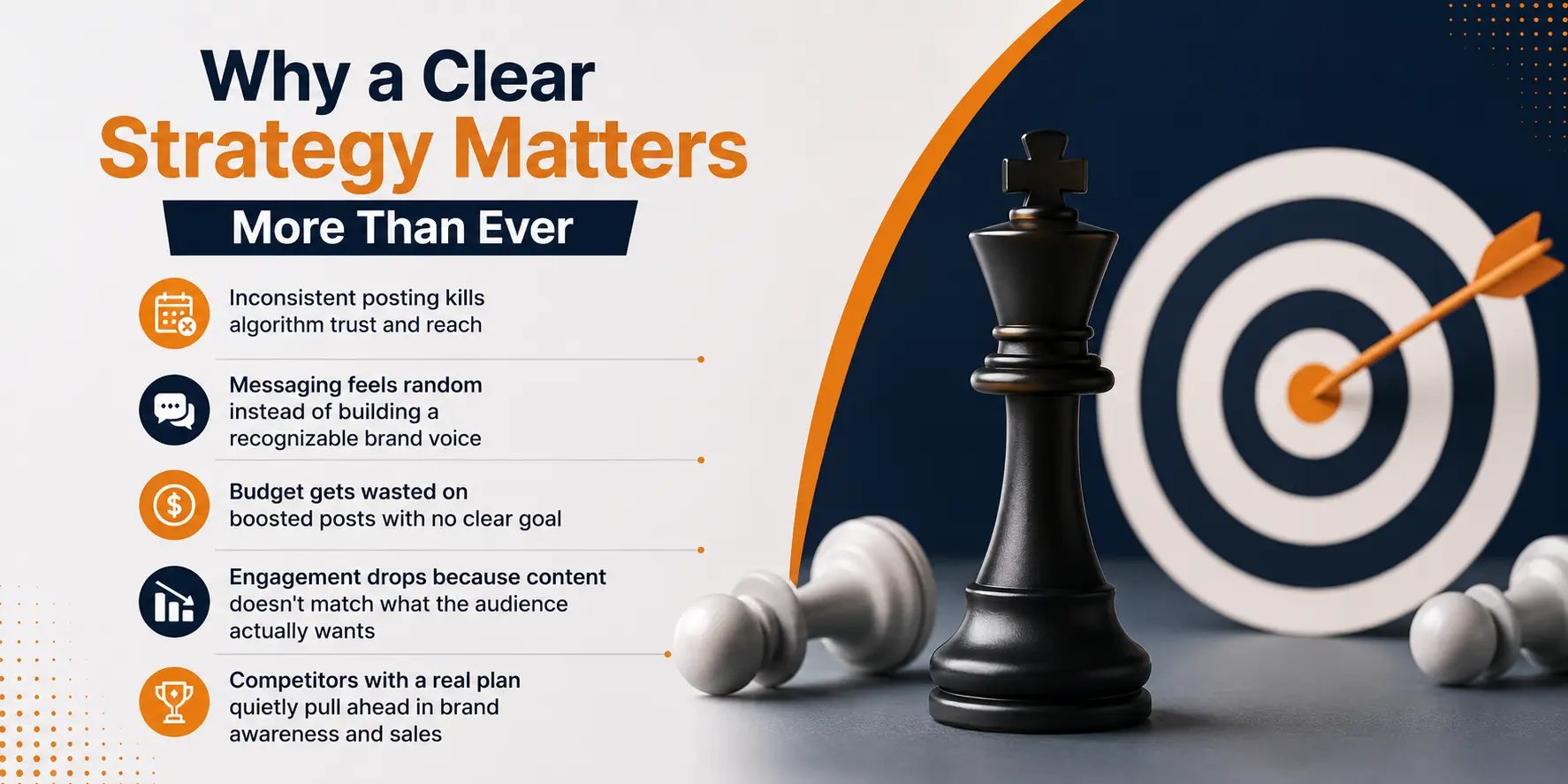
Here is what happens when brands skip strategic planning:
- Inconsistent posting kills algorithm trust and reach
- Messaging feels random instead of building a recognizable brand voice
- Budget gets wasted on boosted posts with no clear goal
- Engagement drops because content doesn’t match what the audience actually wants
- Competitors with a real plan quietly pull ahead in brand awareness and sales
On the other hand, businesses that commit to structured social media marketing strategies see compounding benefits: higher social media engagement, better customer trust, and a steady pipeline of leads that doesn’t depend on luck.
Core Elements of Winning Social Media Marketing Strategies
Before jumping into platform-specific tactics, every solid social media marketing plan needs these foundations in place.
| Element | Why It Matters | Quick Action |
|---|---|---|
| Clear Goals | Defines success (sales, leads, awareness) | Set 1–3 measurable goals per quarter |
| Audience Research | Prevents content that nobody wants | Build a simple audience persona |
| Content Pillars | Keeps posting consistent and on-brand | Pick 3–4 recurring content themes |
| Posting Calendar | Removes guesswork and last-minute scrambling | Plan content two weeks ahead |
| Platform Fit | Stops wasted effort on the wrong channel | Match platform to audience age and habits |
| Performance Tracking | Shows what to repeat and what to drop | Review analytics every two weeks |
Skipping even one of these elements is often why campaigns fail. A brand can have beautiful graphics and still get zero traction because the audience research step was ignored, or because the posting calendar collapsed after the first busy week.
How to Choose the Right Strategy for Your Business
Not every business needs the same approach, and copying a strategy that worked for a completely different industry rarely produces the same results. A local bakery and a B2B software company should never run identical social media marketing strategies, because their audiences behave in completely different ways.
Before picking tactics, ask three honest questions:
- Where does my actual target audience spend their time — not where I personally enjoy scrolling?
- What can I realistically produce every week without burning out my team?
- What business outcome am I actually trying to move — sales, leads, awareness, or retention?
Answering these honestly narrows down which platforms and content formats deserve your energy. A business chasing leads should lean into LinkedIn and targeted ads; a lifestyle brand chasing awareness should lean into Instagram and TikTok. Trying to be everywhere at once, with no clear priority, is one of the quietest ways a social media strategy collapses under its own weight.
Best Social Media Marketing Strategies to Follow
1. Build a Content Calendar You Can Actually Stick To
The single biggest reason accounts go quiet is a lack of planning. Batch-creating content once a week or once a month, then scheduling it in advance, removes the daily pressure of “what do I post today?” This one habit alone fixes a huge chunk of inconsistent social media marketing problems.
2. Prioritize Video Over Static Images
Short-form video continues to outperform static posts across nearly every platform. Reels, Shorts, and TikToks get pushed further by algorithms because platforms want to keep users watching. If your social media marketing strategies still lean heavily on plain image posts, you are leaving reach on the table.
3. Focus on Engagement, Not Just Follower Count
A page with fifty thousand silent followers is worth far less than a page with five thousand engaged ones. Reply to comments, ask questions in captions, and run polls. Genuine social media engagement signals to the algorithm that your content deserves more distribution.
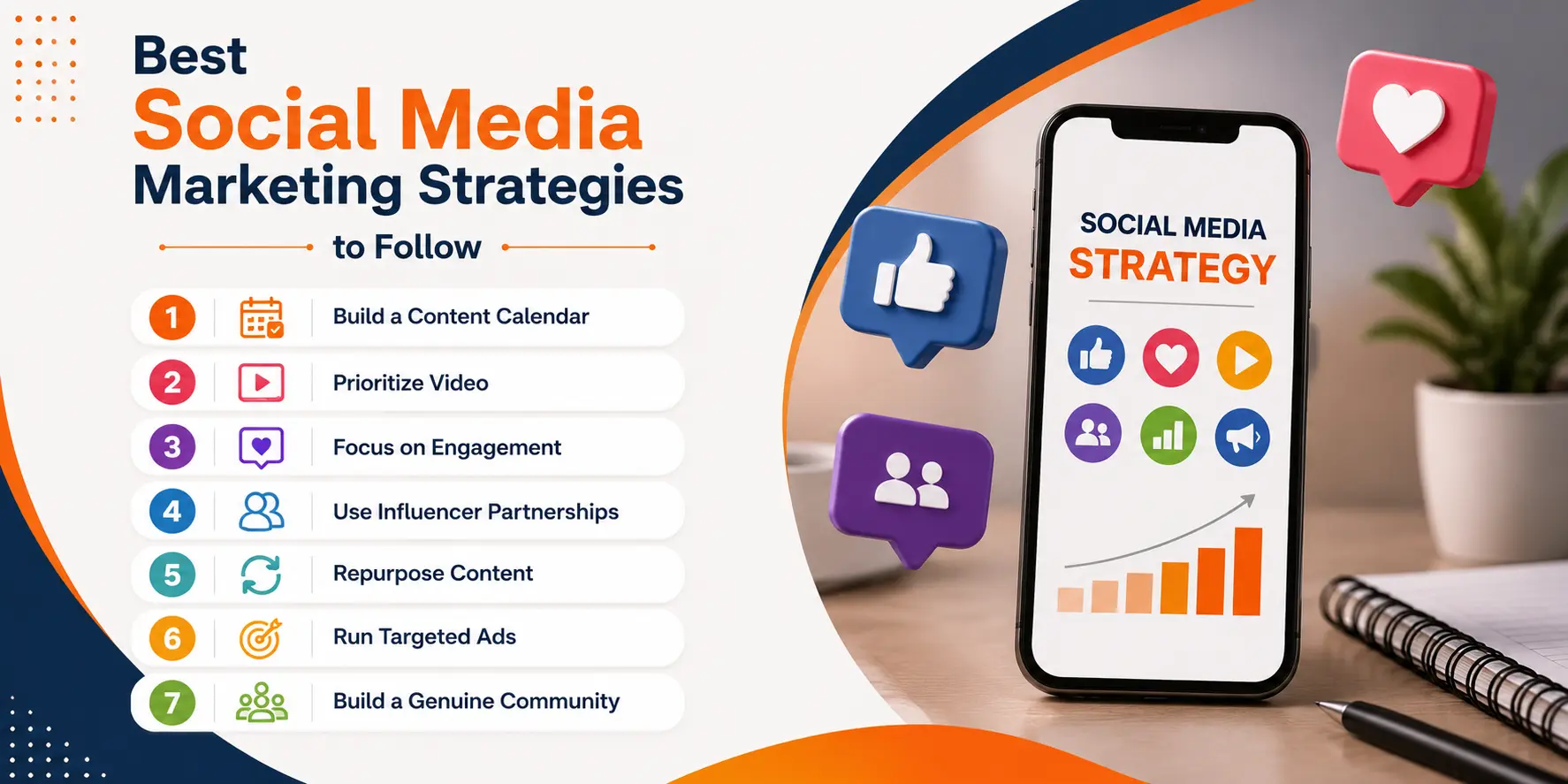
4. Use Influencer and Creator Partnerships
Influencer marketing remains one of the most trusted forms of promotion because recommendations from a familiar face feel more authentic than a direct ad. Micro-influencers, in particular, often deliver stronger engagement rates than large celebrities because their audiences trust them personally.
5. Repurpose Content Across Platforms
One well-made video can become a Reel, a YouTube Short, a TikTok, a LinkedIn clip, and a Twitter/X post. Smart brands stretch every piece of content across multiple social media platforms instead of creating everything from scratch each time. This single shift can double output without doubling workload.
6. Run Targeted Paid Campaigns
Organic reach alone rarely scales a business quickly. Pairing organic content with targeted paid ads — built around a clear audience persona — accelerates results. Even a modest digital marketing budget, spent with precision, usually outperforms a large budget spent carelessly.
7. Build a Genuine Community, Not Just an Audience
Brands that create private groups, host live Q&A sessions, or feature customer stories build loyalty that outlasts algorithm changes. A loyal community keeps showing up even when reach dips temporarily — something a purely transactional audience will never do.
Platform-Wise Strategy Snapshot
Different platforms reward different behavior. Applying the same content everywhere is one of the fastest ways to underperform.
| Platform | Best Content Type | Ideal Posting Frequency |
|---|---|---|
| Reels, carousels, behind-the-scenes | 4–6 times per week | |
| Community posts, videos, events | 3–5 times per week | |
| Industry insights, case studies | 2–4 times per week | |
| YouTube | Long-form and Shorts | 1–3 times per week |
| TikTok | Trend-based short video | Daily if possible |
| Evergreen visual guides | 3–5 times per week |
Common Mistakes That Quietly Kill Results
Even with good intentions, many brands sabotage their own social media marketing strategies through avoidable habits.
- Posting only promotional content instead of value-first content
- Ignoring comments and messages for days at a time
- Copying competitor content instead of finding a unique voice
- Chasing every new trend without checking if it fits the brand
- Never reviewing analytics, so the same mistakes repeat every month
- Treating every platform identically instead of adapting the format
Avoiding these traps is often more valuable than learning a dozen new growth hacks, because a single bad habit can quietly undo weeks of good work.
Tools That Simplify Execution
You don’t need an expensive agency to run strong social media marketing strategies. A handful of accessible tools cover most of what a small team needs:
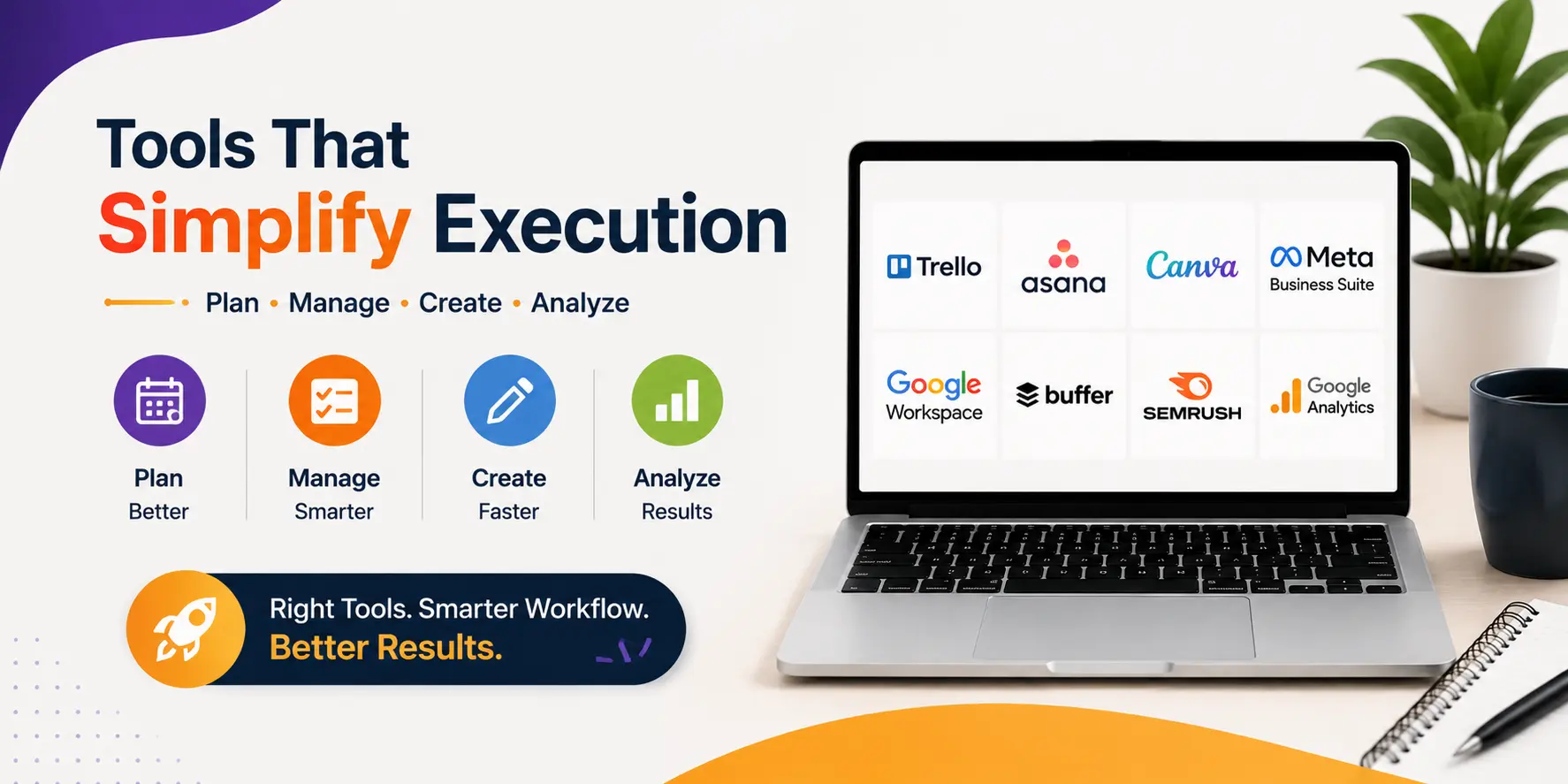
- Scheduling tools for batch-posting across platforms
- Free design tools for quick, on-brand graphics
- Analytics dashboards built into each platform
- Simple spreadsheet trackers for content calendars and performance notes
The tool matters far less than the consistency behind using it.
Measuring What Actually Matters
Vanity metrics like raw follower count feel satisfying but rarely reflect business health. Instead, track:
- Engagement rate (likes, comments, shares relative to reach)
- Click-through rate to your website or landing page
- Conversion rate from social traffic
- Follower growth rate over time, not a single snapshot
- Cost per result on any paid campaigns
Reviewing these numbers every two weeks — instead of once a year — lets you catch what’s working before momentum is lost, and cut what’s failing before it drains the budget.
Bringing It All Together
There is no secret formula that instantly guarantees viral posts. What actually works is unglamorous but reliable: clear goals, consistent posting, genuine engagement, smart repurposing, and honest performance reviews. Brands that treat their social media marketing strategies as a living system — reviewed, adjusted, and improved every month — pull ahead of competitors who post randomly and hope for the best.
Start small if you need to. Pick two platforms, commit to a realistic posting calendar, and track your numbers honestly. Consistency, applied with a real strategy behind it, beats sporadic bursts of effort every single time.
Quick Recap: What Strong Strategies Have in Common
Looking across every successful account, the pattern is rarely luck. The most effective social media marketing strategies are documented instead of improvised, reviewed consistently instead of ignored, and refined using real performance data rather than guesswork.
Learning these practical, industry-focused techniques through DSOM (Dehradun School of Online Marketing) can help marketers and businesses create strategies that deliver long-term results. Brands that treat their social media marketing strategies as an evolving playbook—not a one-time project—are the ones that continue to grow steadily over time.