A well-designed website is more than just attractive visuals. Many businesses invest heavily in design but overlook one critical aspect—search engine optimization. Without proper SEO integration, even the most beautiful website may fail to attract traffic.
This is where SEO Friendly Web Design becomes essential. It ensures that your website is not only visually appealing but also structured in a way that search engines can understand and rank effectively.
In today’s competitive digital environment, combining design with SEO is no longer optional. It is a necessity. A properly optimized website improves user experience, increases visibility, and drives long-term growth.
What is SEO Friendly Web Design?
SEO Friendly Web Design refers to designing and developing a website in a way that helps search engines crawl, index, and rank it efficiently.
It involves a combination of:
- Clean website structure
- Fast loading speed
- Mobile responsiveness
- Proper use of keywords
- User-friendly navigation
In simple terms, SEO web design focuses on both users and search engines. A good website should be easy to use for visitors and easy to understand for search engines.
Why SEO Friendly Web Design is Important
Many people think SEO starts after the website is built, but that approach often leads to poor results. SEO should be integrated from the beginning of the design process. 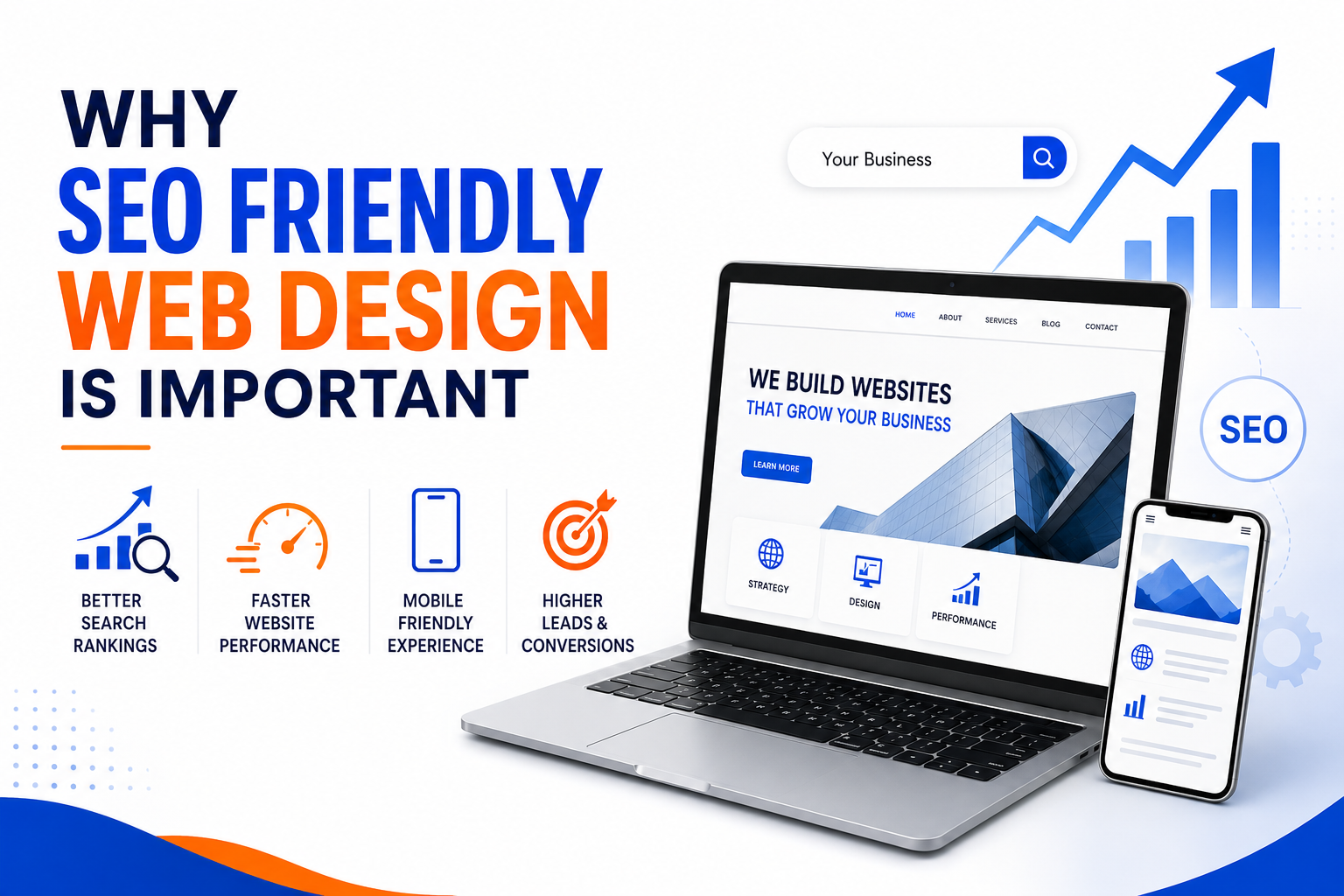
Here’s why SEO Friendly Web Design is important:
First, it improves visibility. A well-structured website is easier for search engines to crawl and index.
Second, it enhances user experience. Visitors stay longer on websites that are fast and easy to navigate.
Third, it increases conversions. When users find what they are looking for quickly, they are more likely to take action.
Finally, it reduces future costs. Fixing SEO issues after development is more time-consuming and expensive.
Key Elements of SEO Friendly Web Design
To build a successful SEO optimized website design, you need to focus on several key elements.
1. Mobile-Friendly Design
With most users browsing on mobile devices, having a responsive design is essential. A mobile-friendly website adapts to different screen sizes and provides a seamless experience.
Search engines also prioritize mobile-friendly websites in rankings.
2. Fast Loading Speed
Website speed plays a major role in both SEO and user experience. Slow websites frustrate users and increase bounce rates.
To improve speed:
- Optimize images
- Use lightweight code
- Choose reliable hosting
3. Clean URL Structure
URLs should be simple, readable, and keyword-rich.
Example:
- Good: yourwebsite.com/seo-web-design
- Bad: yourwebsite.com/page?id=123
Clean URLs help both users and search engines understand your content.
4. Proper Use of Headings
Headings (H1, H2, H3) organize your content and make it easier to read. They also help search engines understand the structure of your page.
5. Optimized Images
Images improve user experience, but they should be optimized for SEO.
Use:
- Proper file names
- Alt text with keywords
- Compressed image sizes
SEO Web Design Overview
| Element | Importance | Benefit |
| Mobile-Friendly | High | Better rankings |
| Page Speed | High | Lower bounce rate |
| URL Structure | Medium | Easy indexing |
| Headings | Medium | Content clarity |
| Image Optimization | Medium | Faster loading |
User Experience and SEO Connection
One of the most important aspects of website design for SEO is user experience. Search engines aim to provide the best results to users, so they prioritize websites that offer a good experience.
Factors that improve user experience include:
- Easy navigation
- Clear layout
- Readable content
- Fast loading speed
When users stay longer on your site and interact with your content, it signals search engines that your website is valuable.
On-Page SEO in Web Design
On-page SEO is a key part of SEO Friendly Web Design. It includes optimizing individual pages for better rankings.
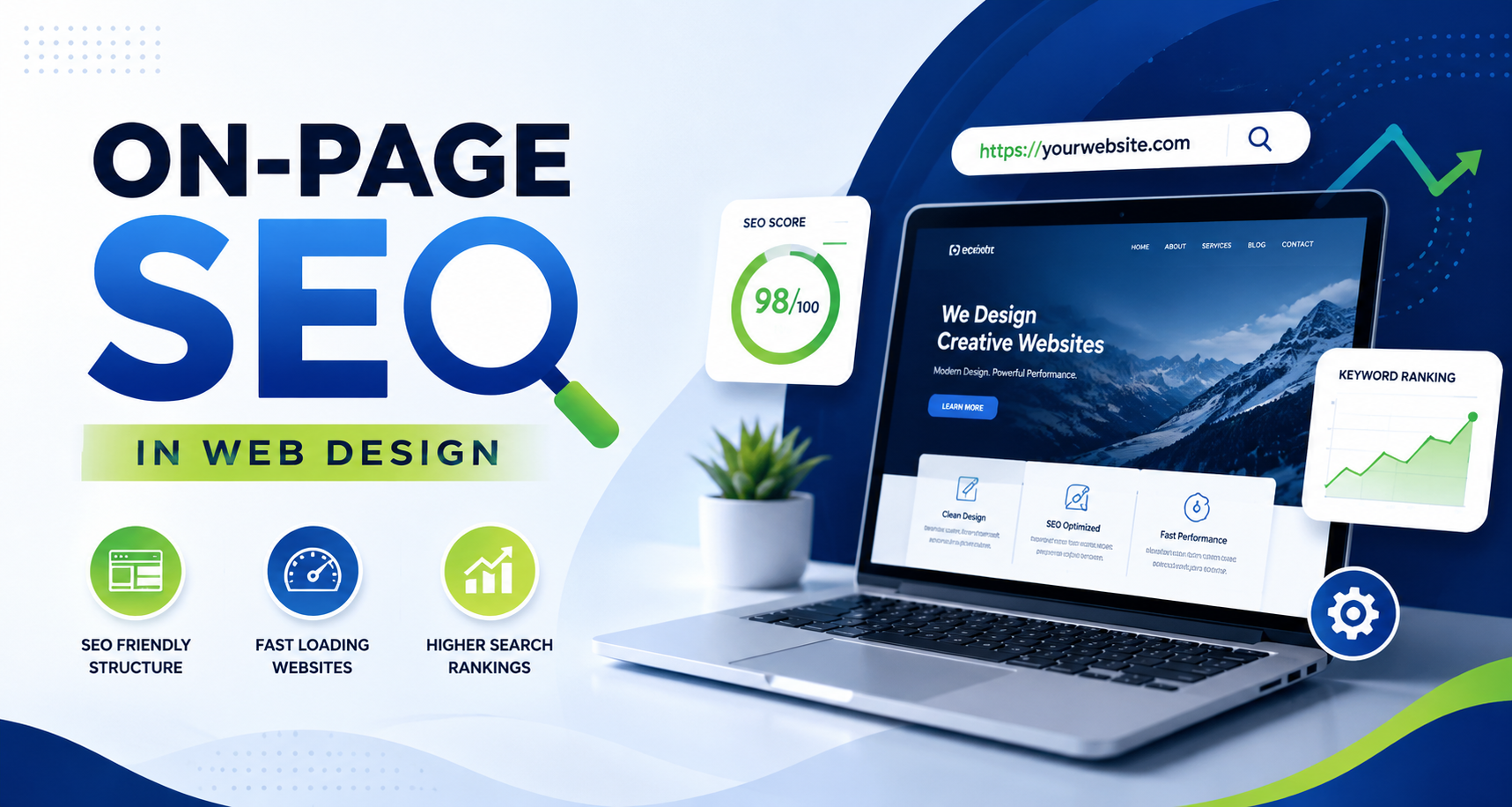
Important elements include:
- Title tags with keywords
- Meta descriptions
- Internal linking
- Keyword placement in content
These elements help search engines understand your content and improve visibility.
Common Mistakes to Avoid
Even with good design, certain mistakes can negatively impact your SEO.
Avoid these:
- Using heavy images that slow down the site
- Ignoring mobile optimization
- Poor navigation structure
- Duplicate content
- Missing meta tags
Fixing these issues can significantly improve your SEO performance.
How to Build an SEO Optimized Website Design
Creating an SEO optimized website design requires a step-by-step approach.
Step 1: Plan Your Website Structure
Start with a clear structure that organizes your pages logically.
Step 2: Research Keywords
Identify keywords relevant to your business and include them naturally in your content.
Step 3: Design for Users First
Focus on user experience while keeping SEO in mind.
Step 4: Optimize Technical Elements
Ensure fast loading speed, mobile responsiveness, and clean coding.
Step 5: Test and Improve
Regularly analyze your website performance and make improvements based on data.
Real-Life Example
Imagine you have a business website with great design but slow loading speed. Users leave quickly, and your rankings drop.
By improving speed, optimizing images, and simplifying navigation, your website becomes more user-friendly. As a result, your rankings improve and traffic increases.
This shows how SEO web design directly impacts performance.
Benefits of SEO Friendly Web Design
A well-optimized website offers multiple benefits:
- Higher search engine rankings
- Better user experience
- Increased traffic
- Higher conversion rates
- Long-term growth
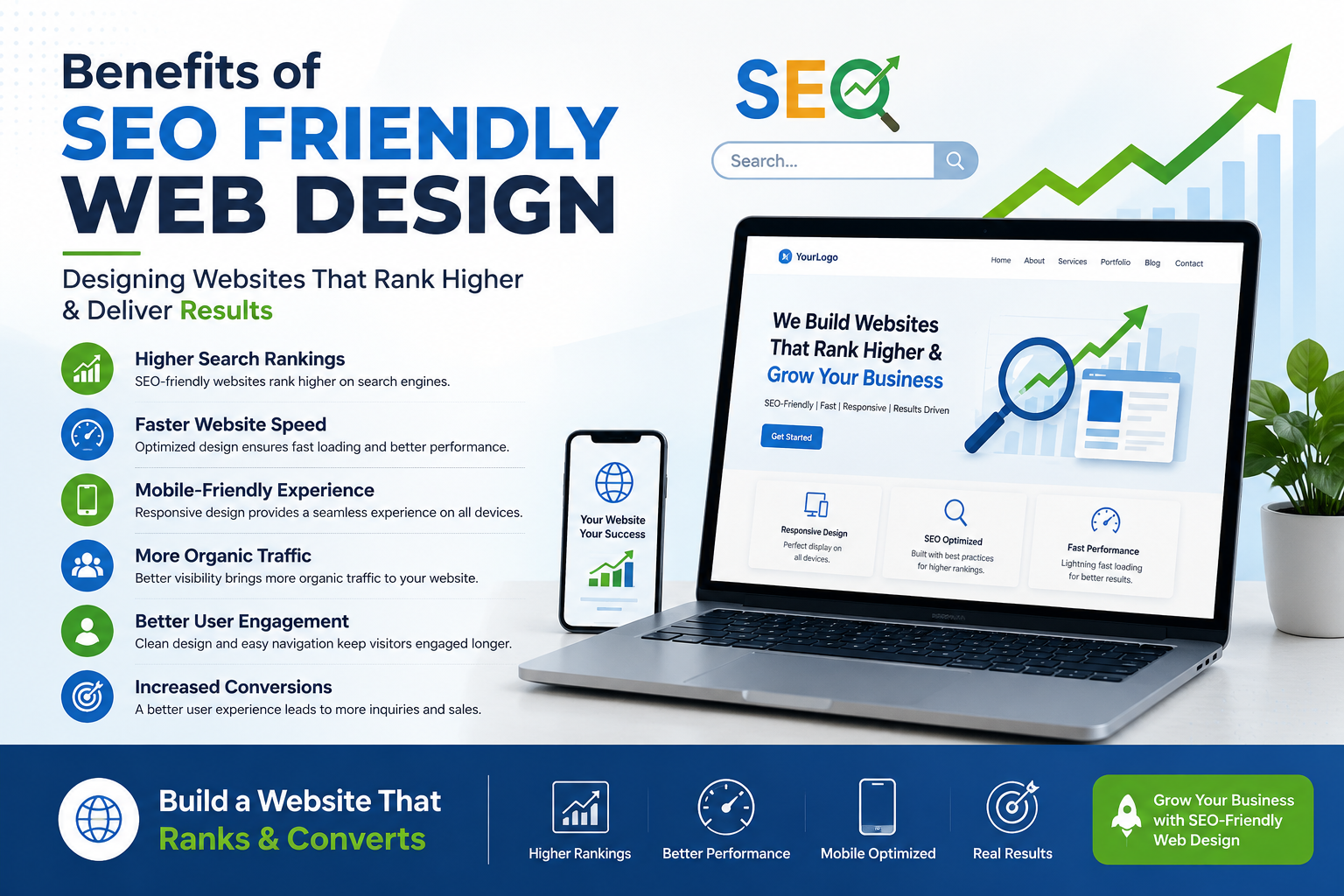
These benefits make SEO Friendly Web Design a crucial investment.
Conclusion
SEO Friendly Web Design is not just about creating a visually appealing website. It is about building a platform that performs well in search engines and delivers value to users.
For those looking to build expertise in digital marketing, SEO, and web design, DSOM (Dehradun School of Online Marketing), offers industry-focused training programs designed to equip students and professionals with practical skills. With hands-on learning and real-world projects, DSOM helps learners stay ahead in the ever-evolving digital landscape and build successful careers in online marketing.
By focusing on speed, structure, mobile responsiveness, and user experience, you can create a website that ranks higher and converts better.
In the long run, integrating SEO into web design will help you achieve sustainable growth and stay ahead of the competition.