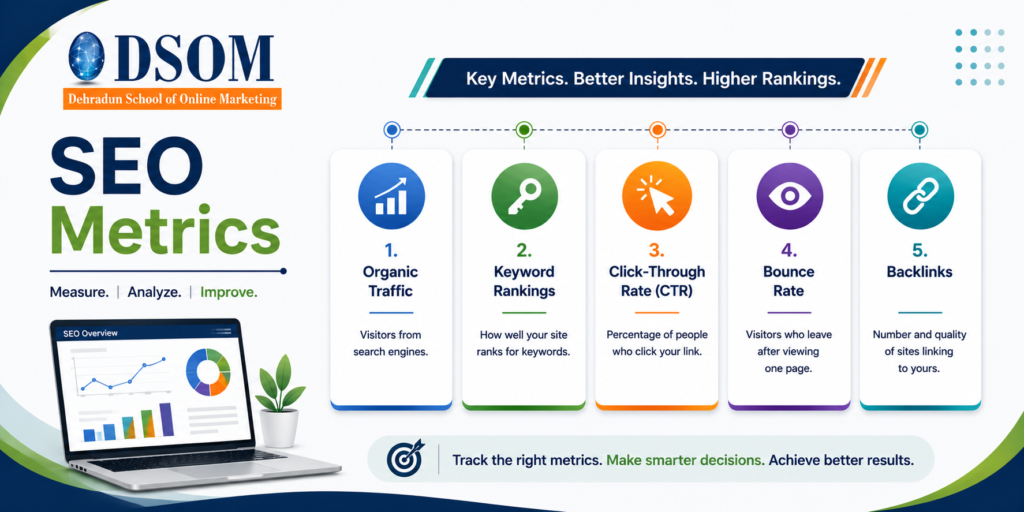
Search engine optimization is often seen as a long-term process, and one of the biggest challenges people face is understanding whether their efforts are actually working. Many beginners focus only on publishing content and targeting keywords, but without measuring performance, it becomes difficult to improve results.
This is where SEO Metrics become essential. They help you track progress, identify weaknesses, and make data-driven decisions. Instead of relying on assumptions, SEO metrics provide clear insights into how your website is performing and how users are interacting with your content.
Whether you are managing a blog, business website, or e-commerce platform, understanding SEO metrics is critical for growth. In this guide, we will explore what SEO metrics are, why they matter, and how you can use them effectively to improve your website performance.
What Are SEO Metrics?
SEO Metrics are measurable data points that help evaluate the effectiveness of your SEO strategy. These metrics provide insights into various aspects of your website, such as traffic, engagement, rankings, and conversions.
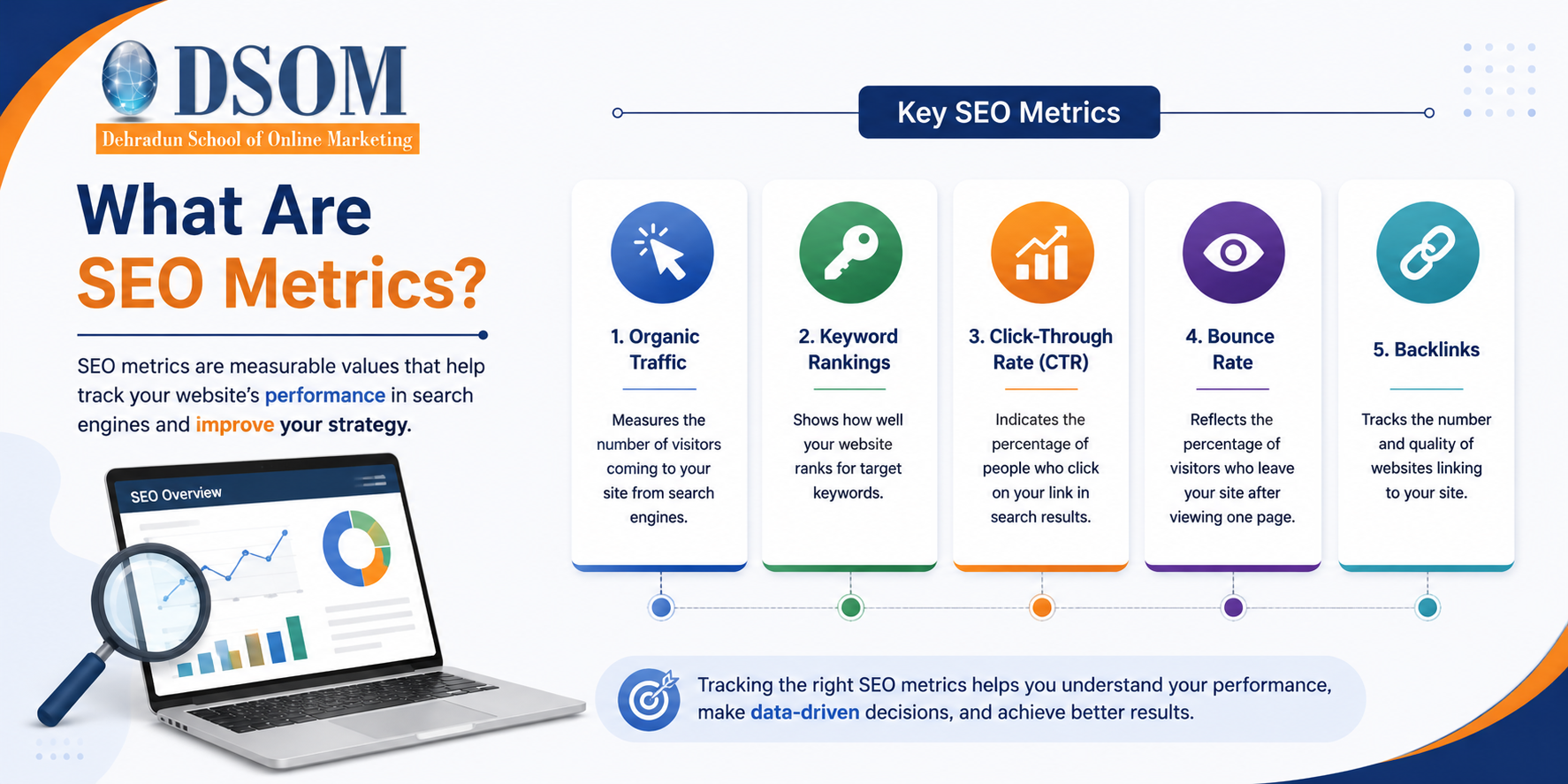
In simple terms, SEO metrics answer important questions like:
- How many people are visiting your website?
- Which keywords are bringing traffic?
- Are users engaging with your content?
- Is your website improving in search rankings?
By analyzing these metrics, you can understand what is working well and what needs improvement.
Why SEO Metrics Are Important
SEO is not just about ranking on search engines; it is about delivering value to users and achieving measurable results. Without tracking SEO metrics, you are essentially working without direction.
Here are some key reasons why SEO metrics are important:
- First, they help you evaluate your performance. Instead of guessing whether your strategy is effective, you can rely on actual data.
- Second, they allow you to identify problems early. For example, if your traffic drops suddenly, metrics can help you find the cause.
- Third, they support better decision-making. You can focus on strategies that deliver results and avoid wasting time on ineffective approaches.
Finally, SEO metrics help you track growth over time. This is especially important for long-term success.
Key SEO Metrics You Should Track
Understanding the right metrics is crucial for improving your SEO performance. Below are the most important SEO metrics you should focus on.
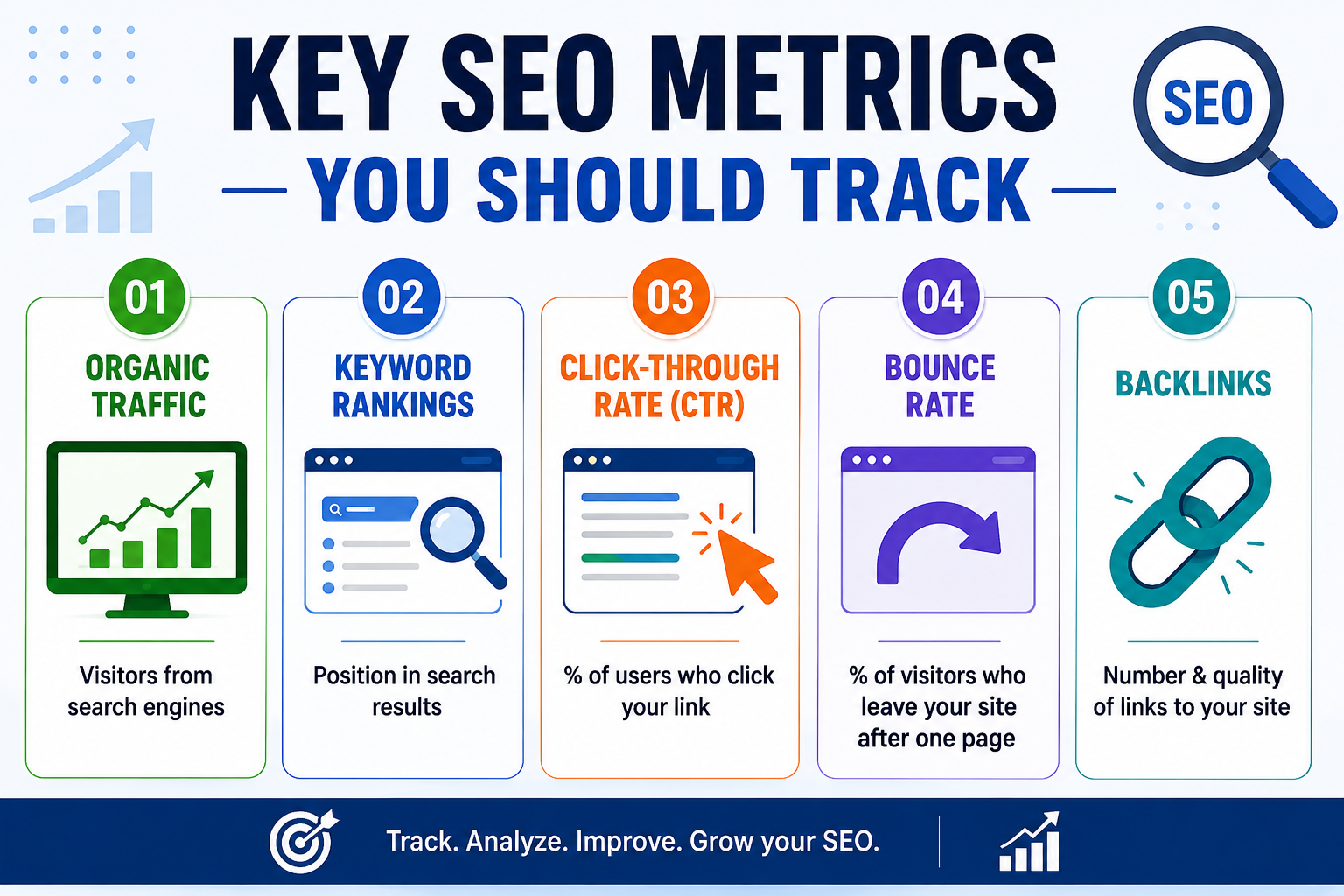
1. Organic Traffic
Organic traffic refers to the number of visitors who come to your website through search engines. This is one of the most important website performance metrics because it directly reflects your visibility.
If your organic traffic is increasing, it indicates that your SEO efforts are working. On the other hand, a decline may signal issues with your content, keywords, or competition.
2. Keyword Rankings
Keyword rankings show the position of your website in search engine results for specific keywords. This metric helps you understand how visible your content is to users.
Higher rankings generally lead to more traffic. Monitoring keyword rankings also helps you identify which keywords are performing well and which need improvement.
3. Click-Through Rate (CTR)
Click-through rate measures how many users click on your website after seeing it in search results. It is calculated by dividing clicks by impressions and multiplying by 100.
A high CTR indicates that your title and meta description are appealing. If your CTR is low, you may need to improve how your content appears in search results.
4. Bounce Rate
Bounce rate refers to the percentage of visitors who leave your website without interacting with it. This metric is a strong indicator of user experience.
A high bounce rate may suggest that your content is not relevant, your website is slow, or your design is not engaging. Improving content quality and usability can help reduce bounce rate.
5. Backlinks
Backlinks are links from other websites that point to your site. They play a major role in SEO analytics because search engines consider them as a sign of credibility.
The quality of backlinks is more important than quantity. Links from reputable websites can significantly improve your rankings.
SEO Metrics Overview
| Metric | Purpose | Impact |
| Organic Traffic | Measures visitors | High |
| Keyword Rankings | Tracks visibility | High |
| CTR | Measures engagement | Medium |
| Bounce Rate | Indicates user behavior | Medium |
| Backlinks | Builds authority | High |
Advanced SEO Metrics to Consider
Once you understand the basics, you can explore advanced metrics to gain deeper insights.
Domain Authority
Domain Authority is a score that predicts how well your website can rank. Higher authority often means better ranking potential.
Page Speed
Page speed measures how quickly your website loads. Faster websites provide better user experience and tend to rank higher.
- Conversion Rate
Conversion rate shows how many visitors complete a desired action, such as making a purchase or signing up. This is an important metric when you want to measure SEO performance in terms of business results.
Tools for Tracking SEO Metrics
Tracking SEO metrics becomes easier with the right tools. Some popular tools include:
- Google Analytics for traffic and user behavior
- Google Search Console for keyword and search performance
- Ahrefs and SEMrush for backlinks and competitor analysis
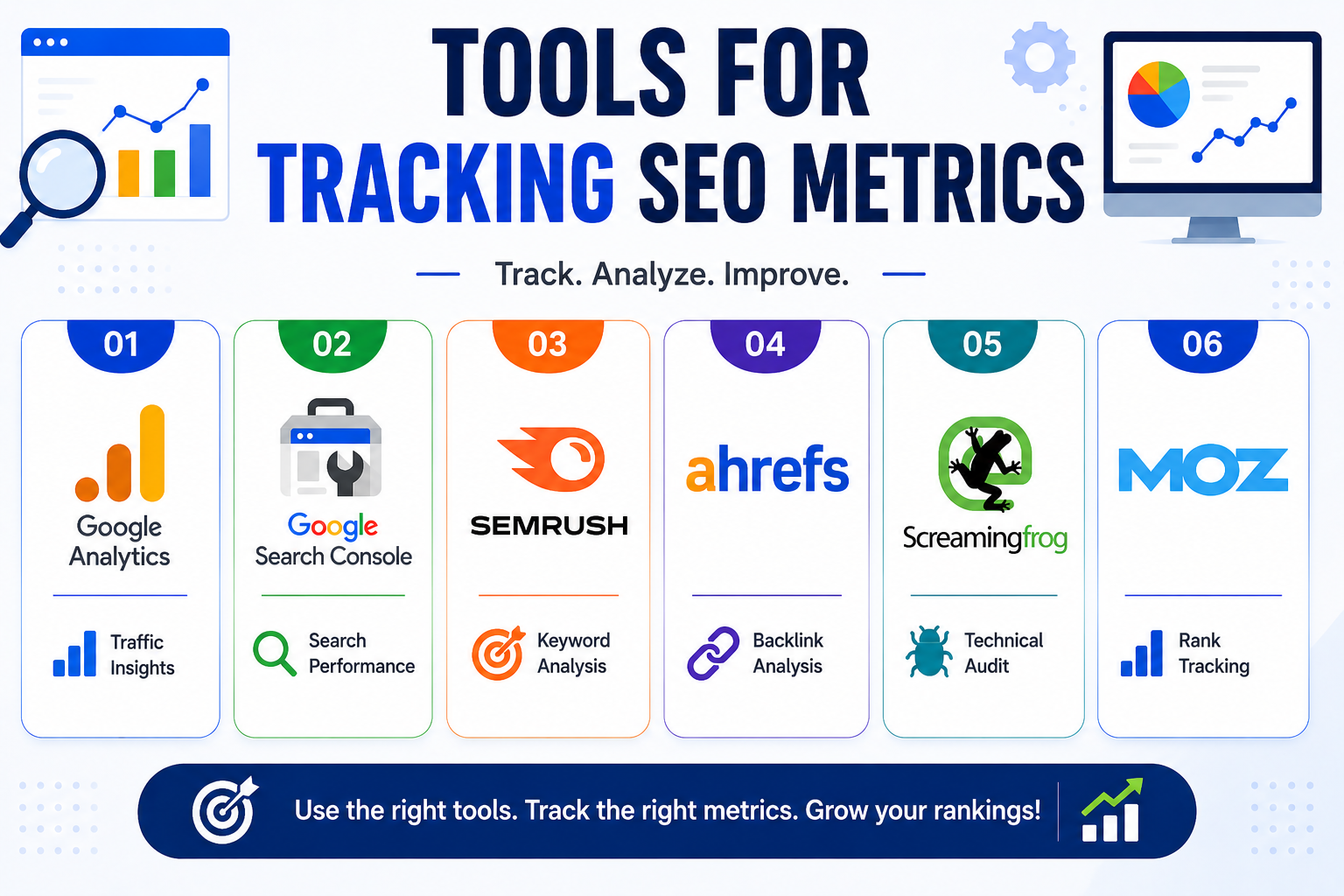
These tools provide detailed insights and help you make informed decisions.
How to Improve Your SEO Metrics
Improving SEO metrics requires a combination of strategy and consistency. Here are some effective methods.
1. Focus on High-Quality Content
Content remains the most important factor in SEO. Your content should be informative, engaging, and relevant to user needs. High-quality content naturally improves traffic and engagement.
2. Optimize Keywords Properly
Use keywords in a natural and meaningful way. Include them in titles, headings, and throughout the content without overusing them.
3. Improve Website Speed
A fast-loading website enhances user experience and reduces bounce rate. Optimizing images and using reliable hosting can help improve speed.
4. Build Quality Backlinks
Focus on earning backlinks from trustworthy and relevant websites. This improves your website’s authority and rankings.
5. Enhance User Experience
A user-friendly website encourages visitors to stay longer and explore more pages. Ensure your site is mobile-friendly and easy to navigate.
Common Mistakes to Avoid
Many people make mistakes that negatively impact SEO performance. Avoid the following:
- Ignoring SEO analytics
- Creating low-quality content
- Overusing keywords
- Not updating old content
- Neglecting mobile optimization
Being aware of these mistakes can help you maintain consistent growth.
Real-World Example
Consider a scenario where a website experiences low traffic. By analyzing SEO metrics, you may discover that the keyword rankings are low or the CTR is poor. By improving titles and content, you can increase visibility and engagement.
Similarly, if bounce rate is high, improving content quality and design can help retain users.
This shows how SEO metrics guide your decisions and help you improve performance step by step.
Conclusion
SEO Metrics are an essential part of any successful SEO strategy. They provide valuable insights into your website performance and help you make informed decisions.
By tracking metrics such as organic traffic, keyword rankings, CTR, and backlinks, you can identify opportunities for improvement and achieve better results. The key is to focus on continuous analysis and optimization.
SEO is not a one-time effort but an ongoing process. With the right use of SEO metrics, you can build a strong online presence and achieve long-term success.
Understanding and tracking SEO metrics is essential for measuring website performance, improving search rankings, and driving sustainable organic growth. From keyword rankings and organic traffic to click-through rates and conversions, the right metrics help businesses make data-driven decisions. At DSOM (Dehradun School of Online Marketing), we emphasize the importance of performance-focused SEO strategies and analytics to help brands monitor their progress, identify opportunities, and achieve long-term digital marketing success.