YouTube is the second largest search engine in the world. With over 500 hours of video uploaded every minute, simply uploading good content is no longer enough to get seen. If you want your videos to rank, get recommended, and consistently grow your channel, you need a deliberate YouTube SEO strategy behind every upload.
This complete guide covers everything you need to know about youtube search engine optimization — from keyword research and title optimization to the YouTube algorithm and the ranking factors that matter most in 2026.
What Is YouTube SEO?
YouTube SEO is the process of optimizing your videos, channel, and metadata so they rank higher in YouTube search results and get recommended more often across the platform. Just like Google SEO helps web pages rank, youtube search engine optimization helps your videos appear when people search for topics you cover — and keeps them appearing in suggested feeds long after upload day.
The goal of youtube search engine optimization goes beyond search rankings. It is about maximizing every signal the algorithm uses to decide whether your content deserves to be surfaced — to searchers, to subscribers, and to new audiences discovering your channel for the first time.
How the YouTube Algorithm Works
Understanding the YouTube algorithm is essential before applying any YouTube SEO tactic. YouTube does not rank videos purely by view count or upload date.
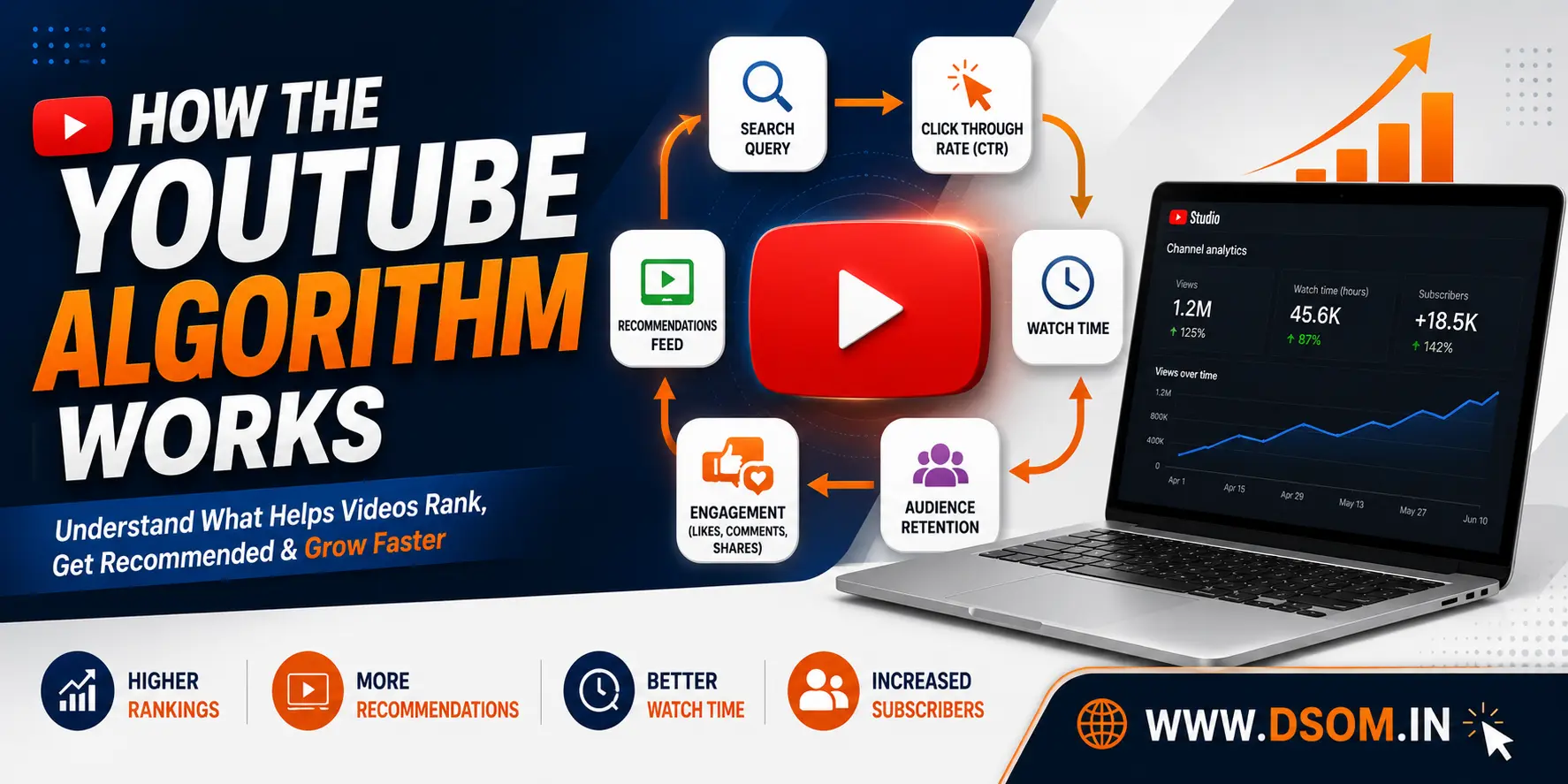
It evaluates a combination of three signals:
- Relevance — how closely your video matches what a viewer searched for. Title optimization, description writing, and tag selection all communicate relevance directly to the algorithm.
- Engagement — how viewers interact with your content. Watch time, click-through rate (CTR), likes, comments, shares, and saves all signal that your video is worth showing to more people.
- Satisfaction — measured through post-watch behavior like thumbs ratings and whether viewers return to your channel. High satisfaction keeps the algorithm recommending your content long-term.
Every youtube search engine optimization decision you make should serve one of these three signals.
YouTube SEO Ranking Factors at a Glance
| Ranking Factor | What It Measures | Impact Level |
|---|---|---|
| Video Title | Keyword relevance and click appeal | Very High |
| Description | Context, keywords, and searchability | High |
| Tags | Topic relevance and category signals | Medium |
| Click-Through Rate (CTR) | How often viewers click your thumbnail | Very High |
| Watch Time | Total minutes watched per session | Very High |
| Audience Retention | Percentage of video viewers watch | Very High |
| Engagement Rate | Likes, comments, shares, saves | High |
| Channel Authority | Subscriber count, overall performance | Medium–High |
| Closed Captions | Accessibility and keyword indexing | Medium |
| Video File Name | Keyword signal before upload | Low–Medium |
| Publish Frequency | Channel consistency signals | Medium |
Step 1: YouTube Keyword Research
Every strong YouTube SEO strategy starts with YouTube keyword research. You need to know what your audience is actually searching for before you create or optimize a single video.
- YouTube’s Search Bar — Type your topic and study the autocomplete suggestions. These are real queries people are searching for right now. Each suggestion is a viable keyword opportunity.
- YouTube Studio Analytics — If you have existing videos, Studio shows which search terms are already bringing viewers to your channel. This is your richest source of real audience keyword data.
- Keyword Tools — TubeBuddy, VidIQ, and Ahrefs all provide keyword search volume, competition data, and related ideas. For serious YouTube video optimization, these tools are worth the investment.
- Competitor Research — Study top-performing videos on channels with similar audiences. What titles keep appearing? What topics get the most views? Their success signals what your audience wants to watch.
The goal of keyword research is finding terms with meaningful search volume and manageable competition — especially important when your channel is still building authority.
Step 2: YouTube Title Optimization
Your video title is the most important youtube search engine optimization element outside of the video itself. It directly influences both your search ranking and your click-through rate — affecting discovery and engagement simultaneously.
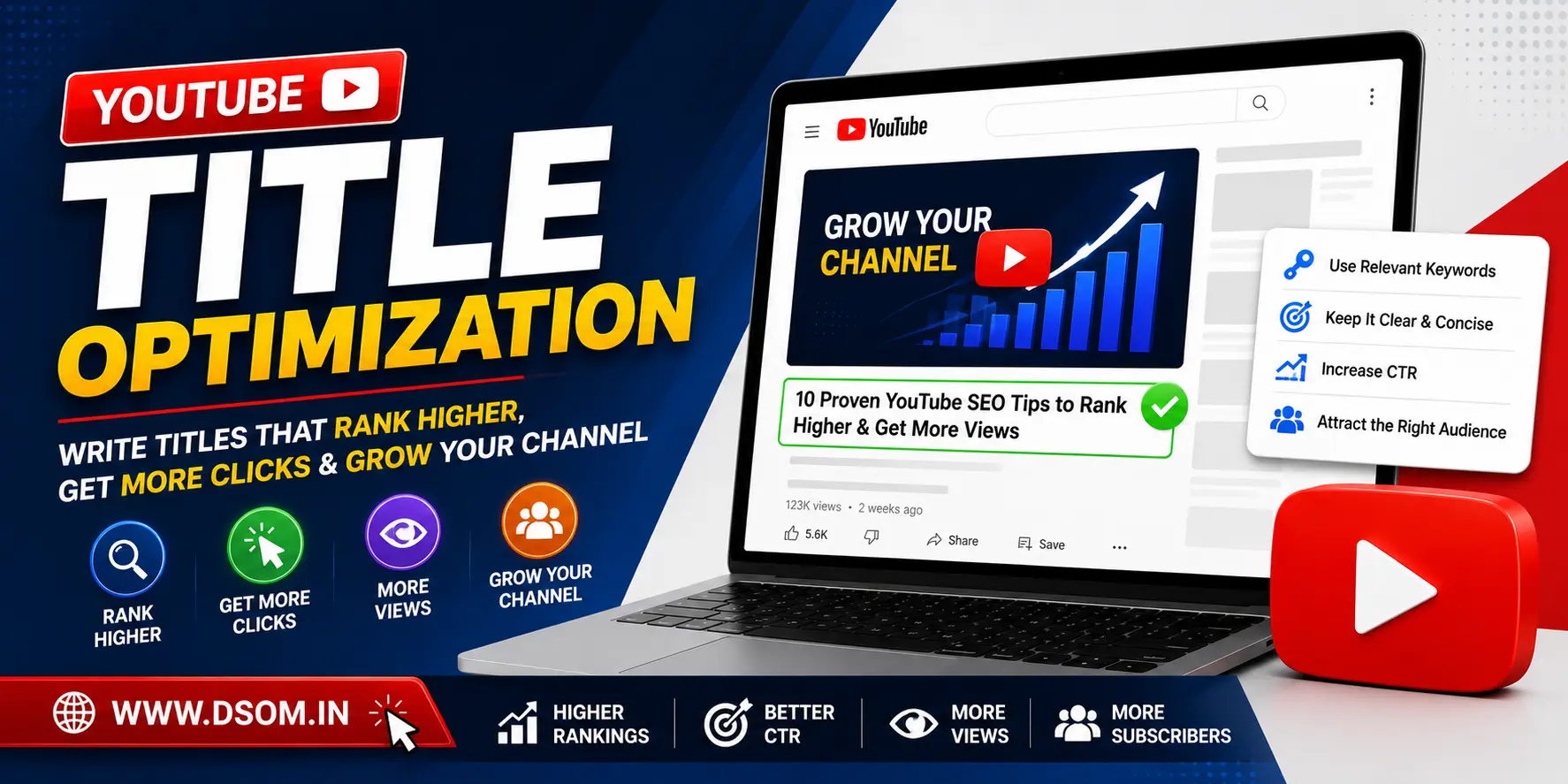
YouTube Title Optimization Best Practices:
- Place your primary keyword as close to the beginning of the title as possible
- Keep titles under 60 characters so they display fully on all devices
- Write for the human reader first — the title needs to earn the click, not just contain a keyword
- Use numbers, questions, or power words (Complete, Proven, Step-by-Step) to increase CTR
- Avoid misleading titles — they spike early drop-off and hurt audience retention over time
A title like “YouTube SEO: 10 Proven Steps to Rank Any Video in 2026” works because it contains the focus keyword, communicates a clear benefit, includes a number, and sets an honest expectation.
Step 3: YouTube Description Optimization
Your video description is one of the most underused YouTube SEO tools available. YouTube reads it to understand your video’s topic, and viewers use it for context before clicking or subscribing.
Description Best Practices:
- Put your primary keyword and core value in the first two sentences — only the first 150 characters show before “Show More”
- Write a genuine 200–300 word description that naturally incorporates your focus keyword and related terms
- Include timestamps for longer videos — they improve UX and create additional keyword-rich anchor points
- Add relevant links and a clear call to action (subscribe, comment, visit your website)
Think of YouTube description optimization as writing a mini article about your video. The more useful context you provide, the better the YouTube algorithm understands your content — and the more searches it can rank you for.
Step 4: YouTube Tags Strategy
YouTube tags help the algorithm connect your video to related content and surface it as a suggested video alongside similar material. Their direct ranking impact has decreased, but tags remain a useful video SEO signal for topic categorization.
How to Use YouTube Tags:
- Use your exact focus keyword as the first tag
- Add 2–3 keyword variations and related terms
- Include broader topic category tags
- Use 5–10 total tags — quality over quantity
- Never use irrelevant tags — YouTube can penalize misleading tagging
Tools like TubeBuddy and VidIQ show which tags competitors use on their top videos, giving you a reliable starting point.
Step 5: Thumbnail Optimization for Higher CTR
Your thumbnail is not a traditional YouTube SEO element, but it is one of the most powerful levers for improving click-through rate — a major YouTube ranking factor. When a high percentage of people click your video in search results or suggested feeds, the YouTube algorithm interprets that as quality and shows it to more people.

What Makes an Effective Thumbnail:
- High contrast colors that stand out against YouTube’s white interface
- Bold text overlay of 3–5 words maximum that complements the title
- An expressive human face where relevant — faces consistently drive higher CTR
- A single clear focal point — cluttered thumbnails underperform
- Consistent visual style across your channel for brand recognition
Step 6: Boost Watch Time and Audience Retention
Watch time and audience retention are the most heavily weighted YouTube ranking factors. A video that keeps viewers watching will always outrank one that loses them in the first 30 seconds — regardless of how well optimized the metadata is.
Ways to Improve Audience Retention:
- Open with a strong hook in the first 15 seconds — state the problem you are solving
- Use a clear structure and preview it early so viewers know what is coming
- Cut unnecessary filler — viewers who sense wasted time leave fast
- Use pattern interrupts (new angle, graphic, question) every 60–90 seconds
Even a 5–10% improvement in average audience retention measurably improves how the YouTube algorithm treats your video over time.
Step 7: Build Engagement Signals
Engagement is the algorithm’s shortcut for quality. Videos with strong likes, comments, shares, and saves are shown to more people because high engagement signals that the content genuinely resonated.
How to Drive More Engagement:
- Ask a specific question at the end of your video to spark comments
- Reply to comments in the first hour after publishing — early activity signals momentum
- Ask for likes naturally within the video, explaining why it helps
- Create content that sparks discussion — comparisons and opinions consistently outperform neutral how-to content in raw engagement volume
YouTube SEO Tips: Quick-Reference Checklist
| Action | Priority |
|---|---|
| Research keywords before filming | Essential |
| Include focus keyword in video title | Essential |
| Write a 200+ word description with keywords | Essential |
| Design a custom, high-contrast thumbnail | Essential |
| Add 5–10 relevant tags (start with exact keyword) | Important |
| Add closed captions for accessibility and indexing | Important |
| Name the video file with your keyword before upload | Minor |
| Create a relevant playlist for watch session extension | Important |
| Pin a comment with links or key information | Useful |
| Publish on a consistent schedule | Important |
How to Grow a YouTube Channel with SEO
YouTube SEO is a compounding strategy. The first few months may feel slow — but each optimized video builds your channel’s authority, helps the YouTube algorithm understand your niche, and creates a library of content that generates views and subscribers continuously.
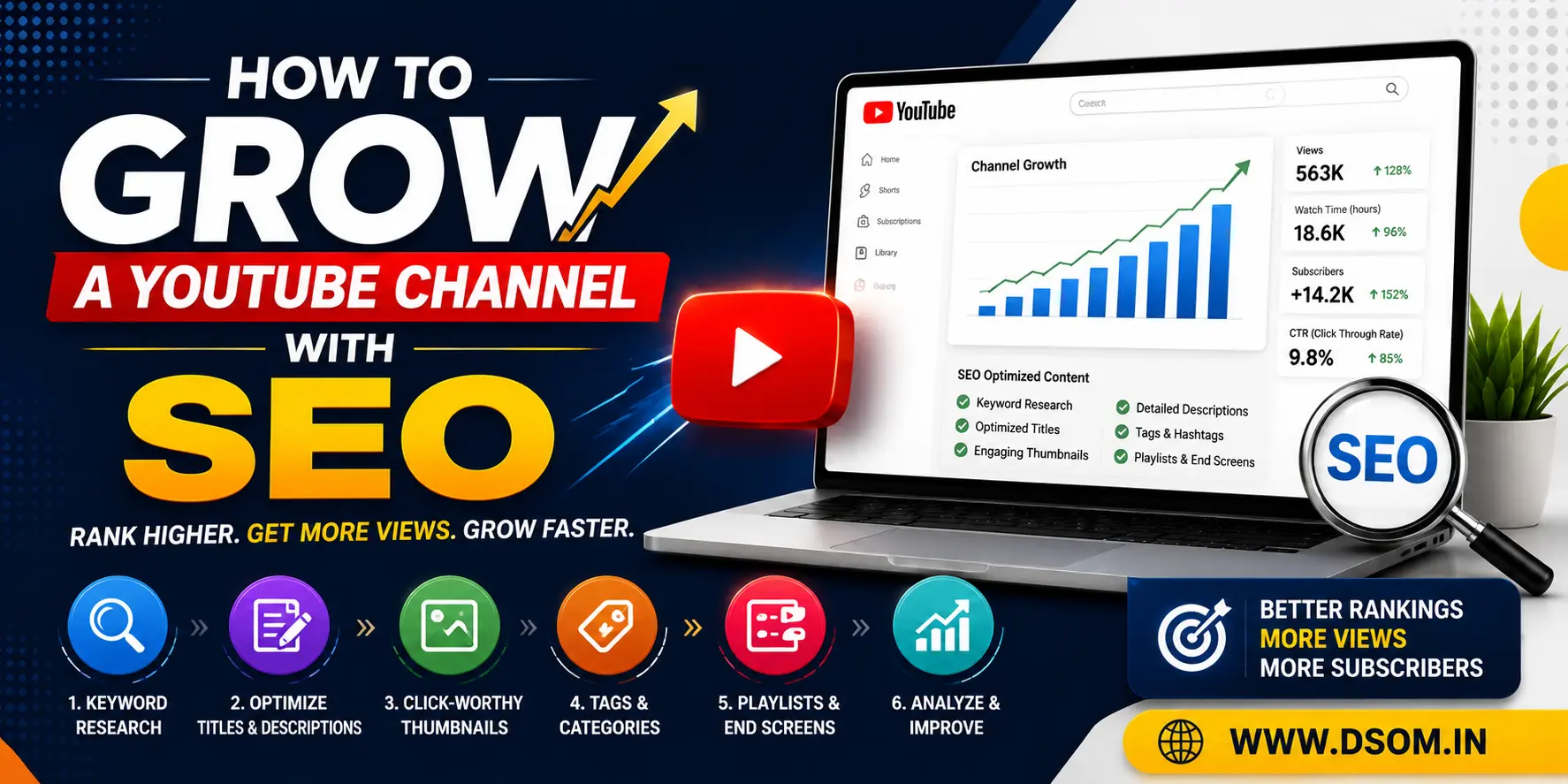
The channels that grow consistently share a few habits: they know their audience’s search behavior, they optimize every video without exception, they study their analytics weekly, and they treat youtube search engine optimization as a permanent part of creation — not a one-time task.
Start with YouTube keyword research for your next video, apply every step in this guide, and review your analytics after 30 days. The data will show you exactly where to focus next — and that focused iteration is how channels go from invisible to unstoppable.
Final Thoughts
YouTube SEO is one of the highest-leverage skills a creator or brand can develop. With billions of searches happening on the platform daily and the YouTube algorithm rewarding consistency and quality, the investment you make in video SEO today keeps paying returns for months and years after each upload.
If you’re looking to build advanced YouTube SEO skills and stay ahead of algorithm updates, learning from industry experts and practical digital marketing programs such as DSOM (Dehradun School of Online Marketing) can help accelerate your growth and provide hands-on strategies that deliver measurable results.
Master YouTube keyword research, nail your title and description optimization, build engagement deliberately, and let the algorithm work for you. That is the complete youtube search engine optimization playbook — and every creator who applies it consistently sees results.