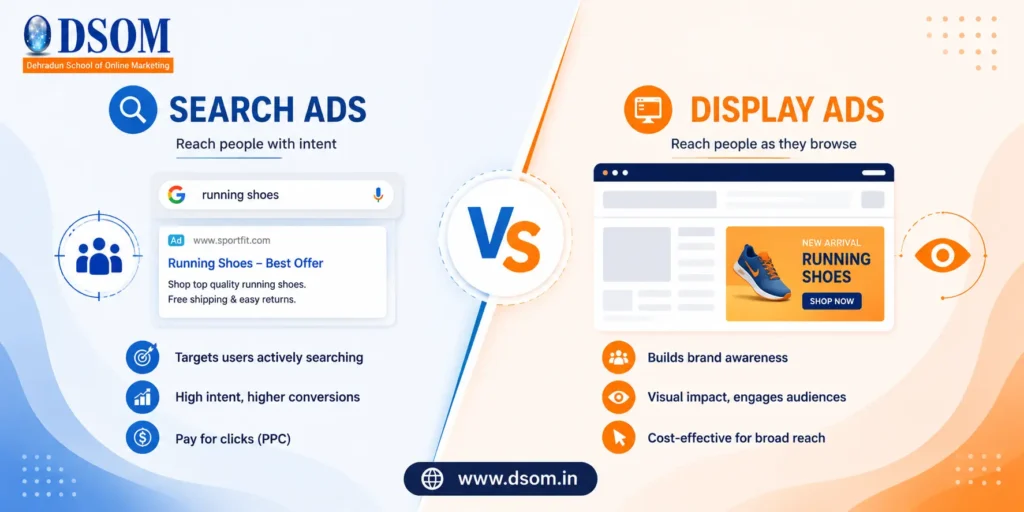
If you have ever set up a Google Ads account and stared at the campaign type options wondering which one to choose, you are not alone. Search Ads vs Display Ads is one of the most debated topics in paid advertising — and getting it wrong means money spent on the wrong audience at the wrong moment.
Both campaign types live inside Google Ads, both can drive results, but they work in fundamentally different ways. Understanding Search Ads vs Display Ads is the strategic foundation of every paid advertising decision you make in 2026.
What Are Search Ads?
In the Search Ads vs Display Ads debate, Search Ads are the high-intent option. Google Search Ads are text-based paid advertisements that appear at the top and bottom of Google’s search results pages when a user types in a relevant keyword. They are the most recognizable form of PPC advertising — the “Sponsored” listings you see when you search for almost anything commercial online.
The core mechanism behind Search Ads is intent. A user actively types a query — “emergency plumber Dubai,” “best CRM software,” “dentist near me” — and your ad appears in response to that specific search. You are not interrupting someone. You are answering them at exactly the moment they are looking.
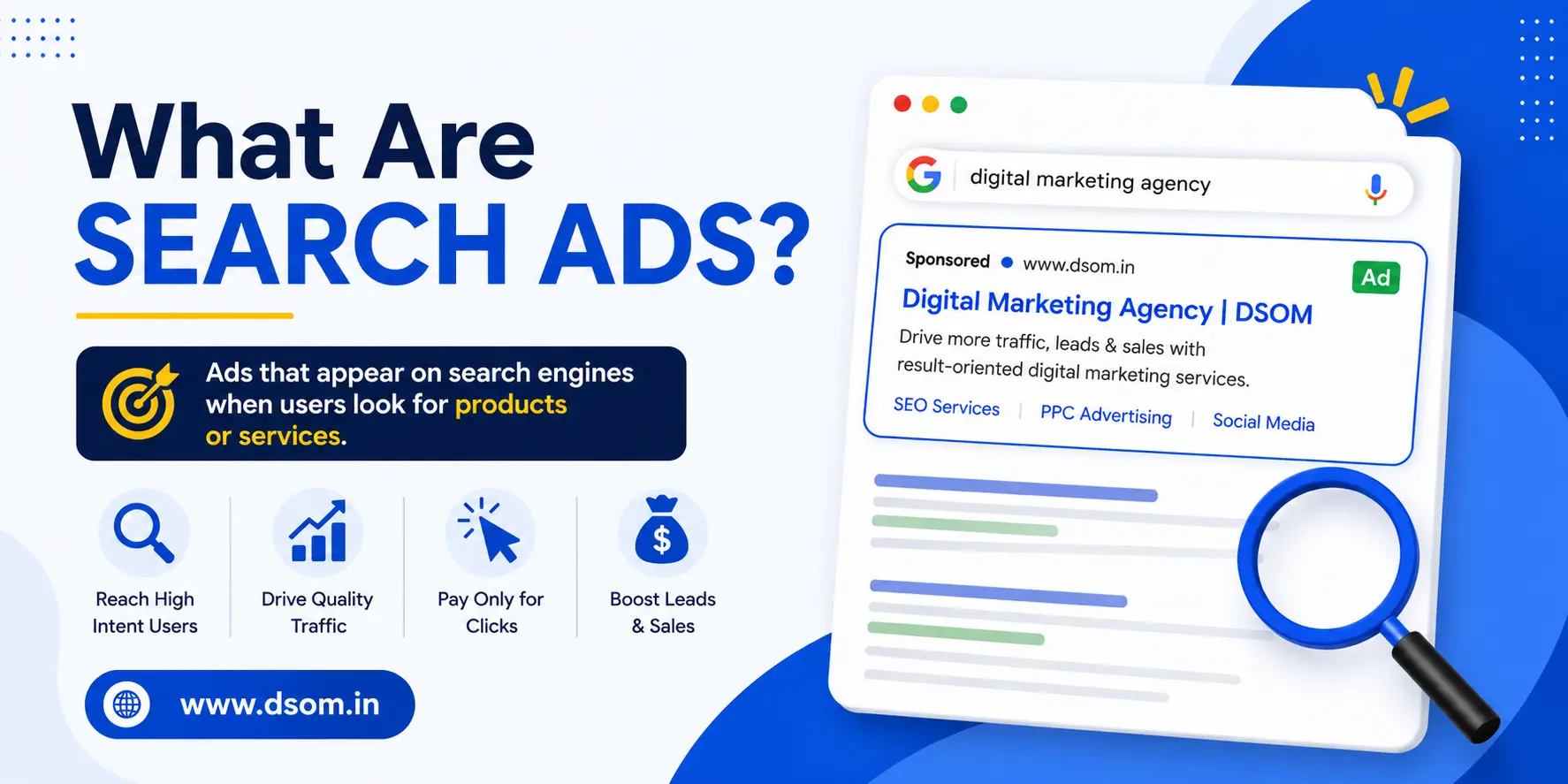
Key Characteristics of Search Ads:
- Text-based format — headlines, descriptions, and a URL
- Keyword-triggered — ads appear when specific search terms are used
- High purchase intent — users are actively searching for a solution
- Pay-per-click (PPC) — you only pay when someone clicks
- Immediate visibility — appears in search results within hours of launch
- Competitive bidding — you bid against competitors for ad position
What Are Display Ads?
On the other side of Search Ads vs Display Ads, Display Ads are the reach-and-awareness option. Google Display Ads appear across the Google Display Network (GDN) — a vast network of over 2 million websites, apps, and YouTube that have partnered with Google to show ads. These are the visual banner ads, image ads, and responsive ads you see while reading a news article, browsing a blog, or using a mobile app.
Unlike Search Ads, Display Ads are not triggered by a specific search. Instead, they are shown to audiences based on who they are — their demographics, interests, browsing behavior, or previous interactions with your website.
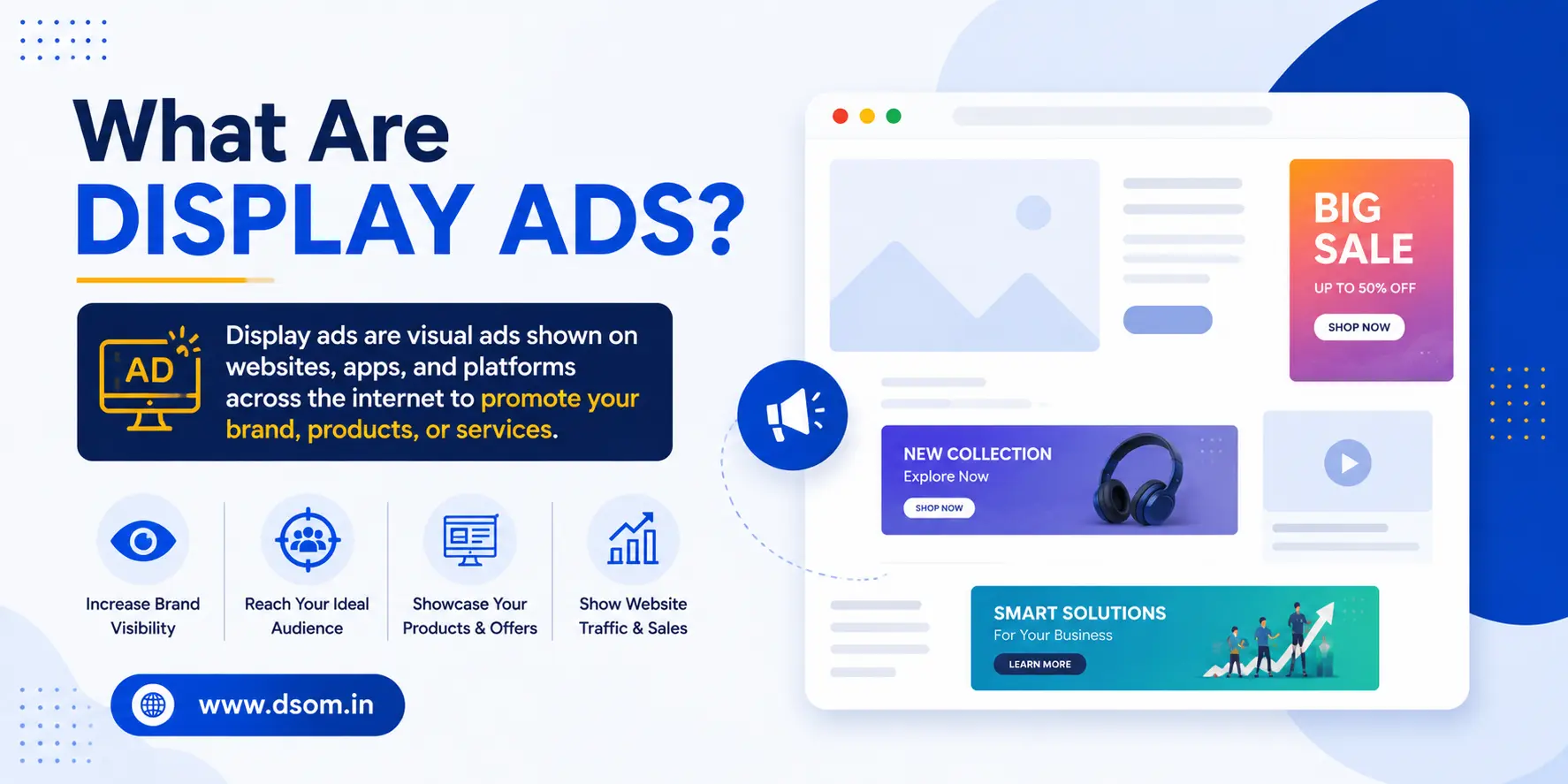
Key Characteristics of Display Ads:
- Visual format — images, banners, responsive display ads, rich media
- Audience-triggered — shown based on targeting settings, not keywords
- Lower purchase intent — users are browsing, not actively searching
- Lower cost-per-click — typically much cheaper per click than Search
- Massive reach — the GDN reaches over 90% of internet users globally
- Strong for retargeting — ideal for re-engaging past website visitors
Search Ads vs Display Ads: Side-by-Side Comparison
| Factor | Search Ads | Display Ads |
|---|---|---|
| Placement | Google Search results pages | Websites, apps, YouTube (GDN) |
| Trigger | User’s search keyword | Audience targeting settings |
| Format | Text only | Images, banners, responsive visuals |
| User Intent | High — actively looking for solution | Low — passively browsing |
| Average CPC | Higher ($1–$50+ depending on industry) | Lower ($0.10–$1.50 typically) |
| Click-Through Rate | Higher (for relevant queries) | Lower (0.1%–0.5% average) |
| Best Funnel Stage | Bottom — ready to buy | Top/Mid — awareness and consideration |
| Targeting Type | Keyword-based | Demographic, interest, behavioral |
| Retargeting Capability | Limited | Very strong — core use case |
| Conversion Rate | Generally higher | Generally lower |
| Creative Required | No — text only | Yes — design or images needed |
| Best For | Lead gen, direct sales, local services | Brand awareness, retargeting, product launch |
The Core Difference: Intent vs Interruption
This is the most important concept when understanding Search Ads vs Display Ads — and the one that makes all the strategic decisions fall into place.
Search Ads capture demand. When someone searches for your product or service, they have already decided they have a need. Your ad meets them at that critical moment of active intent. This is why Search Ads typically convert at a higher rate — you are not convincing someone they have a problem, you are simply being the best answer to one they already know about.
Display Ads create demand. Users seeing Display Ads have not searched for your product. They may not know your brand exists. Display Ads work by interrupting a user’s browsing experience with a visually compelling message that introduces your brand, keeps it top of mind, or re-engages someone who has already shown interest. The goal is not immediate conversion — it is visibility, familiarity, and consideration.
Key Insight: Think of Search Ads as fishing with a baited hook (targeting someone who is hungry) and Display Ads as putting up a billboard (reaching anyone who passes by).
Cost Comparison: Search Ads vs Display Ads
Cost is where Search Ads vs Display Ads look very different on paper — but the comparison requires more context to be meaningful.
Search Ads Costs
- Average CPC: $1 to $10 for most industries; $20–$50+ for competitive niches (legal, finance, insurance)
- Why it’s higher: You are bidding for high-intent traffic — users who are ready to act
- Cost driver: Keyword competition. More advertisers bidding on the same keyword = higher CPC
Display Ads Costs
- Average CPC: $0.10 to $1.50 across most campaigns
- Why it’s lower: You are reaching passive audiences who may or may not be interested
- Cost driver: Audience quality and targeting precision
The critical point: A $10 Search Ads click that converts at 10% costs $100 per acquisition. A $0.50 Display Ads click that converts at 0.5% also costs $100 per acquisition. Neither is inherently cheaper when measured by actual results.
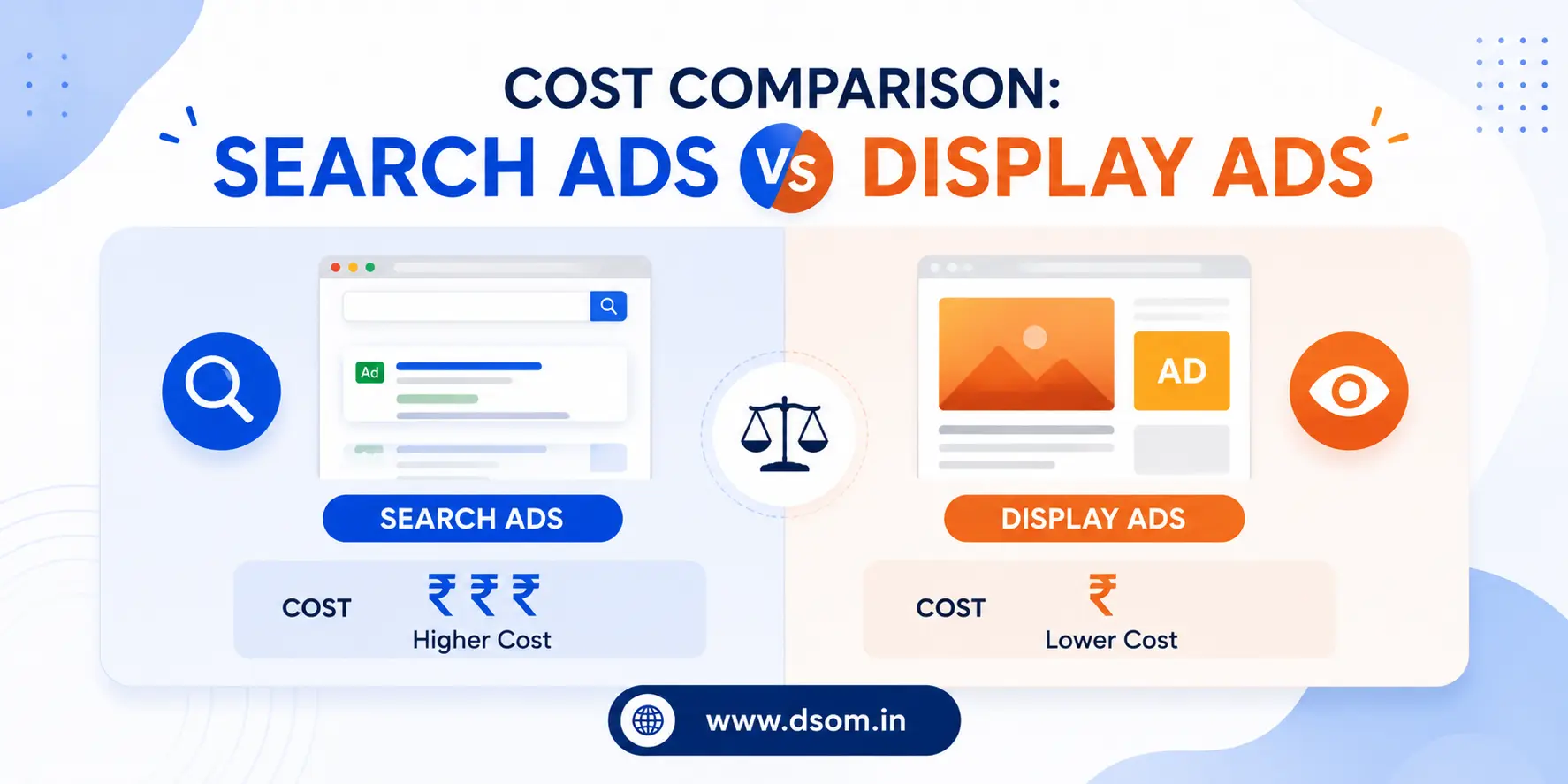
Important: Always measure cost per acquisition (CPA) — not cost per click — when comparing the efficiency of Search Ads vs Display Ads for your campaigns.
Targeting: How Each Platform Finds Your Audience
Search Ads Targeting
Search Ads targeting is built around what people are actively searching for. Your targeting levers include:
- Keywords — the specific phrases that trigger your ad
- Match types — broad, phrase, or exact match control how closely the search must match
- Location — target by country, city, radius, or specific postcodes
- Device — adjust bids for mobile, desktop, or tablet
- Audience layers — overlay demographic or in-market audience data on top of keywords
- Ad scheduling — control which hours and days your ads run
Display Ads Targeting
Display Ads targeting is built around who people are, not what they are searching. Options include:
- Demographics — age, gender, household income, parental status
- In-market audiences — people actively researching products in your category
- Affinity audiences — users with long-term interests aligned with your brand
- Custom intent audiences — audiences built on recent search behavior
- Remarketing / retargeting — showing ads to previous website visitors
- Placement targeting — choosing specific websites or apps for your ads
Retargeting is where Display Ads shine brightest. Showing your ad to someone who visited your pricing page but did not convert is one of the highest-ROI uses of any advertising budget.
When to Use Search Ads
Choose Google Search Ads when:
- Your customers are actively searching for your product or service
- You need immediate leads or sales — Search Ads deliver results fast
- You operate in a transactional industry — legal, medical, home services, SaaS, ecommerce
- Your keywords carry strong commercial intent (“buy,” “hire,” “best,” “near me”)
- You have a specific conversion goal — calls, form submissions, purchases
- Your product solves a known, searchable problem
When to Use Display Ads
Choose Google Display Ads when:
- You are building brand awareness for a new product, service, or audience
- You want to retarget website visitors who have not yet converted — this is Display’s strongest application
- Your product has a long consideration cycle — customers need multiple touchpoints before buying
- You are running a product launch and want to reach potential customers early
- You have strong visual creative — images, graphics, or animated banners
- Your goal is staying top of mind during an extended sales cycle
- You want to reach a broad audience cheaply for awareness campaigns
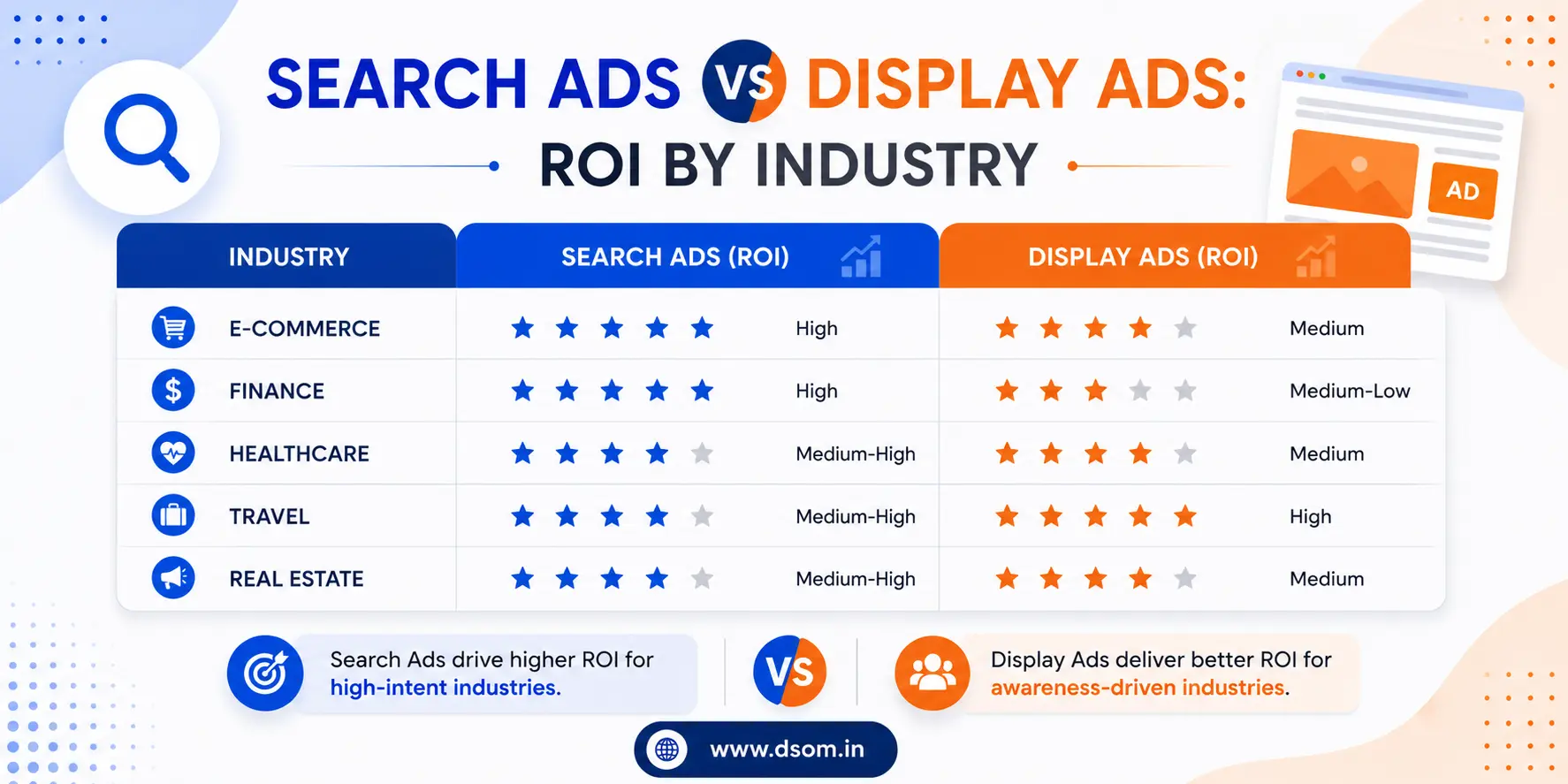
Search Ads vs Display Ads: ROI by Industry
| Industry | Better Platform | Reason |
|---|---|---|
| Legal & Finance | Search Ads | High intent — people search when they urgently need help |
| Ecommerce | Both | Search for active buyers; Display for retargeting cart abandoners |
| Healthcare & Medical | Search Ads | Patients search symptoms and services before booking |
| Fashion & Lifestyle | Display Ads | Visual discovery, aspirational browsing behavior |
| B2B Software (SaaS) | Search Ads | Decision-makers search for specific solutions |
| Local Services | Search Ads | Location-intent searches drive calls and visits |
| Luxury Products | Display Ads | Premium visual storytelling, lifestyle association |
| Real Estate | Both | Search intent + Display retargeting for long decision cycles |
| App Downloads | Display Ads | Wide reach across apps and YouTube for discovery |
Can You Run Both Together?
Yes — and most effective advertisers do. The strongest paid advertising strategies use both in a coordinated funnel:
- Display Ads introduce your brand to cold audiences at the top of the funnel
- Search Ads capture users who later actively search for your solution
- Display Ads (remarketing) re-engage visitors who clicked but did not convert
- Search Ads close the sale for high-intent returning visitors
Search Ads drive conversions; Display Ads build the brand awareness that makes Search Ads more effective over time. That combination consistently outperforms either channel used alone — and it is the approach behind the highest-performing Search Ads vs Display Ads strategies in 2026.
Common Mistakes in Search Ads vs Display Ads
Knowing the technical differences between Search Ads vs Display Ads is only half the battle. Avoiding these common mistakes is what separates campaigns that waste money from those that generate consistent returns.
| Mistake | Platform | Why It Costs You |
|---|---|---|
| Running Display targeting in Search campaigns | Both | Dilutes intent-based targeting with irrelevant traffic |
| No negative keywords in Search | Search Ads | Wastes budget on irrelevant queries |
| Poor creative quality in Display | Display Ads | Low CTR and wasted impressions |
| Not using retargeting | Display Ads | Missing the highest-ROI Display audience |
| Judging Display by Search conversion rates | Both | Different goals require different success metrics |
| No conversion tracking set up | Both | Impossible to optimize without data |
Final Thoughts
Search Ads vs Display Ads is not a competition with one winner — it is a strategic decision based on your goals, your budget, and where your customers are in the buying journey. The answer in the Search Ads vs Display Ads question always comes back to intent, audience, and funnel stage.
Use Search Ads when intent is high and customers are actively looking. Understanding when and how to use Search Ads and Display Ads is a key skill taught at DSOM (Dehradun School of Online Marketing), helping students and professionals build effective digital advertising campaigns that deliver measurable ROI. Use Display Ads when you need reach, awareness, or retargeting.
Use both when you want a complete funnel that captures new audiences and converts them consistently. The businesses generating the strongest paid advertising ROI in 2026 are the ones that understand Search Ads vs Display Ads at this strategic level — not just which button to click, but when each platform serves their customers best.