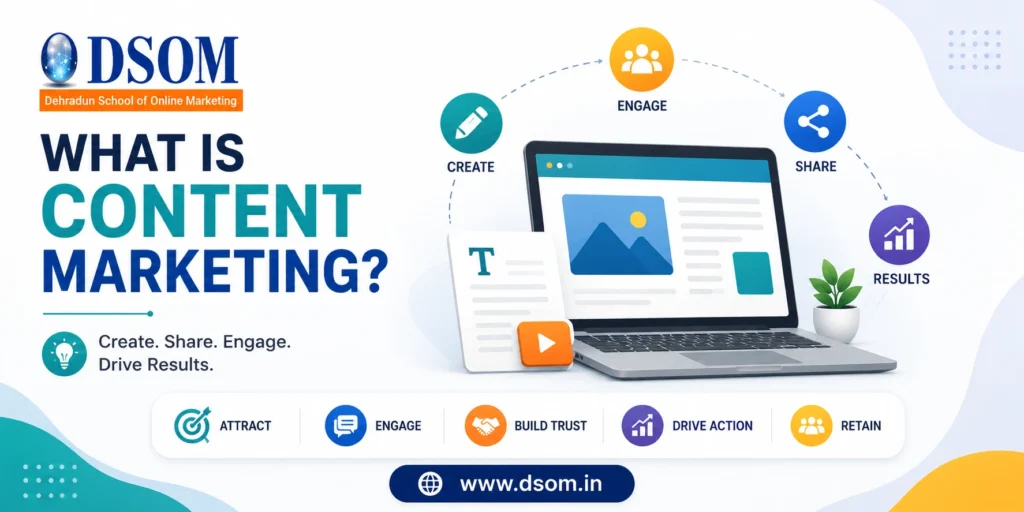
Ask ten marketers what this strategy means and you will get ten slightly different answers. Some will say it is blogging. Others will say social media. A few will mention podcasts or YouTube. All of them are partially right — but none of them are giving you the complete picture.
Done well, this strategy builds audiences, earns trust, drives organic traffic, and converts strangers into loyal customers — all without the interruptive, push-based tactics that modern consumers increasingly ignore. Done poorly, it wastes enormous resource producing pieces that nobody reads and nothing that ranks.
This guide answers the question of what is content marketing completely — covering the definition, why it works, the types available, how to build a strategy, and what results you can realistically expect.
Content Marketing Definition
The most accepted content marketing definition comes from the Content Marketing Institute: it is a strategic approach focused on creating and distributing valuable, relevant, and consistent content to attract and retain a clearly defined audience — and ultimately drive profitable customer action.
Notice what is absent from that definition: sales pitches and product promotions. The strategy is not about telling people how great your product is. It is about providing genuine value to your target audience — solving their problems, answering their questions, helping them make better decisions — in a way that builds trust over time. That trust eventually converts a reader, viewer, or listener into a paying customer. It is a longer game than paid advertising, but the results are far more durable.
Why Content Marketing Matters in 2026
The internet is noisier than it has ever been — over 7 million blog posts published every single day. Attention is the scarcest resource in marketing. So why does this strategy still work, and why does it work better than ever for brands that commit to it seriously?
| Reason | Why It Matters |
|---|---|
| Ad Fatigue is Real | Over 25% of internet users block ads — content reaches them organically |
| Search Engine Traffic | Optimized content earns free, compounding organic traffic over time |
| Trust Building | Builds credibility before the sale, not during it |
| Lower Long-Term Cost | Evergreen content generates results long after it was published |
| Audience Ownership | Your content assets belong to you — you cannot be priced out |
| Supports Every Channel | Good content fuels email, social, SEO, and sales simultaneously |
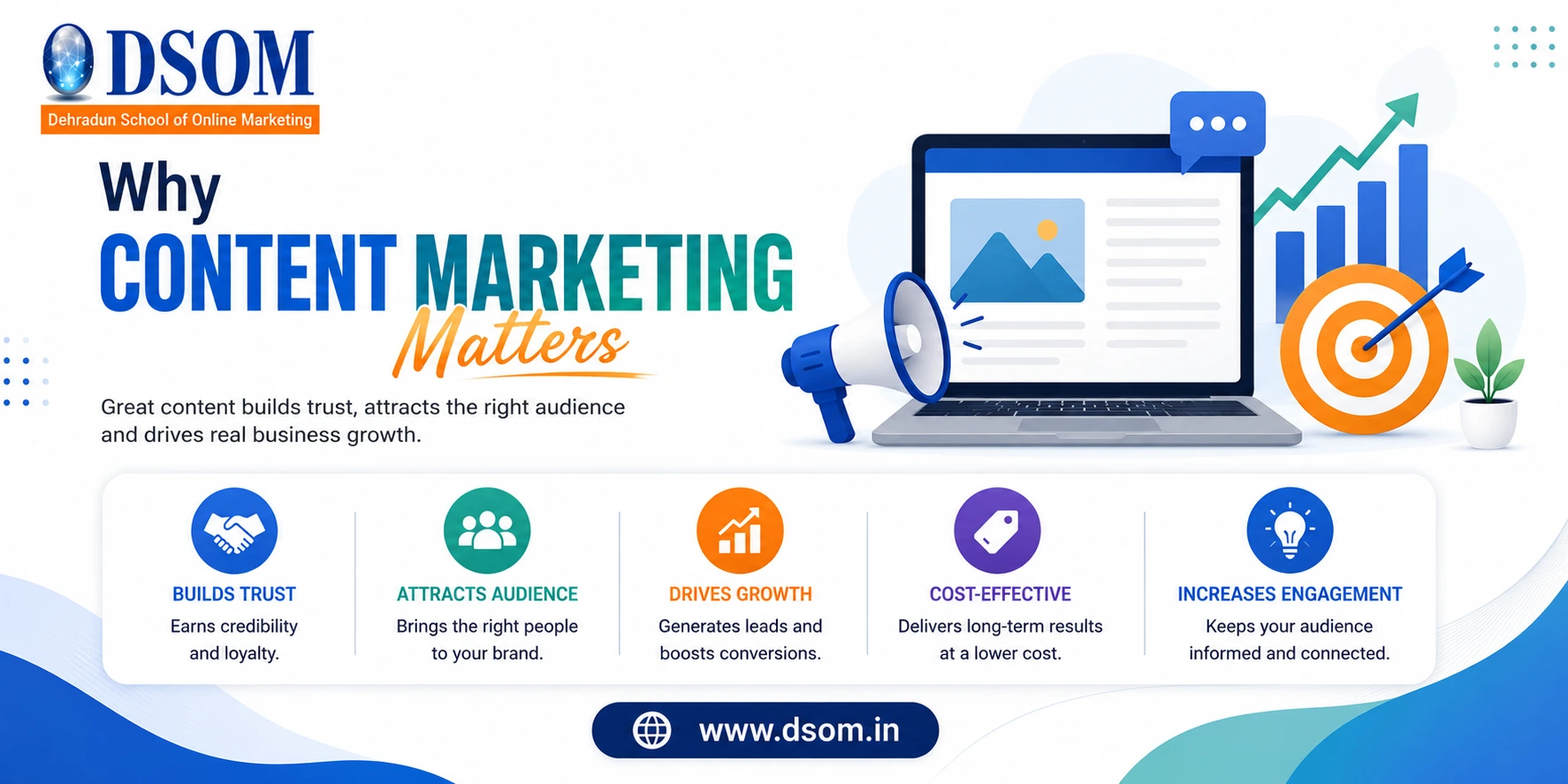
Brands that have invested consistently in this practice for five years are pulling ahead of competitors who relied entirely on paid advertising — because their organic assets compound in value while ad costs keep rising.
Types of Content Marketing
One of the most common misconceptions is that it just means blog posts. In reality, the types of content marketing available to brands in 2026 span every format and channel where your audience spends time.
| Content Type | Format | Best For |
|---|---|---|
| Blog Posts and Articles | Written, long-form | SEO, organic traffic, thought leadership |
| Video Content | YouTube, short-form Reels, TikTok | Brand awareness, engagement, demonstrations |
| Podcasts | Audio, episodic | Loyalty building, niche authority |
| Infographics | Visual, shareable | Data communication, social sharing |
| Email Newsletters | Written, direct to inbox | Nurturing leads, retention, announcements |
| Case Studies | Written, data-driven | Bottom-funnel conversion, B2B trust |
| Whitepapers and Ebooks | Downloadable, gated or ungated | Lead generation, deep expertise demonstration |
| Social Media Content | Images, captions, stories | Discovery, engagement, community building |
| Webinars and Live Events | Video, interactive | Consideration stage, direct audience connection |
| User-Generated Content | Reviews, testimonials, social posts | Social proof, authenticity, trust building |
Choosing the right format depends on where your audience spends time, what stage of the buying journey you are targeting, and what your team has the skills and resources to produce consistently.
Content Marketing vs Digital Marketing
A common point of confusion for beginners is content marketing vs digital marketing — are they the same thing? The short answer is no, but they are closely related.
Digital marketing is the umbrella term covering all online marketing activities — including paid advertising, SEO, email marketing, social media, and content marketing as one specific strategy within it.
Content marketing is a specific strategy within digital marketing, defined by its focus on creating and distributing valuable content rather than paid or interruptive promotion.
| Content Marketing | Digital Marketing | |
|---|---|---|
| Scope | Specific strategy | Broad umbrella |
| Cost Model | Primarily organic | Mix of paid and organic |
| Timeframe | Long-term asset building | Varies — can be immediate (paid) |
| Ownership | You own the content | You rent paid placement |
| Goal | Build trust and audience over time | Drive traffic, leads, and conversions |
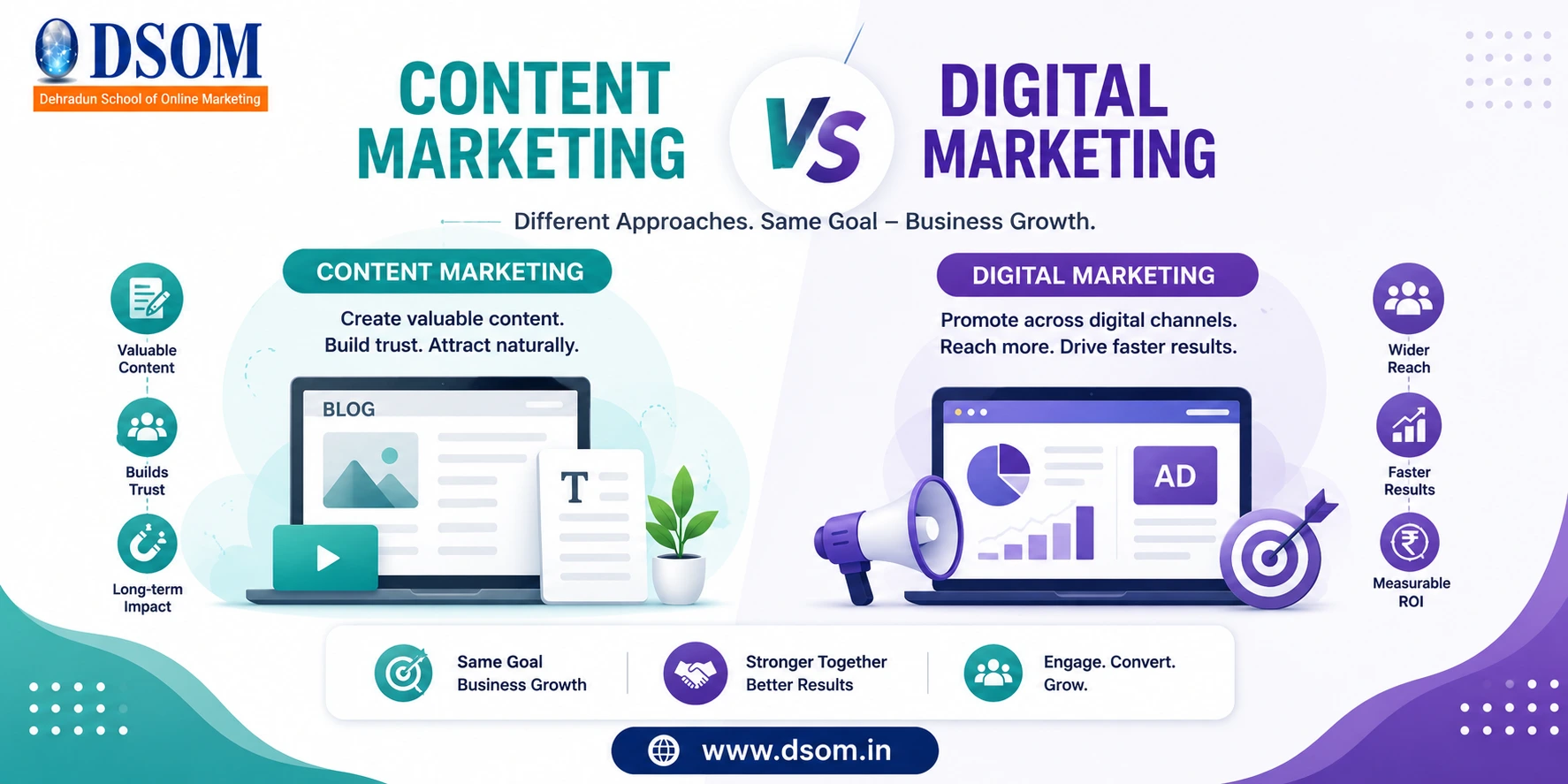
In practice, the most effective digital strategies use content marketing as the foundation — high-quality content that earns organic search rankings, supports email campaigns, powers social media, and gives paid advertising something worth sending people to.
Benefits of Content Marketing
Understanding the benefits of content marketing helps explain why the world’s most recognized brands — from HubSpot and Salesforce to Red Bull and Patagonia — invest so heavily in content.
- Sustainable Organic Traffic A well-optimized piece of SEO content marketing can rank in Google and drive traffic consistently for months or even years after it is published. Unlike paid ads that stop working the moment you stop paying, great content keeps earning clicks long after the initial investment.
- Builds Brand Authority and Trust When your brand consistently publishes helpful, accurate, and well-researched content on topics your audience cares about, you become the go-to resource in your niche. That authority is one of the most valuable assets a business can own — and it is built through this approach entirely.
- Generates Qualified Leads The benefits of content marketing extend directly to lead generation. Someone who found your brand by reading a detailed guide you published, and then subscribed to your email list, is a far warmer prospect than someone who clicked a cold ad. They already know your brand, trust your expertise, and have actively opted into hearing more.
- Supports Every Stage of the Funnel This strategy serves buyers at every stage of their journey — from blog posts that answer early-stage research questions to case studies and testimonials that convert buyers at the decision stage. A well-planned content marketing strategy covers the full funnel rather than relying on a single touchpoint.
- Strong Content Marketing ROI Over Time Content marketing ROI is difficult to measure quickly — which is one reason many businesses underinvest. But longitudinally, the ROI of content marketing consistently outperforms paid channels, because the costs are primarily upfront (creation) while the returns compound over time through organic traffic, brand searches, and earned backlinks.
How to Build a Content Marketing Strategy
A strong content plan does not need to be complicated, but it does need to be deliberate. Here is a practical framework for building one:
Step 1: Define Your Audience Before creating a single piece of content, clearly define who you are creating it for. What problems do they have? What questions are they searching for answers to? What content format do they prefer consuming? The more specifically you define your audience, the more effective your overall approach will be.
Step 2: Set Clear Goals What do you want this strategy to achieve? Common goals include increasing organic traffic, generating email subscribers, driving product demos, building thought leadership, or supporting sales conversations. Your goals determine which types of content you prioritize and how you measure success.
Step 3: Conduct Keyword and Topic Research SEO content marketing and content marketing strategy go hand in hand. Use keyword research to identify what your audience is actively searching for, and build your content plan around topics that have genuine search demand. This ensures your content is discoverable, not just published.
Step 4: Choose Your Channels Not every channel will suit every brand. A B2B software company may prioritize LinkedIn and blog content. A D2C fashion brand might focus on Instagram and TikTok. Choose the channels where your specific audience is most active and where your content format strengths align.
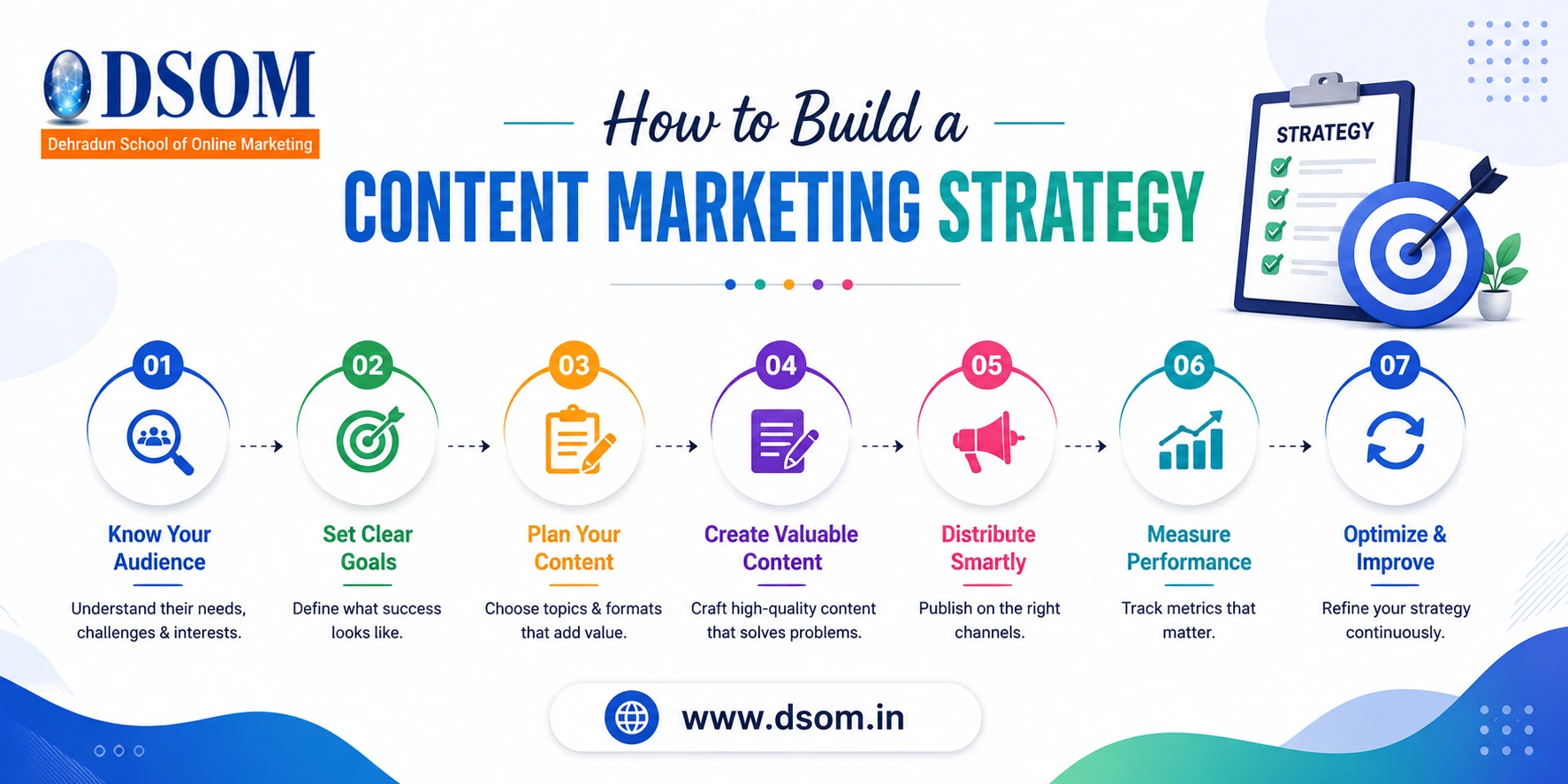
Step 5: Create a Consistent Publishing Schedule Consistency is one of the most underrated elements of content marketing for beginners and experienced teams alike. Publishing one exceptional piece per week beats publishing five mediocre pieces and then going silent for a month. Build a sustainable cadence you can actually maintain.
Step 6: Distribute and Promote Creating the content is only half the work. Distribution — through email newsletters, social sharing, repurposing into different formats, and building backlinks — is what turns a published piece into real audience growth. A strong content marketing plan allocates as much effort to distribution as to creation.
Step 7: Measure and Refine Track organic traffic, engagement rates, email sign-ups, lead conversions, and rankings. Use the data to understand which content is performing and which is not. Over time, content marketing ROI improves as you learn what your specific audience responds to most.
Content Marketing Examples That Work
Some of the most instructive content marketing examples come from brands that have built entire business models around content.
- HubSpot — Built a billion-dollar business in large part by providing free, best-in-class educational content about marketing and sales. Their blog drives millions of organic visitors per month, generating leads who eventually convert to paying customers.
- Red Bull — Redefined content marketing by producing extreme sports media content so compelling that people seek it out voluntarily. Their content strategy is built around lifestyle and values, not product features.
- Shopify — Their blog and free business resources attract millions of aspiring entrepreneurs who are exactly the audience most likely to eventually open a Shopify store.
What all these examples share is a commitment to providing genuine, lasting value — not content that barely disguises a sales pitch.
Final Thoughts
Content marketing is not a one-time tactic—it is a long-term strategy that helps businesses build trust, authority, and lasting relationships with their audience. The most successful brands in 2026 are those that consistently create valuable, relevant, and engaging content rather than relying solely on paid advertising.
For beginners looking to master content marketing, learning from industry experts can make a significant difference. DSOM (Dehradun School of Online Marketing) offers practical digital marketing training that helps students understand content strategy, audience engagement, SEO, and content creation techniques that drive real results.
If you’re just starting out, focus on creating helpful content that solves your audience’s problems and answers their questions. Stay consistent, prioritize quality over quantity, and keep providing value. Over time, this approach can help generate more traffic, leads, and long-term business growth.