Logo design is one of those creative careers that looks deceptively simple from the outside. A logo is just a shape and some text, right? In reality, it’s the distilled visual identity of an entire brand, and the people who make great logos spend years developing a precise skill set that sits at the intersection of art, strategy, and business thinking.
If you’ve been wondering how to become a logo designer, the path is more accessible than most creative careers and doesn’t require a formal degree to get started. What it does require is deliberate practice, the right tools, and a portfolio that proves you can think like a brand, not just draw like an artist.
This guide walks through exactly what the role involves, the skills worth building first, the tools professionals use every day, and how to land your first paid work even before you feel completely ready.
What Does a Logo Designer Actually Do?
A professional in this role creates the visual mark that sits at the center of a brand’s identity. That sounds simple until you realize how much thinking happens before a single vector shape gets drawn. The real job involves researching the client’s industry, studying competitors, understanding the target audience, sketching multiple directions, refining the strongest concept, and delivering final files that work across business cards, signage, digital screens, and everything in between.
A good logo has to work in black and white, at the size of a favicon, and at the size of a billboard. That functional constraint is what separates logo design from general illustration, and it’s what makes the discipline genuinely challenging.
| What Logo Designers Do | Why It Matters |
|---|---|
| Research client brand and market | Ensures the design reflects real positioning |
| Sketch multiple initial concepts | Avoids jumping straight to software too early |
| Develop vector artwork | Guarantees the logo scales to any size cleanly |
| Present and explain design decisions | Clients approve rationale, not just aesthetics |
| Refine based on feedback | Professional work always involves revision cycles |
| Deliver production-ready files | Multiple formats ensure the logo works everywhere |
Do You Need a Degree to Become a Logo Designer?
This is one of the most common questions, and the answer is a clear no. This field is skill-and-portfolio-based. Employers and clients care far more about the quality of your work than the institution listed on your resume. Many highly paid professionals in this field are entirely self-taught, having built their skills through online courses, personal projects, and consistent practice rather than a four-year degree.
That said, a graphic design degree does provide structured grounding in design principles, art history, and typography that self-taught designers sometimes have to work harder to fill in on their own.
The honest trade-off is time and money versus structure. A degree takes years and significant investment. A focused self-study path using online platforms, free resources, and real practice projects can make you job-ready in six to twelve months if you’re genuinely consistent. Platforms like Skillshare, Coursera, and YouTube host high-quality instruction on everything from color theory to vector drawing, often at a fraction of what formal education costs. What can’t be shortcut regardless of path is building a strong portfolio, because that is what gets you hired.
Core Skills Every Logo Designer Needs
Building this career means developing two parallel skill sets: design fundamentals that apply to every visual project, and logo-specific thinking that applies only here.
| Skill | What It Involves | Why It Matters for Logos |
|---|---|---|
| Typography | Understanding typefaces, spacing, hierarchy | Many logos are entirely type-based |
| Color theory | How colors interact, feel, and communicate | Color psychology drives brand perception |
| Composition | Balance, proportion, visual flow | Creates logos that feel settled and intentional |
| Vector drawing | Working with scalable paths rather than pixels | Essential for clean, infinitely scalable logo files |
| Brand thinking | Connecting visuals to business strategy | Separates good designers from great ones |
| Client communication | Taking briefs, presenting ideas, managing feedback | Practical necessity for every paid project |
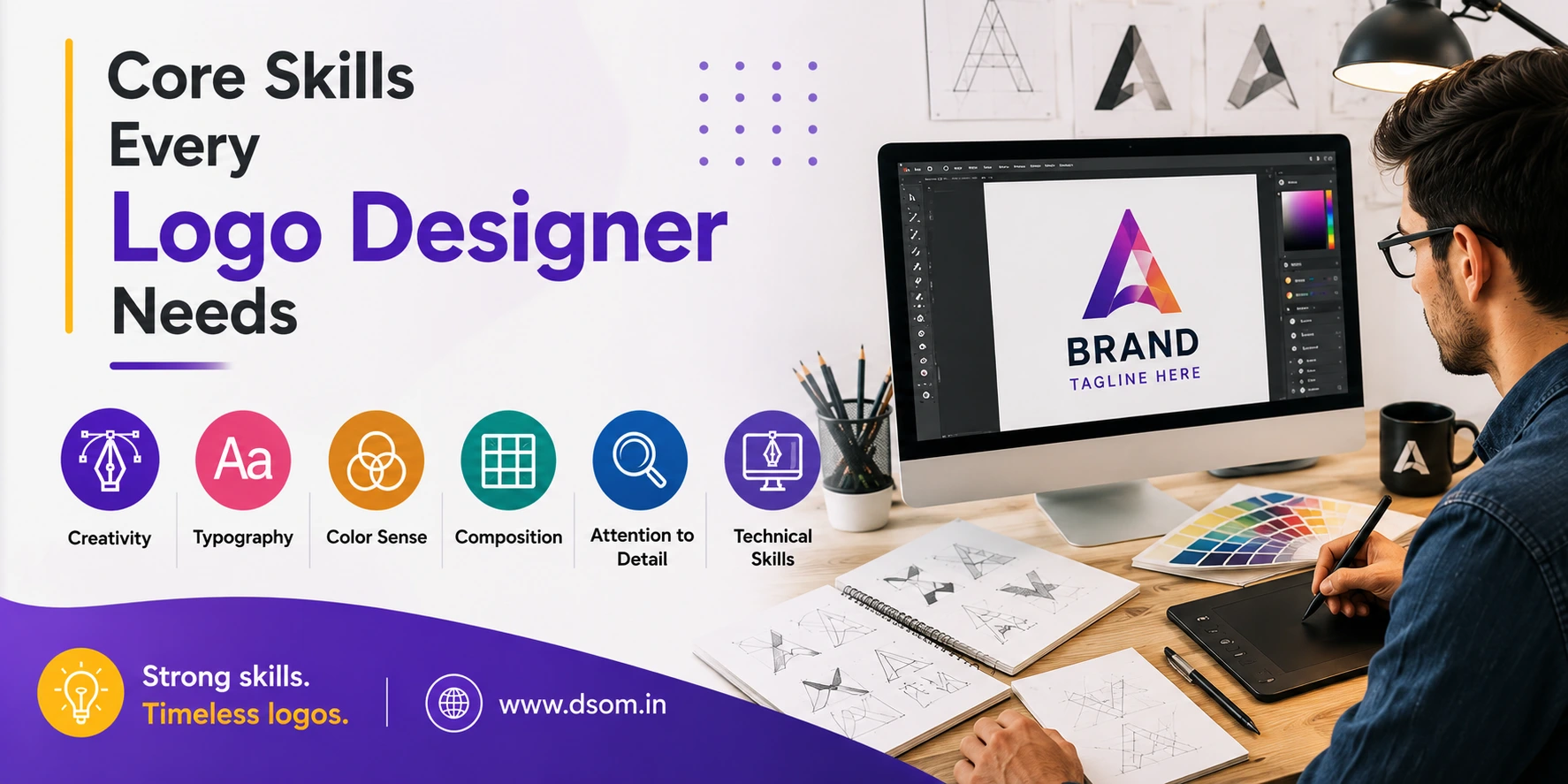
The single most important technical skill for logo designers specifically is vector drawing. Unlike photographs or illustrations created in pixels, professional logos need to be drawn in vector format so they can be resized without any loss of quality. This is why Adobe Illustrator has been the industry-standard tool for logo design for decades, and why learning it early makes everything else easier.
The Tools Professional Logo Designers Use
| Tool | Purpose | Cost |
|---|---|---|
| Adobe Illustrator | Primary vector drawing and logo creation tool | Subscription-based, part of Adobe Creative Cloud |
| Adobe Photoshop | Mockups, texture work, presentation visuals | Included in Adobe Creative Cloud |
| Figma | Digital presentations and client-facing mockups | Free tier available, paid plans for teams |
| Procreate (iPad) | Sketching and ideation before moving to vector | One-time purchase |
| Behance / Dribbble | Portfolio hosting and community feedback | Free |
Adobe Illustrator is non-negotiable for professional logo work. If you are just starting out and the subscription cost is a barrier, Inkscape is a free, open-source vector editor that teaches the same core concepts, though switching to Illustrator eventually is worth doing before you start working with real clients.
Building Your Logo Design Portfolio from Zero
Your portfolio is the most important thing you will ever build in this career. It’s more important than any certificate, course, or qualification. A portfolio of eight to ten well-executed, thoughtfully presented logo projects will open more doors than a design degree with no real work to show.
Here’s a realistic way to build one from scratch:
- Design for fictional brands. Pick industries you find interesting, invent a brand name, write a simple brief for it, and design a complete logo. This produces real portfolio-quality work.
- Redesign existing logos. Pick a real brand whose logo feels dated, research why it’s weak, and create an improved version. Explain your reasoning. This is excellent for showing brand thinking.
- Take on small free or low-paid projects. Local nonprofits, community groups, or small personal businesses often need logos and can provide real briefs, feedback, and testimonials.
- Present your process, not just the final logo. Show your sketches, your thinking, your color decisions. Clients and employers want to see how you solve problems, not just what you produced at the end.
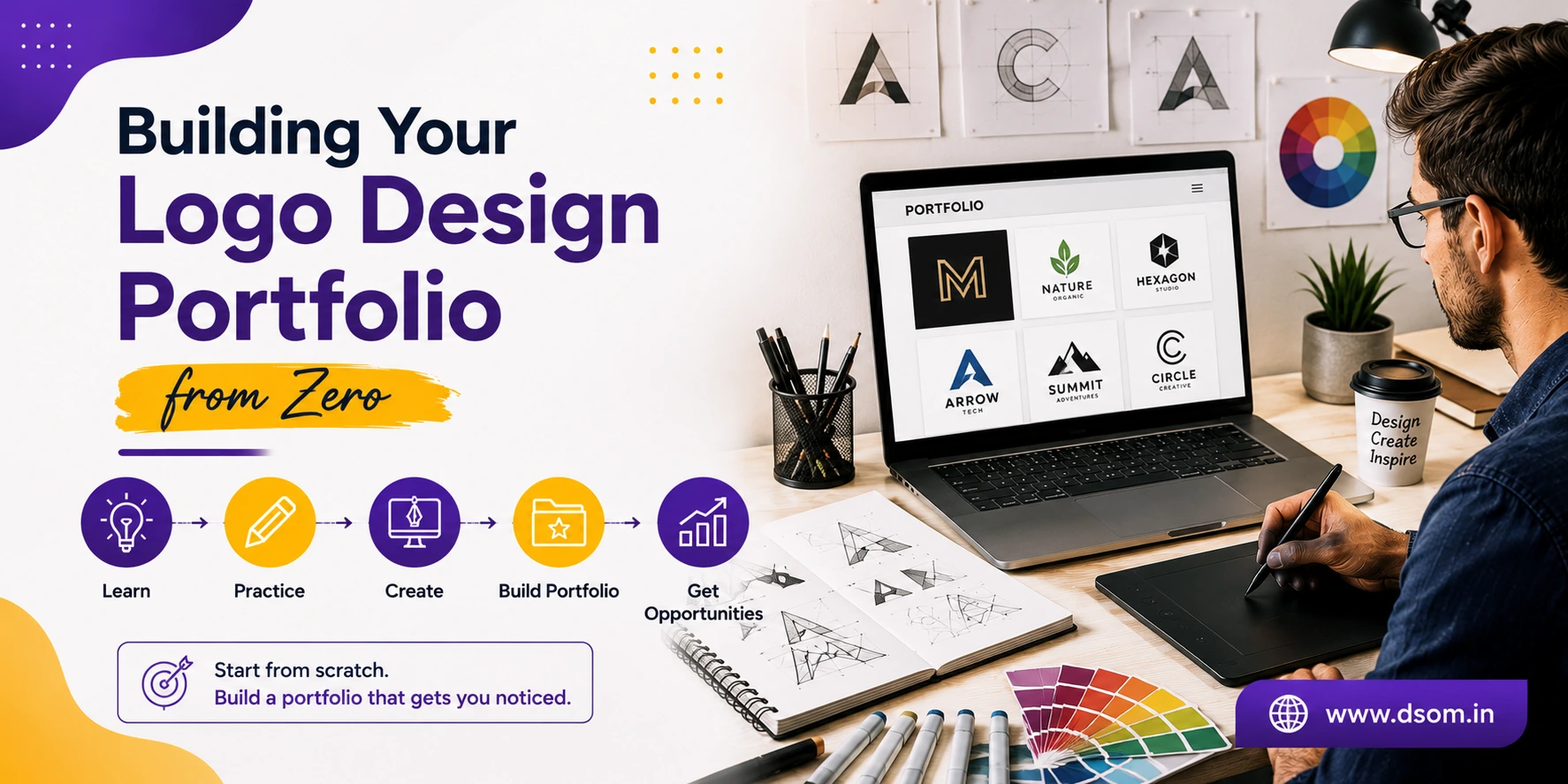
Post your work consistently on Behance and Dribbble. These platforms are where design professionals find each other, and regular posting builds both visibility and a habit of finishing and presenting work properly.
How to Get Your First Paid Logo Design Work
Getting that first paid project feels like the biggest hurdle, but it’s often closer than most beginners think. The logo design market is enormous. Every new business, rebrand, and startup needs one, which means there is a steady and permanent demand for fresh talent willing to work at accessible rates.
- Freelance platforms like Upwork and Fiverr allow you to list services and get found by clients actively searching. Competition is real, but so is the volume of people looking for logo designers. A clear profile with a focused niche, such as logos for food businesses or wellness brands, tends to perform better than a generic offering.
- Local networking is underrated. A local café, boutique, or startup that knows you personally will take a chance on an emerging designer before a stranger would. Introduce yourself at local business events or simply walk in and ask.
- Social media works surprisingly well for designers. Posting your process on Instagram or LinkedIn, especially time-lapse sketching videos or before-and-after comparisons, attracts both followers and clients.
- Cold outreach to small businesses with outdated or generic logos can work. Keep it brief, show relevant work, and offer a single specific improvement rather than a vague pitch.
The biggest mistake early-stage designers make is waiting until they feel ready before approaching clients. You don’t become confident before getting experience; you become confident because of it.
Salary and Earning Potential for Logo Designers
Earnings vary significantly depending on whether you work in-house, at an agency, or as a freelancer.
| Career Path | Typical Earnings (2026) | Notes |
|---|---|---|
| Junior in-house designer | $52,000 – $65,000/year | Steady income, less creative control |
| Mid-level agency designer | $65,000 – $80,000/year | Broader brief exposure, team mentorship |
| Senior / lead designer | $80,000 – $102,000+/year | Leads projects, mentors others |
| Freelance logo designer | $300 – $800 per logo (entry level) | Income scales sharply with reputation |
| Specialist brand identity designer | $1,500 – $10,000+ per project | Full identity packages command premium rates |
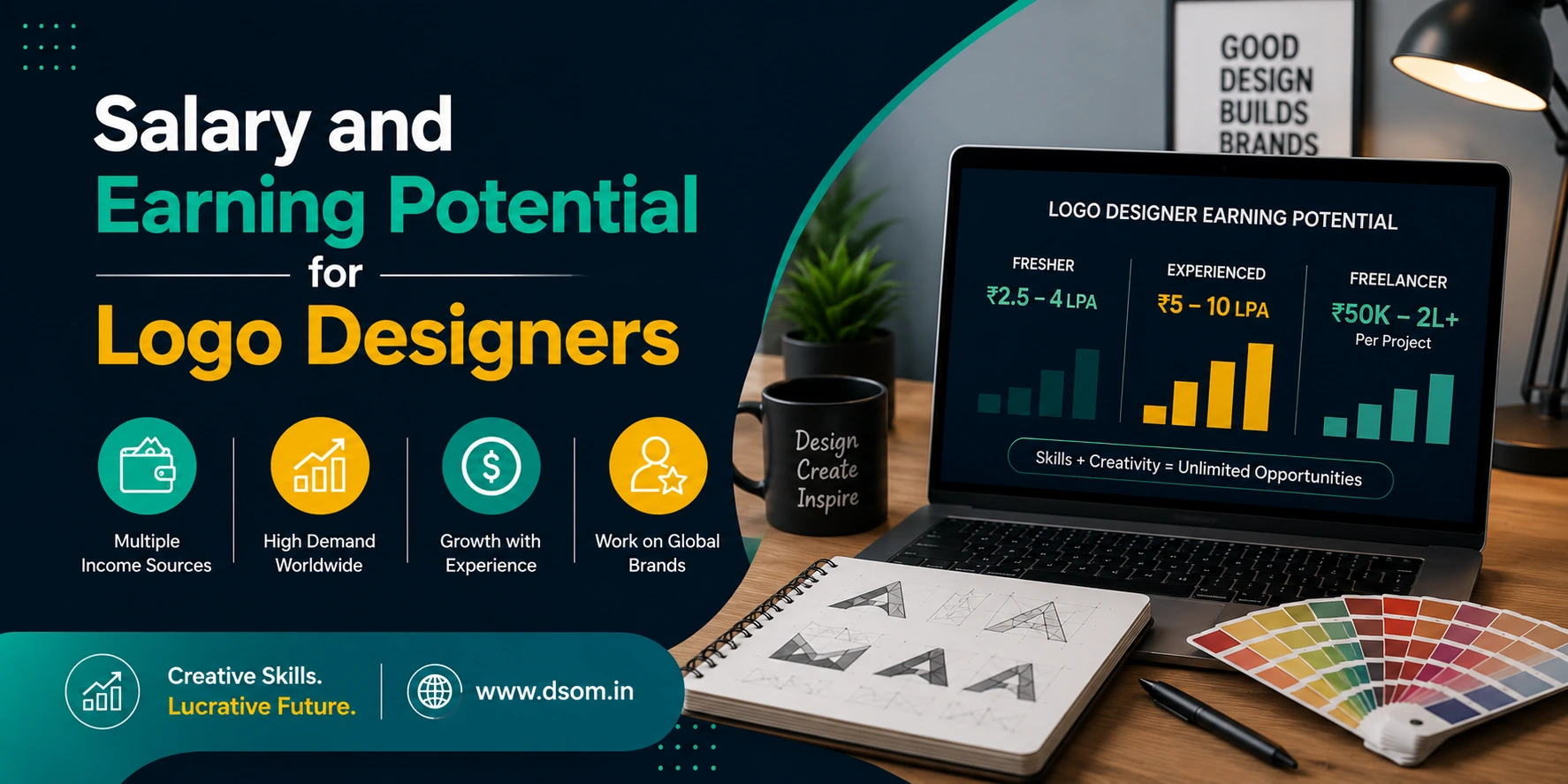
Freelancers who build a strong reputation and move from logo-only work into complete brand identity packages earn considerably more per project, because they’re delivering a broader, more strategic output. The designers who earn at the top of this range are usually those who can explain brand strategy as clearly as they can execute design.
Common Mistakes to Avoid on Your Way Up
- Starting in Photoshop instead of Illustrator. Photoshop works in pixels. Professional work lives in vectors. Building a habit in the wrong tool creates extra work and bad habits that are hard to unlearn later.
- Skipping the brief and sketching phase. Going straight to a computer without sketching first usually produces safe, generic results. Some of the best logo concepts come from a twenty-minute sketching session that a screen-first approach never would have found.
- Underpricing your work indefinitely. Low rates can attract poor clients and communicate low quality to the very people you want to work with. Raise your rates as your portfolio grows, even if it feels uncomfortable.
- Ignoring feedback. Early career designers who treat feedback as personal criticism rather than professional guidance tend to stagnate. The ability to hear a client’s concern and translate it into a design improvement is itself a learnable and valuable skill.
- Never specializing. Generalists find work but specialists command higher rates. Developing a clear point of view, whether that’s minimalist mark-making, bold typographic logos, or heritage brand aesthetics, makes you easier to recommend and harder to replace.
Final Thoughts
Success comes from consistent practice, creativity, and showcasing your work. At DSOM (Dehradun School of Online Marketing), you can gain practical logo design skills, industry guidance, and hands-on experience to build your confidence and prepare for real client work.
The gap between beginner and professional isn’t as wide as it looks from the outside. It’s mostly filled by consistent practice, a willingness to share your work publicly, and the discipline to see every project through to a polished, presentation-ready finish.