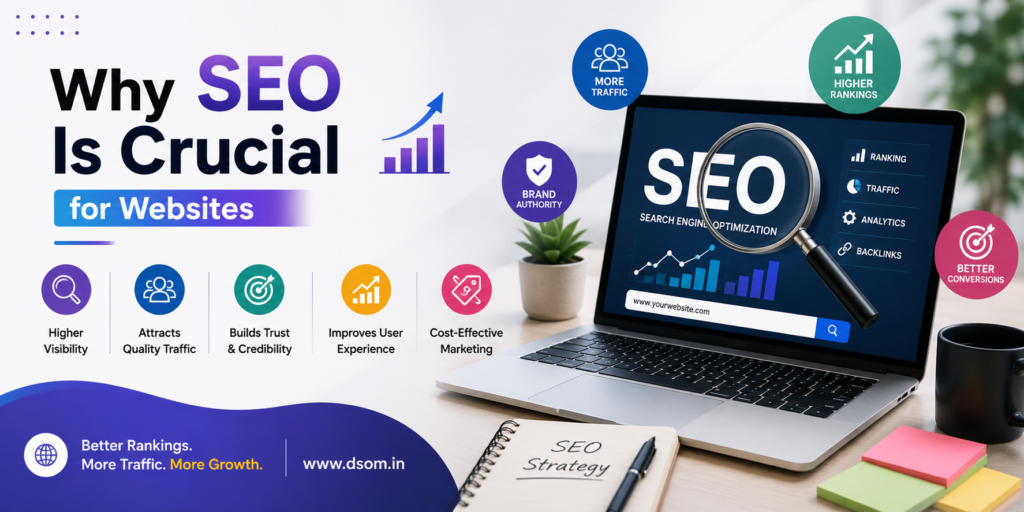
Every website owner eventually asks the same question: why does my site get visitors while a competitor’s site stays empty? The honest answer, almost every time, comes down to one thing — SEO. It is not a buzzword anymore; it is the backbone of how people find businesses, blogs, and brands online today. Understanding SEO for websites is no longer optional for anyone who wants to be found on Google, Bing, or any other search engine.
In this guide, we will break down what SEO actually means, why it matters so much, and how ignoring it can quietly kill your online visibility while embracing it can transform a struggling site into a thriving one. We will also look at practical benefits, common mistakes, and a few numbers that show just how much ranking position really matters in day-to-day traffic.
What Is SEO? A Quick Overview
SEO stands for search engine optimization — the practice of improving a website so that search engines can understand it, index it correctly, and rank it higher for relevant searches. When someone types a question or phrase into a search bar, this process determines whether your page shows up on the first result or gets buried on page ten, where almost nobody ever looks.
SEO is not a single trick or a one-time fix. It is a combination of technical setup, content quality, keyword research, and user experience working together. Done right, it builds long-term, sustainable traffic. Done wrong, or ignored completely, it leaves a website invisible no matter how good the product, service, or content actually is. Search engines are constantly refining how they evaluate pages, which means a website that ranked well two years ago may quietly slip if it is never updated or maintained.
Why SEO Is Important for Websites
This is the core question, and the answer is fairly simple: SEO for websites is what separates visible businesses from invisible ones. Here is why it matters so much.
1. It Builds Trust and Credibility
Websites that rank higher on search engines are automatically seen as more trustworthy by everyday users. Most people assume that Google has already done the work of filtering out low-quality or unreliable pages, so a strong position near the top signals authority. That perceived authority translates into more clicks, longer engagement, and eventually more sales or sign-ups.
2. It Drives Free, Long-Term Traffic
Paid ads stop working the moment you stop paying for them. SEO, on the other hand, keeps working long after the initial effort is put in. A well-optimized blog post or landing page can keep attracting new visitors for months or even years, making it one of the most cost-effective marketing efforts a business can invest in.
3. It Improves the Overall User Experience
Good optimization is not only about keywords; it also involves faster loading speed, mobile-friendly design, clear navigation, and genuinely readable content. All of these factors improve the overall experience for real visitors, which in turn keeps people on the page longer and reduces how quickly they leave.
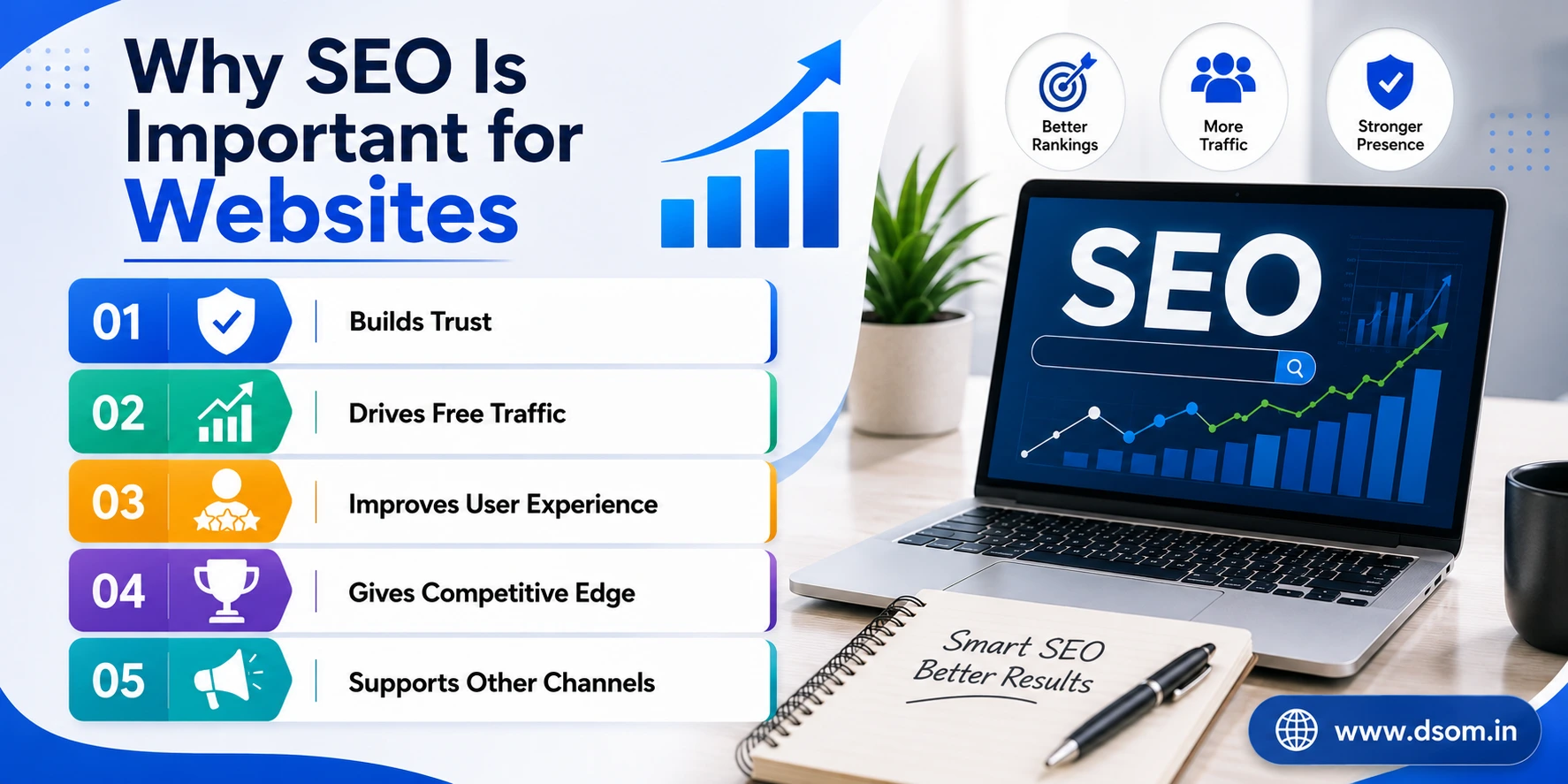
4. It Gives You a Competitive Edge
If your competitors are actively investing in optimization and you are not, they will win the visibility battle by default. Ranking above competitors for the same search terms means capturing customers who would otherwise have clicked on their listing instead of yours.
5. It Supports Every Other Marketing Channel
Social media posts, email campaigns, and paid ads all become more effective when they point toward a website that is properly optimized. A strong technical and content foundation strengthens every other marketing effort that relies on it, from influencer shoutouts to paid social campaigns.
The Real Cost of Ignoring SEO
Neglecting optimization does not just mean slower growth — it often means outright failure to be discovered at all. Thousands of well-designed websites sit unseen because they were never properly set up for search engines to find and understand. Without solid rankings, even the best content, products, or services remain invisible to the very audience they were built for. In competitive industries, poor visibility can mean losing potential customers to rivals every single day, silently and permanently, without the business owner ever realizing why sales have slowed down.
There is also a compounding effect at play. A page that ranks well tends to earn more clicks, more time on site, and often more backlinks from other sites referencing it — all signals that can help it rank even better over time. A page that never gets found rarely accumulates any of these positive signals, so the gap between visible and invisible websites tends to widen rather than shrink.
Key Benefits of SEO at a Glance
| Benefit | Impact on Website |
|---|---|
| Higher Google ranking | More visibility on search results pages |
| Increased organic visitors | Free, consistent traffic without ad spend |
| Better user experience | Lower bounce rate, higher engagement |
| Stronger brand credibility | Higher trust among potential customers |
| Long-term cost efficiency | Reduced dependency on paid advertising |
| Higher conversion rates | More visitors turning into paying customers |
On-Page SEO vs Off-Page SEO
To fully understand why optimization matters, it helps to break the discipline into two major categories that work together rather than in isolation.
| Type | Focus Area | Examples |
|---|---|---|
| On-page factors | Elements within your own website | Keyword usage, meta title, meta description, headings, internal links, content quality |
| Off-page factors | Actions taken outside your website | Backlinks, social signals, guest posting, brand mentions |
Both categories must work hand-in-hand. Focusing only on one while ignoring the other usually leads to average, forgettable results instead of real, measurable growth.
A site with excellent content but zero external mentions or links often struggles to compete against a well-linked rival, even one with slightly weaker writing, which is exactly why a balanced approach to SEO for websites tends to outperform a one-sided one over time.
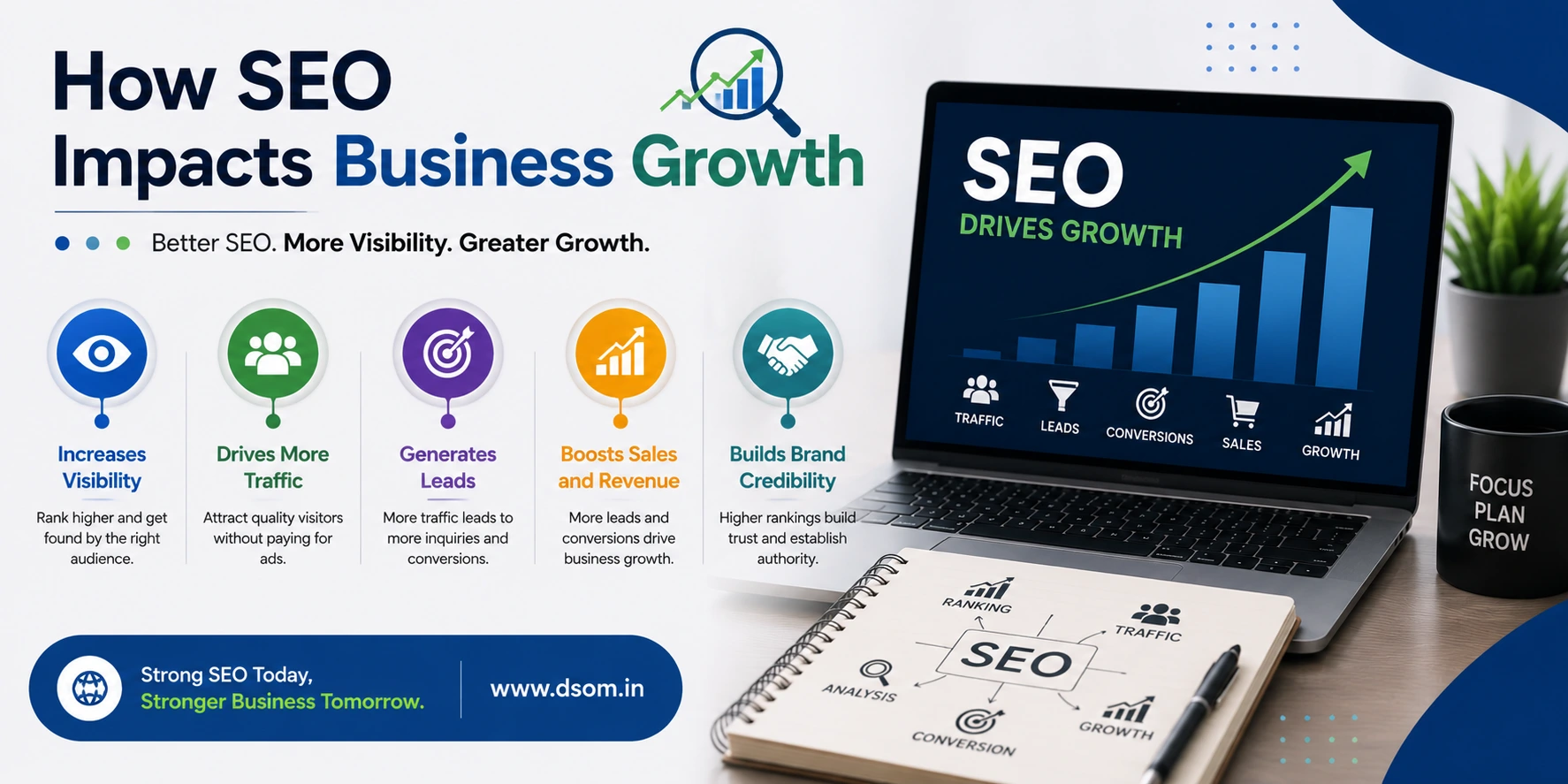
How SEO Impacts Business Growth
A well-executed approach does more than bring in visitors — it brings in the right visitors. People who find a website through a relevant search are already interested in what that site offers, making them far more likely to convert into leads or paying customers. This is why traffic generated this way consistently outperforms many forms of paid traffic in terms of long-term value and return on investment.
Small businesses, in particular, benefit enormously from local optimization, which helps them appear in “near me” searches and map listings. This levels the playing field, allowing smaller players to compete with larger, better-funded competitors purely through smart planning rather than massive advertising budgets. A neighborhood bakery or a local repair shop can realistically outrank a national chain for searches happening in its own city.
Voice search and mobile browsing have also reshaped how people look for information. More searches now happen on phones than on desktops, and a growing share of those searches are spoken rather than typed. Websites that fail to adapt to shorter, conversational, mobile-first queries risk losing an entire generation of potential visitors who never see them in the results at all.
There is also a longer-term brand effect that is easy to overlook. A business that consistently appears near the top of relevant searches, month after month, starts to feel familiar and reliable to the people who repeatedly encounter it, even before they click. That quiet repetition builds a kind of trust that no single advertisement can buy, and it is one more reason serious businesses treat SEO for websites as core infrastructure rather than a side project handled only when there is spare time and budget left over.
Most Searched Keywords Around This Topic
Based on common search behavior, the following terms are frequently used by people researching this subject:
- SEO for websites
- Search engine optimization
- Website ranking
- Organic traffic
- SEO strategy
- On-page SEO and off-page SEO
- Digital marketing
- Google ranking
Naturally weaving these terms throughout meaningful, well-structured writing — rather than stuffing them in artificially — is itself one of the core principles of good optimization. Readers can usually tell the difference between content written for people and content written only to please an algorithm, and so can modern search engines.
Common Mistakes to Avoid
Even well-intentioned website owners often make mistakes that quietly hurt their standing and visibility:
- Keyword stuffing — cramming the same phrase unnaturally into every sentence, which search engines now actively penalize.
- Ignoring mobile optimization — a huge portion of searches now happen on mobile devices, and a clunky mobile layout drives visitors away instantly.
- Slow page speed — visitors and crawlers both tend to abandon pages that take too long to load.
- Duplicate or thin content — pages offering little real value rarely rank well or hold their position for long.
- Broken links — these hurt both the visitor experience and how easily a site can be crawled and indexed.
- Ignoring meta title and meta description — these small elements strongly influence whether someone actually clicks through from the results page.
Avoiding these pitfalls is just as important as actively building a good long-term strategy from scratch, since fixing damage after the fact is often slower than doing things correctly the first time.
Quick Reference: Ranking Impact in Numbers
| Observation | What It Shows |
|---|---|
| Most clicks go to the first page of results | Ranking position directly determines visibility |
| Organic search drives a large share of overall traffic | It remains one of the strongest traffic sources available |
| Most users never scroll past page one | Being on later pages effectively means being invisible |
| Mobile searches make up more than half of all searches | Mobile-friendly design is essential, not optional |
Final Thoughts
SEO is essential for any website because it helps your business get discovered by people who are actively searching online. A well-optimized website attracts more organic traffic, builds trust, improves user experience, and generates quality leads without relying entirely on paid advertising.
In today’s competitive digital landscape, strong SEO is the foundation of long-term online growth. At DSOM (Dehradun School of Online Marketing), we believe that consistent SEO efforts deliver lasting results. Simple improvements like optimizing content, improving website speed, and earning quality backlinks can significantly boost your search rankings over time.