How Bringing Back Lost Visitors Through Retargeting Ads
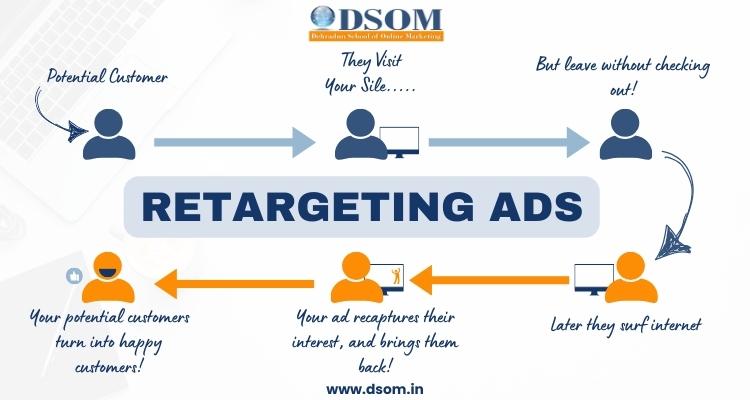
In today’s world, attracting visitors to your website is only half the battle. The real challenge lies in retaining those visitors and converting them into loyal customers. One effective strategy to achieve this is through retargeting ads. In this article, we will dive into the world of retargeting ads and explore how they can help you re-engage with lost visitors and ultimately boost your business. Introduction In the highly competitive online marketplace, businesses often struggle to retain visitors who visit their websites but leave without making a purchase or taking any desired actions. This is where retargeting ads come into play. Retargeting, also known as remarketing, is a powerful advertising strategy that allows you to re-engage with users who have previously visited your website. Understanding Retargeting Ads 1 What are Retargeting Ads? Retargeting ads are a form of online advertising that targets individuals who have already interacted with your website or app. These ads are strategically designed to remind visitors about your products or services, encouraging them to return and complete a desired action, such as making a purchase or filling out a contact form. 2 How do Retargeting Ads Work? Retargeting works by placing a small piece of code (known as a pixel) on your website, which tracks the behavior of visitors. When a visitor leaves your site without converting, the pixel triggers retargeting ads to display to that individual as they browse other websites or social media platforms. This gentle nudge serves as a reminder of your brand and encourages them to return. Benefits of Retargeting Ads 1 Increasing Conversion Rates One of the primary benefits of retargeting ads is their ability to significantly increase conversion rates. By reconnecting with visitors who have shown interest in your products or services, you have a higher chance of turning them into paying customers. 2 Enhancing Brand Awareness Retargeting ads also play a crucial role in reinforcing your brand’s presence. The more a visitor sees your brand across various platforms, the more likely they are to remember and trust it, ultimately leading to increased brand loyalty. 3 Targeted Advertising Unlike traditional advertising methods, retargeting allows you to target specific individuals who have already demonstrated an interest in your offerings. This level of targeting ensures that your ad budget is spent on those most likely to convert. Creating an Effective Retargeting Campaign 1 Define Your Goals Before launching a retargeting campaign, it’s essential to define your objectives. Are you aiming to boost sales, generate leads, or increase brand awareness? Understanding your goals will help shape your campaign strategy. 2 Identify Your Audience Segmenting your audience based on their behavior and interests is key to a successful retargeting campaign. Tailor your ad content to different audience segments for maximum impact. 3 Crafting Compelling Ad Content The ad content you create should resonate with your target audience and provide a clear call to action. Use persuasive language and visuals to entice visitors to return to your site. 4 Setting a Budget Determine your retargeting ad budget to ensure you allocate resources effectively. Monitoring your ad spend is crucial to achieving a positive return on investment. 5 Monitoring and Optimization Continuously monitor the performance of your retargeting ads and make adjustments as needed. A/B testing different ad creatives and audiences can help improve results over time. Best Practices for Retargeting Ads 1 Frequency Capping Avoid bombarding users with excessive ads. Implement frequency capping to limit the number of times an individual sees your retargeting ads. 2 A/B Testing Experiment with different ad creatives, headlines, and calls to action to determine what resonates best with your audience. 3 Ad Creatives and Design Ensure that your ad visuals and design are eye-catching and align with your brand’s aesthetics. 4 Landing Pages Optimization Optimize your landing pages to provide a seamless and relevant experience for visitors who click on your retargeting ads. Overcoming Common Retargeting Challenges 1 Ad Fatigue To prevent ad fatigue, regularly refresh your ad creatives and adjust your targeting criteria. 2 Privacy Concerns Address privacy concerns by being transparent about data usage and providing opt-out options for users. Measuring Success: Key Metrics to Track 1 Click-Through Rate (CTR) Monitor the CTR to gauge how well your retargeting ads are driving traffic back to your site. 2 Conversion Rate Track the conversion rate to assess how effectively your retargeting ads are converting visitors into customers. 3 Return on Ad Spend (ROAS) Calculate the ROAS to determine the profitability of your retargeting campaign. Real-Life Retargeting Success Stories Learn from real-life examples of businesses that have achieved remarkable success through retargeting campaigns. Conclusion In conclusion, retargeting ads are a valuable tool for businesses looking to bring back lost visitors and boost their online presence. By strategically targeting and engaging with visitors who have previously shown interest in your products or services, you can increase conversion rates, enhance brand awareness, and ultimately drive revenue growth. Don’t let potential customers slip away. Embrace the power of retargeting ads and watch your business thrive. Frequently Asked Questions (FAQs) Q1. What is the difference between retargeting and remarketing? A1. Retargeting and remarketing are often used interchangeably. They both refer to the same advertising strategy of targeting users who have previously interacted with your website. However, some platforms may use one term over the other. Q2. Are retargeting ads invasive or annoying to users? A2. Retargeting ads can be effective when done correctly, but they can also become invasive if users are bombarded with excessive ads. Implementing frequency capping and providing opt-out options can help mitigate this issue. Q3. How can I measure the success of my retargeting campaign? A3. Key metrics to track include click-through rate (CTR), conversion rate, and return on ad spend (ROAS). These metrics will provide insights into the effectiveness of your campaign. Q4. Is retargeting suitable for all businesses? A4. Retargeting can benefit a wide range of businesses, but its effectiveness may vary depending on your industry and target audience. It’s essential to assess whether retargeting aligns with your business goals
Unveiling the Boundless Benefits of Learning Graphic Designing
In the digital age, where visual communication reigns supreme, the art of graphic designing has emerged as a powerful tool for individuals and businesses alike. From creating captivating advertisements to crafting compelling user interfaces, graphic design plays a pivotal role in shaping our everyday experiences. However, its significance goes beyond aesthetics; it offers a plethora of benefits that extend to various aspects of life and work. Let’s delve into the myriad advantages of learning graphic designing. 1.Unleashing Creativity: At its core, graphic design is a creative outlet that encourages individuals to think outside the box and express themselves visually. Learning graphic design equips you with the skills to transform your ideas into tangible designs, fostering innovation and originality. 2.Enhancing Communication: Effective communication is essential in any field, and graphic design serves as a powerful medium to convey messages concisely and persuasively. Whether it’s through logos, infographics, or posters, mastering graphic design enables you to communicate ideas effectively, regardless of language barriers. 3.Career Opportunities: In today’s job market, graphic design skills are highly sought after across various industries, including advertising, marketing, publishing, and web development. By acquiring proficiency in graphic design, you open doors to a wide range of career opportunities, from freelance gigs to full-time positions at renowned companies. 4.Boosting Brand Identity: In an increasingly competitive business landscape, establishing a strong brand identity is crucial for success. Graphic designers play a pivotal role in creating visually appealing branding elements such as logos, color schemes, and typography, which help businesses stand out and leave a lasting impression on their audience. 5.Expanding Digital Literacy: As our world becomes increasingly digitized, digital literacy is no longer optional—it’s essential. Learning graphic design not only hones your creative skills but also familiarizes you with various digital tools and software such as Adobe Photoshop, Illustrator, and InDesign, enhancing your overall digital literacy. 6.Flexibility and Autonomy: One of the most enticing aspects of graphic design is the flexibility it offers. Whether you prefer working as a freelancer, collaborating with creative agencies, or pursuing in-house positions, graphic design allows you to tailor your career path according to your preferences and lifestyle. 7.Problem-Solving Skills: Graphic designers are tasked with solving complex visual problems, whether it’s creating a user-friendly interface or designing an impactful advertisement. Learning graphic design nurtures your problem-solving skills, teaching you to approach challenges creatively and find innovative solutions. 8.Personal Branding: In today’s interconnected world, cultivating a strong personal brand is essential for professional success. Graphic design empowers you to create a cohesive and visually appealing personal brand across various platforms, from your resume and portfolio to your social media profiles, helping you stand out in a competitive job market. 9.Cultural and Global Awareness: Graphic design is deeply intertwined with culture and society, reflecting the values, beliefs, and trends of different communities around the world. By immersing yourself in the world of graphic design, you gain a deeper understanding of cultural nuances and global perspectives, enriching your creative repertoire. 10.Continuous Learning and Growth: The field of graphic design is constantly evolving, with new trends, technologies, and techniques emerging regularly. Learning graphic design is a journey of continuous learning and growth, allowing you to stay updated with the latest developments and push the boundaries of your creativity. In conclusion, learning graphic design offers a myriad of benefits that extend far beyond the realm of aesthetics. From unleashing creativity and enhancing communication to unlocking career opportunities and fostering personal growth, the advantages of mastering graphic design are boundless. Whether you’re a budding artist, an aspiring entrepreneur, or a seasoned professional looking to expand your skill set, investing in graphic design education is a decision that can yield lifelong rewards. So, why wait? Embark on your graphic design journey today and unlock the limitless possibilities that await you in this dynamic and exciting field.
Top 10 Logo Maker Sites for Non-Designers
Are you a non-designer looking to create a captivating logo for your business or personal brand? Look no further! In this article, we will discuss the top 10 logo maker sites that are perfect for non-designers. These platforms offer user-friendly interfaces and a wide range of design options, allowing you to create professional-looking logos without any prior design experience. Canva Canva is a popular online design tool that offers a variety of templates, including logo templates. With its user-friendly drag-and-drop interface, you can easily customize colors, fonts, and graphics to create a logo that suits your brand. Canva also provides a vast library of stock images and icons to choose from. DesignEvo DesignEvo is a logo maker platform with a simple and intuitive interface. It offers thousands of logo templates that you can customize as per your preference. With DesignEvo, you can easily select icons, experiment with fonts, and change the colors to create a unique logo for your business. Tailor Brands Tailor Brands is an AI-powered logo maker that allows you to create a professional logo in just a few minutes. Simply answer a few questions about your business, and Tailor Brands will generate personalized logo designs based on your inputs. You can then customize the generated logos to make them perfect for your brand. LogoMakr LogoMakr provides a simple and efficient logo-making process. You have the option to start from scratch or choose from a wide range of pre-designed templates. With LogoMakr, you can easily add text, shapes, and icons to create a logo that represents your brand. Hatchful Hatchful, created by Shopify, is another Logo maker site suitable for non-designers. With Hatchful, you can choose from a variety of industry-specific templates and customize them to match your brand’s identity. It also provides options to download high-resolution logo files for different purposes such as social media profiles, websites, and business cards. Free Logo Design As the name suggests, Free Logo Design allows you to create a logo without spending a penny. It offers a straightforward interface where you can select from a library of icons, customize fonts, colors, and layouts. Once you have finalized your design, you can download it in high-resolution for free. Logojoy Logojoy is an AI logo maker that simplifies the logo creation process. It uses artificial intelligence algorithms to generate logo designs based on your preferences. You can preview and customize various options before finalizing the one that suits your brand. Wix Logo Maker Wix Logo Maker provides a hassle-free logo creation experience. It offers an extensive library of logo templates, fonts, and icons. With its step-by-step process, you can easily customize a logo to represent your brand effectively. Looka Looka is an AI-powered logo maker that allows you to create a professional logo in minutes. It offers a wide variety of design options, including fonts, colors, icons, and layouts. Looka also provides branding tools such as business card designs and social media kits to help you establish a consistent brand identity. Logaster Logaster is a user-friendly platform that enables you to create high-quality logos for your business. It provides a wide range of design options and allows you to customize every aspect of your logo, including fonts, colors, and icons. Logaster also offers additional branding tools such as letterhead templates and email signatures. In conclusion, these top 10 logo maker sites for non-designers offer simple and intuitive interfaces, along with a variety of design options for creating professional logos. Whether you’re starting a new business or rebranding an existing one, these platforms provide the necessary tools to create a logo that represents your brand effectively. So, don’t let your lack of design skills hold you back. Explore these logo maker sites and create a memorable logo for your brand today!
The Concept Of White Space In Graphic Design
In the realm of graphic design, there exists a powerful yet often overlooked element that plays a significant role in enhancing visual appeal and communication: white space. Also known as negative space, white space refers to the empty areas intentionally left untouched within a design composition. Contrary to its name, it does not necessarily have to be white; it can be any color or even transparent. This concept may seem counterintuitive at first glance, as designers are accustomed to filling every inch of a canvas with content. However, by purposefully incorporating strategic areas of emptiness, designers can achieve a multitude of benefits that greatly impact the overall effectiveness of their work. Enhancing Visual Hierarchy: The Power Of White Space In Directing Attention White space plays a pivotal role in enhancing visual hierarchy within graphic design, effectively guiding the viewer’s attention to key elements and messages. By strategically incorporating white space, designers can create a sense of balance and harmony that allows important elements to stand out. The intentional use of white space helps establish a clear visual hierarchy by providing breathing room around focal points, such as headlines or images. This negative space allows the eye to naturally gravitate toward these elements, ensuring they are not overshadowed by clutter or competing visuals. Moreover, it can also be utilized to separate different sections or content blocks, aiding in the organization and comprehension of information. Improving Readability And Comprehension With Ample White Space One of the key benefits of incorporating white space in graphic design is its ability to enhance readability and comprehension. When there is sufficient empty space surrounding text or images, it allows the content to breathe and stand out, making it easier for viewers to read and understand. The absence of clutter and visual noise helps guide the reader’s eye smoothly across the page, preventing information overload. Additionally, white space creates a sense of order and organization, allowing important elements to be highlighted effectively. By providing visual breaks between different sections or paragraphs, it aids in digesting information by providing mental rest points. Ultimately, ample white space promotes a seamless reading experience that captivates attention while facilitating better understanding of the design’s message. Creating A Sense Of Balance And Harmony In Design Through White Space In graphic design, it refers to the intentional absence of elements in a composition. This strategic use of empty space plays a crucial role in achieving balance and harmony within a design. By providing visual breathing room, it allows the eye to rest and focus on the key elements of the composition. It creates a sense of equilibrium by distributing visual weight evenly throughout the layout, preventing overwhelming or cluttered designs. The judicious application of it helps establish a harmonious relationship between different design elements, enhancing readability and comprehension. It promotes clarity and elegance by allowing important information or visuals to stand out, capturing attention more effectively. Boosting User Experience And Engagement Through Thoughtful Use Of White Space It is also known as negative space, plays a crucial role in enhancing user experience and engagement in graphic design. By strategically incorporating white space, designers can create a visually appealing layout that guides the user’s attention to important elements and content. This intentional use of empty space allows for a harmonious balance between text, images, and other visual elements. It provides breathing room for the eyes, reducing cognitive load and allowing users to focus on the key message without distractions. Moreover, it creates a sense of elegance and sophistication while improving readability and comprehension. By embracing the power of white space, designers can elevate user experience by delivering content with clarity, ensuring seamless navigation, and ultimately increasing engagement with their designs.
Augmented Reality and Graphic Design: A Seamless Integration

Introduction Imagine you’re in a world where digital magic blends seamlessly with the real world around you. This is the world of Augmented Reality and Graphic Design is the wizardry that makes it all happen. In this blog, we’ll explore how graphic design plays a crucial role in making AR experiences incredible. Imagine you’re in a world where digital magic blends seamlessly with the real world around you. This is the world of Augmented Reality and Graphic Design is the wizardry that makes it all happen. In this blog, we’ll explore how graphic design plays a crucial role in making AR experiences incredible. Understanding Augmented Reality Before we get into the details, let’s quickly explain what augmented reality is. Augmented reality is a technology that adds digital stuff (like pictures, videos, and information) to the real world you see. It’s like having a secret layer of digital fun on top of the real world, and you can see it using devices like smartphones, tablets, and AR glasses. Augmented Reality and Graphic Design: A Perfect Match Graphic design is all about making things look great and communicate well. In the world of augmented reality, graphic design is the language that helps us interact with the digital world while still being in the real world. Here are some ways graphic design makes AR awesome: Making AR Easy to Use Graphic designers create the buttons, icons, and menus you see in AR apps. These need to be easy to understand and look good, so you can use AR without getting confused. Creating Cool Digital Stuff Graphic designers make the digital things in AR, like 3D models, animations, and cool pictures. These are what make AR experiences fun and exciting. Designing Special Triggers In AR, we often use special things called “markers” to make digital stuff appear in the real world. Graphic designers design these markers so AR devices can recognize them easily. Making Information Beautiful Sometimes, AR shows us important information. Graphic designers are the ones who make this information look pretty and easy to understand. Bringing Brands to Life When companies use AR for marketing, graphic designers make sure that the brand’s look and feel are part of the AR experience. This means using the right colors, logos, and messages. Challenges and Things to Think About While Augmented Reality and Graphic Design are a great team, they also have some challenges: Speed Matters: AR needs to be fast, so graphic designers have to make sure things look good and load quickly. Working Everywhere: AR should work on lots of different devices, like phones and tablets. Graphic designers need to make sure their stuff works everywhere. Real or Pretty? Finding the right balance between making things look real and making them look good is tough. Graphic designers have to figure this out. Accessible for All: AR should be usable by everyone, including people with disabilities. Graphic designers need to make sure AR is easy for everyone to use. Examples of Graphic Design in Augmented Reality 1.Virtual Try-Ons: Fashion brands use AR so you can try on clothes virtually. Graphic designers make 3D models of clothes and create buttons for you to use. 2.Navigation and Maps: AR helps us find our way. Graphic designers create the things you see on your screen to help you navigate. 3.Learning with AR: In education, AR makes learning fun. Graphic designers create cool 3D models and animations to help you understand things better. 4.AR in Ads: Companies use AR to make ads exciting. Graphic designers create amazing visuals and interactive ads. The Future of Graphic Design in Augmented Reality As technology keeps getting better, graphic design will continue to play a huge role in making AR even cooler. We can expect more fun and interactive AR experiences that feel like they’re part of our everyday lives. In the end, Augmented Reality and Graphic Design are like peanut butter and jelly—they just work together. Graphic design makes AR look fantastic, and AR gives graphic design a whole new playground to create in. As we look ahead, we’ll see Augmented Reality and Graphic Design working hand in hand to create even more incredible experiences that make our world a more exciting and visually stunning place. So, get ready for a future where reality and imagination blend seamlessly!
THINKING OF SWITCHING YOUR CAREER – CHOOSE DIGITAL MARKETING
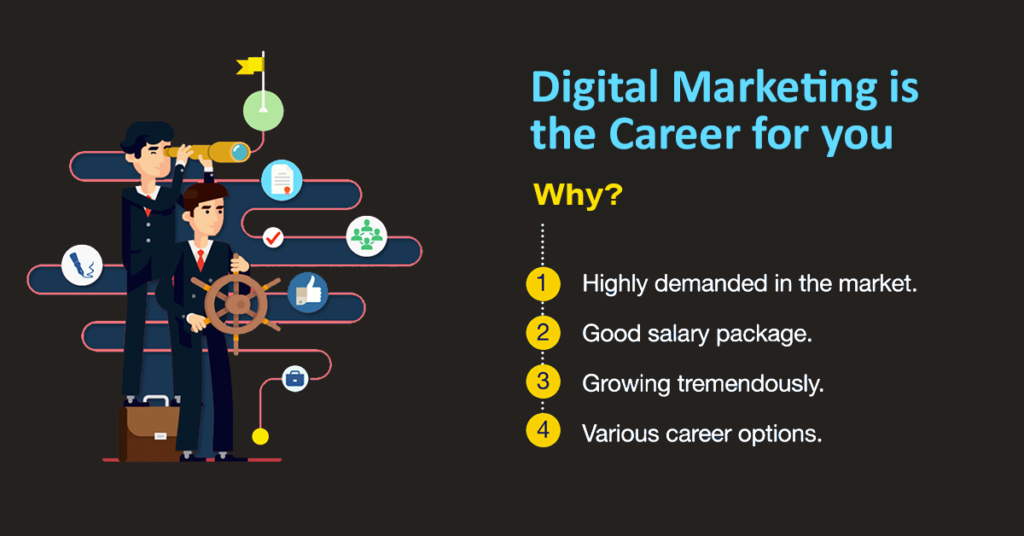
We often are accustomed to going to a straight path when choosing a career, commerce in 11th and 12th then doing commerce related courses like B.om, BBA, Chartered Accountancy and the list goes on. Then after graduation you will probably go for a career path like banking, preparing to become CA, going into law, etc. and also after getting a job you may somehow feel that in today’s fast-growing, digitized professional and personal environment your current skills are not quite up to date as everyday new platforms new startups emerge into the market. Your current job is giving you a monotonous and unsatisfactory work environment and you feel like you’ve made a wrong career choice. DON’T STRESS OUT There are still lots of opportunities available that you can grab, one of them is DIGITAL MARKETING. WHAT IS DIGITAL MARKETING? Digital marketing is the marketing of products through digital platforms like websites, social media search engine, email and other platforms which connect with current and prospective customers. TYPES OF DIGITAL MARKETING Content Marketing Search Engine Optimization (SEO) Search Engine Marketing (SEM) Social Media Marketing (SMM) Pay-Per-Click Advertising (PPC) Affiliate Marketing Email Marketing… CORE REASONS TO SWITCH TO DIGITAL MARKETING CREATIVE PROFESSION Digital marketing is a highly creative profession. It requires regular generation and execution of ideas. It runs on your creative outlook and strategy building techniques. Being a digital marketer for a company, you are responsible for mapping out plans and strategies to grow a business online personality and help them convert prospective visitors into buyers. All this requires creativity and analytical abilities from your end. WIDER JOB OPPORTUNITIES As digital marketing is divided into different categories like Search Engine Optimization(SEO), Social Media Optimization(SMO), content curation, video marketing etc. you get wider job opportunities to choose from. You need to identify your own creative niche as in which field video, writing, social media you have a natural flair, and then polish that skill by choosing the specific path into digital marketing. GROWTH It is one of the fastest growth rendering professions. You can easily acquire a level up into this field through your skills and overall performance. Get real competitive and advance your marketing skills and there are huge growth opportunities waiting for you. CONNECTIONS AND NETWORKS Digital marketing provides you a chance to meet new people everyday. You are given new projects to work on and people from different cultural backgrounds and professions need a digital marketer to boost their online growth. With this , you build connections and networks with different people. Even you can even connect with people internationally and can offer your skills to them. FINANCIAL GROWTH As we mentioned that digital marketing offers huge growth opportunities, it hikes up your pay-grade. Marketers are required by almost every business/organization/solopreneurs and so the multiple skills gained through it help you build multiple income paths. For example – if you are working for an organization, you can also offer your services through freelancing. Apart from this, your corporate ladder will also give better financial growth. SELF-BRANDING Digital marketing one of those jobs which will give you a recognition and help you brand yourself in the market. You will present yourself in front of people, you will meet different people and this helps in establishing yourself and as a face of your digital marketing skills. NO AGE BAR The best thing about marketing is that it demands no age-bar. Anyone who possess skills of analytics, strategy, writing, social media can get into digital marketing irrespective of their age. Due to this digital marketing is becoming one of the most popular career paths, when people think of switching to career. What are you thinking of? Go ahead and choose Digital Marketing as your career.
FAQ’s related to Graphic Designing course

What is graphic design? Graphic design is the process of creating visual content for various media, such as print, digital, and social media. It involves using a combination of text, images, and other design elements to communicate a message or convey information in an effective and visually appealing way. What are the skills required for graphic design? Some of the skills that are essential for graphic design include: Creativity: Graphic designers must have a creative eye and be able to come up with new and innovative design ideas. Attention to detail: Graphic designers need to have excellent attention to detail to ensure that their designs are accurate and visually appealing. Artistic ability: Graphic designers need to have an eye for aesthetics and be able to create visually pleasing designs. Communication skills: Graphic designers need to be able to clearly communicate their ideas to clients, as well as work well with a team. Time management: Graphic designers often work on multiple projects at once, so good time management skills are essential. Technical skills: Graphic designers need to be proficient in various software programs, such as Adobe Photoshop and Illustrator. What are the types of graphic design? There are several different types of graphic design, including: Digital design: Digital design involves creating designs for digital media, such as websites, social media, and mobile apps. Motion graphics: Motion graphics involve creating animations and videos to convey information or tell a story. User interface (UI) design: UI design involves designing the layout and interface of websites and mobile apps. Package design: Package design involves creating the packaging for products, including the shape, size, and materials used. Print design: This includes creating designs for print materials such as brochures, business cards, and posters. Web design: This involves creating designs for websites and other digital platforms. Illustration: This involves creating visual images to communicate information or tell a story. Branding: This involves creating visual elements for a company or brand, such as logos, color schemes, and typography. What is the job outlook for graphic designers? According to the U.S. Bureau of Labor Statistics, employment of graphic designers is expected to grow by 3% from 2020 to 2030, which is about as fast as the average for all occupations. The increasing demand for visual content, particularly in the digital space, is driving this growth. What is the salary range for graphic designers? The salary range for graphic designers can vary widely depending on factors such as location, experience, and industry. According to the U.S. Bureau of Labor Statistics, the median annual wage for graphic designers was $52,110 in May 2020. The lowest 10% of earners made less than $30,530, while the highest 10% made more than $86,480. What is the difference between a graphic designer and a graphic artist? A graphic designer is someone who creates visual content for a variety of purposes, such as marketing, advertising, and branding. A graphic artist, on the other hand, is someone who creates visual art for its own sake, rather than for a specific purpose or function. Graphic artists may create works of art for galleries or exhibitions, rather than for commercial purposes. How long does it take to complete a graphic design course? The length of a graphic design course can vary depending on the institution and the program. Some courses may be completed in as little as a few months, while others may take up to two years or more. Is a degree in graphic design necessary to become a graphic designer? While a degree in graphic design is not strictly necessary to become a graphic designer, many employers prefer to hire designers who have a formal education in the field. A degree in graphic design can provide you with a solid foundation in design principles, as well as the opportunity to gain practical experience through internships and other hands-on learning experiences. What are the job prospects for graphic designers? Graphic design is a growing field, with employment of graphic designers expected to increase by 4% from 2020 to 2030, according to the US Bureau of Labor Statistics. Demand for graphic designers is likely to be driven by the increasing use of digital media and the need for visual content in a variety of industries.
Unlocking Passive Income with Digital Marketing Strategies
In today’s fast-paced digital age, the concept of earning passive income has gained immense popularity. While traditional sources of income require active involvement and time commitment, passive income streams offer the allure of generating revenue with minimal effort once set up. One avenue that has proven to be highly effective in creating passive income is through digital marketing strategies. Let’s explore how digital marketing can serve as a lucrative pathway to income. 1.Affiliate Marketing: Affiliate marketing is a cornerstone of passive income generation in the digital realm. By partnering with companies and promoting their products or services through unique affiliate links, individuals can earn commissions for every sale or referral made through their efforts. Digital marketers can leverage various platforms such as blogs, social media, or email newsletters to reach a broader audience and drive traffic to affiliate products. With strategic content creation and effective promotion, affiliate marketing can become a significant source of income over time. 2.Content Monetization: Creating valuable content is another avenue for passive income through digital marketing. Whether it’s blogging, podcasting, or creating videos, content creators can monetize their work through various channels such as advertising, sponsored content, or membership subscriptions. By consistently delivering high-quality content that resonates with their target audience, content creators can attract a loyal following and generate income through ad revenue or recurring subscriptions. 3.Digital Product Sales: Developing and selling digital products is a lucrative way to earn passive income in the digital landscape. This could include e-books, online courses, software, or digital downloads such as templates or graphics. Digital marketers can leverage their expertise to create valuable digital products that address specific needs or interests within their niche. Once created, these products can be marketed and sold online, allowing marketers to earn income from every sale without the need for ongoing maintenance or fulfillment. 4.Automated Email Marketing: Email marketing remains one of the most effective tools for engaging with customers and driving sales. By building an email list and implementing automated email sequences, digital marketers can nurture leads and convert them into paying customers on autopilot. With the right segmentation and targeting strategies, email marketing campaigns can generate passive income by promoting products or services to subscribers based on their interests and behavior. 5.Dropshipping and E-commerce: E-commerce businesses, particularly those utilizing drop shipping models, offer significant opportunities for passive income generation. Digital marketers can set up online stores and leverage drop shipping suppliers to fulfill orders without the need for inventory management or shipping logistics. By driving traffic to their e-commerce websites through digital marketing tactics such as SEO, social media, or paid advertising, marketers can earn passive income from sales made through their online storefronts. In conclusion, digital marketing presents a wealth of opportunities for creating passive income streams in today’s digital economy. By digital marketing strategies such as affiliate marketing, content monetization, digital product sales, automated email marketing, and e-commerce, individuals can build scalable income streams that generate revenue with minimal ongoing effort. However, it’s essential to remember that success in passive income endeavors requires patience, persistence, and a commitment to delivering value to your audience. With dedication and strategic execution, digital marketing can serve as a powerful vehicle for achieving financial freedom and building long-term wealth.
The Fusion of UX and UI Design
The way we engage with technology is more important than ever in a world where it is all around us. Have you ever wondered why certain apps or websites seem so obvious, while others baffle you? Let us introduce you to fusion of UX and UI design, the magic ingredient for a flawless and delightful online experience. Understanding Design for User Experience (UX) Enhancing user satisfaction through improved product usability and accessibility is the main goal of UX design. Imagine entering a store where finding what you need is simple because everything is arranged logically. That’s the goal of effective UX design in the digital sphere. Keys Aspects of UX Design Research: The cornerstone is an understanding of user preferences, behaviors, and needs. Surveys, interviews, and data analysis are all part of this process to develop user personas. Consider wireframing and prototyping : The process of drawing up a plan before constructing a house. Prototypes are interactive models, and wireframes are skeletal outlines that aid in visualizing the finished product. Usability testing : It is the process of presenting prototypes to actual users in order to get their input and improve the design. Iterative processes guarantee that the final product lives up to user expectations. Examining User Interface (UI) Design The appearance and feel of a product—its aesthetics and interactivity—are more important in UI design. It’s the skill of creating an intuitive and aesthetically pleasing digital interface. UI design is the fine details and color schemes that give a house a homey feel, if UX design is the blueprint. Layout and Responsiveness: Creating layouts that smoothly change to fit various screen sizes and gadgets while maintaining a consistent user experience. Animation & Interactivity: Including components that direct users and simplify interactions, such as sliders, buttons, and animations. The Point Where UI and UX Meet Although they are different, UX and UI design go hand in hand. Just as a poor user interface can undermine an excellent user experience, so too does a great user interface (UI) if the overall user experience (UX) is confusing. Together, they provide a comprehensive user experience. Collaboration & Communication Collaboration : To produce a unified product , UX and UI designers frequently work together closely and comprehend one another’s viewpoint. Communication: Clear Communication between these teams ensures that user needs and design elements align effectively. What Makes UX/UI Design Important? With so many digital options available to them, users want efficiency and ease of use. An intelligent UX/UI design: Increases Engagement: Users are more likely to stay on a platform or website longer when they have a smooth experience. Improves Brand Perception: A user-friendly interface that is aesthetically pleasing helps to build a favourable impression of the brand. Boosts Conversions: Users are more likely to convert, whether that means making a purchase or signing up for a service, when they find a product easy to navigate and use. UI Design Components: Visual Design: Selecting elements such as imagery, typography, colours, and icons that support the brand and establish a logical visual hierarchy. Layout and Responsiveness: Creating layouts that smoothly change to fit various screen sizes and gadgets while maintaining a consistent user experience. Animation & Interactivity: Including components that direct users and simplify interactions, such as sliders, buttons, and animations The Point Where UI and UX Meet Although they are different, UX and UI design go hand in hand. Just as a poor user interface can undermine an excellent user experience, so too does a great user interface (UI) if the overall user experience (UX) is confusing. Together, they provide a comprehensive user experience. Collaboration & Communication Collaboration : To produce a unified product , UX and UI designers frequently work together closely and comprehend one another’s viewpoint. Communication: Clear Communication between these teams ensures that user needs and design elements align effectively. What Makes UX/UI Design Important? With so many digital options available to them, users want efficiency and ease of use. An intelligent UX/UI design: Increases Engagement: Users are more likely to stay on a platform or website longer when they have a smooth experience. Improves Brand Perception: A user-friendly interface that is aesthetically pleasing helps to build a favourable impression of the brand. Boosts Conversions: Users are more likely to convert, whether that means making a purchase or signing up for a service, when they find a product easy to navigate and use. The Future for UX/UI Design Technology is always changing, and this is also true of UX/UI design. The way that designers approach user experiences is changing due to emerging trends like voice user interfaces (VUI), augmented reality (AR), and artificial intelligence (AI). Customization & Availability: Personalization: Creating a more customized journey by adjusting experiences according to the preferences of each individual user. Accessibility: Creating inclusive designs that make digital products easily usable and accessible to all users, regardless of ability. UX/UI design, to put it briefly, is the art of making digital experiences that are pleasant, intuitive, and natural for users. It is really about empathy and understanding. UX/UI designers continue to play a critical role in influencing how we interact with the digital world as technology becomes more and more integrated into our daily lives.
Skills Required to Become a UX Designer
Skills Required to Become a UX Designer In today’s digital landscape, user experience (UX) has become a crucial aspect of design. Whether it’s a website, mobile app, or software interface, creating a seamless and user-friendly experience is essential for success. UX designers play a vital role in crafting these experiences, putting the user at the center of the design process. If you aspire to become a UX designer, here are the key skills you should acquire to thrive in this dynamic field. 1.Empathy and User-Centric Thinking: A successful UX designer must possess empathy and the ability to understand user needs and perspectives. The capacity to put yourself in the users’ shoes helps in creating designs that are intuitive and user-friendly. Developing a user-centric mindset allows designers to design experiences that meet the needs and solve the problems of the target audience. 2.Research and User Analysis: One of the foundational skills of a UX designer is conducting research and user analysis. This involves user interviews, surveys, user testing, and analyzing user behavior and preferences. By gathering insights and feedback directly from users, designers can make data-driven decisions and create designs that align with user expectations. 3.Information Architecture: Information architecture (IA) is the organization and structuring of information within a digital product. It involves creating intuitive navigation systems and organizing content in a logical and user-friendly manner. A UX designer should possess strong IA skills to ensure users can easily find the information they need and navigate through the product seamlessly. 4.Wireframing and Prototyping: Wireframing and prototyping are essential skills for UX designers. These techniques allow designers to create low-fidelity sketches and interactive mockups of their designs. Wireframes and prototypes are used to test and validate design concepts, gather user feedback, and iterate on the design before development. Proficiency in tools like Sketch, Figma, or Adobe XD is crucial for creating effective wireframes and prototypes. 5.Visual Design and UI Principles: While UX focuses on functionality and usability, visual design plays a crucial role in creating an aesthetically pleasing experience. UX designers should possess a solid understanding of color theory, typography, and visual hierarchy. They should have the ability to create visually appealing interfaces that align with brand guidelines and create a cohesive user experience. 6.Interaction Design and Micro interactions: Interaction design is concerned with defining how users interact with a product. It involves designing intuitive and responsive elements, such as buttons, menus, and gestures. A UX designer should understand the principles of interaction design and have the ability to create engaging micro interactions that delight users and enhance the overall experience. 7.Usability Testing and UX Evaluation: Usability testing is an important part of the UX design process. It involves observing users as they interact with a prototype or a live product and collecting feedback. UX designers should be skilled in planning and conducting usability tests and analyzing the results. Through usability testing, designers can identify pain points, areas of improvement, and validate their design decisions. 8.Collaboration and Communication: UX designers often collaborate with other team members, such as developers, product managers, and stakeholders. Effective communication and collaboration skills are critical for a UX designer to effectively convey design decisions, gather feedback, and work together to create user-centered designs. Strong interpersonal skills and the ability to present and articulate design rationale are essential for success in this field. 9.Continuous Learning and Adaptability: The field of UX design is constantly evolving. To stay at the forefront, UX designers should be adaptive and continuously learning. They should be updated about the latest design trends, emerging technologies, and best practices. Having a growth mindset and a thirst for knowledge will enable UX designers to deliver innovative and effective solutions. 10.Problem Solving and Critical Thinking: UX designers are problem solvers. They should possess strong analytical and critical thinking skills to identify user pain points and devise innovative solutions. The ability to think outside the box and approach problems from different angles allows designers to create user experiences that meet and exceed user expectations. In conclusion, becoming a UX designer requires a diverse skill set that encompasses empathy, research, information architecture, wireframing, visual design, interaction design, usability testing, collaboration, and continuous learning. It’s important to note that these skills can be developed and honed through practice, hands-on experience, and continuous learning. By acquiring and mastering these skills, aspiring UX designers can unlock a world of opportunities to create meaningful and user-centered experiences in the digital realm.