Adobe Photoshop shortcut keys for Lightning-Fast Editing
Introduction: Adobe Photoshop shortcut keys is the clear winner when it comes to digital design and photo editing. Professionals and novices alike use it because of its robust tools and wide range of possibilities. On the other hand, Photoshop’s vast feature set may occasionally be intimidating and time-consuming to navigate. Shortcut keys are useful in situations like that. We’ll explore the world of Adobe Photoshop shortcut keys in this blog post and reveal the techniques for incredibly quick editing. In the realm of digital creativity, Adobe Photoshop reigns supreme as the ultimate tool for photo editing and graphic design. From enhancing images to creating stunning visual masterpieces, Photoshop empowers users to unleash their creativity in ways previously unimaginable. Adobe Photoshop shortcut keys are essential keystroke combinations that perform various tasks within the software, ranging from basic functions like opening and saving files to more advanced actions like applying filters and adjustments. Understanding the Basics Before we dive into the world of shortcut keys, let’s take a moment to understand what they are and why they’re important. Shortcut keys, also known as hotkeys, are keyboard combinations that allow users to perform tasks quickly without having to navigate through menus or use the mouse. They are essential for improving efficiency and productivity, making the editing process smoother and more streamlined. The Power of Adobe Photoshop Shortcut Keys: 1. Getting Started: Essential Shortcut Keys Ctrl + N: Opens a new document Ctrl + O: Opens an existing document Ctrl + S: Saves the current document Ctrl + Z: Undo the last action Ctrl + Shift + Z: Redo the last action These basic shortcut keys lay the foundation for efficient editing in Adobe Photoshop. By mastering these shortcuts, you can perform common tasks with ease and speed up your workflow significantly. 2. Navigation and Selection Ctrl + T: Transform selected layer Ctrl + D: Deselects the current selection Ctrl + A: Selects the entire canvas Ctrl + Shift + I: Inverts the current selection Ctrl + Shift + Alt + N: Creates a new layer without displaying the dialog box These shortcuts allow you to navigate through your document and make precise selections quickly, saving you valuable time during the editing process. 3. Tools and Functions B: Brush tool V: Move tool E: Eraser tool M: Marquee tool Ctrl + Alt + Z: Step backward in the history panel By memorizing these shortcut keys for commonly used tools and functions, you can work more efficiently and focus on unleashing your creativity without interruption. Tips for Mastery Practice regularly: The more you use shortcut keys, the more familiar they will become. Customize your shortcuts: Adobe Photoshop allows you to customize shortcut keys to suit your workflow preferences. Refer to cheat sheets: Keep a handy reference guide of shortcut keys nearby for quick access when needed. Conclusion: In conclusion, mastering Adobe Photoshop shortcut keys is paramount for anyone seeking to elevate their editing game and maximize efficiency within the software. By incorporating these keystroke combinations into your workflow, you can significantly reduce the time spent on repetitive tasks, navigate through Photoshop’s interface with ease, and unleash your creativity with lightning-fast speed. Remember, mastery of Adobe Photoshop shortcut keys is an ongoing journey that requires dedication and practice. Keep exploring new shortcuts, experimenting with different combinations, and refining your skills to unlock the full potential of this powerful software. With Adobe Photoshop shortcut keys by your side, you’ll be well-equipped to tackle any editing task with speed, precision, and confidence. So, what are you waiting for? Start mastering Adobe Photoshop shortcut keys today and take your editing skills to new heights of efficiency and productivity. Your creative journey awaits!
Top 10 Advantages and Disadvantages of Social Media
Social media has become an integral part of our lives, with over 4.6 billion active users worldwide. It offers a wide range of benefits, from staying connected with friends and family to learning new things and promoting businesses. However, it is important to be aware of the potential disadvantages of social media as well. In this article we are sharing with you some advantages and disadvantages of Social Media in 2026. Social media has both advantages and disadvantages. On the positive side, it facilitates communication and connection, enabling people to stay in touch with loved ones and even make new friends globally. It serves as a powerful platform for information dissemination and awareness on important issues. Moreover, social media provides opportunities for entertainment, self-expression, and professional networking. On the downside, it can lead to privacy concerns, as personal information is often shared online. It may also contribute to addiction and time-wasting, affecting productivity and mental health. The spread of misinformation and cyberbullying are other significant drawbacks. Striking a balance between the advantages and disadvantages of social media usage is crucial for responsible and beneficial engagement. Reasons why people use social media as a part of their lives People use social media for various reasons, making it an integral part of their lives. It’s a primary tool for social connection, allowing users to stay in touch with friends and family, while also serving as a source of news and information. Entertainment, self-expression, and professional networking are other key purposes. Some use it for education and learning, promotion, or finding support communities. Social media also plays a role in raising social awareness and activism, e-commerce, and sharing creative work. Additionally, it serves as a means of communication with brands and a platform for nostalgia, memory sharing, and travel exploration. However, it’s essential to balance its positive aspects with responsible usage to mitigate potential downsides. Average time to spend on Social Media Key Statistics Only 1.32 percent of the 4.48 billion social media users access platforms entirely via desktop, with 99 percent accessing websites or apps through a mobile device. Globally, people spend an average of 2 hours 24 minutes every day on social media; if someone signed up at 16 and lived to be 70, they would have spent 5.7 years of their lives on it. With 2.9 billion monthly active users, Facebook is the most popular social network, followed by YouTube (2.3 billion), WhatsApp (2 billion), Facebook Messenger (1.3 billion), and WeChat (1.3 billion) (1.2 billion) 93.33 percent of the 4.8 billion internet users are active. 85 percent of the 5.27 billion unique mobile phone users are active users. 99 percent of the 4.48 billion social media users access the sites or apps via a mobile device Top 10 Advantages of social media: 1.Stay connected with friends and family: Social media makes it easy to stay in touch with loved ones who live far away or who you don’t see often. You can share photos, videos, and updates about your life, and see what they’re up to as well. 2.Learn new things: Social media is a great way to learn about new topics and cultures. You can follow experts in different fields, read articles and blog posts, and watch educational videos. 3.Promote your business: It is a powerful marketing tool for businesses of all sizes. You can use it to reach a large audience, connect with potential customers, and promote your products or services. 4.Build relationships: It can help you build relationships with people who share your interests. You can join groups and communities, participate in discussions, and collaborate on projects. 5.Stay informed: It is a great way to stay up-to-date on current events and news. You can follow news organizations, journalists, and other experts to get their insights on the latest headlines. 6.Find entertainment: It is a great source of entertainment. You can watch funny videos, listen to music, play games, and read stories. 7.Express yourself: It is a platform to express yourself creatively. You can share your thoughts, feelings, and experiences with the world. 8.Make a difference: It can be used to raise awareness about important issues and causes. You can use your platform to speak out against injustice, share resources, and encourage others to get involved. 9.Find support: It can be a great place to find support from others who are going through similar experiences. You can join groups and communities dedicated to specific topics, such as mental health, chronic illness, or parenting. 10.Have fun: It can be a lot of fun! You can use it to connect with friends, learn new things, and be entertained. Earning from Social Media Possible? Yes, earning from social media is indeed possible. Many individuals and businesses generate income through various avenues on social platforms. Influencers and content creators can earn money through sponsored posts, brand partnerships, and affiliate marketing. Businesses can use social media for advertising and driving sales. Additionally, platforms like YouTube and Twitch offer opportunities for creators to monetize their content through ads and subscriptions. Earning from it often requires a significant following, engaging content, and effective monetization strategies. Here are some examples of Indian social media influencers and creators who are earning a living from their online presence: Dolly Singh: Dolly Singh is a comedian, actress, and YouTuber with over 6 million subscribers. She is known for her relatable and humorous videos about everyday life. She earns money from her YouTube channel through advertising revenue, brand sponsorships, and merchandise sales. Kusha Kapila: Kusha Kapila is a comedian, actress, and YouTuber with over 2 million subscribers. She is known for her hilarious videos about Indian culture and society. She earns money from her YouTube channel through advertising revenue, brand sponsorships, and merchandise sales. Bhuvan Bam: Bhuvan Bam is a comedian, YouTuber, and actor with over 25 million subscribers. He is known for his popular YouTube channel BB Ki Vines, where he creates sketch comedy videos in Hindi. He earns money from his YouTube channel through advertising revenue, brand sponsorships, and merchandise sales. Sejal Kumar: Sejal Kumar is a fashion and lifestyle YouTuber with over 1 million subscribers. She is known for her
Benefits Of AI(Artificial intelligence) in Graphic Design

Graphic design has permeated every aspect of our lives, from the banner ads we encounter while browsing the Internet to the intricate logos that businesses use. Technology has significantly influenced graphic design in recent years. One technological advancement that has given graphic designers new opportunities is AI(Artificial intelligence). This article will examine some of the most significant ways that AI might improve visual design. Improved Automation: Saving time and simplifying the work of a graphic designer can be accomplished through automation. Numerous graphic design activities, like color correction, image magnification, and pattern detection, can be automated with AI. AI can assist designers in automating their processes to expedite their work. Greater Creativity: AI can be utilized to produce unique logos and designs. AI enables designers to create distinctive patterns and aesthetics that can be applied to logos and other branding materials. More creative freedom is possible by using AI to generate a variety of stylized images depending on a set of parameters. More Accurate picture Calibration: AI can be utilized to boost picture calibration precision. Designers can more readily refine their images by employing AI-assisted editing tools. AI can also be employed to identify mistakes in photographs and recommend fixes, saving time and effort. A quicker design process: AI aids designers in producing designs and logos rapidly. AI-driven design tools may produce original logo and other branding materials concepts on their own. AI may also save designers time by finding the ideal color scheme and general aesthetic for a design. Reducing Redundancy: By improving workflow organization and clarity, AI(Artificial intelligence) can assist designers in reducing redundancy. By removing tedious tasks, this can help save time and effort. AI can also be employed to develop predetermined templates that enable designers to swiftly produce new designs based on pre-existing components. Augmented Reality: In the field of graphic design, augmented reality (AR) is gaining popularity. On mobile, web, and digital devices, real-time AR-powered designs can be generated using AI. This enables designers to give their clients experiences that are more dynamic and compelling. Better Visualizations: Artificial intelligence (AI) may be used to visualize intricate ideas and concepts. AI-driven design tools can assist designers in producing more accurate and aesthetically pleasing graphics. Overall, there are several benefits of using AI(Artificial intelligence) into graphic design. It enables designers to work faster, more effectively, and produce ideas that are more imaginative and compelling. AI can also increase visual accuracy and enhance the user experience in general. AI is changing the way graphic designers work and creating new avenues for artistic expression.
5 Website Design Mistakes to Avoid Right Now
Introduction When it comes to website design, it’s important to create an appealing, user-friendly experience that drives traffic and conversions. However, there are common mistakes that many designers make that can hinder the effectiveness of a website. In this article, we will discuss the top 5 website design mistakes to avoid, along with practical tips on how to overcome them. 5 Website Design Mistakes to Avoid Right Now 1.Poor User Navigation Navigation is the backbone of any website. A common mistake is having complex or confusing navigation menus that make it difficult for users to find the information they need. To avoid this, keep your navigation simple and organized, with clear categories and subcategories. Use descriptive labels, employ a logical hierarchy, and include a search bar if necessary. Regularly test your navigation to ensure that users can easily and intuitively navigate through your website. 2.Inadequate Responsiveness With the increasing use of mobile devices, having a responsive website is extremely important.. A responsive design ensures that your website adapts and functions correctly on any screen size, providing a seamless user experience. It’s a mistake to neglect mobile optimization, as failing to do so can result in high bounce rates and loss of potential customers. Make sure to test your website on different devices and use tools like Google’s Mobile-Friendly Test to identify and fix any responsiveness issues. 3.Slow Loading Time In today’s fast-paced digital world, users are impatient with slow-loading websites. Slow loading times not only frustrate users but also negatively impact search engine rankings. To avoid this mistake, optimize your website’s performance by compressing images, minifying CSS and JavaScript files, leveraging browser caching, and ensuring your hosting provider can handle your website’s traffic. Regularly monitor your website’s loading speed and make improvements as necessary. 4.Lack of Clear Calls to Action (CTAs) Your website should have clear and compelling calls to action (CTAs) that guide users towards the desired action, such as making a purchase or signing up for a newsletter. A common mistake is either the lack of CTAs or poorly designed ones that don’t attract attention. To avoid this, create visually distinctive CTAs that stand out from the rest of the content. Use action-oriented and persuasive language, and place CTAs strategically throughout your website to maximize conversions. 5.Overloading with Visual Elements While visually appealing websites can captivate users, too many visual elements can overwhelm them and distract from the content. It’s a mistake to overcrowd your website with excessive images, videos, animations, or other multimedia. To avoid this, adopt a minimalist approach that focuses on essential visual elements and leaves room for your content to shine. Use whitespace effectively to give your design room to breathe and create a balanced user experience. Conclusion By avoiding these common website design mistakes, you can create a visually appealing, user-friendly website that effectively communicates your message and drives desired actions. Focus on clear navigation, responsive design, optimized loading times, compelling calls to action, and balanced visual elements. Ongoing testing, collecting user feedback, and keeping up with the latest design trends will help you continually improve and refine your website’s design, ultimately resulting in a successful online presence
Graphic designing: Best Guidance for Graphic Designing Course
Introduction Are you ready to Make you career in the world of graphic design? Look no further! In this comprehensive guide, we’ll Explain everything you need to know about graphic designing course and the promising career prospects they offer, including insights into graphic designer salary. Graphic design is not just about creating visually appealing images; it’s about conveying messages, solving problems, and engaging audiences across various platforms. Whether you’re a seasoned designer looking to Improve your skills or a beginner who wanted to start new creative journey, this guide is your roadmap to success in the Evergreen field of graphic design. The Importance of Graphic Designing Course Graphic designing courses serve as a Medium for unlocking your creative potential and honing your technical skills. These courses offer a structured learning environment where you can learn various design principles, tools, and techniques under the guidance of experienced instructors. Whether you prefer traditional classroom settings or online learning platforms, there’s a course available to suit your learning style and schedule. By enrolling in a graphic designing course, you gain access to industry-standard software, resources, and feedback that will help you develop a strong foundation in graphic design. Types of Graphic Designing Courses The world of graphic designing is vast and diverse, catering to individuals with varying levels of experience and interests. From introductory courses that cover the basics of design theory and software proficiency to advanced programs specializing in areas like branding, motion graphics, and user experience design, there’s something for everyone. Consider factors such as course duration, curriculum content, instructor credentials, and student reviews when choosing the right course for your needs. Additionally, look for courses that offer hands-on projects, portfolio-building opportunities, and industry certifications to enhance your credibility as a graphic designer. Graphic Designing Course Curriculum (Syllabus) Highlights A well-designed curriculum (Syllabus) is essential for providing a detailed learning experience in graphic design. A typical graphic designing course curriculum covers a wide range of topics, including design principles, typography, color theory, layout composition, image manipulation, and digital illustration. You’ll also learn how to use industry-standard software tools such as Adobe Photoshop, Illustrator, and InDesign to create professional-quality designs. Additionally, some courses may include modules on web design, branding, advertising, and multimedia production to prepare you for diverse career opportunities in the field of graphic design. Through a combination of lectures, tutorials, assignments, and projects, you’ll acquire practical skills and theoretical knowledge that will empower you to succeed as a graphic designer. Graphic Designer Salary Insights One of the most Attractive aspects of pursuing a career in graphic design is the potential for a Attractive salary. Graphic designers are in high demand across various industries, including advertising, marketing, publishing, digital media, and e-commerce, creating Various opportunities for career growth and financial stability. According to the Survey Statistics, the median annual wage for graphic designers was 30,000 to 50,000 rupees per month in 2023, with the top 10% earning more than 70,000 rupees per month. However, salary ranges can vary based on factors such as location, experience, education, industry specialization, and portfolio quality. By acquiring in-demand skills through a graphic designing course and staying abreast of industry trends, you can position yourself for higher-paying job opportunities and freelance projects in the competitive job market. Explore Your Potential as a Graphic Designer As you Start your journey to become a successful graphic designer, it’s essential to Develop a growth mindset and Increase continuous learning and self-improvement. Take advantage of networking events, design conferences, online forums, and mentorship opportunities to connect with industry professionals and expand your knowledge and skills. Build a strong online presence by showcasing your work on portfolio websites, social media platforms, and design communities to attract potential clients and employers. Experiment with new design trends, techniques, and software tools to push the boundaries of your creativity and stay ahead of the curve in an ever-evolving industry. By staying passionate, persistent, and proactive, you can unlock your full potential as a graphic designer and achieve your career goals. Conclusion: In conclusion, graphic designing courses offer a gateway to a rewarding career in a creative and dynamic field. By enrolling in a graphic designing course, you’ll gain the skills, knowledge, and confidence to pursue exciting opportunities in graphic design and related industries. Whether you’re interested in working for design agencies, corporate companies, or as a freelance designer, the possibilities are endless. So why wait? Invest in yourself and unleash your creativity by enrolling in a graphic designing course today! Your future as a successful graphic designer awaits.
Myths Vs Facts in Digital Marketing in 2026
In the ever-evolving landscape of digital marketing, staying informed is paramount. As we navigate through 2025, it’s crucial to discern between myths and facts that shape our strategies and decisions. Let’s delve into some Myths Vs Facts in Digital Marketing to illuminate the path forward in this dynamic realm. Myth 1: More Traffic Equals More Success It’s a common misconception that the volume of website traffic directly correlates with success in digital marketing. While high traffic can be indicative of effective marketing efforts, it doesn’t guarantee conversions or business growth. Quality over quantity remains the key principle. Focusing on targeted traffic relevant to your niche and optimizing for conversions yields better results. Fact 1: Conversion Rate Optimization (CRO) Trumps Traffic Instead of obsessing solely over traffic numbers, prioritize conversion rate optimization. Enhance user experience, streamline the sales funnel, and leverage data analytics to refine your strategies. By converting a higher percentage of existing traffic into leads or customers, you maximize the value of your digital marketing efforts. Myth 2: Social Media Presence Equals Success Many businesses believe that merely maintaining a presence on various social media platforms ensures success. However, a vast following or numerous likes doesn’t necessarily translate into business growth. Blindly chasing vanity metrics without a coherent strategy can lead to wasted resources and diluted brand messaging. Fact 2: Strategic Engagement Yields Results Rather than spreading yourself thin across all social media channels, focus on platforms where your target audience is most active. Develop a cohesive content strategy tailored to each platform’s nuances, fostering meaningful engagement with your audience. Quality interactions and valuable content build genuine connections and drive measurable outcomes. Myth 3: SEO is a One-Time Effort Some perceive Search Engine Optimization (SEO) as a one-time task – optimize your website, and you’re done. However, SEO is an ongoing process influenced by algorithm updates, competitor activities, and evolving user behaviors. Neglecting regular optimization and content updates can result in dwindling search rankings and diminished visibility. Fact 3: Continuous Optimization is Imperative To maintain and improve search rankings, commit to continuous SEO efforts. Stay updated on algorithm changes, conduct regular audits, and refine your content strategy based on keyword research and performance analytics. Consistent optimization ensures your website remains relevant and competitive in search engine results. Myth 4: Email Marketing is Dead With the rise of social media and instant messaging platforms, some proclaim the demise of email marketing. However, email remains a potent tool for customer acquisition, retention, and conversion. When executed strategically, email campaigns deliver high returns on investment and facilitate personalized communication with your audience. Fact 4: Email Marketing Thrives with Personalization Rather than abandoning email marketing, embrace personalization to enhance its effectiveness. Segment your audience based on demographics, behavior, and preferences to deliver targeted content that resonates with recipients. Utilize automation to send timely and relevant messages, nurturing leads and fostering customer loyalty. Myth 5: Content Quantity Trumps Quality In the quest to maintain a consistent online presence, some prioritize quantity over quality when creating content. However, flooding digital channels with mediocre or irrelevant content risks alienating your audience and diluting your brand’s credibility. Fact 5: Quality Content Drives Engagement and Authority Invest in creating high-quality, value-driven content that resonates with your audience and aligns with your brand identity. Whether it’s blog posts, videos, or infographics, prioritize substance over volume. Quality content not only engages your audience but also establishes your brand as a trusted authority in your industry. In conclusion, separating digital marketing myths from facts is essential for devising effective strategies and achieving tangible results. By embracing proven practices, leveraging data-driven insights, and adapting to the evolving digital landscape, businesses can thrive and stay ahead of the curve in 2026 and beyond. “Intrigued to delve deeper into the realm of digital marketing? Join DSOM (Dehradun School of Online Marketing) to gain comprehensive insights, expert guidance, and practical skills to navigate the digital landscape with confidence. Empower yourself with knowledge and propel your digital marketing endeavors to new heights. Explore DSOM today.”
The Best AI Generator Websites: Unleash Your Creativity
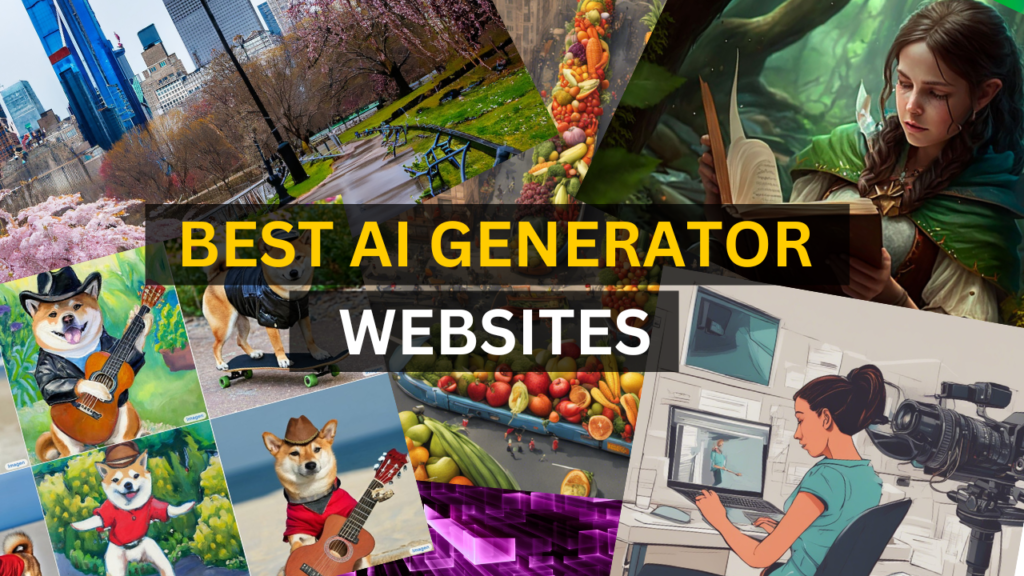
In the digital age, AI-driven technologies have been transforming various aspects of our lives, including content creation. AI generator websites have gained immense popularity for their ability to assist users in generating text, images, and even entire projects quickly and efficiently. In this blog, we will explore some of the best AI generator websites, including Stability.ai, DreamStudio.ai, MidJourney.com, and OpenAI’s DALL·E 2. These platforms are revolutionizing content creation, making it easier than ever to bring your ideas to life. 1.Stability.ai: Your Go-To Text Generator Stability.ai is a powerful AI-driven text generator that’s perfect for content creators, marketers, and writers seeking assistance with generating high-quality written content. The platform utilizes cutting-edge AI models to generate articles, blog posts, product descriptions, and more with remarkable precision and coherence. One of the standout features of Stability.ai is its ability to adapt to various writing styles and tones. Whether you need a formal research paper, a conversational blog post, or a persuasive marketing copy, Stability.ai can deliver. The interface is user-friendly, making it accessible for both beginners and experienced writers. 2.DreamStudio.ai: Bring Your Visual Ideas to Life DreamStudio.ai is a game-changer in the realm of visual content creation. This AI generator specializes in generating stunning images, designs, and illustrations. Whether you need eye-catching graphics for your website, social media, or marketing materials, DreamStudio.ai has got you covered. The platform offers a wide range of customization options, allowing you to fine-tune your visuals to match your brand’s identity and messaging. With DreamStudio.ai, you can create impressive visuals without the need for advanced design skills, making it an indispensable tool for businesses and individuals looking to enhance their online presence. 3.MidJourney.com: Your Virtual Creative Partner MidJourney.com is a versatile AI generator websites that offers a range of creative tools for content creators and designers. This platform goes beyond text and images, providing solutions for generating logos, videos, music, and more. One of MidJourney.com’s standout features is its logo generator, which can help businesses and startups create unique and memorable logos in minutes. The video and music generation tools are also notable, allowing users to produce engaging multimedia content effortlessly. 4.OpenAI’s DALL·E 2: The Artistic AI OpenAI has been at the forefront of AI research and development, and their latest offering, DALL·E 2, is nothing short of revolutionary. DALL·E 2 is an AI model that generates images from textual descriptions. You can describe an image you have in mind, and DALL·E 2 will create it for you. This AI generator Websites is particularly exciting for artists, designers, and anyone looking to turn their written ideas into visual art. With DALL·E 2, you can explore the boundaries of creativity and bring your wildest imaginations to life. In conclusion, AI generator websites are transforming the way we create content and visuals. Whether you’re a writer, a designer, a marketer, or simply someone looking to express your creativity, these platforms offer valuable tools and resources to simplify and enhance your creative process. Stability.ai, DreamStudio.ai, MidJourney.com, and OpenAI’s DALL·E 2 are just a glimpse into the exciting possibilities that AI-powered content generation brings to the table. As technology continues to advance, we can expect even more innovative solutions that will empower us to create, design, and communicate with greater ease and efficiency. Embrace the future of content creation with these AI generator websites, and watch your ideas come to life like never before.
Voice Search and SEO: Optimizing for Conversational Queries

Introduction In today’s advanced world technology is working to make humans work easy. Nowadays we are doing SEO optimization for our website or for our content, but a new trend is going on nowadays which is voice search. Everyone is searching their queries by using Google search. Some examples are Google Home, amazon Alexa, etc. Now it is important that we do voice search optimization for our content. Convert into conversational queries. Traditional text-based searches and Google voice searches differ in queries. In voice search queries people use long-tale keywords and in traditional text-based searches people use short-tale keywords. People use to ask a complete question in Google Voice searches and in text-based searches, people are searching for an answer, which is around 2 or 3 words that is a short tale keyword. So, it’s important to research good keywords for your content that will help to rank your content. Understand the result Now voice search totally depends on Google’s algorithm that how it delivers results to people’s Questions. We need to find the user search behavior on the Google Voice search and then what type of result Google delivers to their users. Now we have to work on our optimization technique. Now we have to optimize our content according to Questions. Also we need to focus on queries and solutions accordingly. You can understand it like that in the traditional text “digital marketing institute in Dehradun” now in voice search “Which and where are the best digital marketing institute in Dehradun”. Now you can find the behavior of users and how the user is searching their queries in the same platform in a different way. Long tale keyword: you need to include long tale keywords and question-based keywords in your content naturally. You need to inject these users’ friendly keywords in your content to voice search optimization. Keyword place a vital role in on-page SEO to rank websites. Featured snipped: if you want that your content should be featured that you need to give some direct answers to questions in your content to your user. That it will easily enter in featured snipped. The content you write on your website should be informative and evergreen. This increases the favorability of your content being used as a voice search answer. Local SEO: Some voice searches are location-based such as. Where is the grocery shop near me? Doing local SEO is difficult so you need to list google my business and make it up to date. Try to ask for positive reviews from your customer. Update your business and must mention all updated pictures on google my business. FAQs: Add some common FAQs question in your content to optimize. Which should be based on Google searches and direct answer based. Search your title on Google and find those people also ask questions from there. User-friendly website: Must check that your website should be user friendly. Where users can easily navigate. Must check your website load time and check whether your website is mobile user friendly or not. Use schema markup: Schema markup is a type of code that can be added to your website to help search engines understand the meaning of your content. This can be helpful for voice search, as it can help search engines match your content to conversational queries. Voice-friendly content: Create content that is easy to understand when read aloud. Use concise sentences, simple language, and proper formatting to ensure that voice assistants can articulate your content By following these tips, you can optimize your website or content for voice search. As looking forward there is no sign of a slowdown in google voice searches the future of it is broad because technology always focuses on easing the work of users. Now lots of apps and personal websites are also launching their voice search tools. So, it’s possible that text-based may end but it does not. So, we need to be flexible ourselves and work according to Google’s algorithm.
Types of Graphic Designers: Unveiling Specializations and Talents

Like a large umbrella, graphic design encompasses a wide range of creative endeavors. It’s not only about making things appear nice; it’s also about using images to convey concepts and sentiments. But did you know that there are many distinct types of designers in the field of graphic design? Each type specializes in different things and has its own unique set of skills. Let’s examine these several categories of graphic designers in more detail, as well as what they perform. 1.Brand Identity Designers: Making Brands Look Cool Consider that you have a preferred brand. Right, you can quickly recognize it by its design, colors, and logo. These hip and recognizable looks for companies are made by brand identity designers. They create logos, select colors, and pick fonts that convey the essence of a brand. 2.Web and UI/UX Designers: Making Websites Easy and Fun Web and UI/UX designers deserve praise for creating user-friendly, attractive websites. Website buttons and menus are made to appear good and be simple to click by UI designers. UX designers ensure that using a website or an app is easy and pleasurable for you. 3.Illustrators Turned Designers: Artists Who Tell Stories Some graphic designers are also talented artists. They are comparable to artists who utilize their drawings to convey ideas or give a unique touch to projects. These designers produce original drawings that give designs a more fascinating and distinctive feel. 4.Packaging Designers: Making Products Look Awesome Have you ever chosen a product only on the basis of its appealing packaging? Designers of packaging are the ones who bring that about. They create the stunning and alluring boxes, bottles, and bags that the products are packaged in. 5. Motion Graphic Designers: Adding Life to Designs Designers of motion graphics are the wizards of animation. By incorporating movement, like in videos or advertisements, they give designs life. To make things entertaining and attention-grabbing, they employ animation and sound. 6. Print Designers: Creating Cool Stuff You Can Hold For tangible items like posters, flyers, and periodicals, print designers create artwork. They are skilled at making things appear fantastic on paper or other tangible mediums. 7.Typography Experts: Making Words Look Beautiful Making words seem good is the only focus of typography experts. They select fonts and arrange words in a way that’s visually appealing and aids in communicating a message. 8.Environmental Graphic Designers: Creating Cool Spaces Ever gone somewhere where just by looking at it made you feel incredibly cool? It is environmental graphic designers who create such environments. They provide images that make public and retail environments look appealing and user-friendly. 9.Game Designers: Creating Visuals for Video Games Graphic designers contribute to the cool appearance of video games, which are a combination of art and technology. Characters, backdrops, and other visual elements are created by game designers to add fun and excitement to games.
Mobile marketing trends and strategies: latest and proven
What is Mobile marketing? Mobile marketing is a type of digital marketing strategy that emphasizes on mobile devices, including smartphones and tablets, to connect and interact with a target audience. It includes a broad range of strategies and platforms that use mobile technology to advertise goods, services, or brands. In the current digital environment, mobile marketing is crucial since mobile devices are becoming the main means of online activity, communication, and information consumption. Some common components of mobile marketing include: 1.Mobile advertising refers to various forms of mobile advertising that are presented within mobile apps or mobile websites, such as banner ads, interstitial ads, native ads, and video commercials. To target particular user behaviors or demographics, mobile advertising can employ a variety of targeting techniques. 2. SMS marketing is the practice of sending updates, notifications, or promotional messages by text messaging (SMS) straight to a user’s mobile device. It is frequently employed for informational or time-sensitive promotions. 3. Mobile Apps is one type of mobile marketing is creating and advertising apps for smartphones and tablets. Apps can be used to market goods and services, engage consumers, and offer value. 4. Location-Based Marketing sending suitable and relevant offers, communications, or material based on a user’s location data. One example of this is geographic boundaries, which sets off alerts or advertisements when a user enters a certain region. 5. Mobile social media marketing is reaching and interacting with the target audience through the use of social media sites like Facebook, Instagram, Twitter, and TikTok that are mainly accessible on mobile devices. 6. Mobile search marketing involves using call-only advertisements and other mobile-friendly ad formats to target mobile visitors while also optimizing websites and content for mobile search engines (like Google). 7. NFC marketing Using near Field Communication (NFC) technology, or QR codes, to give users instant access to promotions, information, or interactions by having them scan or tap their mobile device. 8. Mobile Wallet Marketing Utilizing mobile wallets, such as Apple Wallet and Google Pay, to distribute coupons, loyalty cards, and offers. 9. In-App Marketing Promoting products or services within mobile apps, including in-app advertisements and in-app purchases. Some of the top mobile marketing strategies in 2026 include: In mobile marketing strategies, develop a mobile-friendly application and website. Businesses that wish to connect with mobile consumers must do this. On all mobile devices, your website and app should be simple to use and navigate. Use location-based marketing to reach clients in particular regions. Reaching out to those who are already interested in what you have to offer is an excellent plan. For instance, you can utilize mapping to notify customers via push notifications when they are in close proximity to your store. Send relevant and accurate messages to your clients by using push notifications on their mobile devices. This is a fantastic method to market your goods and services and keep in touch with your customers. A larger audience can be reached by using mobile advertising. Paid search, social network advertising, and in-app advertising are just a few of the numerous mobile advertising choices accessible. You can select the alternatives that best suit your target market and budget. Engage with your clients on mobile devices by using social media. Social networking is an excellent platform for content sharing, contests, and providing your mobile clients with exclusive offers. Make sure to communicate with your audience and consistently publish interesting stuff. To monitor your progress and assess the effectiveness of your mobile marketing activities, use mobile analytics. Over time, this will help you in refining your campaigns. Some of the top mobile marketing trends in 2026 include: M-commerce: The online purchasing and selling of goods and services through mobile devices is known as mobile commerce. This is one of the e-commerce areas that is expanding the fastest, therefore companies who want to reach these clients must have a mobile-friendly strategy in place. Mobile streaming: The act of watching and listening to audio and video information on a mobile device is known as mobile streaming. It’s another well-liked activity for those who use mobile devices, and companies may use it to deliver interesting material to their target market. Mobile gaming: This is a massive market where companies can advertise in mobile games or create their own mobile games to reach a wide audience. Video: Video content continues to be one of the most popular formats on mobile devices, and companies may use it to interact with clients in fresh and creative ways. For instance, companies can make quick films that tell the tale of their brand or product movies that show customers how to utilize their items. User-generated content (UGC) is content—such as social network posts, product reviews, and customer testimonials—that is produced by users. Companies can employ user-generated content (UGC) to raise awareness of their brand and gain the trust of future consumers. Voice search and voice SEO: As voice search grows in popularity, companies must make their websites and content voice search-friendly. Using long-tail keywords and phrases that people are likely to use in conversation is part of this. Virtual reality (VR) and augmented reality (AR) are immersive technologies that can be used to give mobile users fresh, interesting experiences. Companies can develop interactive games, virtual showrooms, and product tours using AR and VR. Mobile influencer marketing is the process of interacting with mobile influencers to market goods and services to their audience. Gaining the trust of future customers with this approach might be a terrific method to expand your audience. In conclusion, mobile marketing is an essential component of a comprehensive digital marketing strategy, given the widespread use of mobile devices in today’s world. To stay competitive, businesses should focus on mobile-friendly websites, location-based marketing, push notifications, and various mobile advertising options to engage with their target audience effectively. Monitoring progress through mobile analytics is crucial for continuous improvement. Looking ahead to 2026, mobile marketing trends are evolving rapidly. M-commerce, mobile streaming, mobile gaming, video content, user-generated content, voice search optimization, virtual reality, and influencer marketing are all shaping the mobile marketing landscape. Staying updated with these trends and embracing innovative strategies will be key to reaching and