Why Avoiding Common SEO Mistakes Matters More Than Ever
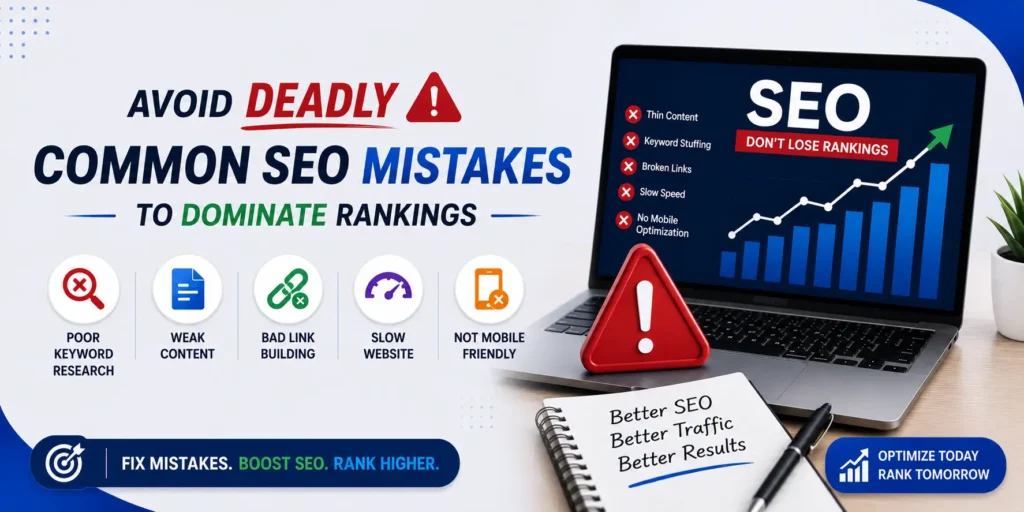
In the fast-evolving world of search, even experienced marketers fall into traps that quietly sabotage their efforts. Common SEO mistakes aren’t just minor oversights—they can tank your rankings, drive away visitors, and waste months of hard work. Whether you’re running a small business site or managing a large e-commerce platform, steering clear of these pitfalls is essential for long-term success.
This comprehensive guide dives deep into the most searched keywords around SEO mistakes to avoid, drawing from real-world experiences and current 2026 best practices. We’ll cover technical blunders, content issues, on-page oversights, and strategic errors. Expect practical advice, tables for quick reference, and highlighted key takeaways to make implementation straightforward.
By the end, you’ll have a clear roadmap to fix issues and build a resilient SEO strategy. Let’s eliminate those frustrating common SEO mistakes and unlock your site’s true potential.
1. Ignoring Proper Keyword Research:
(The Foundation of Every SEO Strategy)
One of the biggest common SEO mistakes is jumping into content creation without solid keyword research. Many assume they know what their audience searches for, only to discover low search volume or fierce competition later.
Why it hurts: You invest time and resources into pages that never attract traffic. Tools like Google Keyword Planner, Ahrefs, or Semrush reveal high-intent phrases with realistic competition.
How to fix it:
- Focus on a mix of head, body, and long-tail keywords.
- Analyze search intent (informational, navigational, transactional).
- Track seasonal trends and competitor gaps.
Pro Tip: Always validate keywords before writing. Targeting the wrong ones is one of the most expensive SEO mistakes to avoid.
Incorporate related terms naturally to maintain keyword density without stuffing. This mistake alone affects countless sites, leading to zero organic growth.
2. Neglecting Search Intent:
(Creating Content That Misses the Mark)
Search engines prioritize relevance. A classic common SEO mistake is optimizing for keywords while ignoring what users truly want.
For example, a query like “best running shoes” might seek reviews, comparisons, or buying guides. Delivering a sales page instead results in high bounce rates and poor rankings.
Fixes to implement immediately:
- Study top-ranking pages for format, depth, and elements.
- Answer key questions users have.
- Update existing content to better align with intent.

Businesses that master this see significant lifts in engagement and conversions. Avoiding this SEO mistake transforms average content into traffic magnets. Highlight: Match intent = higher dwell time and better signals.
3. Keyword Stuffing and Over-Optimization:
(A Recipe for Disaster)
Forcing keywords unnaturally remains a stubborn common SEO mistake. Google’s algorithms detect spammy patterns, leading to penalties or suppressed rankings.
Signs you’re guilty:
- Repeating the exact phrase excessively.
- Awkward sentences that read like robot text.
- Overloading meta tags and headings.
Better approach: Use your focused keyword naturally (aim for ~1% density in longer content). Rely on synonyms, LSI terms, and conversational language for a humanized flow. Write for readers first—search engines follow.
This positive shift from outdated tactics builds trust and improves readability scores.
4. Publishing Thin or Low-Quality Content
Thin content—short, shallow pages lacking value—is among the top SEO mistakes to avoid in 2026. With helpful content updates, Google favors comprehensive, authoritative material.
Characteristics of thin content:
- Under 1,000 words without substance.
- Generic info available everywhere.
- No original insights, data, or examples.
Solutions:
- Aim for in-depth guides (like this 1700+ word piece).
- Include visuals, tables, stats, and expert quotes.
- Regularly audit and refresh old posts.
Highlighted takeaway: Quality over quantity wins. Invest in E-E-A-T (Experience, Expertise, Authoritativeness, Trustworthiness) to stand out.
5. Slow Page Speed and Poor Core Web Vitals
Users hate waiting. Slow-loading pages are a critical common SEO mistake that directly impacts rankings and user experience.
Core Web Vitals (LCP, INP, CLS) are official ranking factors. Pages taking over 3 seconds lose over 50% of visitors.
Quick wins:
- Compress images and enable lazy loading.
- Minify CSS/JS and use CDN.
- Optimize server response time.
Test with Google PageSpeed Insights. Fixing speed issues often delivers fast ranking improvements.
6. Ignoring Mobile Optimization
With mobile-first indexing, failing mobile-friendliness is a disastrous SEO mistake.
Ensure responsive design, readable fonts, and easy navigation on small screens. Use Google’s Mobile-Friendly Test tool.

Common issues: Tiny buttons, horizontal scrolling, slow mobile load times. Prioritize this for better user signals and rankings.
7. Technical SEO Blunders: Crawl Errors, Duplicates, and Indexing Issues
Technical problems silently kill visibility. Key common SEO mistakes include:
- Blocking pages in robots.txt accidentally.
- Missing or incorrect canonical tags.
- Duplicate content without proper handling.
- Broken links and redirect chains.
Table: Common Technical SEO Mistakes and Fixes
| Mistake | Impact | Fix |
|---|---|---|
| Robots.txt blocks | Pages not crawled | Review and allow important URLs |
| No XML Sitemap | Poor discovery | Create and submit updated sitemap |
| Duplicate content | Split authority | Use 301 redirects or canonicals |
| Broken internal links | Poor UX & crawl budget waste | Regular audits with tools like Screaming Frog |
Submit sitemaps in Google Search Console and monitor for errors. These fixes strengthen your site’s foundation.
8. Weak On-Page Optimization:
(Titles, Meta, Headings, and More)
Poorly crafted title tags and meta descriptions hurt CTR. Missing alt text or suboptimal headings are frequent common SEO mistakes.
Best practices:
- Unique, compelling titles under 60 characters.
- Persuasive meta descriptions (~160 chars).
- Proper H1-H6 structure with keywords.
- Optimized images with descriptive alt text.
Highlighted: Your title is prime real estate—make it powerful and benefit-driven.
9. Keyword Cannibalization: Internal Competition
Multiple pages targeting the same keyword confuse search engines and dilute authority—one of the sneakier SEO mistakes to avoid.
Detection: Use tools to find overlapping pages. Solution: Consolidate content, set clear page focuses, and improve internal linking.
This creates stronger topical clusters and clearer signals.
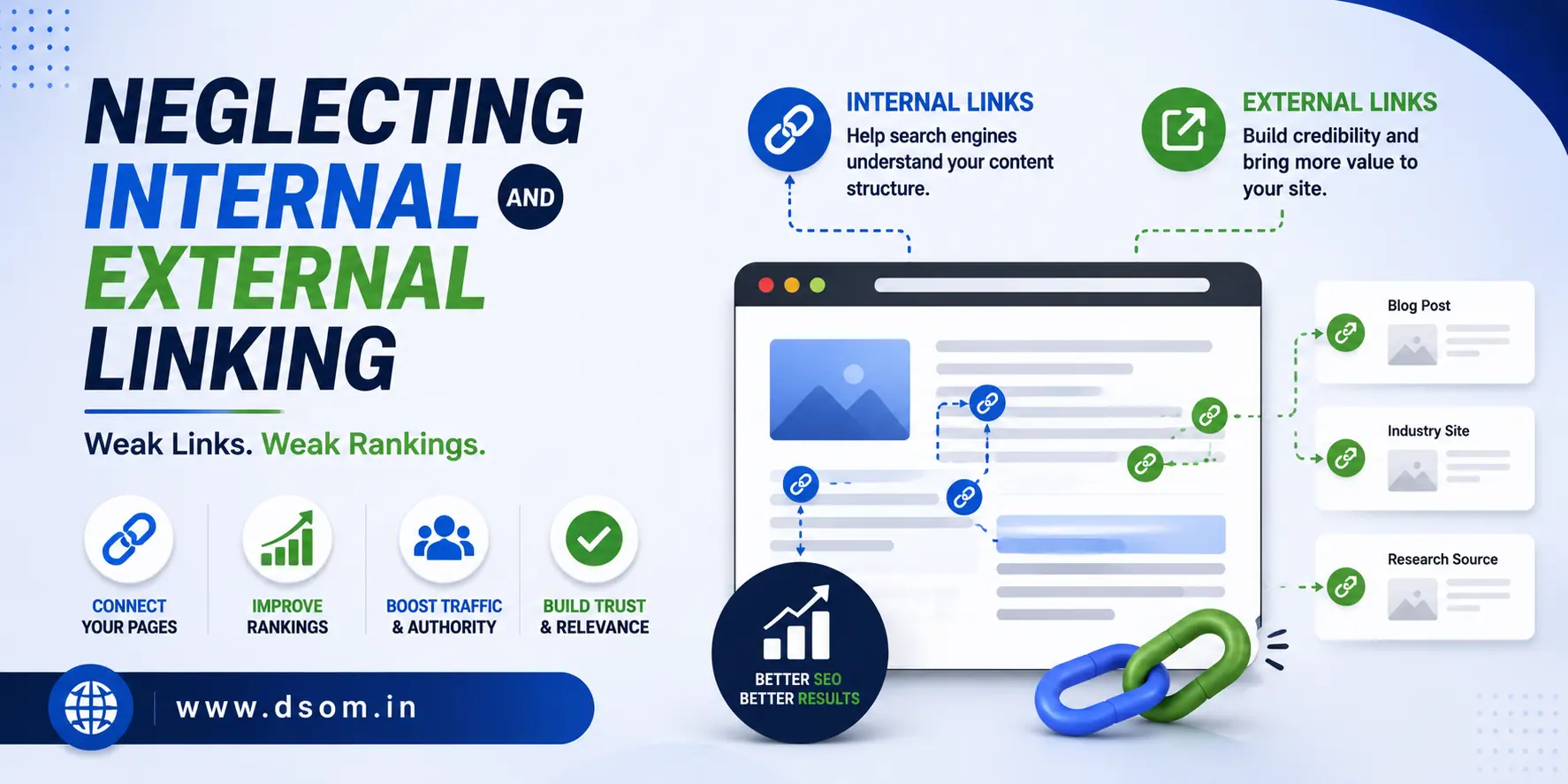
10. Neglecting Internal and External Linking
Weak internal linking wastes crawl budget and equity. Poor backlink profiles (or buying spammy links) invite penalties.
Strategies:
- Build logical site architecture.
- Link contextually to relevant pages.
- Earn high-quality backlinks through great content.
Avoid black-hat tactics like link farms. Focus on natural growth.
11. Failing to Track and Measure Results
Flying blind is a major common SEO mistake. Without Google Analytics, Search Console, or ranking trackers, you can’t identify what’s working.
Set up proper tracking, monitor key metrics (organic traffic, bounce rate, conversions), and iterate based on data. Regular audits prevent small issues from becoming big problems.
12. Overlooking Local SEO and Other Specialized Areas
For location-based businesses, ignoring Google Business Profile, citations, and local signals is costly. Also watch for issues like missing structured data (schema markup) that enhance rich results.
Comprehensive Table: Top Common SEO Mistakes Summary
| S.No | Common SEO Mistake | Severity | Primary Fix | Expected Benefit |
|---|---|---|---|---|
| 1 | Poor Keyword Research | High | Thorough research tools | Targeted traffic |
| 2 | Ignoring Search Intent | Critical | Align content deeply | Lower bounce, higher engagement |
| 3 | Keyword Stuffing | Medium-High | Natural usage | Better readability & trust |
| 4 | Thin Content | Critical | In-depth, valuable pieces | Stronger rankings |
| 5 | Slow Page Speed | High | Optimization techniques | Improved Core Web Vitals |
| 6 | Mobile Issues | High | Responsive design | Mobile-first success |
| 7 | Technical Crawl Errors | Critical | Audits & fixes | Full indexation |
| 8 | Weak On-Page Elements | Medium | Optimized titles/metas | Higher CTR |
| 9 | Cannibalization | Medium | Consolidation | Authority concentration |
| 10 | Bad Linking Practices | High | Strategic internal/external | Better equity flow |
This table serves as a quick checklist—bookmark it! (Table adds structure and scannability.
Additional Insights: Emerging Trends and Long-Term Avoidance
In 2026, AI-generated content without human oversight and failure to adapt to generative search are rising SEO mistakes. Focus on originality, user experience, and continuous learning. Update old content regularly, build topic clusters, and prioritize genuine value.
Highlighted Important Things:
- Consistency beats perfection: Small, regular improvements compound.
- User-first mindset: Everything flows from solving real problems.
- Avoid shortcuts: Sustainable growth comes from ethical practices.
Transform Your SEO by Fixing These Common Mistakes
Avoiding common SEO mistakes isn’t about chasing every trend—it’s about building solid fundamentals and staying vigilant. From keyword strategy to technical health, each fix contributes to higher rankings, more traffic, and better conversions.
Implement these strategies step-by-step. Audit your site today, prioritize high-impact areas, and watch your visibility soar. To strengthen your knowledge and stay ahead of the latest search engine trends, consider learning practical SEO techniques through DSOM (Dehradun School of Online Marketing), where you can gain hands-on skills to optimize websites effectively.
Ready to dominate search results? Start fixing these SEO mistakes to avoid now and create content that truly resonates. Your future traffic will thank you. Remember, the most successful sites aren’t flawless from day one; they simply correct course faster than others.