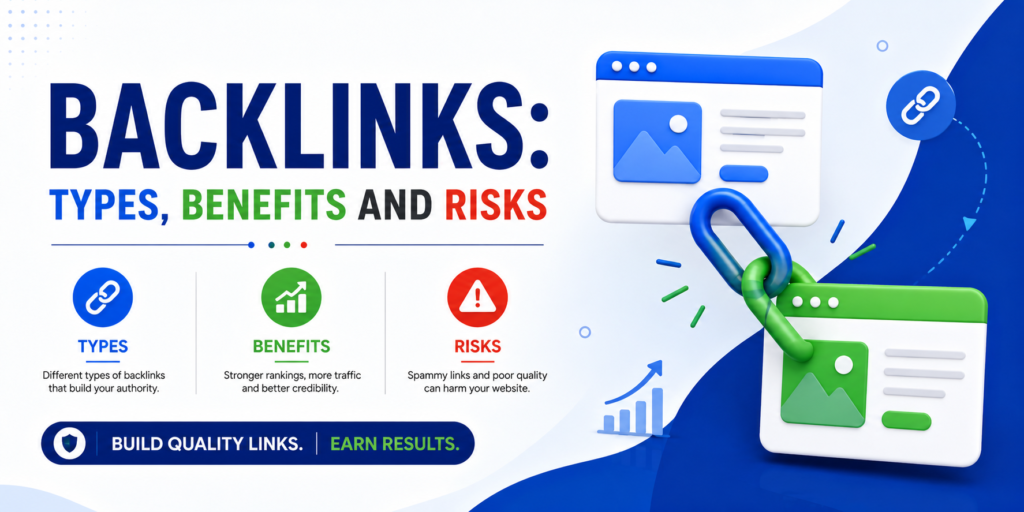
If there is one SEO factor that has remained consistently influential since Google launched, it is backlinks. Algorithm updates have come and gone, but the relationship between quality inbound links and strong search rankings has held firm through all of it.
Understanding backlinks — the different types, the genuine benefits they deliver, and the real risks of poor practice — is essential knowledge for anyone serious about SEO in 2026. This guide breaks it all down in plain, practical terms.
What Are Backlinks?
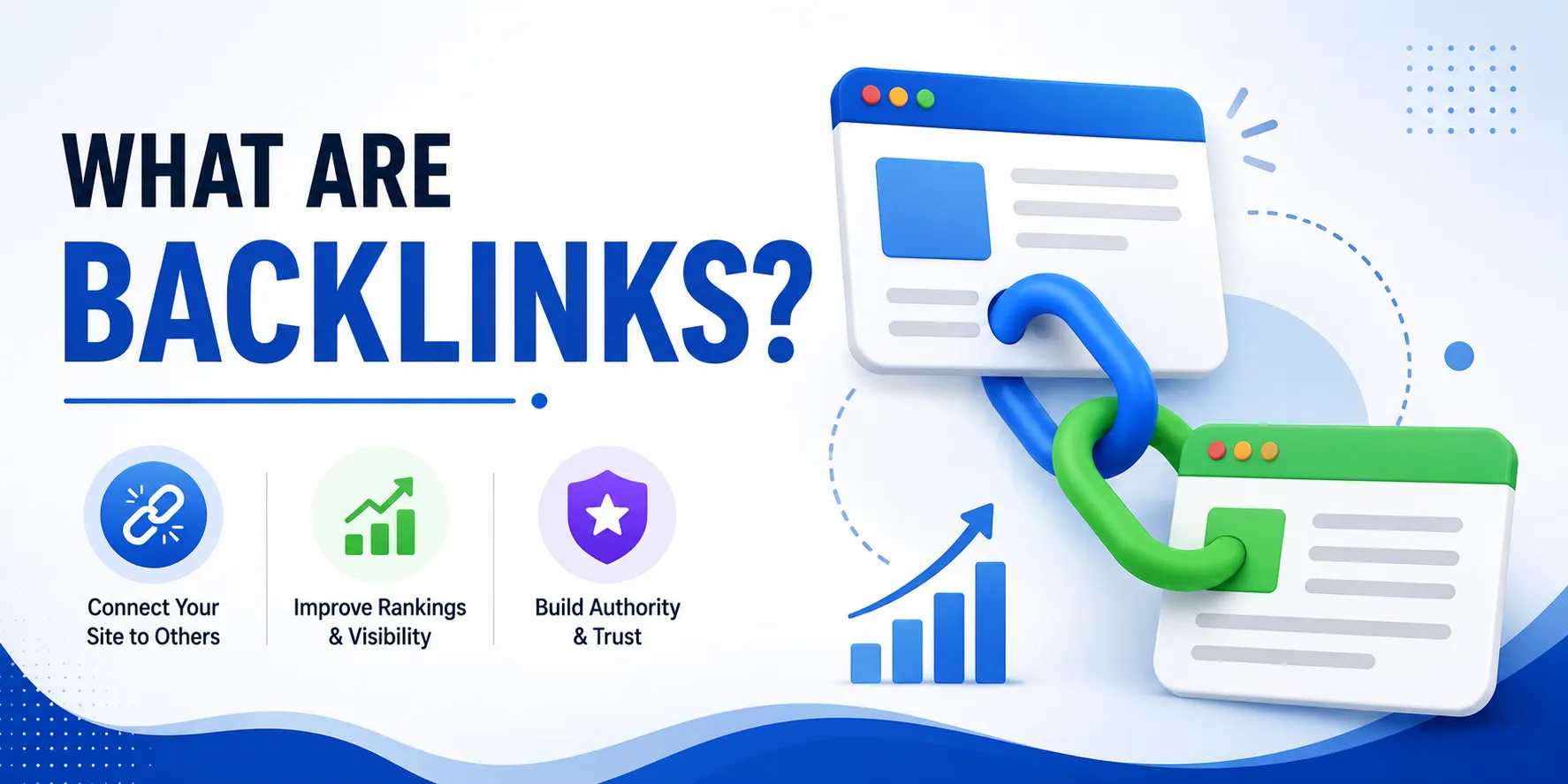
Backlinks are links from one website that point to a page on a different website. When another site links to your content, that link is a backlink to your page — an inbound link from their domain to yours.
Search engines treat backlinks as votes of confidence. When a well-respected website links to your content, it signals to Google that your page is trustworthy and worth referencing. The more credible sites that link to you, the more authority Google associates with your domain — and that authority translates into better rankings for competitive search terms.
Not all of them carry equal weight, though. A single link from a major publication is worth far more than dozens from obscure, low-traffic blogs. Quality consistently outweighs quantity when building a backlink profile that actually moves rankings.
Types of Backlinks
Knowing the different types of backlinks helps you build a strategy that earns the right links and avoids the ones that can silently damage your site.
1. Dofollow Links
Dofollow links are the standard link type and the most valuable for SEO. When a site links to your page without any special attribute, that link passes what is known as link equity — essentially a transfer of authority from their domain to yours. These are the links most backlink building strategies are designed to earn.
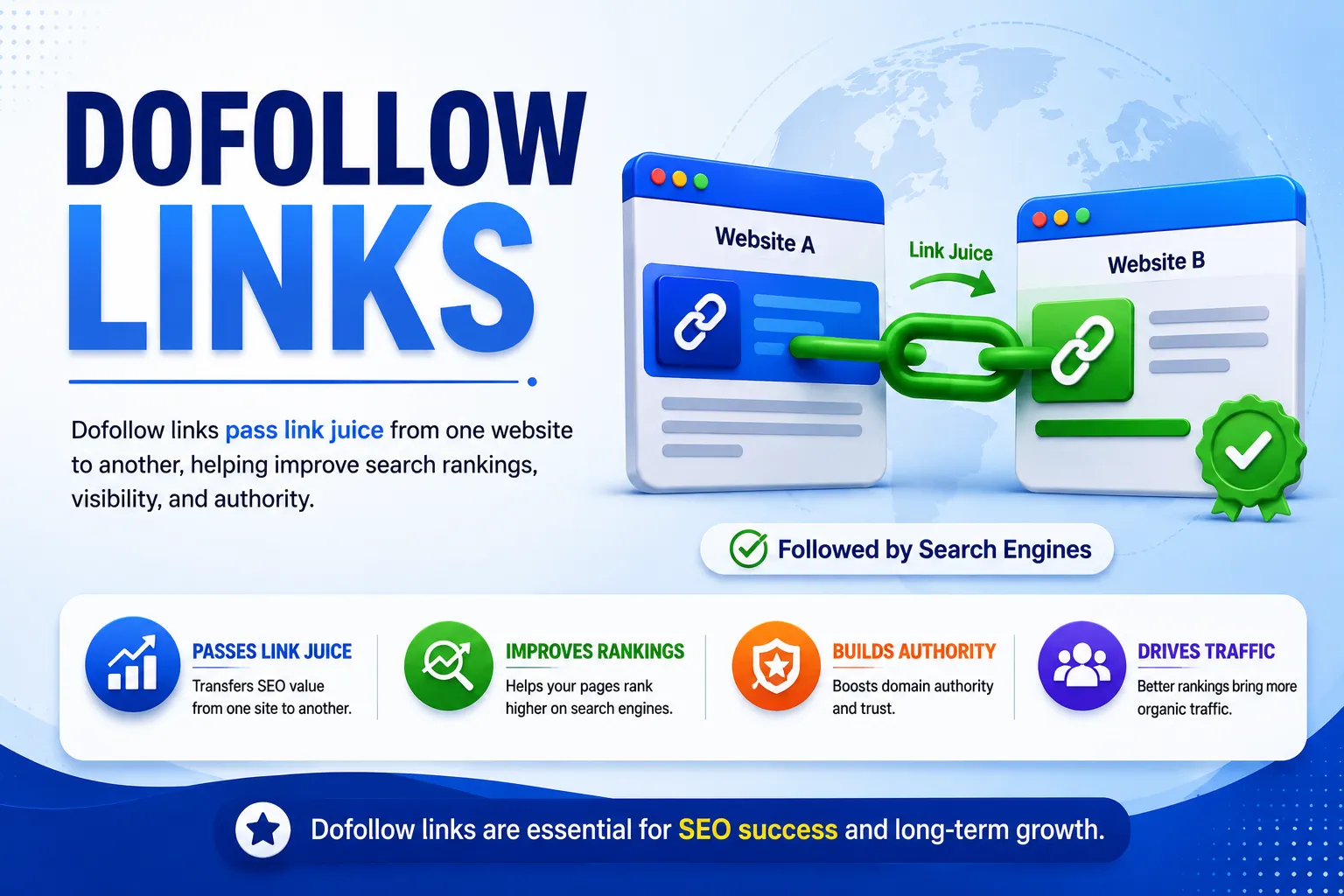
Every dofollow link from a reputable, relevant website strengthens your backlink profile and tells search engines that your content is credible. These are the connections you actively want through content creation, outreach, and digital PR.
2. Nofollow Links
Nofollow links include a rel="nofollow" attribute that tells search engines not to pass link equity to the destination page. They were originally introduced to combat spam and paid link schemes. For years, SEO professionals dismissed them entirely — but that position has shifted.
Google now treats the nofollow attribute as a hint rather than a hard rule, meaning some of these links may still contribute to rankings indirectly. More importantly, a site whose backlink profile consists entirely of dofollow links looks unnatural. A healthy mix of nofollow and dofollow links signals organic growth rather than manipulation.
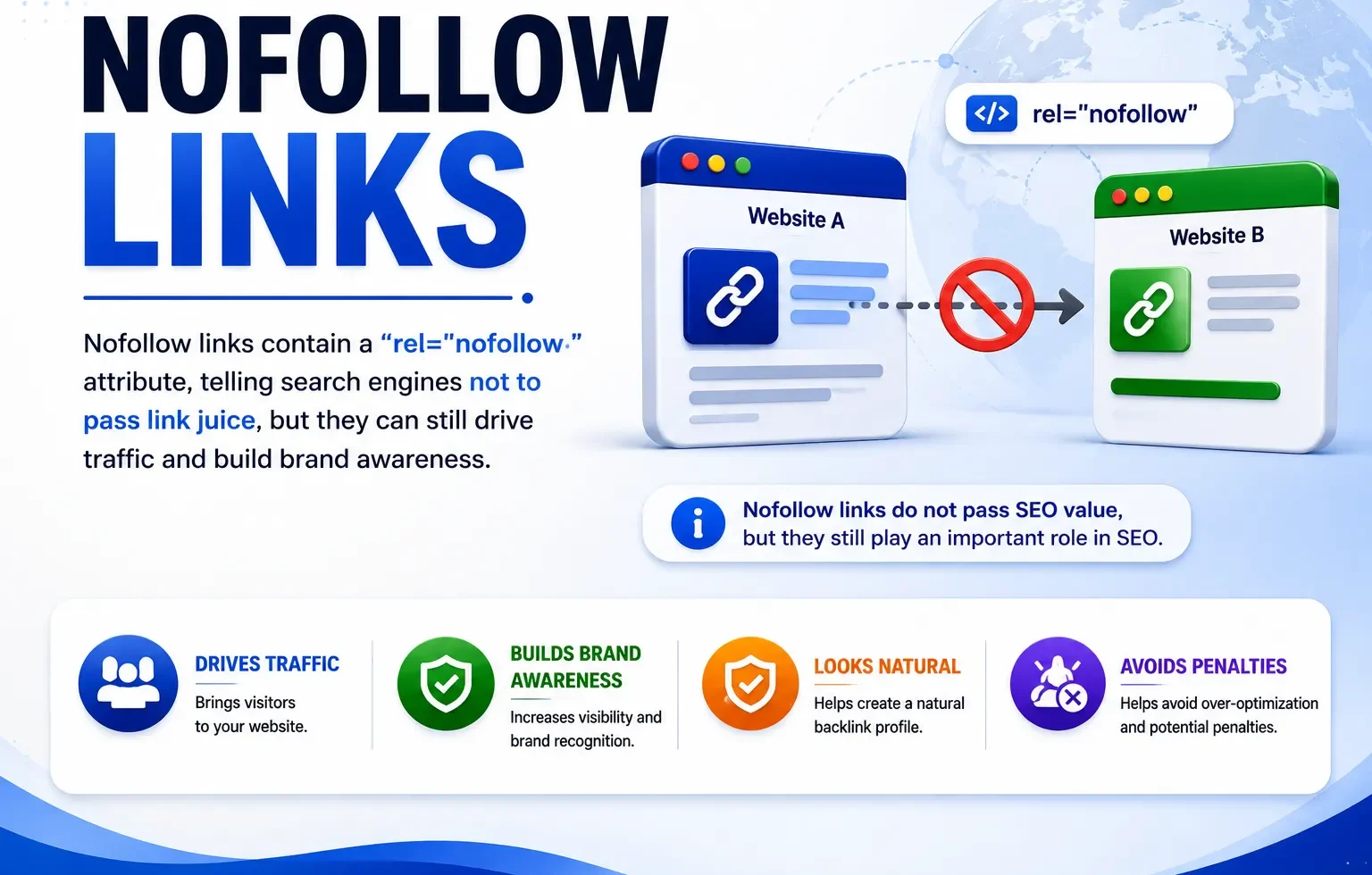
High-authority nofollow links — from Wikipedia, major news platforms, or large social networks — still drive significant referral traffic and build brand recognition, even when they pass limited direct SEO value.
3. Sponsored Links
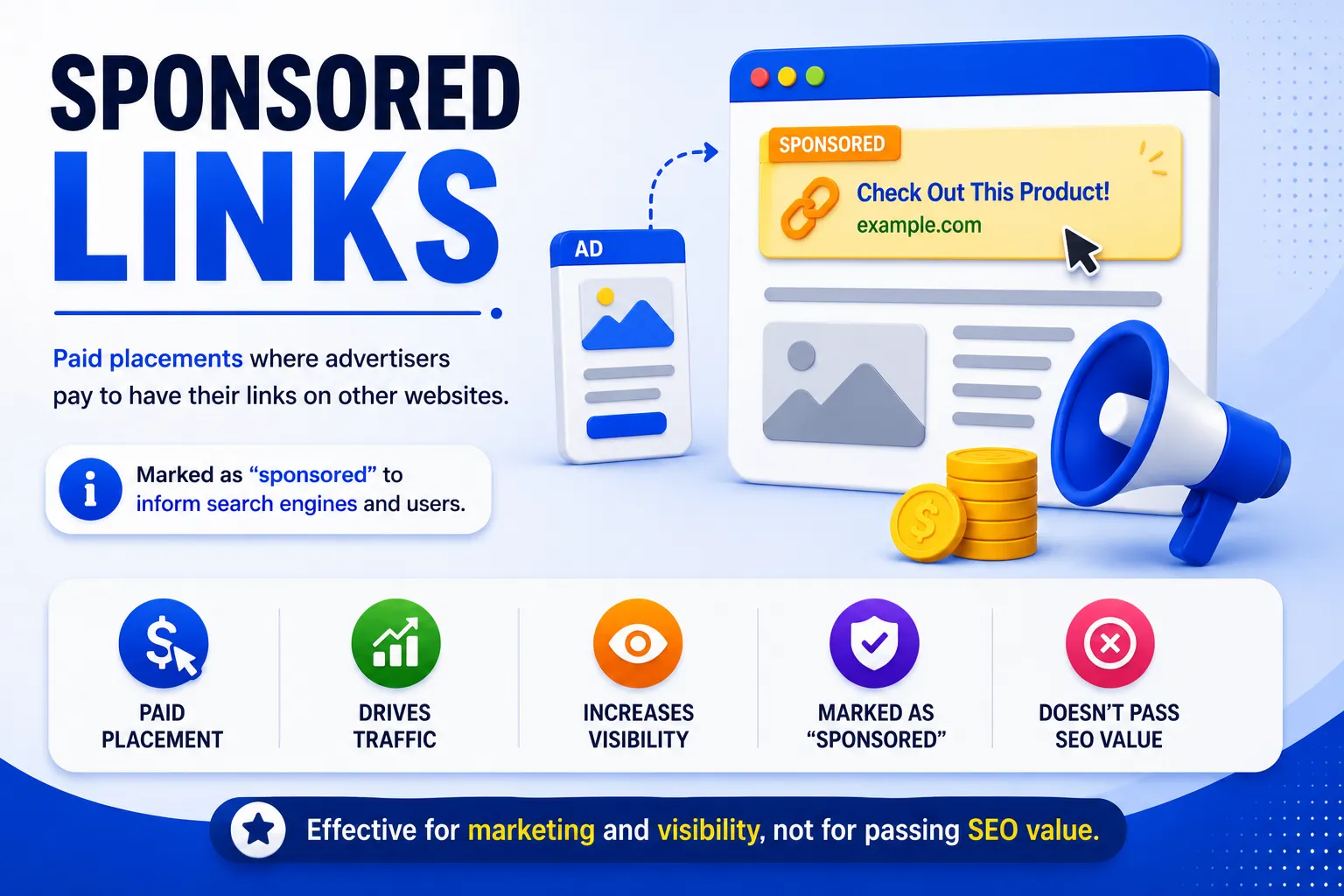
Sponsored links use the rel="sponsored" attribute to identify paid placements, advertisements, or affiliate arrangements. Using this attribute for any paid link keeps you within Google’s guidelines and protects your site from penalties linked to undisclosed paid placements.
4. UGC Links
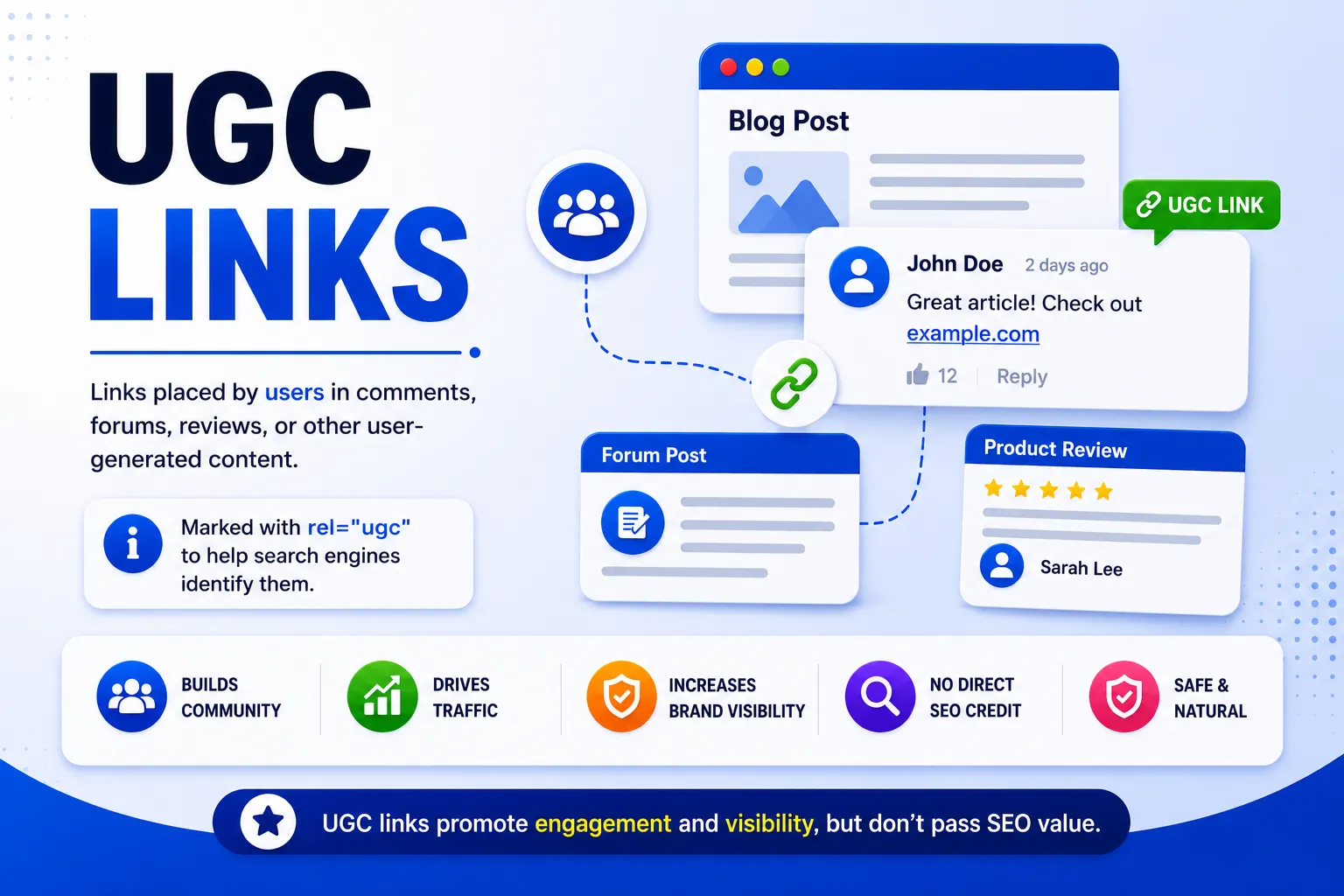
UGC (User Generated Content) links come from comments, forum posts, and community discussions where users post links themselves. Search engines discount them heavily since anyone can create them without editorial oversight. They carry minimal SEO value but can contribute to brand visibility and referral traffic in active communities.
5. Natural Backlinks
Natural backlinks are earned without any direct outreach or manipulation. A journalist cites your research. A blogger recommends your tool. A forum user shares your guide because it genuinely answers a question. These are the links Google values most because they represent authentic, independent endorsement.
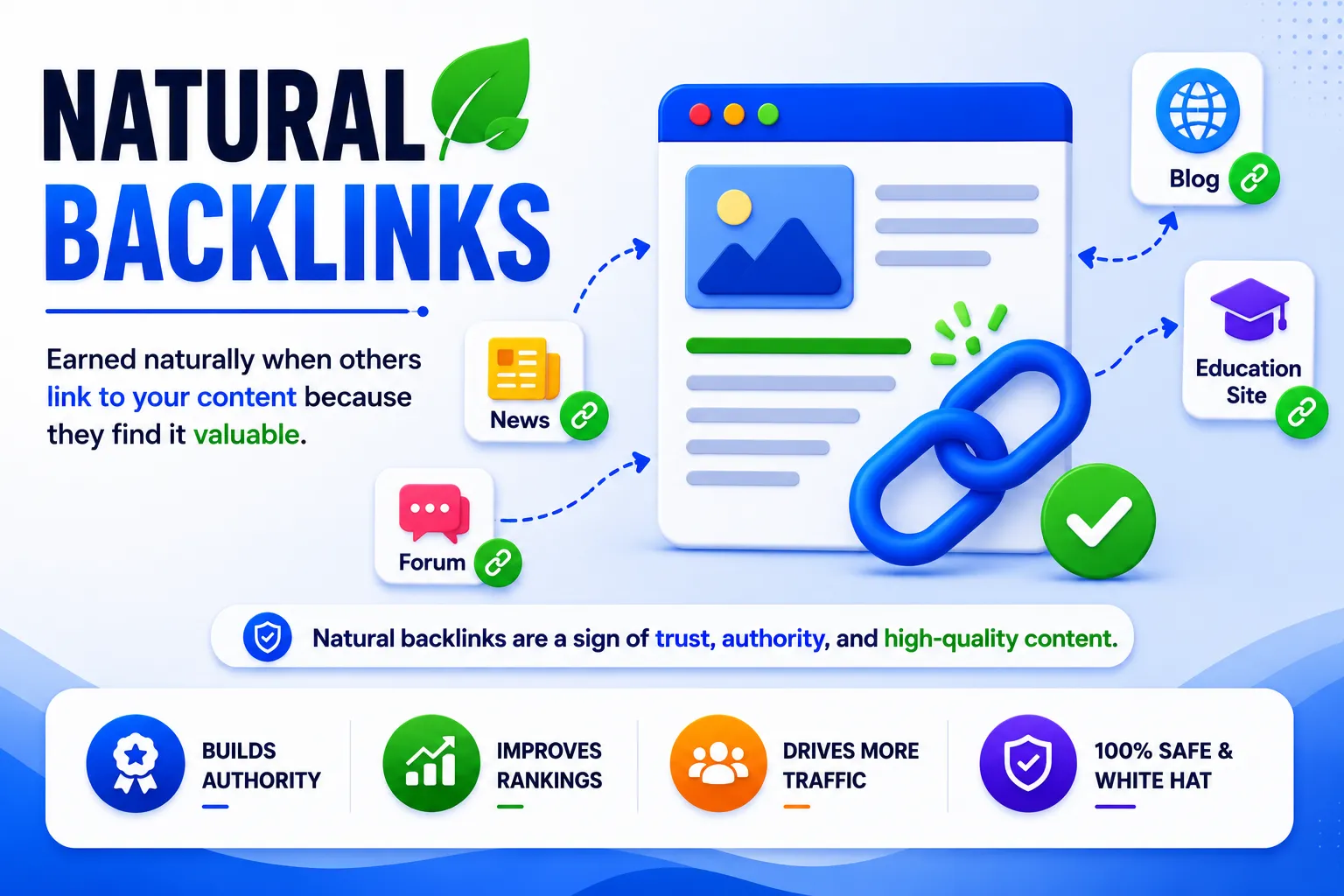
Creating content that earns natural links — original research, comprehensive guides, free tools, and data others cannot easily find elsewhere — is the most sustainable backlink building strategy available. Results take longer to materialize, but the links earned this way are the strongest and most durable in any backlink profile.
6. Editorial Backlinks
Editorial backlinks are links placed within content by a writer or editor because your page genuinely adds value to their piece. They are contextually embedded, come from relevant content, and carry strong trust signals because they represent independent judgment.
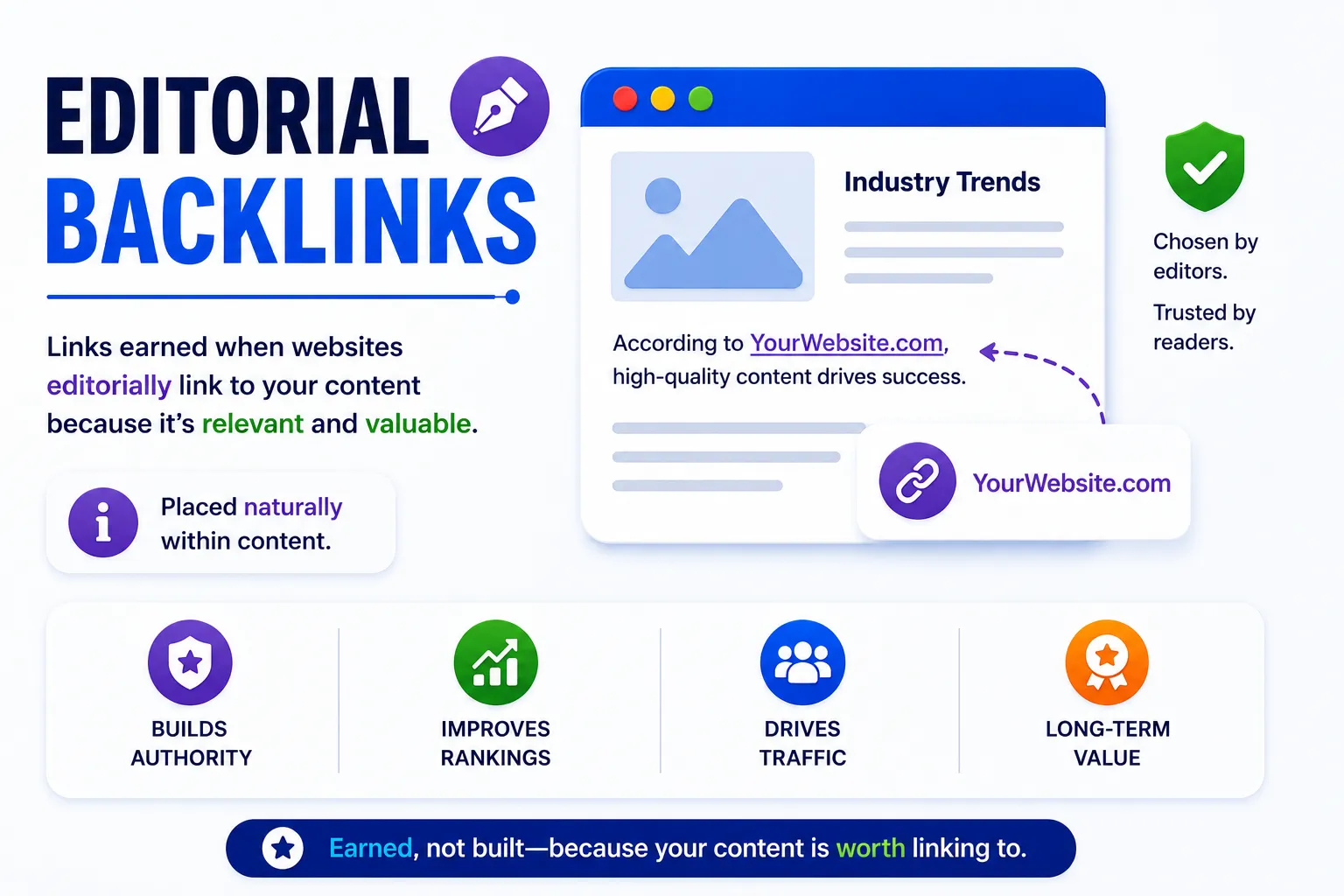
Earning editorial links through digital PR, expert commentary, and consistently high-quality content is one of the most effective long-term link building for SEO approaches in 2026.
7. Guest Post Links
Guest post links come from articles you write and publish on other websites, with a link back to your own content. Done correctly — producing genuinely valuable content for reputable, relevant publications — this remains one of the most practical ways to build high-quality backlinks at a reasonable pace.
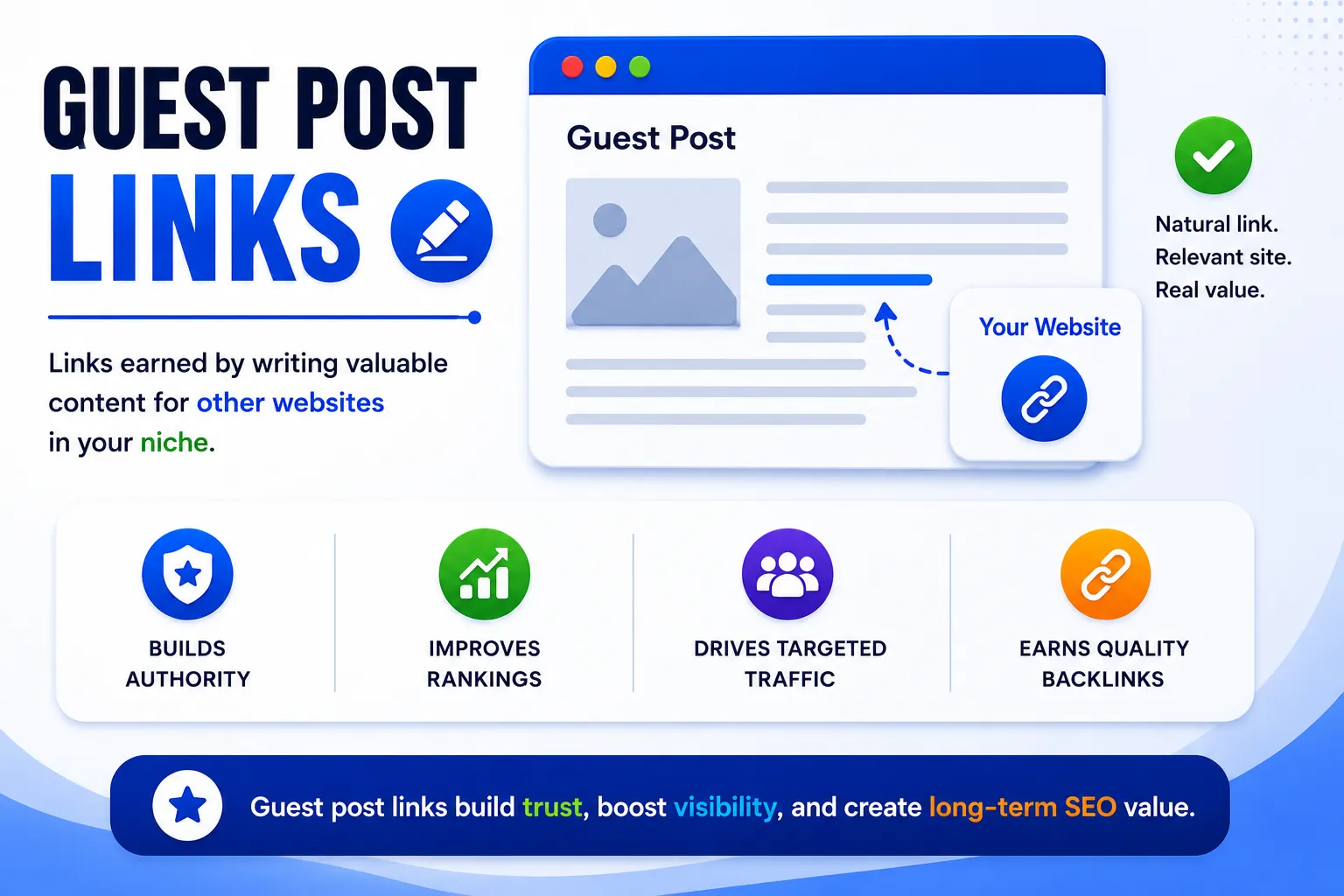
Relevance and quality are everything here. A guest post on a respected industry blog carries real domain authority transfer. A post on a low-quality site that exists only to sell link placements achieves the opposite.
Benefits of Backlinks
The reasons backlinks matter for SEO go beyond a single ranking factor. Here is what a strong link profile actually delivers.
Better Search Rankings
The most direct benefit is improved rankings. Pages with strong backlink profiles consistently outrank pages with weak or no inbound links for competitive keywords. Google treats each quality link as a credibility signal — pages with more credible signals rank higher. The relationship between backlinks and domain authority is one of the most consistently documented patterns across every major SEO study.
Stronger Domain Authority
Every high-quality link you earn raises the overall authority of your domain. As your backlink profile grows, new pages you publish benefit from that accumulated authority — they rank faster and with less effort than they would on a low-authority domain. This compounding effect is why consistent link building for SEO delivers stronger returns over time.
Referral Traffic
Backlinks are direct pathways for readers on other websites to reach yours. A link placed in a widely read industry article can send hundreds of targeted visitors to your page — traffic that is valuable entirely apart from any SEO benefit. Referral visitors tend to be engaged, relevant, and more likely to convert than cold traffic from generic searches.
Faster Indexing
Google’s crawlers follow outbound links to discover new content. When an authoritative site links to your new page, Google finds and indexes it faster than it would with no inbound links at all — a meaningful advantage for new sites and freshly published content.
Brand Credibility
Being linked to by respected publications tells readers — not just algorithms — that your brand is worth paying attention to. A growing backlink profile in relevant industry outlets builds genuine credibility that shapes how potential customers perceive and trust your business.
Risks of Backlinks
Links are powerful, but they carry real risks when mismanaged. Understanding these risks is just as important as pursuing the benefits.
Toxic Links and Manual Penalties
Toxic backlinks — links from spammy, irrelevant, or penalized domains — can actively harm your search rankings. If Google detects a pattern of manipulative or low-quality links pointing to your site, it can apply a manual penalty that causes significant ranking drops or complete removal from search results.
Toxic links sometimes arrive through negative SEO attacks where competitors point harmful links at your domain deliberately. More commonly, they are left over from past black-hat link building campaigns or purchased links from link farms. Auditing your backlink profile regularly using tools like Ahrefs, Semrush, or Google Search Console is essential for catching and addressing these before they cause lasting damage.
Penalties for Unnatural Link Schemes
Google’s guidelines explicitly prohibit link schemes — paying for links, exchanging them excessively, or building them at scale with software. Violating these guidelines risks both algorithmic action through the Penguin system and manual penalties from Google’s spam reviewers.
Over-Optimized Anchor Text
Anchor text — the clickable words that form a hyperlink — is another area where aggressive optimization creates risk. If a high percentage of your inbound links use identical keyword-rich anchor text, the pattern looks manipulated. A healthy backlink profile includes branded anchors, generic phrases, naked URLs, and keyword-targeted anchors in natural proportions — not a single pattern that dominates.
Low-Quality Guest Post Networks
Guest post links are valuable when executed properly, but private blog networks (PBNs) and guest post farms — low-quality sites built specifically to sell link placements — are a significant risk. Google has become increasingly effective at identifying these networks, and sites that rely on PBN links frequently experience sharp drops when those networks are penalized.
How to Build a Safe, High-Quality Backlink Profile
The most effective backlink building strategies share one foundation: earn links by creating genuine value rather than manufacturing them through shortcuts.
Produce content others naturally want to cite — original research, comprehensive guides, free tools, and data-driven insights. This approach generates natural links without outreach and is the safest long-term investment in your backlink profile.
Use digital PR to earn editorial placements in relevant publications. Pitch expert commentary to journalists, respond to media queries, and contribute insights that editors want to reference and link to.
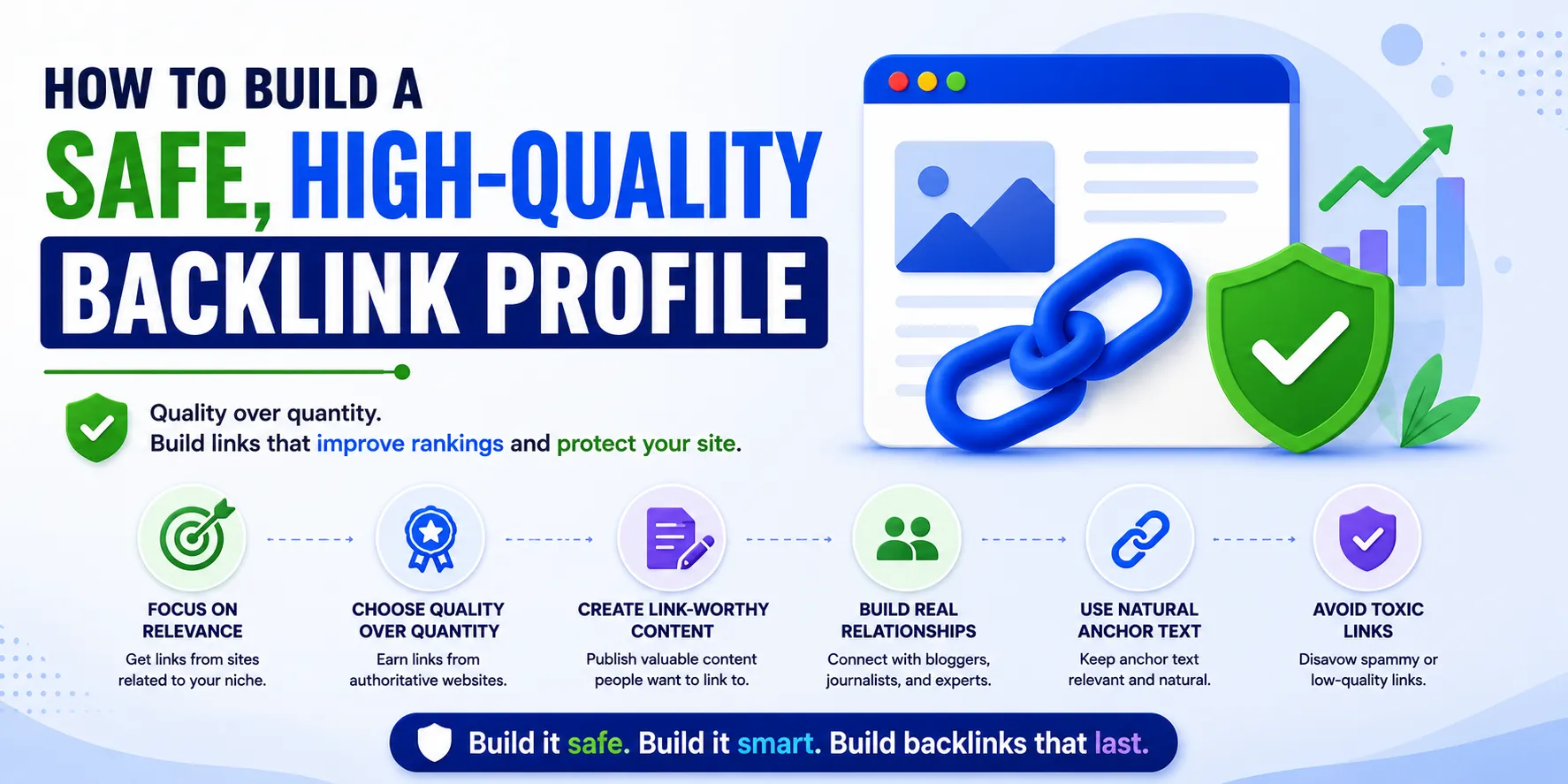
Pursue guest post links on reputable industry publications. Focus on relevance, write content that genuinely serves the audience, and treat every placement as a relationship-building opportunity rather than just a link source.
Audit your backlink profile at least quarterly. Flag toxic domains, submit a disavow file for harmful links, and monitor anchor text distribution to keep it varied and natural.
Final Thoughts
Backlinks remain one of the most influential signals in SEO — and in 2026, Google is better than ever at distinguishing genuine, high-quality links from manipulative ones. The gap between earning real editorial backlinks and chasing shortcuts has never been more consequential.
Build your link profile with patience At DSOM (Dehradun School of Online Marketing), we believe successful link building starts with authority, trust, and valuable content. Build your link profile with patience, focus on content worth linking to, audit consistently, and keep your anchor text distribution natural. A strong, diverse backlink profile built over time is one of the most durable competitive advantages your website can hold.