Introduction: How Broken Links Quietly Killed My Rankings
A few years ago, one of my blog posts suddenly stopped performing.
Traffic dropped.
Bounce rate increased.
User engagement collapsed.
At first, nothing looked wrong.
The content was still relevant.
Keywords were ranking.
Backlinks were intact.
Then I noticed it.
Multiple Broken Links inside the article.
- Some pages no longer existed.
- Some external resources were removed.
- Some images failed to load.
Users clicked… and hit dead ends.
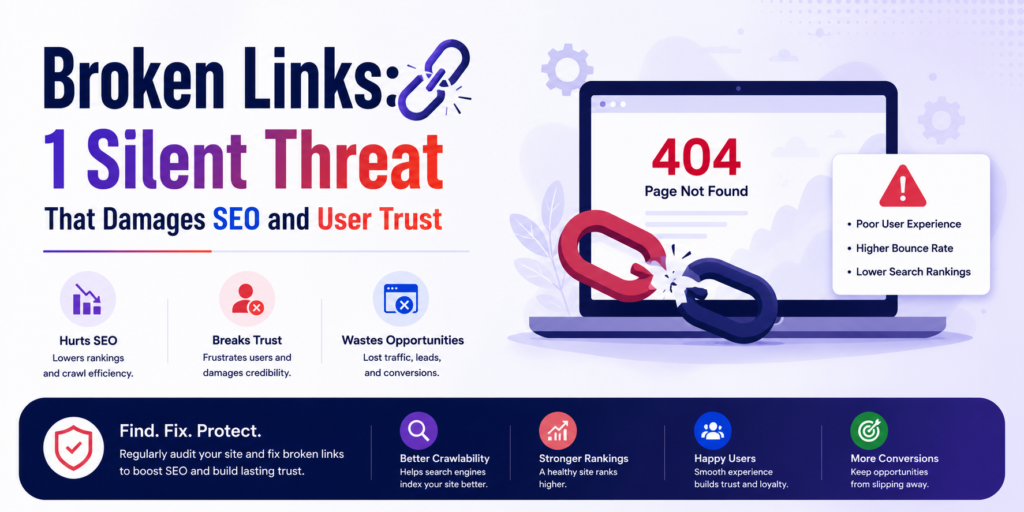
That’s when I realized something important: Broken Links don’t announce themselves—but they silently destroy trust, experience, and SEO performance, especially when ignored in on page SEO.
What Are Broken Links?
Broken Links are hyperlinks that no longer lead to a valid destination.
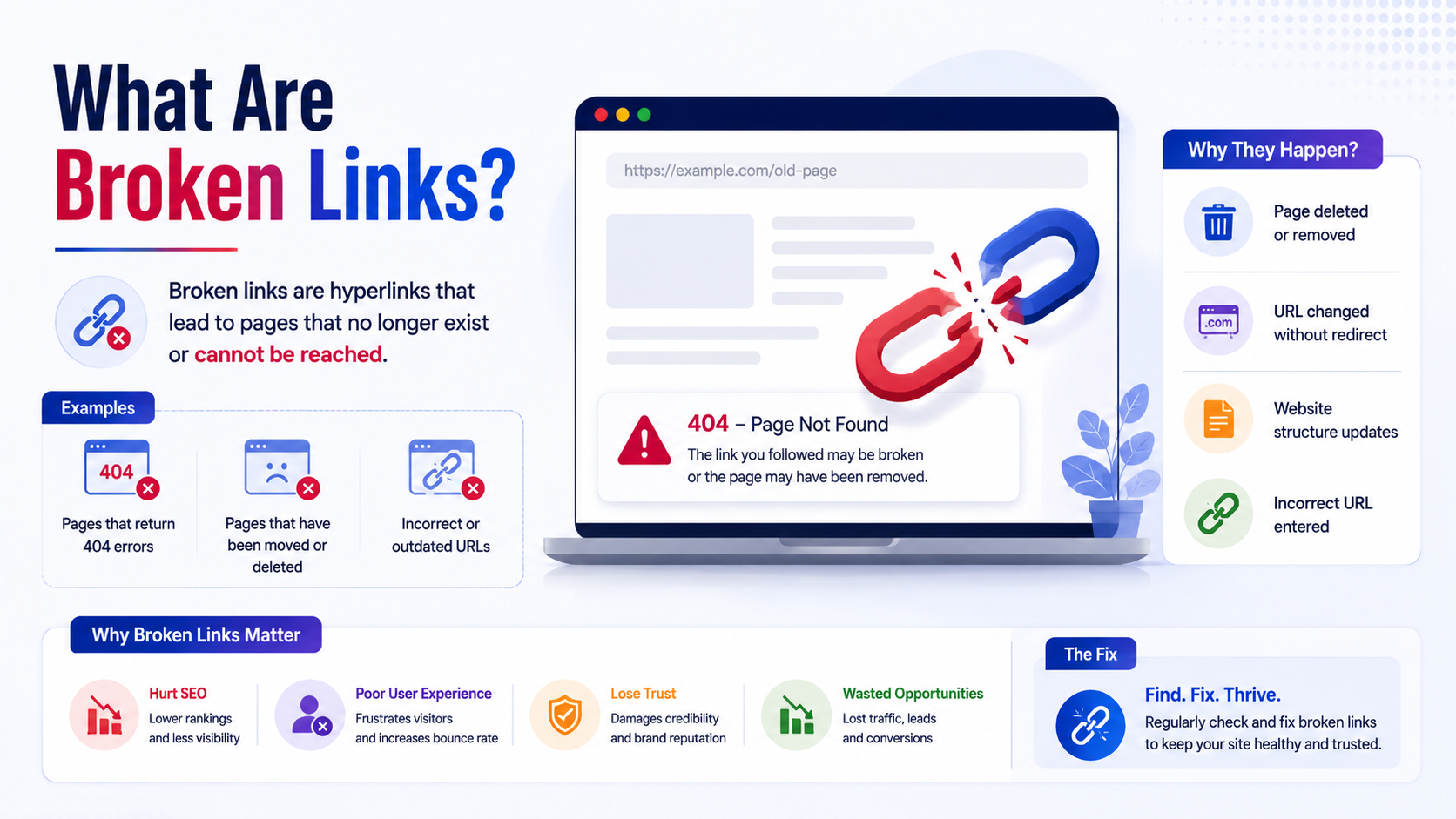
Instead of opening the intended page, they usually return errors like:
404 Not Found
410 Gone
Server errors
Blank pages
In simple terms, a broken link promises information—but delivers nothing.
And for users and search engines, that’s a bad experience.
Why Link Errors Are More Dangerous Than You Think
Many website owners ignore them.
After all, it’s “just a link,” right?
Wrong.
Broken Links create friction, confusion, and frustration.
From an on page SEO perspective, they signal:
Poor maintenance
Weak user experience
Low content reliability
Search engines want to send users to trustworthy websites—and broken paths damage that trust.
Types of Broken Links and Their Impact
Not all link errors behave the same way.

Here are the most common types and why they matter:
Internal Link Errors
Links pointing to pages on your own website that no longer exist.
Impact:
Confuses users and search engines, harming crawlability.
External Link Errors
Links pointing to third-party websites that removed or changed pages.
Impact:
Reduces credibility and interrupts content flow.
Image Load Failures
Images that fail to load due to incorrect URLs or deleted files.
Impact:
Hurts visual experience and accessibility.
Redirect Issues
Links stuck in redirect loops or pointing to outdated URLs.
Impact:
Wastes crawl budget and slows down pages.
Each type of Broken Links chips away at user trust in different ways.
How Broken Links Affect On Page SEO
Search engines evaluate how users interact with your pages.
Broken paths increase:
Bounce rate
Exit rate
Time-to-frustration
From an on page SEO standpoint, this tells search engines:
“This page doesn’t deliver what it promises.”
Over time, rankings suffer—even if content quality is high.
How to Find and Fix Broken Links
You can’t fix what you don’t detect.
Here’s how professionals handle it:
1. Use Crawling Tools
SEO tools can scan your site and identify problem URLs instantly.
2. Check Google Search Console
Coverage and crawl error reports often highlight link issues.
3. Manual Audits
Click through key pages, menus, and CTAs—especially older content.
4. Fix Strategically
Once identified, you can:
Update the link
Redirect it
Remove it
Replace it with a better resource
Fixing Broken Links restores both usability and SEO strength.
Where These Issues Commonly Occur on Websites
Some areas are more vulnerable than others.
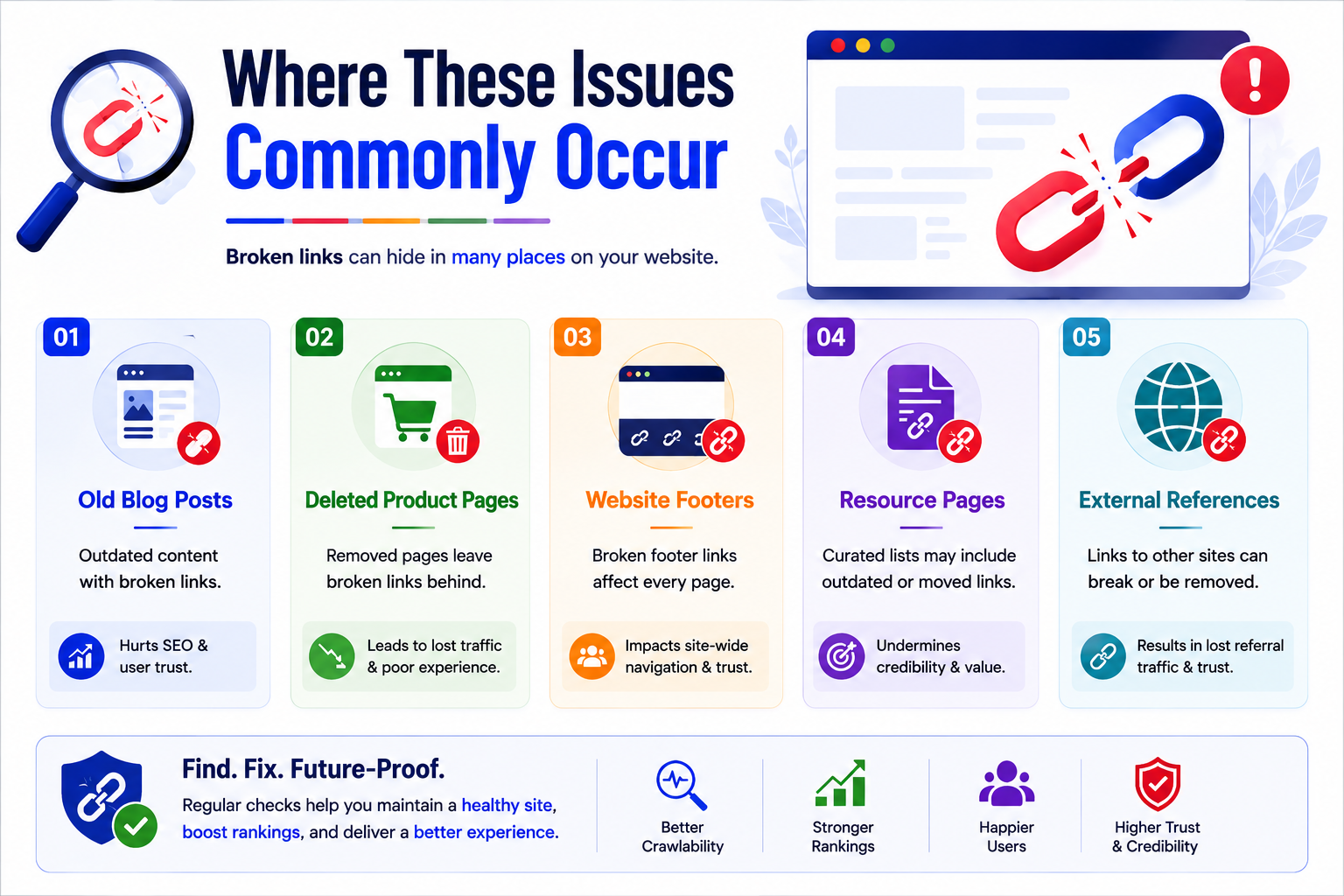
Common problem zones include:
Old blog posts
Deleted product pages
Website footers
Resource pages
External references
If content isn’t reviewed regularly, errors multiply silently.
Detecting and Fixing Link Errors the Right Way
Fixing isn’t just about removal—it’s about intent.
Best practices include:
Redirecting removed pages to relevant alternatives
Updating outdated external references
Removing useless links entirely
Maintaining internal link hygiene
Smart handling of Broken Links improves user flow and crawl efficiency.
The Hidden Costs of Broken Links
The real damage isn’t obvious.
Hidden costs include:
Lost conversions
Lower trust
Wasted crawl budget
Reduced authority signals
Poor brand perception
A single broken path may seem harmless—but dozens create friction across your entire site.
Are Broken Links a Direct Ranking Factor?
Not directly.
But indirectly? Absolutely.
They affect:
User satisfaction
Crawl efficiency
Engagement metrics
Search engines reward websites that provide seamless experiences.
Broken experiences don’t rank well.
Final Thoughts: Small Errors, Massive Impact
Most SEO problems aren’t dramatic.
They’re subtle.
Broken Links quietly sabotage trust, experience, and performance—one click at a time.
Fixing them doesn’t require advanced tactics.
It requires awareness and consistency.
And learning how to audit, detect, and fix such real-world SEO issues is exactly what DSOM (Dehradun School of Online Marketing) focuses on—training students to master on page SEO, website maintenance, and practical optimization skills that protect rankings, users, and long-term growth.