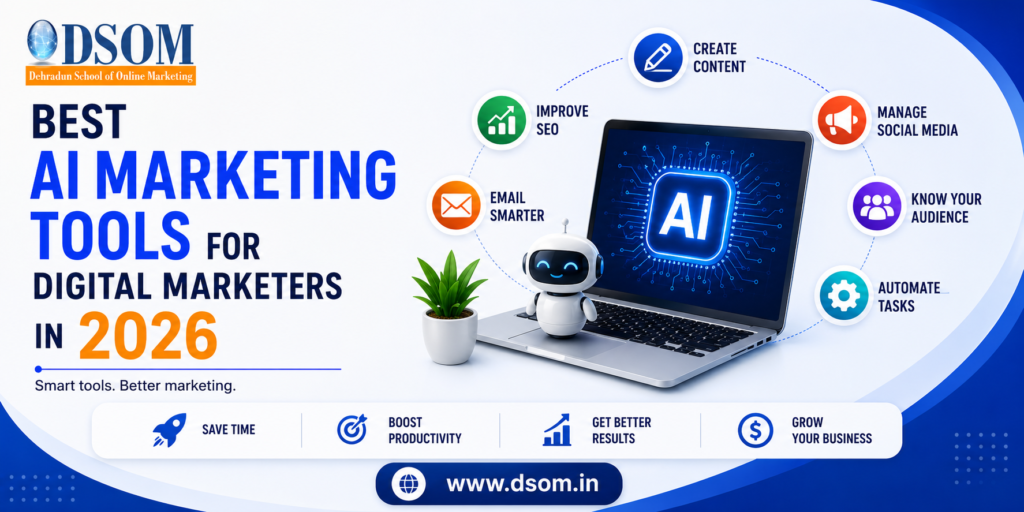
Best AI marketing tools for Digital Marketers in 2026
Digital marketing has never moved this fast. Between constant algorithm updates, the explosion of short-form video, and the pressure to produce more content with fewer resources, marketers today are genuinely stretched thin. The good news? Finding the best AI tools for digital marketers no longer requires a massive budget or a technical team. In 2026, AI-powered marketing software is accessible, affordable, and when chosen correctly, genuinely transformative. This guide walks you through the best AI marketing tools available right now, broken down by the exact use cases you deal with every day. No fluff, no vague promises — just practical breakdowns of tools that deliver real results for real marketing teams. Why Digital Marketers Need AI Tools in 2026 Think about the last time you spent three hours writing a single blog post, manually pulling together campaign analytics, or scheduling a week of social media content. That time adds up — and it is time you could spend on strategy, relationships, and creative thinking. AI does not replace the human judgment that makes great marketing work. But the best AI tools for digital marketers do handle the repetitive, time-consuming layers underneath. Marketers who consistently use AI marketing tools report faster turnaround times, significantly lower content production costs, and stronger campaign performance. The reason is simple: they can focus their energy on what AI cannot replicate — building genuine connections with their audience. 1. Best AI Tools for Content Marketing Content is still the engine driving most digital marketing strategies — but producing it consistently at a high standard is exhausting without the right support. These AI writing tools for marketers change that entirely. Jasper AI Jasper remains one of the most trusted names in AI tools for content marketing, and for good reason. It goes well beyond basic text generation — it understands brand voice, tone guidelines, and audience context at a deeper level than most tools on the market. You feed it a brief, and it produces full blog posts, ad copy, email sequences, and product descriptions that actually sound like your brand. Best for: Content teams, agencies, and solo marketers who publish regularly. Copy.ai Copy.ai is one of the most practical free AI tools for digital marketing when you are working on shorter-form copy — think email subject lines, social media captions, product descriptions, and paid ad headlines. It gets you from blank page to first draft in minutes, and the variety of output styles makes it easy to test multiple angles quickly without setup overhead. Best for: Ecommerce brands and marketers who need high-volume short-form copy fast. ChatGPT for Digital Marketing (GPT-4o) Using ChatGPT for digital marketing has become standard practice for a reason. The GPT-4o model handles research, drafting, outlining, brainstorming, customer persona development, and even basic data analysis — all within the same window. Many marketers now use it as a daily thinking partner and creative collaborator rather than a one-click content machine, which is exactly where it delivers the most value. Best for: General-purpose research, ideation, and content drafting across all formats and channels. 2. Best AI SEO Tools in 2026 Ranking on Google in 2026 requires more than good writing. These best AI SEO tools give you the data, structure, and competitive insight to consistently win organic traffic. Surfer SEO Surfer SEO is the go-to choice among the best AI SEO tools 2026 has to offer for anyone who takes organic search seriously. It analyzes every top-ranking page for your target keyword and gives you a real-time content optimization score as you write — covering word count, semantic terms, heading structure, and internal linking. You stop guessing and start building content that matches what Google actually rewards. Best for: SEO writers, content agencies, and digital marketers focused on growing organic traffic. Semrush AI Semrush has significantly expanded its AI capabilities over the past year. Its AI assistant now handles keyword clustering, competitive content gap analysis, and topic ideation based on what competing domains are already ranking for. The traffic opportunity reports are particularly useful for marketers who need to prioritize where to invest content effort — a key feature in any solid AI-powered marketing software stack. Best for: SEO strategists and marketers doing deep competitor and keyword research. Frase.io Frase is a focused alternative that combines AI writing assistance with detailed content briefs and live SERP analysis. It is especially helpful when you are managing a team of freelance writers — you can build a precise brief directly from the SERP data and hand it off without constant back-and-forth. A reliable pick among AI tools for content marketing where brief quality and writer direction matter most. Best for: Content managers coordinating with freelance or contract writing teams. 3. AI Email Marketing Automation Tools Email remains one of the highest-ROI channels in digital marketing. These AI email marketing automation platforms make it smarter, faster, and more personalized than ever before. ActiveCampaign ActiveCampaign has fully committed to AI throughout its platform. It uses AI email marketing automation to predict the optimal send time for each individual subscriber, scores leads based on real behavioral engagement, and generates email subject line suggestions calibrated to improve open rates. For marketers managing sophisticated funnels, it is one of the most capable platforms in the AI marketing tools 2026 landscape. Best for: B2B and B2C marketers running complex, multi-step email sequences. Klaviyo For ecommerce, Klaviyo is the benchmark. Its AI-powered segmentation lets you target customers based on predicted lifetime value, purchase likelihood, and churn probability — not just basic demographics. The platform connects natively with Shopify, WooCommerce, and BigCommerce, making it one of the best AI tools for small business marketing in the ecommerce space. Best for: Ecommerce marketers who need personalized email and SMS campaigns at scale. Mailmodo Mailmodo takes a fresh approach with interactive AMP emails — a format that allows subscribers to fill forms, browse product carousels, and answer polls directly inside the email without clicking away. Combined with AI subject line optimization, it consistently drives
SEO, AEO and GEO Full Form Explained: Ultimate Strategies & Powerful Ranking Guide for 2026
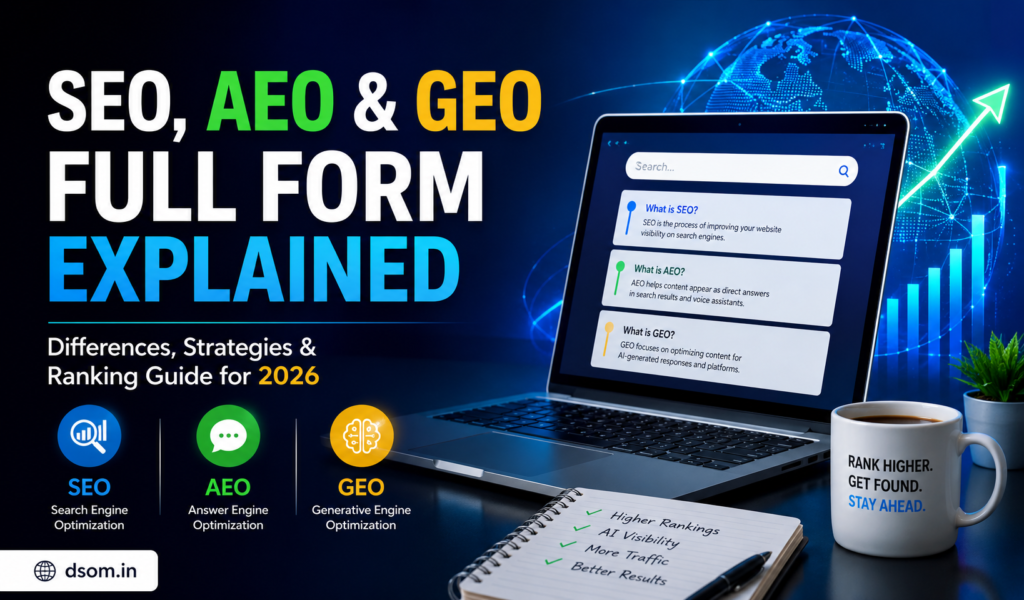
The world of digital marketing is changing rapidly. Traditional search engine optimization is no longer enough for brands that want to dominate online visibility. Today, businesses need to understand SEO, AEO and GEO to stay ahead in Google search results, AI-powered answer engines and generative AI platforms. Search behavior has evolved. Users are no longer typing only short keywords into search engines. They are now asking detailed questions to AI tools, voice assistants and generative platforms. Because of this shift, modern businesses must optimize their content differently. In this guide, we will explain the full forms of SEO, AEO vs GEO, understand their differences, explore modern optimization strategies and learn how businesses can improve rankings in 2026. What Is SEO, AEO and GEO? Before understanding the differences, it is important to know the meaning of each term and how they work in modern search optimization. Term Full Form Main Purpose SEO Search Engine Optimization Improve rankings on search engines like Google AEO Answer Engine Optimization Optimize content for direct answers and voice search GEO Generative Engine Optimization Optimize content for AI-generated search responses SEO focuses on improving website visibility in search engine result pages. AEO helps content appear as direct answers in featured snippets and voice searches. GEO is the newest concept that focuses on AI-driven search engines such as ChatGPT, Gemini and generative search experiences. Together, SEO, AEO and GEO form the foundation of modern search optimization strategies. What is SEO? Google made search engines popular, and because of that, SEO became one of the most important digital marketing strategies. SEO stands for Search Engine Optimization. It is the process of improving a website so it can rank higher on search engines like Google and Microsoft Bing. The main goal of SEO is to increase organic traffic. When users search for something online, search engines show many websites. SEO helps a website appear on the first page of search results. For example: If someone searches for “best digital marketing tips,” websites with strong SEO have a better chance of ranking higher. Important Parts of SEO 1. Keyword Optimization Using the right keywords in content helps search engines understand the topic. 2. High-Quality Content Good content improves user engagement and ranking. 3. Technical SEO Fast website speed Mobile-friendly design Secure website connection 4. Backlinks Links from other websites improve website authority. 5. User Experience Easy navigation helps users stay longer on a website. Benefits of SEO Increases website traffic Improves online visibility Builds trust and authority Gives long-term results Helps businesses get customers What is AEO? AEO stands for Answer Engine Optimization. AEO focuses on giving direct answers to user questions. Today, many users use voice search or ask direct questions online. Search engines now show quick answers instead of only website links. For example: If someone asks: “What is SEO?” The search engine may show a short answer box at the top of the page. This is where AEO becomes important. Where AEO is Used AEO is commonly used in: Featured snippets Voice search FAQ sections Smart assistants Platforms like Amazon Alexa and Apple Siri use answer-based search systems. Important Parts of AEO Question-Based Content Content should answer common user questions. Clear Answers Short and simple answers work best. Structured Data Schema markup helps search engines understand content better. Voice Search Optimization People speak differently than they type. AEO helps optimize content for voice searches. Benefits of AEO Better chance of getting featured snippets Improves voice search visibility Gives quick answers to users Builds trust and authority What is GEO? GEO stands for Generative Engine Optimization. GEO is a newer concept in digital marketing. It focuses on optimizing content for AI-powered search tools and generative AI platforms. Today, AI tools do not always show website links only. They also generate direct answers using information from different sources. Platforms like OpenAI ChatGPT and Google Gemini are changing how people search online. This is why GEO is becoming very important. How GEO Works Generative AI tools read content from many sources and create detailed answers. GEO helps content become useful for these AI systems. The goal of GEO is to make content: Easy to understand Informative Trustworthy Well-structured Important Parts of GEO Context-Rich Content Content should explain topics deeply. Natural Language AI tools understand conversational language better. Topical Authority Websites should become experts in a topic. Trustworthy Information Correct and reliable information is important. Structured Formatting Headings, bullet points, and short paragraphs improve readability. Benefits of GEO Better visibility in AI-generated answers Future-ready marketing strategy Improved online authority Higher chances of being used by AI tools Now, You know what SEO, AEO And GEO are. Next let’s jump onto the difference between SEO, AEO and GEO, as understanding the difference is as much important as knowing what they are. Difference Between SEO, AEO and GEO Feature SEO AEO GEO Full Form Search Engine Optimization Answer Engine Optimization Generative Engine Optimization Main Goal Rank websites Give direct answers Appear in AI-generated responses Focus Search engine ranking Quick answers AI understanding Platform Search engines Voice assistants AI search tools Content Style Keyword-focused Question-answer format Conversational and detailed User Intent Website visits Instant answers AI-generated information SEO, AEO and GEO: Main Differences Understanding the difference between SEO, AEO and GEO is very important for modern digital marketing. Along with this Let’s understand the Importance of SEO, AEO And GEO. SEO focuses on ranking – SEO helps websites appear higher in search results. AEO focuses on answering questions – AEO helps content appear in answer boxes and voice searches. GEO focuses on AI systems – GEO helps AI tools understand and use content in generated responses. Why SEO is Still Important? Even though AI search is growing, SEO is still very important. Millions of users still use traditional search engines every day. Good SEO helps websites: Get traffic Improve visibility Build authority Increase sales Without SEO, websites may struggle to rank online. Why AEO is Growing Fast Voice search is becoming more popular. People
Navigating the Online World: Where to Find Freelance Design Work

In today’s digital age, the freelance landscape is flourishing, particularly in creative fields like design. Whether you’re a graphic designer, web designer, or specialize in another area of design, there’s no shortage of opportunities waiting for you online. However, the challenge often lies in knowing where to look. With countless platforms and websites available, finding the right freelance design work can be overwhelming. But fear not! In this blog, we’ll navigate through the vast online realm and pinpoint some of the best places to find freelance design work. 1.Freelance Marketplaces: Platforms like Upwork, Freelancer, and Fiverr are well-known hubs for freelancers of all kinds, including designers. These sites allow you to create a profile showcasing your skills and portfolio, and then bid on projects posted by clients. The competition can be stiff, but with a compelling profile and a solid portfolio, you can stand out and win projects regularly. 2.Design-Specific Platforms: For designers looking for more specialized opportunities, there are platforms dedicated specifically to creative professionals. Websites like Dribbble, Behance, and DesignCrowd cater to designers and often feature higher quality projects. Additionally, these platforms allow you to showcase your work, connect with other designers, and even participate in design contests to showcase your skills. 3.Job Boards: Don’t overlook traditional job boards when searching for freelance design work. Websites like Indeed, Glassdoor, and SimplyHired often have freelance opportunities listed alongside full-time positions. You can filter your search to find remote or contract design gigs that match your skills and experience. 4.Social Media: Social media platforms aren’t just for connecting with friends and family; they’re powerful tools for networking and finding freelance work. Utilize platforms like LinkedIn, Twitter, and Facebook to showcase your work, connect with potential clients, and join design-related groups and communities where opportunities are often shared. 5.Industry-Specific Websites: Depending on your niche within the design industry, there may be specialized websites and forums where clients post freelance gigs. For example, if you’re a UI/UX designer, websites like UX Design Jobs or Smashing Magazine’s job board could be valuable resources for finding freelance work tailored to your expertise. 6.Networking and Referrals: Never underestimate the power of networking and word-of-mouth referrals. Let your friends, family, and professional contacts know that you’re available for freelance design work. Attend industry events, join online forums, and participate in design communities to expand your network and increase your chances of finding freelance opportunities through referrals. 7.Cold Pitching: If there’s a company you admire or a project you’re passionate about, don’t hesitate to reach out directly. Craft a personalized pitch showcasing your relevant experience and how you can add value to their project. While cold pitching requires some initiative and persistence, it can often lead to rewarding freelance opportunities. 8.Freelance Design Agencies: Consider partnering with freelance design agencies or studios that connect clients with freelance talent. These agencies often handle client acquisition, project management, and payment processing, allowing you to focus solely on your design work. While they may take a percentage of your earnings, they can provide a steady stream of projects and alleviate some of the administrative burdens of freelancing. In conclusion, finding freelance design work online requires a combination of strategy, networking, and perseverance. By leveraging the myriad platforms and resources available, showcasing your skills effectively, and actively seeking out opportunities, you can carve out a successful freelance career in the dynamic world of design. So, dive in, explore your options, and let your creativity and talent shine!
Top 10 Websites for Blog Submission in 2024
In the vast digital landscape of the internet, getting your blog noticed can be a daunting task. With millions of blogs competing for attention, it’s crucial to utilize every available avenue for exposure. One powerful strategy is to submit your blog to various platforms dedicated to showcasing and promoting quality content. Here, we present the Top 10 websites for blog submission in 2024, offering you a chance to expand your reach and attract a wider audience. 1.Medium Medium remains a favorite platform for bloggers due to its sleek interface, engaged community, and potential for virality. By publishing your blog on Medium, you tap into its vast network of readers and writers, increasing your chances of gaining traction and recognition. 2.WordPress As one of the most popular content management systems globally, WordPress offers a myriad of plugins and themes to customize your blog. By submitting your blog to WordPress’s directory or guest posting on established WordPress blogs, you can access its extensive user base and enhance your visibility. 3.LinkedIn Leveraging LinkedIn’s publishing platform can be advantageous, especially if your blog caters to a professional audience. By sharing your insights and expertise directly on LinkedIn, you can establish yourself as a thought leader in your industry and attract connections who may further promote your content. 4.Hacker News If your blog covers topics related to technology, startups, or programming, submitting your posts to Hacker News can expose them to a tech-savvy audience. However, keep in mind that Hacker News values quality and originality, so ensure your content is informative and engaging. 5.Reddit : With its vast array of communities (subreddits), Reddit offers a platform to share your blog posts with niche audiences interested in specific topics. Find relevant subreddits related to your blog’s content and engage with the community before sharing your posts to avoid being perceived as spam. 6.Quora Quora isn’t just a Q&A platform; it’s also an excellent place to share your blog posts, especially if they provide valuable insights or solutions to common questions. By answering questions related to your blog’s niche and linking back to your content, you can drive traffic and establish credibility. 7.Guest Blogging Platforms Numerous websites accept guest contributions, allowing you to reach new audiences while also building backlinks to your blog. Research platforms within your niche that welcome guest posts, and pitch your ideas to expand your reach and authority within your industry. 8.Flipboard : Flipboard curates content from various sources based on users’ interests, making it a valuable platform for blog submission. By adding your blog to relevant topics or creating your magazine, you can attract readers who are passionate about your chosen subjects. 9.Tumblr Although Tumblr’s popularity has waned in recent years, it still boasts a dedicated community of users who appreciate its visual-centric approach to blogging. Submit your blog to Tumblr and engage with other users by reblogging and commenting to increase your visibility. 10.Alltop Alltop aggregates top headlines from various blogs and websites, making it a convenient platform for discovering new content. Submit your blog to relevant categories on Alltop to increase its exposure to users seeking information within your niche. In conclusion, submitting your blog to these top 10 websites can significantly enhance its visibility and reach in 2024. However, remember that quality content and genuine engagement are key to sustaining and growing your audience over time. Experiment with different platforms, analyze your results, and refine your strategy to maximize the impact of your blog submissions. Happy blogging!
50+ Tools To Help You simplify Your Blog in 2024
Welcome to the Ultimate Blogging Toolkit! Whether you’re an experienced blogger or just getting started, we’ve compiled a comprehensive list of tools to help you succeed. From AI-powered writing aids like Jarvis and Rytr to SEO optimisation tools like Yoast SEO and SEMrush, we’ve got your back. Find content idea generators, social media management platforms, website analytics tools, and more to help you organise your workflow and improve your content. Prepare to unleash your creativity, optimise your website, and engage your audience like never before. Let us take your blogging game to the next level! AI Writing Tools: 1.Jarvis, one Jarvis is an artificial intelligence (AI) writing tool that creates content through natural language processing. Based on user input, it helps bloggers by making recommendations, outlining articles, and even producing entire pieces. Jarvis can improve productivity and expedite the content creation process. Rytr Rytr is an AI writing tool made to help authors produce excellent material more rapidly. It gives users the option to alter the tone and voice of their material by providing a variety of templates and writing styles. Creating blog posts, social media material, and marketing text may be done more effectively with Rytr. Writesonic An AI tool called Writesonic assists bloggers and content producers in producing interesting and convincing content. Features including product descriptions, blog post creation, and ad authoring are available. Writesonic allows users to create content faster without sacrificing quality or relevancy. AI Video Tools: Lumen5 An AI-powered tool called Lumen5 turns blog articles into interesting movies. With its huge template library and easy-to-use interface, bloggers can easily produce movies that appear professional without requiring advanced editing knowledge. When it comes to adding visual narrative to blog content, Lumen5 is a useful tool. 5 In-Video With the use of artificial intelligence (AI), InVideo is a flexible platform for creating videos that streamlines the video production process. It offers an extensive editing tool set, elements that may be customised, and a library of pre-designed templates. With InVideo, bloggers may produce eye-catching videos that visually captivate their audience and enhance their textual material. Synthesia With the help of the AI video synthesis programme Synthesia, users may produce customised videos featuring movable avatars. By automating the avatar-based video creation process, it provides a novel approach to creating video content. For bloggers who want to inject some creativity and interactivity into their content strategy, Synthesia can be a very useful tool. WordPress Bloggers all around the world use WordPress, a well-liked open-source content management system (CMS). It has an easy-to-use interface, themes that can be customised, and a large selection of plugins for more features. WordPress makes it simple for bloggers to start and maintain their websites, post material, and interact with readers. Blogger Google offers Blogger, a free blogging tool with an easy-to-use interface and setup procedure. With a variety of layouts and design possibilities, users can create and personalise their blogs. Blogger enables connectivity with other Google services and is suited for novices. 9 Medium Medium is a well-known blogging platform that emphasises storytelling and has a simple aesthetic. It gives authors an easy-to-use interface to publish their work and interact with readers. To assist writers in reaching a larger audience, Medium also provides tools like partner programmes and curated collections. Content Idea Generation Tools: Portent’s Content Idea Generator A tool called “Portent’s Content Idea Generator” can assist in coming up with original and captivating content ideas. When a user enters a keyword or topic, the tool suggests headlines and offers explanations and samples. It’s helpful for generating ideas and coming up with blog post material. 11.AnswerThePublic “AnswerThePublic” is a tool for coming up with content ideas that assists users in finding questions people have about a particular subject. The search queries are visualised as “questions,” “prepositions,” “comparisons,” and “alphabeticals.” When producing information that is specifically aimed at an audience, “AnswerThePublic” is a useful tool to have. BuzzSumo A content research tool called “BuzzSumo” assists users in finding well-liked material within their field. Users may follow social media engagement data, discover key content authors, and analyse trending themes. “BuzzSumo” offers insightful information for competitive analysis and content brainstorming in the blogging space. Blog Post Title Tools: CoSchedule Headline Analyzer The “CoSchedule” Headline Analyzer is a tool used to assess a blog post’s effectiveness. Based on elements including word balance, length, sentiment, and keywords, it evaluates the quality of headlines. The tool offers recommendations for enhancing titles to raise engagement and click-through rates. Portent’s Content Idea Generator (again) In addition to offering ideas for original material, “Portent’s Content Idea Generator” also suggests attention-grabbing blog post titles. The application allows users to enter a keyword or topic and provides explanations, examples, and headline recommendations to help create interesting titles. Tools for Proofreading Grammarly “Grammarly” is an AI-powered writing tool that assists users in enhancing their writing’s style, grammar, and punctuation. It helps to improve the readability and clarity of blog articles by providing real-time suggestions and corrections while users type. There are desktop and browser extensions for “Grammarly” available. ProWritingAid A thorough writing tool called “ProWritingAid” provides readability analysis, style recommendations, and extensive grammatical checking. It offers thorough assessments outlining several aspects of writing, such as grammar, style, structure, and more, that want work. Blog writers who are searching for an extensive editing and proofreading tool might consider “ProWritingAid”. Hemingway Editor Hemingway Editor is a writing tool that emphasises the use of adverbs, complex phrases, and passive voice in order to improve readability. It provides advice on how to make writing more clear and simple sentences. A excellent tool for bloggers who want to write content that is clear and succinct for their audience is Hemingway Editor. Photo Editing Tools Canva A well-known online design platform, Canva provides a plethora of tools for graphic design, including blog picture creation. To create aesthetically pleasing visuals for blog articles, it offers text possibilities, customisable layouts, stock photographs, and icons. Canva is easy to use and appropriate for bloggers who don’t
A Comprehensive Guide: How to Rank Your Website on Top

In the digital era, having a website is essential for any business or individual looking to establish an online presence. However, merely having a website isn’t enough; you need to ensure that it ranks well on search engine results pages (SERPs) to attract organic traffic and potential customers. Ranking your website on top requires a combination of strategic planning, optimization techniques, and consistent effort. In this comprehensive guide, we’ll delve into various strategies and best practices to help you rank your website effectively. Understanding Search Engine Optimization (SEO) Search Engine Optimization (SEO) is the process of enhancing your website’s visibility on search engines like Google, Bing, and Yahoo. By optimizing various elements of your website, you can improve its chances of ranking higher on SERPs for relevant keywords. SEO can be broadly categorized into on-page and off-page optimization. On-Page Optimization On-page optimization involves optimizing elements directly on your website. Here are some key factors to consider: Keyword Research: Conduct thorough keyword research to identify the terms and phrases your target audience is searching for. Use tools like Google Keyword Planner, SEMrush, or Ahrefs to discover relevant keywords with high search volumes and low competition. Quality Content: Create high-quality, relevant, and engaging content that addresses the needs and interests of your target audience. Incorporate your target keywords naturally within the content while ensuring readability and coherence. Meta Tags Optimization: Optimize title tags, meta descriptions, and heading tags (H1, H2, etc.) to include your target keywords. These elements provide search engines with information about your website’s content and help improve click-through rates (CTR) on SERPs. Optimized URLs: Ensure that your URLs are concise, descriptive, and contain relevant keywords. Avoid long, convoluted URLs that are difficult for both users and search engines to understand. Mobile Optimization: With the increasing use of mobile devices, optimizing your website for mobile is crucial. Ensure responsive design, fast loading times, and easy navigation across all devices. Off-Page Optimization Off-page optimization involves improving your website’s authority, relevance, and popularity across the web. Here’s how you can do it: Link Building: Acquire high-quality backlinks from authoritative websites in your industry. Focus on earning natural backlinks through guest blogging, content promotion, influencer outreach, and participation in relevant online communities. Social Media Presence: Build a strong presence on social media platforms relevant to your target audience. Share your content, engage with your followers, and encourage social sharing to increase visibility and drive traffic to your website. Online Reputation Management: Monitor and manage your online reputation by responding to reviews, addressing customer feedback, and maintaining a positive brand image. A good reputation not only improves user trust but also positively impacts search engine rankings. Local SEO: If you have a physical location or serve specific geographic areas, optimize your website for local search. Claim your Google My Business listing, ensure NAP (Name, Address, Phone Number) consistency across online directories, and solicit positive reviews from satisfied customers. Technical SEO Technical SEO focuses on optimizing the technical aspects of your website to improve its crawlability, indexability, and overall performance. Key technical SEO practices include: Site Structure: Ensure a clear and logical site structure with easily navigable internal links. Use XML sitemaps to help search engines discover and index your website’s pages effectively. Page Speed Optimization: Improve your website’s loading speed by optimizing images, minimizing server response times, leveraging browser caching, and employing content delivery networks (CDNs). Schema Markup: Implement schema markup to provide search engines with structured data about your website’s content. This can enhance your listings on SERPs and improve visibility for specific types of content, such as events, recipes, or products. HTTPS Security: Secure your website with HTTPS encryption to protect user data and gain a ranking boost from Google, which prioritizes secure websites in search results. Continuous Monitoring and Optimization SEO is an ongoing process that requires constant monitoring, analysis, and optimization. Regularly track your website’s performance using tools like Google Analytics, Google Search Console, and other SEO software. Monitor keyword rankings, organic traffic, backlink profiles, and user engagement metrics to identify areas for improvement and adjust your strategies accordingly. Conclusion Ranking your website on top of search engine results requires a multifaceted approach that encompasses on-page optimization, off-page optimization, technical SEO, and continuous monitoring and optimization. By implementing the strategies outlined in this guide and staying abreast of the latest SEO trends and best practices, you can improve your website’s visibility, attract more organic traffic, and ultimately achieve your business objectives in the competitive online landscape.
Top 10 Digital Marketing Updates You Need to Know for March 2024
The digital marketing landscape is constantly evolving, and staying ahead of the curve is essential for success. Here’s a breakdown of the top 10 updates from March 2024 that you can’t miss: 1.Google Ads Embraces AI with Gemini Integration: Performance Max campaigns are getting a major upgrade with the inclusion of Google’s Gemini AI models. This means even more powerful synergy between creative assets and AI, leading to better conversions and campaign performance. 2. Knowledge Reigns Supreme on LinkedIn: Gone are the days of viral content ruling LinkedIn. The platform’s algorithm now prioritizes “suggested posts” that demonstrate expertise and encourage sustained engagement. Time to focus on high-quality, informative content! 3. Structured Data Gets a Carousel Makeover: Google is beta testing structured data carousels for entities like hotels and products. This allows for a more dynamic and visually appealing showcase in search results, potentially boosting click-through rates. 4. Google Analytics 4 Simplifies Ad Reporting: Marketers rejoice! GA4 now offers a streamlined and integrated Google Ads report. This simplifies data analysis and helps optimize campaigns for maximum effectiveness. 5. Unveiling the Search Partner Network: Google is increasing transparency and control for advertisers within the Search Partner Network. This allows for more strategic targeting and potentially improves campaign performance. 6. Instagram Prioritizes Lead Generation: Businesses, listen up! Instagram has introduced a “Generate More Leads” option when boosting posts. This can be a game-changer for capturing valuable leads directly within the platform. 7. (Beyond March) The Continued Rise of GA4: While not a specific update for March, it’s crucial to remember the ongoing transition to GA4. With the sunsetting of Universal Analytics approaching, familiarizing yourself with GA4 is essential for future success. 8. The Power of Collaboration on LinkedIn: LinkedIn is embracing collaboration with its new “Collaborative Articles” feature powered by AI. This allows for co-creation of content, potentially leading to increased reach and engagement. 9. Encrypted DMs on Twitter: Privacy is paramount, and Twitter is prioritizing it with the upcoming rollout of fully encrypted direct messages. This could foster a more secure and trusting environment for users. 10. Innovation on the Horizon with Bluesky: The social media landscape might be getting a shake-up with the private beta launch of Bluesky, a decentralized alternative to Twitter. Keep an eye on this potential disruptor! By staying informed about these digital marketing updates, you can adapt your strategies and leverage the latest tools to stay ahead of the competition. Remember, the key is to be proactive and embrace the ever-changing digital marketing landscape!
The Power of Local SEO for Small Businesses
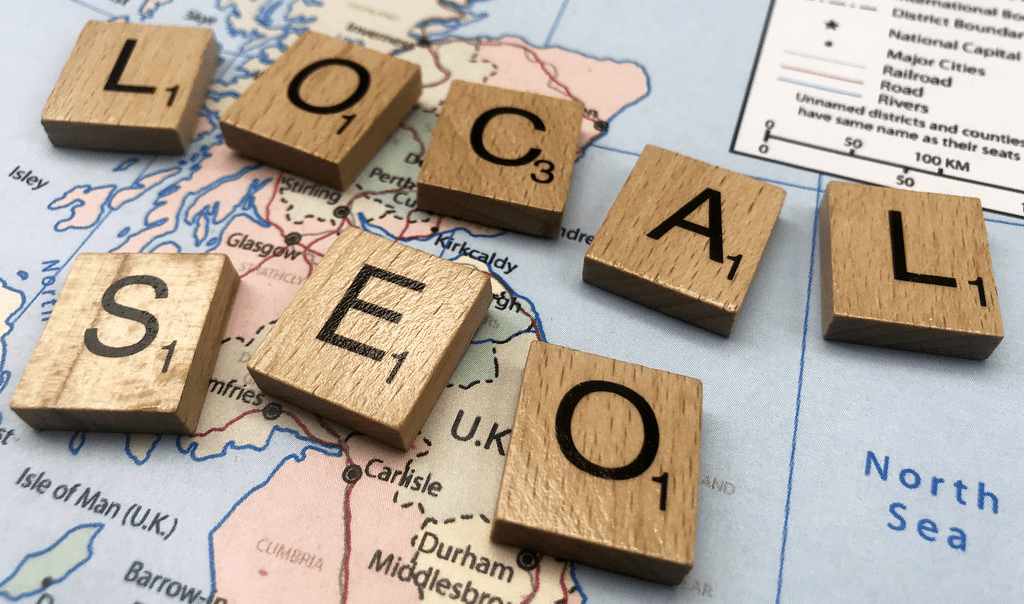
In today’s competitive digital landscape, small businesses face the challenge of standing out amidst the noise. With consumers increasingly turning to the internet to discover local products and services, mastering local search engine optimization (SEO) has become essential for small business growth. In this guide, we’ll explore how harnessing the power of local SEO can propel your small business to new heights. Understanding Local SEO Local SEO focuses on optimizing your online presence to attract more local customers searching for products or services in your area. It involves a combination of strategies aimed at improving your visibility in local search results, such as Google Maps and local listings. By optimizing your website and online profiles for local searches, you can connect with potential customers at the precise moment they’re looking for what you offer. Key Components of Local SEO Google My Business (GMB) Optimization: Claiming and optimizing your Google My Business listing is crucial for local SEO success. Provide accurate and up-to-date information about your business, including your address, phone number, website, and business hours. Add high-quality photos of your storefront, products, and team to make your listing more appealing to potential customers. Localized Keyword Optimization: Conduct keyword research to identify relevant search terms with local intent. Incorporate these keywords naturally into your website content, meta tags, and headings. Focus on long-tail keywords that include location-specific phrases to attract highly targeted traffic from your area. Local Content Creation: Create content that resonates with your local audience. Write blog posts, guides, and case studies that address local topics, events, and trends. Showcase your involvement in the community and highlight local testimonials and success stories to build trust and credibility with potential customers. Online Reviews and Reputation Management: Encourage satisfied customers to leave positive reviews on platforms like Google, Yelp, and Facebook. Respond promptly to both positive and negative reviews to show that you value customer feedback and are committed to providing excellent service. Monitoring and managing your online reputation is essential for attracting and retaining customers. Local Link Building: Build relationships with local businesses, organizations, and influencers to earn high-quality backlinks to your website. Participate in community events, sponsor local charities, and collaborate with other businesses on joint promotions or initiatives. Building a network of local connections can help boost your online visibility and credibility. Measuring Success and Making Adjustments Track key metrics such as website traffic, search rankings, and customer engagement to gauge the effectiveness of your local SEO efforts. Use tools like Google Analytics and Google Search Console to monitor your website performance and identify areas for improvement. Regularly review your local search rankings and online reviews to stay ahead of the competition and adapt your strategy as needed. Conclusion: Driving Local Growth with Local SEO In an increasingly competitive marketplace, small businesses must leverage every available opportunity to attract and retain customers. By implementing a comprehensive local SEO strategy, you can increase your visibility in local search results, drive more targeted traffic to your website, and ultimately grow your business. From optimizing your Google My Business listing to creating locally relevant content and building relationships with other businesses, there are numerous ways to harness the power of local SEO to propel your small business forward. Start implementing these strategies today and watch as your business flourishes in the digital age.
Top 10 Digital Marketing Ideas to Propel Your Small Business to Success
In today’s digital age, a strong online presence is no longer a luxury – it’s a necessity for small businesses. But with so many digital marketing channels and tactics available, it can be overwhelming to know where to start. Here are the top 10 ideas to get you on the right track and achieve success through digital marketing: Master the Art of SEO: Search Engine Optimization (SEO) is the foundation of digital marketing. By optimizing your website with relevant keywords and user-friendly design, you increase your chances of appearing at the top of search engine results pages (SERPs) when potential customers search for products or services like yours. 2. Embrace the Power of Content Marketing: Content is king! Create valuable, informative, and engaging content like blog posts, infographics, videos, or social media posts that resonate with your target audience. This establishes you as an industry thought leader and builds trust with potential customers. 3. Own Your Social Media Space: Choose the social media platforms where your target audience hangs out (Facebook, Instagram, etc.) and establish a strong presence there. Regularly share engaging content, run contests, and respond to comments and messages to build a community around your brand. 4. Leverage the Magic of Email Marketing: Email marketing remains a powerful tool for nurturing leads and driving sales. Build an email list by offering valuable incentives and send targeted email campaigns with personalized offers and promotions. 5. Don’t Underestimate Local SEO: If your business has a physical location, local SEO is crucial. Claim your Google My Business profile, optimize your website for local searches, and encourage customer reviews to increase your local visibility and attract nearby customers. 6. Run Paid Advertising Campaigns: Social media advertising platforms and pay-per-click (PPC) advertising can be highly effective ways to reach a wider audience and target specific demographics. Set a clear budget and track your results to ensure you’re getting the most out of your ad spend. 7. Collaborate with Influencers: Partnering with relevant influencers in your industry can expose your brand to a new audience and build trust through endorsements. 8. Unleash the Power of Video Marketing: Videos are a highly engaging content format. Create explainer videos, product demos, customer testimonials, or behind-the-scenes glimpses to capture attention and connect with your audience on a deeper level. 9. Track, Analyze, and Adapt: Digital marketing is an ongoing process. Utilize website analytics tools to track your progress, measure the effectiveness of your campaigns, and adapt your strategies based on data and customer insights. 10. Embrace Customer Reviews and Feedback: Encourage customer reviews on Google, social media platforms, and other relevant sites. Respond to both positive and negative feedback to demonstrate your commitment to customer satisfaction and build trust with potential customers. By implementing these ideas and staying up-to-date with the evolving digital landscape, you can leverage the power of digital marketing to take your small business to new heights. Remember, success doesn’t happen overnight, so be patient, consistent, and data-driven in your approach.
Top Digital Marketing Updates for April 2024: Stay Ahead of the Curve
The digital marketing landscape is constantly evolving, and April 2024 has been no exception. From platform updates to emerging trends, staying informed is crucial for success. Here’s a breakdown of the top 10 updates you need to know: 1. Google Search Core Algorithm Update (April 5th): Google rolled out a core algorithm update in early April. While specifics remain undisclosed, experts suggest a focus on content quality, user experience, and EAT (Expertise, Authoritativeness, and Trustworthiness) of websites. Action: Double down on high-quality content creation, ensure website usability, and strengthen your backlink profile. 2. TikTok’s Focus on eCommerce (April 12th): TikTok announced a series of updates aimed at streamlining in-app purchases. This includes better product discovery tools, partnerships with major retailers, and enhanced livestream shopping features. Action: Consider incorporating TikTok into your marketing strategy, especially for younger demographics, and explore its advertising and shopping features. 3. AI-Powered Content Creation on the Rise: The use of AI for content creation, from text generation to image optimization, is rapidly increasing. Platforms are offering tools to assist with content strategy, writing, and even video editing. Action: Explore AI-powered tools to streamline your content creation workflow, but remember human creativity remains essential. 4. Increased Focus on Data Privacy: Data privacy regulations are becoming stricter worldwide. Platforms like Google are offering users more control over their data, and marketers need to adapt their data collection and targeting strategies. Action: Ensure compliance with data privacy regulations, prioritize first-party data collection, and obtain explicit user consent for data usage. 5. The Rise of Micro-Influencers: Brands are increasingly recognizing the value of partnering with micro-influencers (those with smaller, highly engaged audiences) for marketing campaigns. Micro-influencers often offer higher engagement and more targeted reach. Action: Consider collaborating with micro-influencers relevant to your niche and target audience. 6. Interactive Content Takes Center Stage: From polls and quizzes to augmented reality (AR) experiences, interactive content provides a more engaging way to connect with audiences. Platforms are offering new tools to facilitate interactive content creation. Action: Explore interactive content formats that align with your marketing goals and target audience. 7. The Growing Importance of Voice Search: Voice search continues to gain popularity, and marketers need to optimize their content for voice queries. This includes using long-tail keywords and natural language optimization. Action: Analyze long-tail keywords related to your services or products and optimize your content for conversational search. 8. The Evolving Landscape of Social Media Advertising: Social media platforms are constantly updating their advertising features. This month features like interest-based targeting and audience segmentation received refinements on various platforms. Action: Stay updated on social media advertising platform updates and adapt your targeting strategies to leverage new features. 9. The Blurring Lines of Online and Offline Shopping: “Omnichannel” marketing, combining online and offline experiences, is crucial. Think click-and-collect options, in-store AR experiences, and social media integration with physical stores. Action: Develop a cohesive marketing strategy that bridges the gap between online and offline channels.