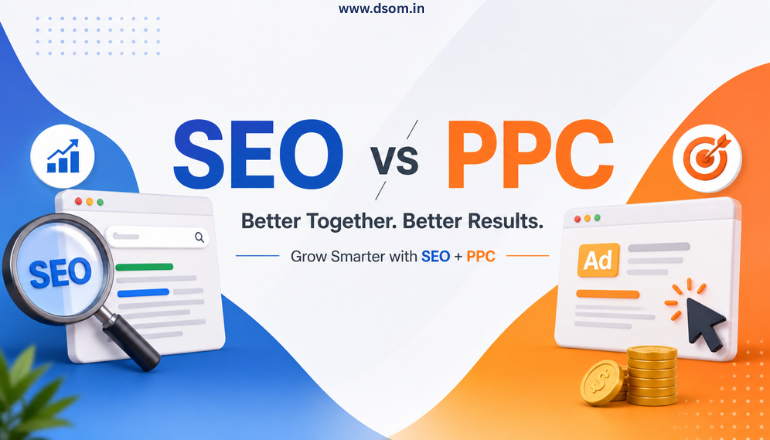
Most brands spend thousands on SEO and PPC without realising the two are fighting each other. This digital marketing strategy article breaks down what SEO vs PPC really are, how they differ, why using them separately is hurting your brand, and the smart SEO and PPC integration strategy to make them work as one powerful team.
Your Brand Is Showing Up on Google, but Is It Actually Working?
Imagine this! A potential customer opens Google and types your brand name. Your PPC advertising paid ad appears. Your SEO organic result appears. A competitor’s ad appears. An affiliate blog appears. A review site appears. All on the same page. All at the same time.
Now here is the real question, who is actually in control of that page? In most companies, the answer is nobody, fully. This is where you lose clicks, organic traffic, and waste your PPC budget funds.
To understand why this happens, we first need to understand the two players at the centre of it all: SEO and PPC in digital marketing.
What Is SEO? (Search Engine Optimization)
SEO stands for Search Engine Optimization, a core part of any digital marketing strategy. In simple terms, it is the art and science of making your website appear on Google without paying for it and improving organic traffic.
When you search for something on Google and click on a result that does not have the word “Sponsored” or “Ad” next to it, that is an organic result and SEO optimization is what made it visible there.
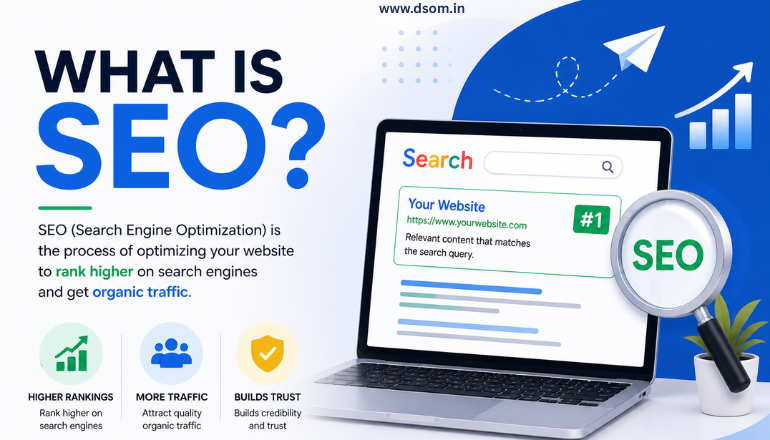
SEO works by helping Google understand what your website is about, how trustworthy it is, and how useful it is to people searching for a particular topic using a proper keyword strategy.
This is done through a combination of strategies like:
- writing quality content with the right SEO keywords,
- building links from other reputable websites,
- making sure your website loads fast and works well on mobile,
- structuring your pages so Google can read them easily.
The biggest advantage of SEO is that it is free in terms of direct cost and helps improve website traffic organically. You do not pay Google every time someone clicks your link.
However, SEO is not actually free, it requires:
- significant time
- skilled content writers
- technical developers
- months of consistent effort
It is a long-term investment in search engine optimization. Think of it like building a reputation. You cannot buy it overnight, but once you have it, it works for you every single day.
For any brand with a digital presence, SEO is not optional. It is the foundation of sustainable organic traffic and online visibility.
A brand that ranks well organically is seen as more credible by users, receives more consistent traffic, and is less vulnerable to sudden changes in ad budgets or platform policies.
What Is PPC? (Pay-Per-Click Advertising)
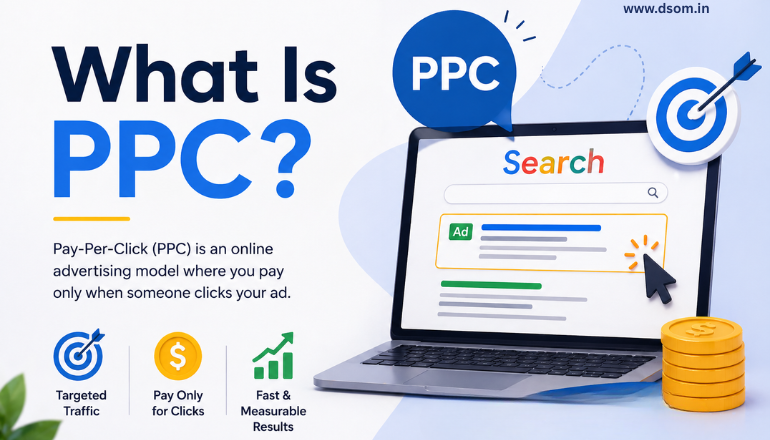
PPC stands for Pay-Per-Click, a major part of search engine marketing (SEM). It is a form of online advertising where you pay a fee every time someone clicks on your ad. The most common form of PPC advertising is Google Ads, where businesses bid on specific keywords.
The way it works is simple:
- You choose the keywords
- You want your ad to appear
- You set a budget
- Write your ad copy
Google enters you into an auction. Every time someone searches for that keyword, Google runs a real-time auction among all the advertisers competing for that space, and the winners get their ads shown. You pay only when someone actually clicks, generating paid traffic.
The biggest advantage of PPC is speed. While SEO can take months to show results, a well-set-up PPC campaign can start driving traffic to your website within hours of going live.
It is also highly targeted. You can control who sees your ads based on location, language, device, time of day, and even the specific words they searched using a strong keyword targeting strategy.
However, PPC has a critical weakness like:
- The moment you stop paying, your ads disappear.
- There is no residual value.
The moment the budget runs out or the campaign is paused, so does the traffic. For brands that rely too heavily on paid search without building organic presence, this creates a dangerous dependency.
The Difference Between SEO and PPC
While both SEO and PPC are tools for appearing on Google search results, they operate in fundamentally different ways and serve different purposes in a digital marketing strategy.
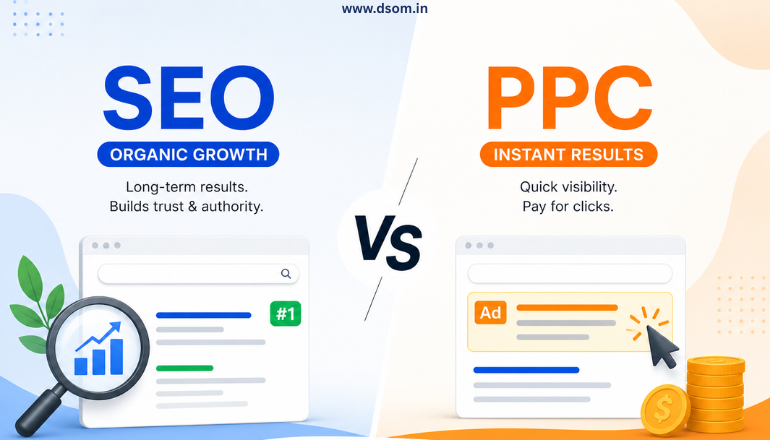
In terms of user perception, studies consistently show that organic results are considered more credible by users, increasing organic traffic.
| Factor | SEO (Search Engine Optimization) | PPC (Pay-Per-Click Advertising) |
|---|---|---|
| Nature | Organic and unpaid | Paid advertising |
| Timeframe | Long-term results | Immediate results |
| Cost Structure | Free per click, but requires time and effort | Cost per click (CPC) |
| Authority | Builds long-term authority and trust | No long-term authority |
| Traffic Type | Organic traffic | Paid traffic |
| Scalability | Slow and steady growth | Fast and scalable |
| Sustainability | Continues even without spending | Stops when budget ends |
| Strategy Type | Content + technical optimization | Bidding + ad campaigns |
| User Trust | High credibility among users | Moderate trust (ads often skipped) |
In terms of user perception, studies consistently show that organic results are considered more credible by users, increasing organic traffic.
The key insight is, SEO vs PPC is not a competition. They are complementary tools in search engine marketing. Used together strategically, they can dominate a search results page. Used separately without coordination, they create chaos.
The Problems When SEO and PPC Are Used Separately
When SEO and PPC teams operate independently without sharing data or strategy, several costly problems emerge in your digital marketing strategy.
- The first and most common problem is budget waste. When a brand already ranks number one organically for its own brand name, running a paid ad for the same keyword means you are essentially paying for clicks you would have received for free, increasing PPC cost unnecessarily.
- The second problem is blind spots in the search results page. The PPC team sees auction data and ad performance. The SEO team sees rankings and organic traffic. But neither team sees the full picture of search engine results pages (SERP).
- The third problem is conflicting messaging. When PPC and SEO teams write independently, the ad copy and the organic meta description for the same brand can carry completely different messages. This affects conversion rate optimization.
Finally, there is the problem of slow response to change. Without shared insights, your SEO and PPC strategy becomes reactive instead of proactive.
The Solution: The Smart Way to Use SEO and PPC Together
Now you must be thinking of fixing it, and the answer is not to choose one over the other. The smart approach is SEO and PPC integration.
- Get Both Teams to Look at the Same Data:
Both teams must work together and share their keyword data, analytics, and performance insights to improve website traffic. - Use PPC to Test and Inform SEO:
Paid campaigns produce results quickly and reveal which keywords drive the most clicks and conversions. SEO teams can then prioritise content around those exact high-performing keywords. - Use SEO to Reduce PPC Costs:
If your brand already ranks number one organically for a keyword, there is no need to also pay for an ad on that same keyword, helping you reduce PPC cost. - Monitor Your Branded Search Page Like a Product:
Your branded search page is your most important digital real estate in search engine marketing. - Align Messaging Across Both Channels:
Ensure your paid ad copy and organic meta description carry the same core message to improve trust and conversion rates.
Learn SEO and PPC (Digital Marketing Training)
If you are thinking about how you are going to learn and implement these SEO and PPC strategies, then you are on the right path.
Selecting an institute is difficult if you don’t know what to do. But your goal is to gain more knowledge on digital marketing and be better than before.
DSOM – Dehradun School of Online Marketing must be your first priority. DSOM is Dehradun’s first institute dedicated to digital marketing training.
Here mentors give you one-on-one attention and proper guidance. You learn through real projects, not dummy ones.
Along with this, DSOM provides:
- AI integration in courses
- Small batch size
- Practical learning
- Coding knowledge
- One-on-one mentorship
DSOM has trained 12,000+ students and maintains a 90% placement rate, making it a strong choice for learning SEO, PPC, and digital marketing strategy.
Final Thought
So, what are you waiting for? This is the right time to learn SEO and PPC together, build a strong digital marketing strategy, and grow your career or business online.