Introduction: How Missing Structure Hid an Entire Website
A few years ago, I audited a website that looked perfect on the surface.
Great design.
Helpful content.
Strong keywords.
Yet traffic was unusually low.
Pages weren’t appearing in search results—even months after publishing.
The issue wasn’t content quality.
It was discoverability.
The site had no Sitemap.
Once we created and submitted one, search engines began finding pages faster. Indexing improved. Visibility followed.
That experience proved a simple truth: even the best content struggles when search engines don’t know where to look. When combined with solid on page SEO, proper structure quietly becomes a technical foundation.
What Is a Sitemap?

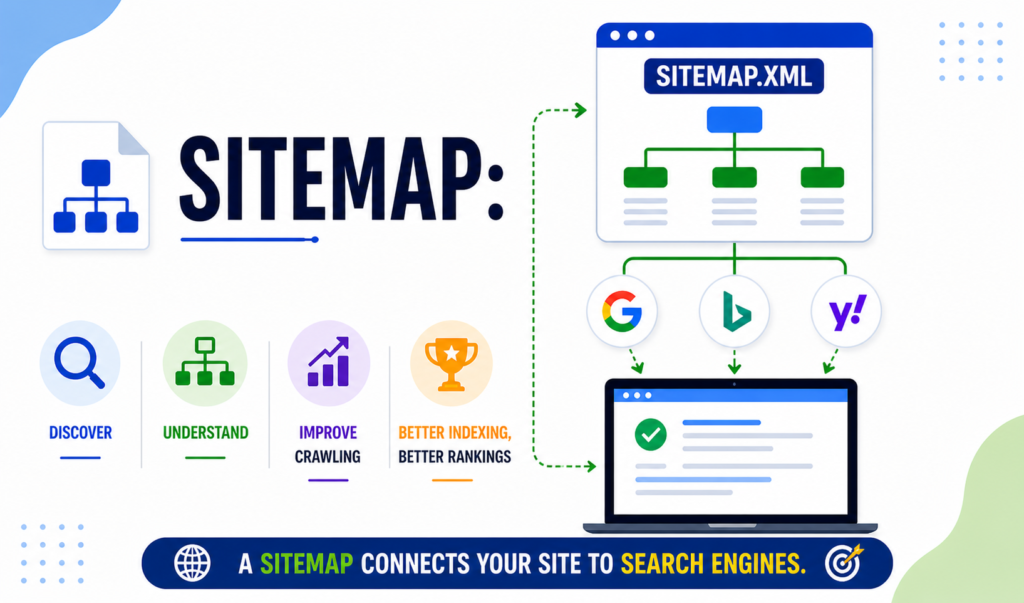
A Sitemap is a file that lists the important pages of a website to help search engines and users understand its structure.
In simple terms, it acts like a roadmap.
Instead of forcing crawlers to discover pages randomly, you guide them directly to what matters.
It communicates:
Which pages exist
How they relate to one another
When content was last updated
This guidance improves crawling efficiency and indexing clarity.
Why Structure Matters for SEO
Search engines don’t automatically find every page.
This is especially true for new, large, or frequently updated websites.
A Sitemap supports SEO by:
Speeding up indexing
Improving crawl coverage
Highlighting priority pages
Supporting on page SEO efforts
Without it, valuable content may remain invisible.
Types of Sitemaps

Not all sitemap formats serve the same role.
XML Version
Designed for search engines.
It lists URLs with metadata such as update frequency and priority.
HTML Version
Designed for users.
It provides a clear navigation path for visitors.
Used together, both formats improve usability and crawl understanding.
Visual Version
How Page Discovery Supports On Page SEO
On page SEO improves individual pages.
But pages still need to be discovered.
A Sitemap supports on page SEO by ensuring:
Important pages are crawled
New content is found faster
Updated pages are reprocessed efficiently
Optimization improves quality. Structure ensures visibility.
How to Create and Submit One Correctly
You can generate this file using:
WordPress SEO plugins
Online generators
Manual XML creation
Once created, submit it through:
Bing Webmaster Tools
Submitting a Sitemap doesn’t guarantee rankings—but it guarantees discovery.
Where to Place It for Easy Access
The file should live at a standard location:
yourwebsite.com/sitemap.xml
You should also:
Reference it inside robots.txt
Keep it updated with new content
Remove outdated URLs
Easy access ensures search engines always know where to look.
Guiding Search Engines and Users Together
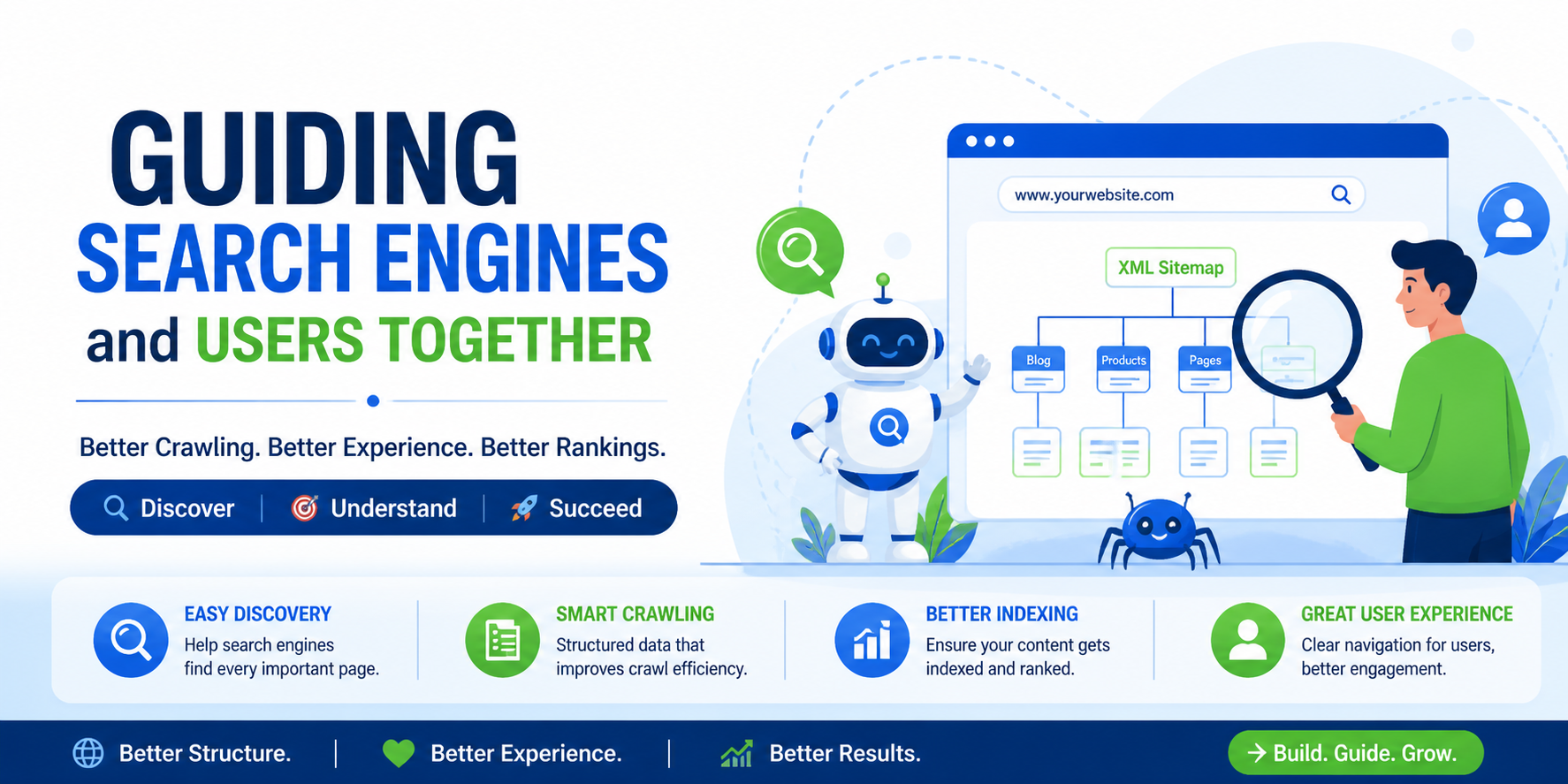
Search engines use structured files for crawling.
Users use them for navigation.
A Sitemap serves both purposes.
For crawlers, it improves crawl paths.
For users, it improves accessibility.
This dual role strengthens overall site experience.
Common Mistakes That Hurt Discovery
Many websites create these files—but configure them poorly.
Avoid:
Including blocked or redirected URLs
Forgetting updates after publishing new pages
Submitting multiple conflicting versions
Listing low-value pages
A poorly maintained Sitemap can confuse crawlers instead of helping them.
Does It Directly Improve Rankings?
No—indirectly.
This file doesn’t boost rankings on its own.
But it improves:
Indexing speed
Crawl efficiency
Page discovery
Which supports ranking potential when paired with strong content and on page SEO.
Final Thoughts: Visibility Starts With Structure
Most SEO issues aren’t about content quality.
They’re about access.
A Sitemap ensures your pages are discoverable, organized, and crawl-ready.
It doesn’t replace on page SEO—it supports it.
And learning how to implement technical SEO foundations like this is exactly what DSOM (Dehradun School of Online Marketing) focuses on—training students to master on page SEO, site structure, and real-world optimization strategies that protect visibility and drive long-term growth.