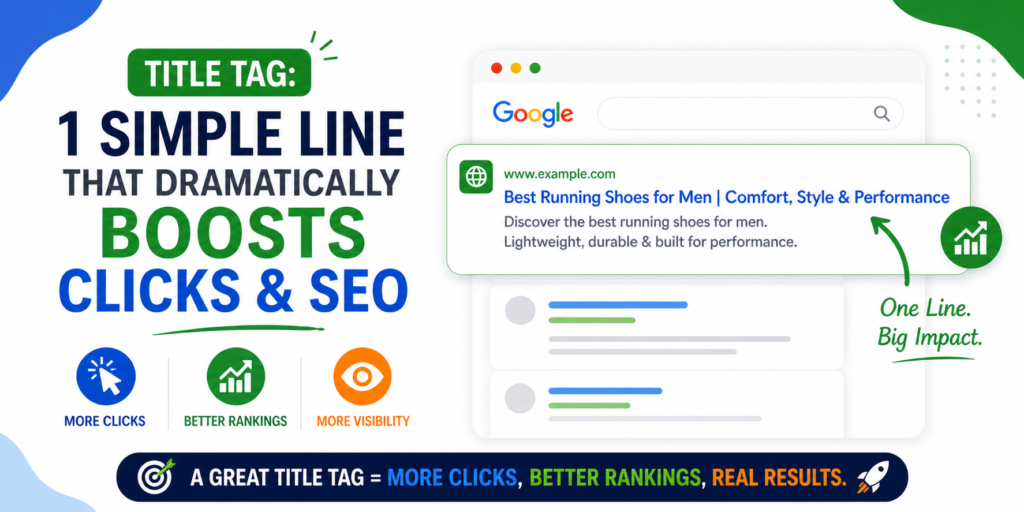
The Day I Realized Rankings Weren’t Enough
Title Tag was something I underestimated for years.
- My page ranked well.
- The content was strong.
- The keywords were right.
Yet traffic stayed flat.
At first, I blamed competition.
Then I blamed algorithms.
But the real issue was simpler.
The search headline was boring.
It didn’t spark curiosity.
It didn’t promise value.
It didn’t earn the click.
Once I rewrote the Title Tag, impressions turned into clicks almost overnight—without changing the content itself.
That moment changed how I approached SEO forever.
What Is a Title Tag?
A Title Tag is an HTML element that defines the main title of a webpage.
It serves as the primary identifier of a page across multiple platforms.
You’ll see it in:
Google search results
Browser tabs
Social media link previews
In simple terms, it tells search engines like google what the page is about and tells users why they should click.
It’s the first impression of your content.
Why the Title Tag Matters in SEO
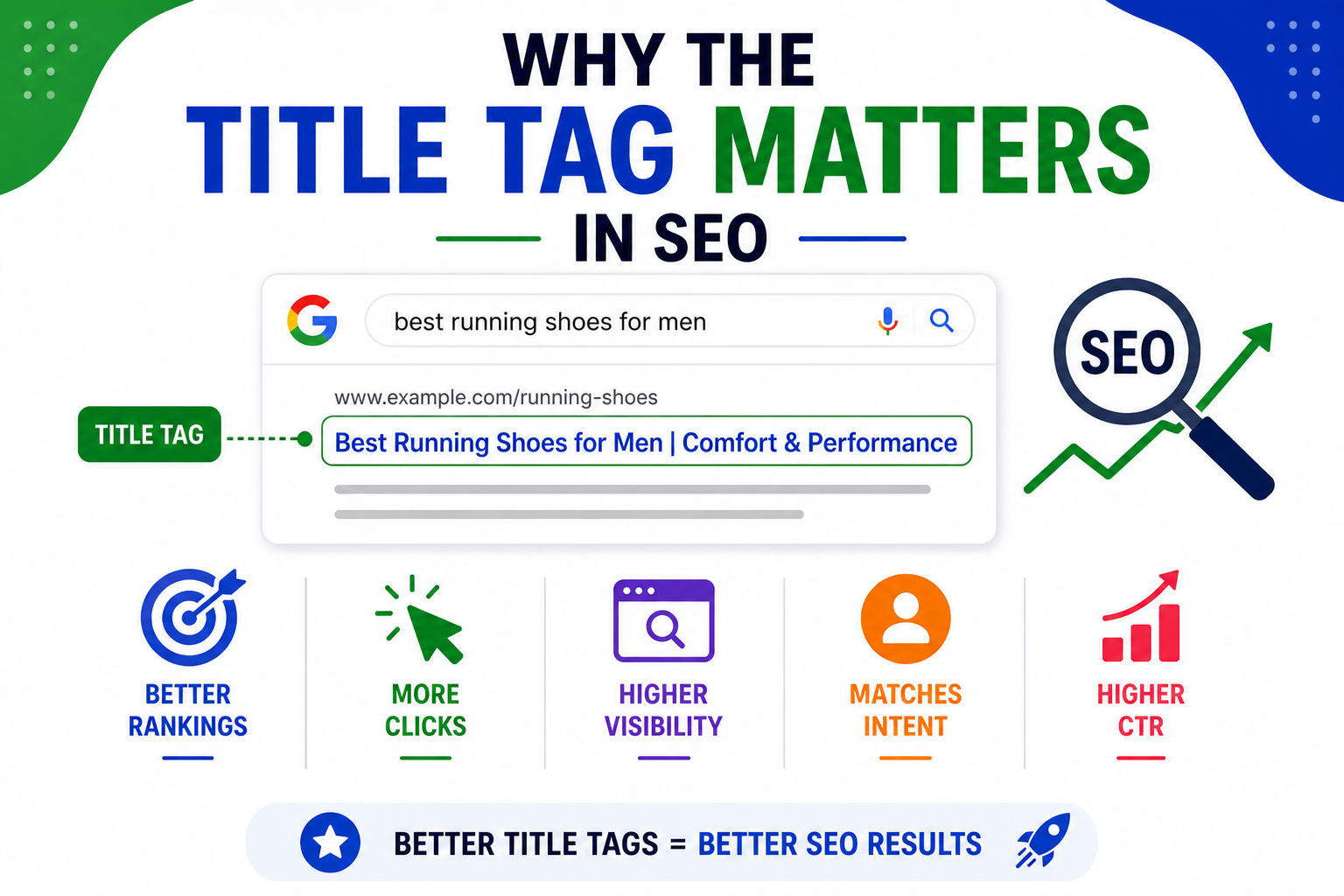
Search engines analyze multiple signals to understand relevance.
The Title Tag is one of the strongest.
From an on page SEO perspective, it helps search engines:
Understand page topic
Match the page with search intent
Evaluate content relevance
For users, it works as a decision-maker.
A clear, relevant headline earns attention.
A weak one gets ignored—no matter how good the content is.
Types of Effective Page Titles
Different search intents require different headline styles.
Here are proven formats that work well:
Keyword-Focused Titles
Clear and informational. Ideal for educational content.
Benefit-Driven Titles
Highlight what the user gains by clicking.
Question-Based Titles
Directly match how users search.
List-Based Titles
Use numbers to set expectations and improve scannability.
The best-performing headlines always align with intent—not trends.
Where Is the Title Tag Displayed and Used?

The Title Tag plays a visible role beyond search results.
It appears:
As the clickable headline in Google
On browser tabs, helping users navigate
In social previews when shared
Because it’s reused across platforms, accuracy and clarity are essential.
Misleading headlines damage trust and increase bounce rate.
How to Create an Effective Title Tag
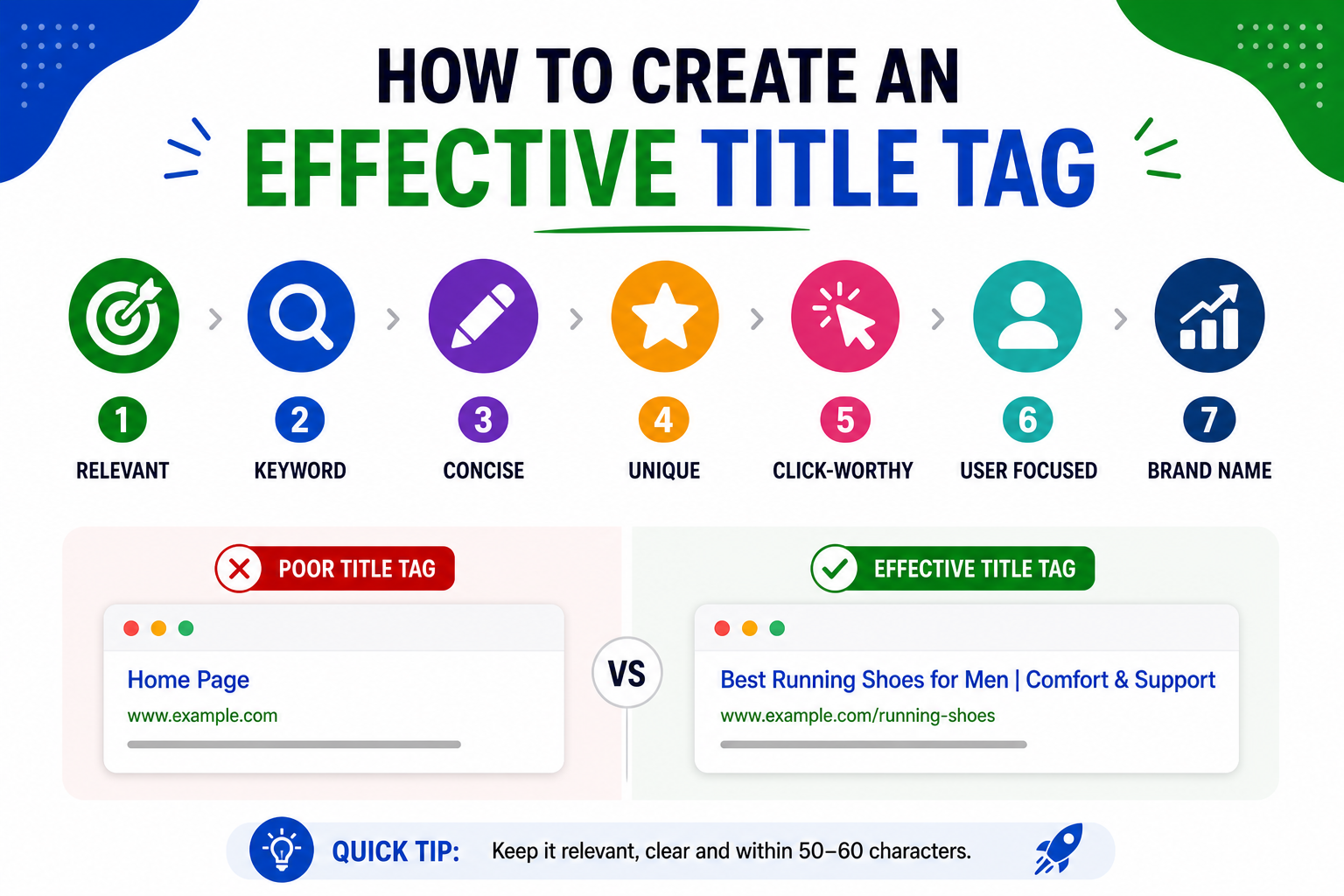
Writing a strong Title Tag requires balance.
Follow these best practices:
Keep it under 60 characters
Place important keywords early
Make it readable, not robotic
Match the page content exactly
Think of it as a promise.
If the headline overpromises and underdelivers, users won’t stay.
Crafting Compelling Headlines That Get Clicks
Users don’t read search results carefully.
They scan.
A compelling Title Tag stands out because it is:
Clear
Specific
Relevant
Intent-driven
Clarity always beats cleverness.
When users immediately understand what they’ll get, clicks follow naturally.
Common Title Mistakes to Avoid
Many websites hurt performance without realizing it.
Avoid:
Duplicate headlines across pages
Keyword stuffing
Overly long titles that get truncated
Generic phrases like “Home” or “Services”
One poorly written Title Tag can suppress traffic even if rankings are strong.
The Art of Effective Title Creation

Creating strong headlines isn’t about tricks or formulas.
It’s about empathy.
A great Title Tag understands:
What the user is searching for
Why they are searching
What problem they want solved
When your headline answers those questions instantly, engagement improves.
Title Tag and On Page SEO: The Direct Connection
On page SEO is about alignment.
The Title Tag aligns:
Search queries
Page content
User expectations
When alignment is strong, users stay longer, interact more, and trust the page.
Search engines notice that behavior.
Final Thoughts: Small Line, Massive Impact
Most people chase rankings.
Smart marketers chase clicks.
A Title Tag may be a single line of text, but it carries enormous influence.
It shapes first impressions.
It influences trust.
It drives traffic.
And learning how to master such practical SEO fundamentals is exactly what DSOM (Dehradun School of Online Marketing) focuses on—training students to excel in on page SEO, content optimization, and real-world strategies that convert visibility into measurable results.