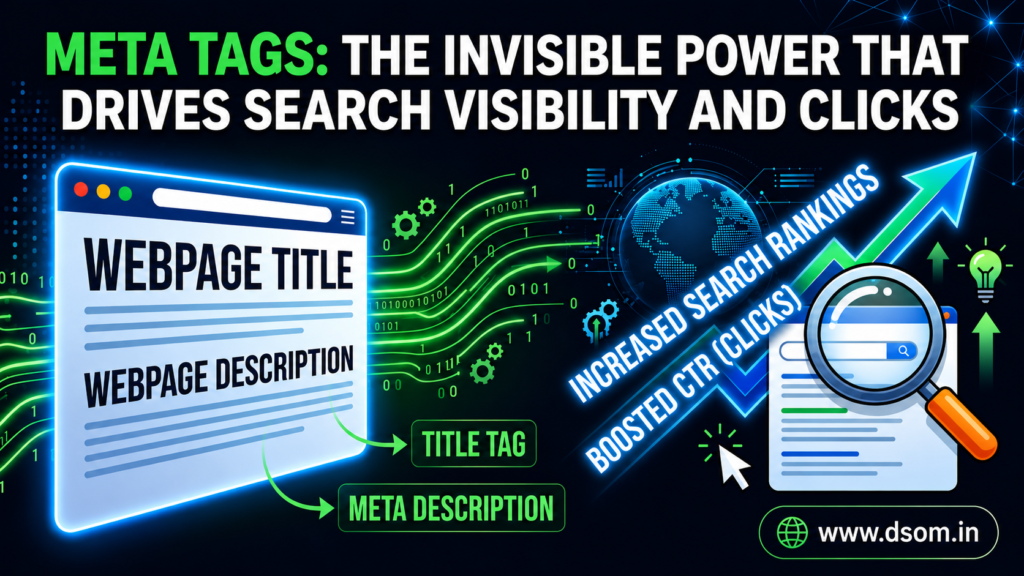
Introduction: When My Page Looked Perfect—but Got No Clicks
Meta Tags were the last thing I thought to check.
The content was solid.
The keywords were researched.
The page ranked—but nobody clicked.
Impressions were visible.
Traffic wasn’t.
When I reviewed the page carefully, the issue became obvious.
The title felt lifeless.
The description was missing.
The page had no presence in search results.
Once the metadata was rewritten, click-through rate improved almost immediately—without changing a single word of content.
That moment made something very clear: what users see before clicking is just as important as what they read after.
What Are Meta Tags?
Meta Tags are snippets of HTML code placed inside a webpage’s <head> section to communicate important information to search engines and browsers.
They do not appear on the visible page.
Instead, they explain what the page is about, how it should be displayed, and how it should be handled during crawling and indexing.
In simple terms, this metadata acts as a bridge between your content and search engines—translating intent, relevance, and structure.
Why Meta Tags Matter in SEO
Search engines rely on signals to determine:
What a page represents
How it should appear in results
Whether users are likely to trust it
Meta Tags help shape these decisions by providing structured context.
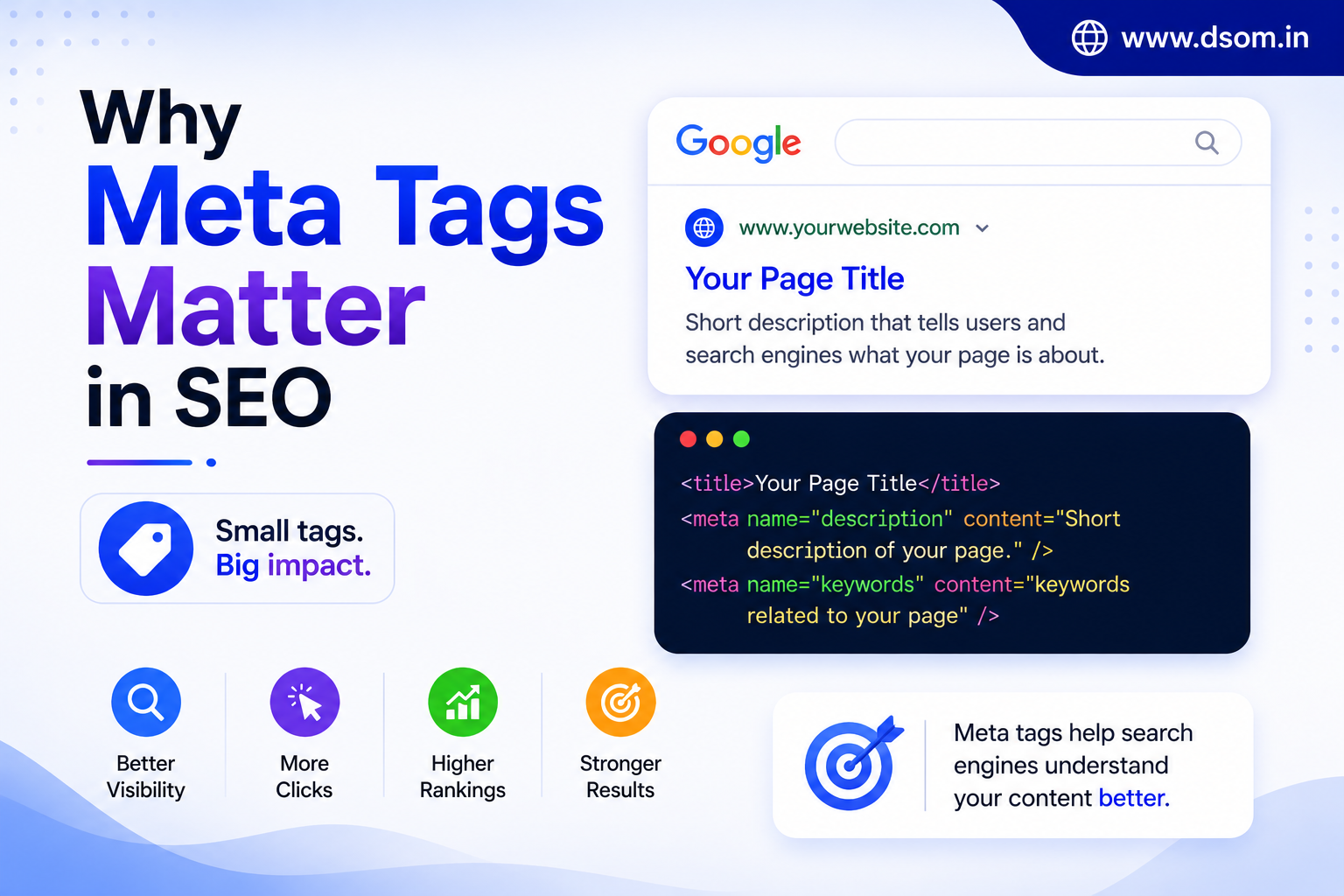
From an on page SEO perspective, this directly impacts visibility, relevance, and user engagement—especially through titles and descriptions that appear in SERPs.
Types of Page-Level Metadata and Their Purposes
Not all HTML tags serve the same function.
Title Element
Defines the clickable headline shown in search results and browser tabs.
Description Element
Summarizes page content and influences user click behavior.
Robots Directive
Controls crawling and indexing instructions.
Charset Declaration
Ensures correct text rendering across browsers.
Viewport Setting
Optimizes display for mobile devices.
Each of these elements works together to shape how a page is interpreted and presented.
How to Write Engaging Search Snippets
Effective metadata is written for humans first.
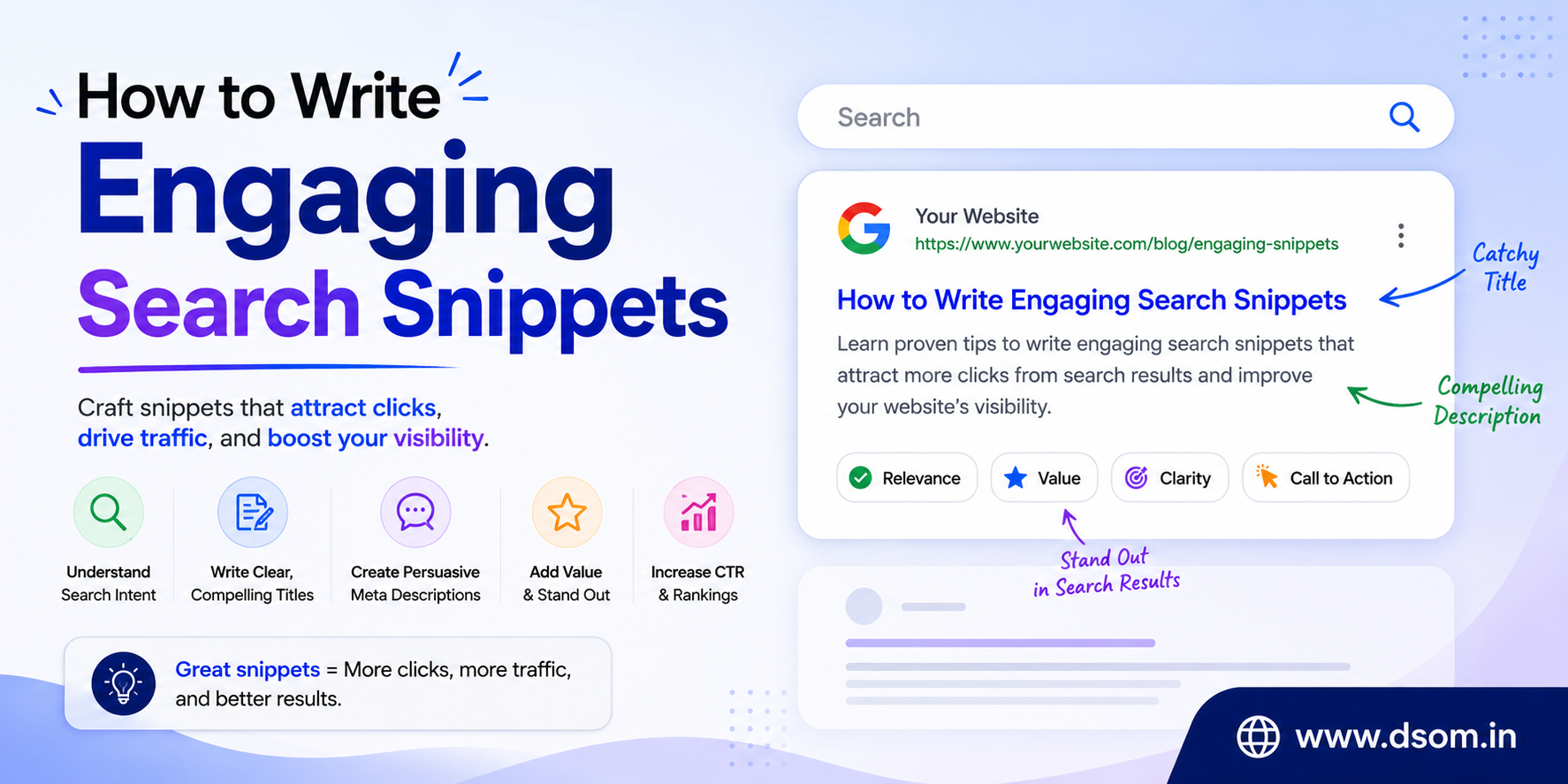
Best practices include:
Clear and concise language
Alignment with search intent
Natural keyword placement
Informational or emotional appeal
Well-crafted snippets build trust before the click even happens.
Where Metadata Plays a Critical Role
Page-level information matters most at key interaction points.
It influences:
Search result appearance
Social media previews
Browser tab labels
Indexing behavior
From an on page SEO standpoint, this layer is foundational—not optional.
Ignoring it means handing over control of your page’s presentation to algorithms.
Meta Tags: Your Website’s Hidden Voice
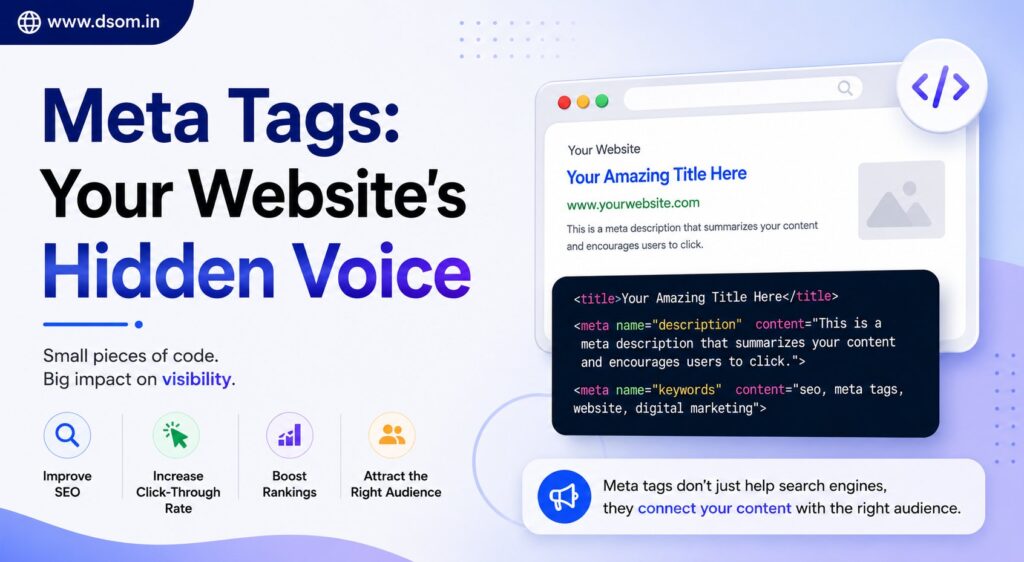
Your content speaks after the click.
Meta Tags speak before it.
They decide whether users pause, read, and choose—or scroll past.
Think of them as your website’s elevator pitch in search results.
Short.
Clear.
Intentional.
The Impact of Metadata on User Behavior
While page-level tags don’t guarantee rankings, they strongly influence:
Click-through rate
Bounce rate
Perceived relevance
Brand trust
Search engines observe how users interact with results.
Better engagement sends stronger quality signals over time.
Common Metadata Mistakes to Avoid
Many websites hurt performance unintentionally.
Avoid:
Duplicate titles across pages
Missing descriptions
Keyword stuffing
Truncated headlines
Generic wording
One poorly written setup can undermine even the best content.
Metadata and On Page SEO: The Direct Relationship
On page SEO is about clarity and alignment.
When page information matches content accurately, search engines trust the page more.
Trust leads to consistency.
Consistency leads to stability.
Final Thoughts: Control the Message Before the Click
SEO is not just about ranking.
It’s about choice.
Users choose what looks relevant, clear, and trustworthy.
Meta Tags give you control over that choice.
They shape first impressions, guide search engines, and support strong on page SEO when used correctly.
And learning how to apply these fundamentals strategically is exactly what DSOM (Dehradun School of Online Marketing) focuses on—training students to master on page SEO, search visibility fundamentals, and real-world optimization techniques that drive clicks, trust, and sustainable growth.