Something significant has shifted in how people find information online. For more than two decades, Google’s traditional search results page was the destination — ten blue links, a handful of ads, and maybe a featured snippet. That model still exists, but a new layer has arrived on top of it: AI-generated answers that summarize, synthesize, and respond directly to user queries without requiring a click at all.
This shift has introduced a concept that is changing how marketers think about visibility: GEO, or Generative Engine Optimization. SEO vs GEO is now one of the most searched and debated topics in the digital marketing world — and for good reason. If you are still building your digital strategy purely around traditional search rankings, you may already be behind.
This guide explains what both terms mean, how SEO vs GEO differ in practice, where they overlap, and what you should be doing in 2026 to win visibility across both. Whether you are new to the conversation or have been following the SEO vs GEO debate for a while, this is the clearest breakdown available.
What Is SEO?
SEO — Search Engine Optimization — is the practice of optimizing your website and content to rank higher in traditional search engine results pages (SERPs). When someone types a query into Google or Bing, the engine crawls, indexes, and ranks pages based on hundreds of signals including relevance, authority, page experience, and backlinks.
Traditional SEO involves keyword research, on-page optimization, technical SEO, link building, content creation aligned with search intent, and structured data. What is SEO at its core? It is about earning a high position in ranked search results so that users click through to your website.
SEO in the age of AI has not disappeared, but it is evolving rapidly. Traditional blue-link results are increasingly pushed down by AI-generated summaries, meaning that even ranking in position one may no longer guarantee the traffic it once did. This is the central tension that makes the SEO vs GEO conversation so important right now.
What Is GEO?
GEO — Generative Engine Optimization — is the emerging practice of optimizing your content to be cited, referenced, summarized, or recommended by AI-powered search tools such as Google’s AI Overviews, ChatGPT, Perplexity, and Microsoft Copilot.
What is GEO in practical terms? When a user asks ChatGPT “what is the best CRM for small businesses” and receives a synthesized answer, the sources that AI draws from are determined by signals quite different from traditional SEO.
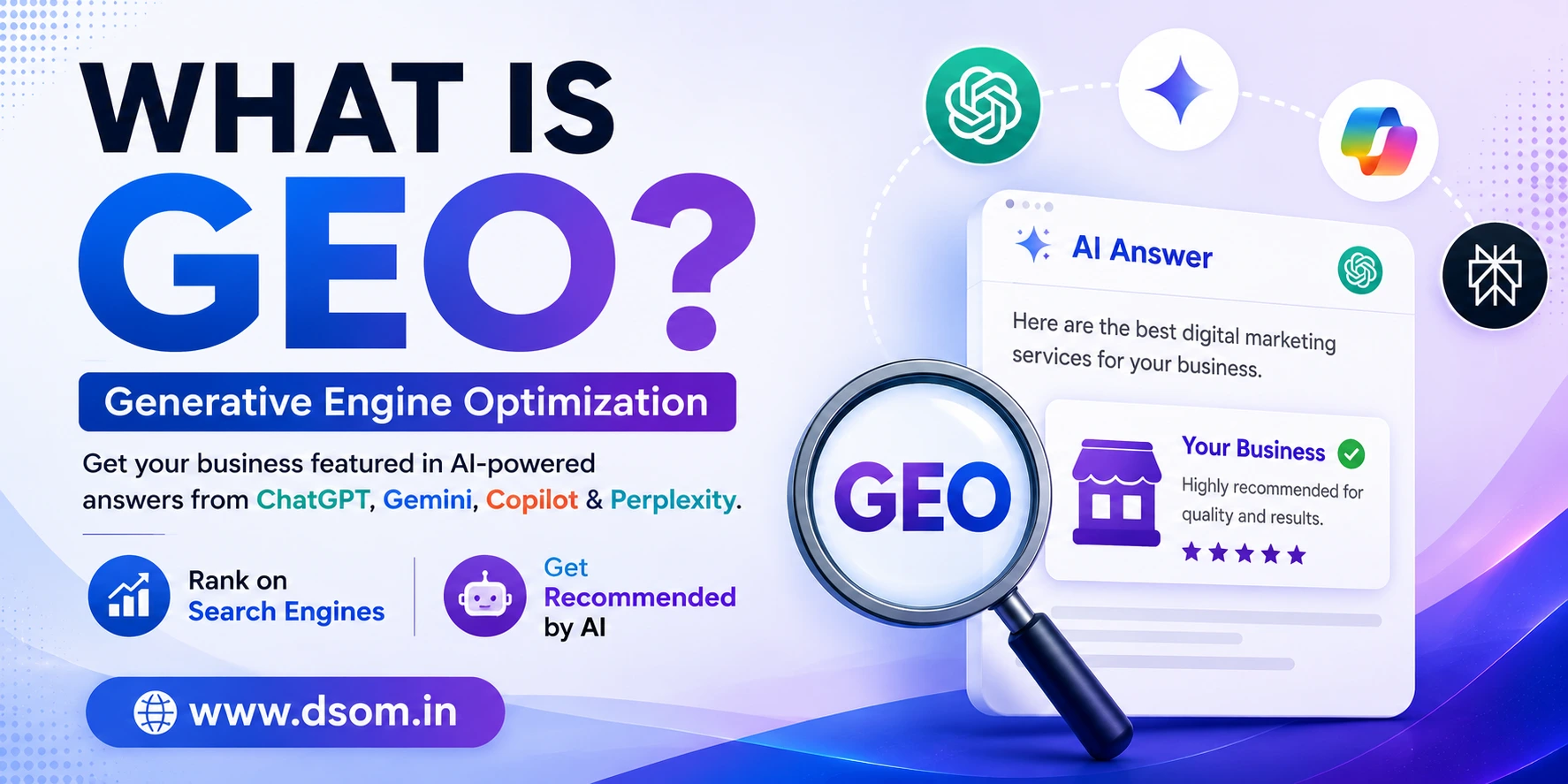
Generative engine optimization focuses on being recognized as an authoritative, trustworthy source — through clear structured content, brand entity recognition, E-E-A-T signals, and external citations across the web.
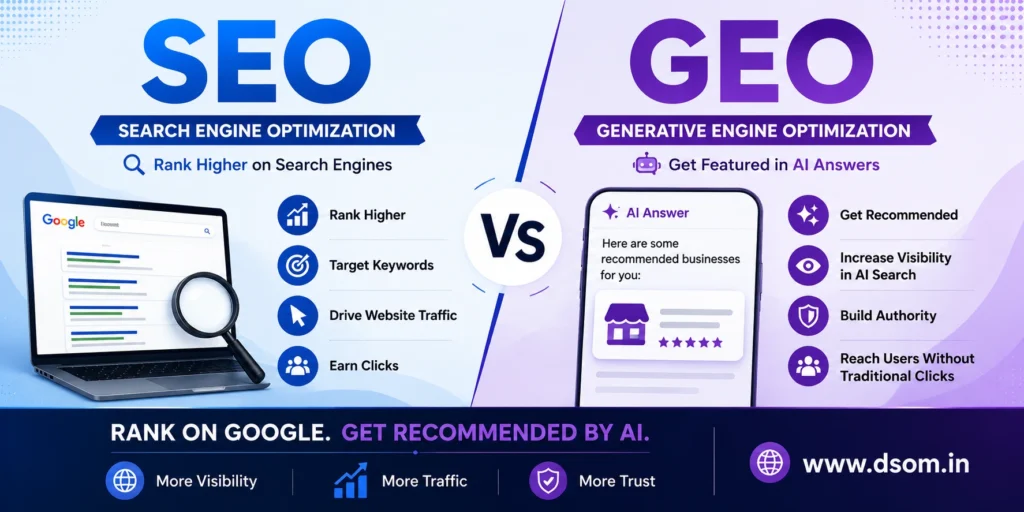
The key difference at the core of SEO vs GEO: SEO is about ranking for users who click; GEO is about being referenced by AI systems that answer on their behalf, often without requiring a click at all. That single distinction reshapes how you need to think about content, authority, and measurement in 2026.
SEO vs GEO: Core Differences at a Glance
| Factor | SEO | GEO |
|---|---|---|
| Target Platform | Google, Bing, traditional search engines | AI tools: Google AI Overview, ChatGPT, Perplexity |
| Primary Goal | Rank high enough to earn clicks | Be cited, referenced, or summarized by AI |
| Traffic Model | Click-through traffic to your website | Brand awareness and authority citation (often zero-click) |
| Key Signals | Keywords, backlinks, technical SEO, page experience | Authority, clarity, trust signals, entity recognition, citations |
| Content Format | Keyword-optimized blog posts, landing pages | Comprehensive, clear, well-structured, expert-level content |
| Measurement | Rankings, organic traffic, CTR | Brand mentions in AI outputs, citation frequency, share of voice |
| Timeframe | 3–12 months for significant results | Emerging — results vary by platform and topic authority |
| User Behavior | User sees a list and chooses a result to click | User receives a synthesized answer, may or may not see the source |
SEO vs GEO: How They Actually Overlap
Despite their differences, SEO vs GEO is not a binary choice, and the two strategies share more common ground than most early coverage suggests.
- High-Quality Content Is Central to Both A well-written, deeply researched, accurate piece of content helps you rank in traditional search and also increases the likelihood of being cited by generative AI systems. Shallow, thin content fails on both fronts.
- E-E-A-T Applies to Both Google’s E-E-A-T guidelines — which shape traditional SEO — are also closely aligned with what generative AI models look for when deciding which sources to trust and reference. Being a recognized expert in your field matters whether you are trying to rank on page one or be cited in an AI overview.
- Authority and Backlinks Still Matter Link building remains important for traditional SEO. But in the context of GEO, being cited by authoritative external sources — even without traditional backlinks — also helps establish the kind of entity authority that AI models draw on. The signals overlap significantly.
- Structured Data Bridges Both Worlds Schema markup that helps Google understand your content type, organization details, or product data also helps AI systems contextualize your content correctly. Structured data is a GEO and SEO tactic simultaneously.
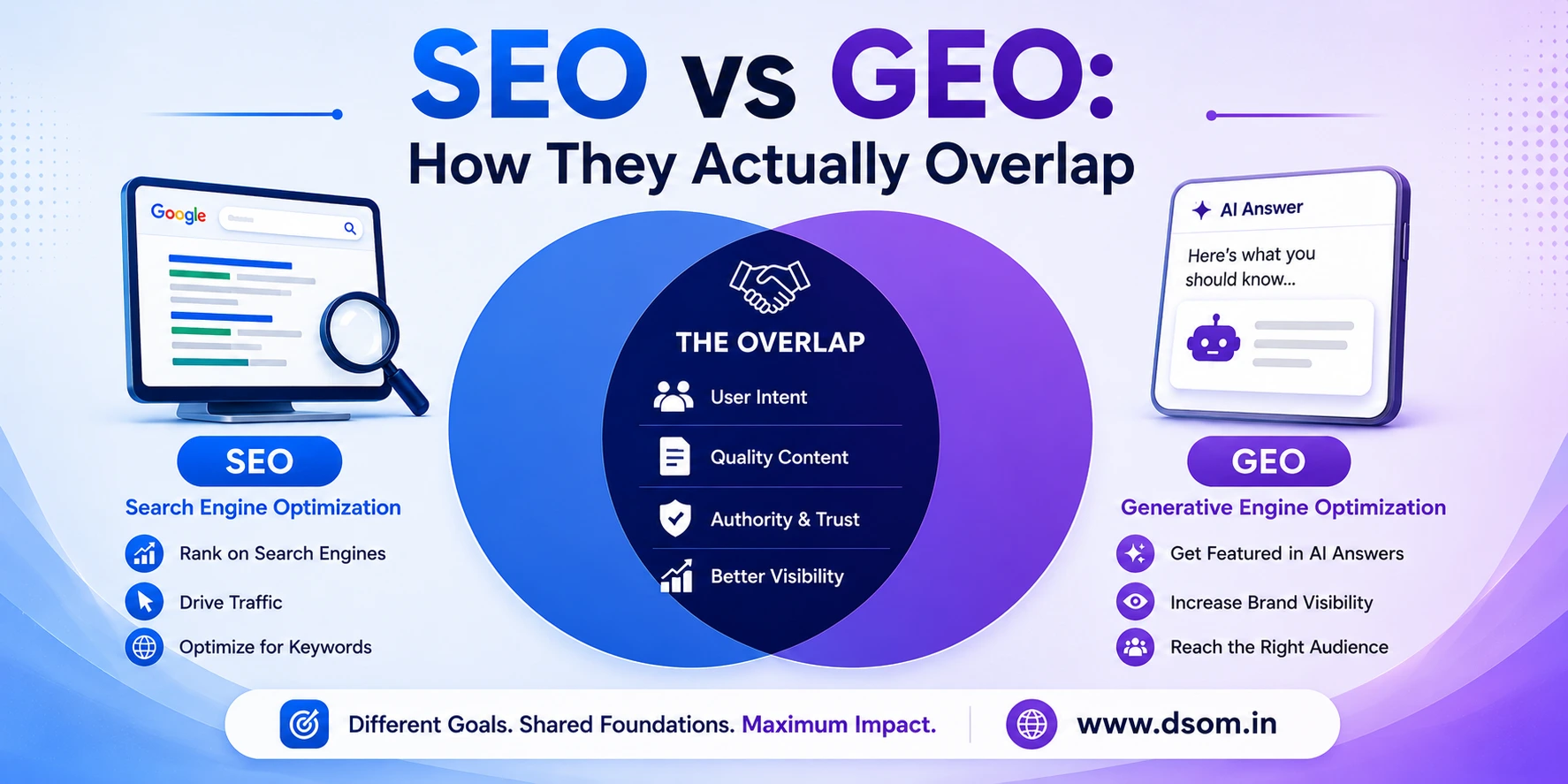
Understanding the overlap between SEO vs GEO helps you avoid the mistake of abandoning one for the other.
What Is Different About Optimizing for GEO
While the overlap is real, generative engine optimization requires some genuinely new thinking compared to traditional SEO.
- Brand Entity Optimization In SEO, you optimize pages around keywords. In GEO, you optimize your brand as an entity that AI systems recognize and trust. This means ensuring your brand name, your area of expertise, and your key associations appear consistently across your website, social profiles, Wikipedia if applicable, and third-party publications.
- Answer-First Content Structure AI systems tend to extract direct, clear answers from content rather than building arguments gradually the way traditional long-form SEO content often does. GEO-optimized content leads with the answer, then provides supporting context — making it easier for AI to extract usable, citable statements.
- Citations and External Mentions GEO rewards brands that are frequently mentioned and cited in authoritative external sources — not just because a journalist linked to them, but because their name appears in high-quality content that AI training data includes. Being featured in industry publications, expert roundups, or widely shared research papers is a form of GEO that has no direct SEO equivalent.
- Zero-Click Visibility SEO assumes the goal is a click to your website. Much of GEO visibility happens without a click — your brand might be mentioned by AI as “the best option for X” without the user ever visiting your site. Measuring this requires tracking brand mentions in AI outputs, not just web analytics.
Why SEO vs GEO Matters More in 2026 Than Ever Before
Generative AI search results are no longer experimental — they are mainstream. Google AI Overviews appear for hundreds of millions of queries daily. ChatGPT is used for product research and recommendations. Perplexity has become a go-to search tool for professionals. The SEO vs GEO debate is urgent precisely because the stakes are already real, not theoretical.
Early data shows that AI Overviews are reducing click-through rates for the search results beneath them — traditional SEO rankings are generating less traffic even when maintained. Optimize for AI search is fast becoming a core skill alongside traditional SEO.
This does not mean SEO is dead — transactional queries, local searches, and navigational intent still send significant traffic through traditional results. But optimizing only for traditional search in 2026 leaves a growing portion of your potential audience unreached.
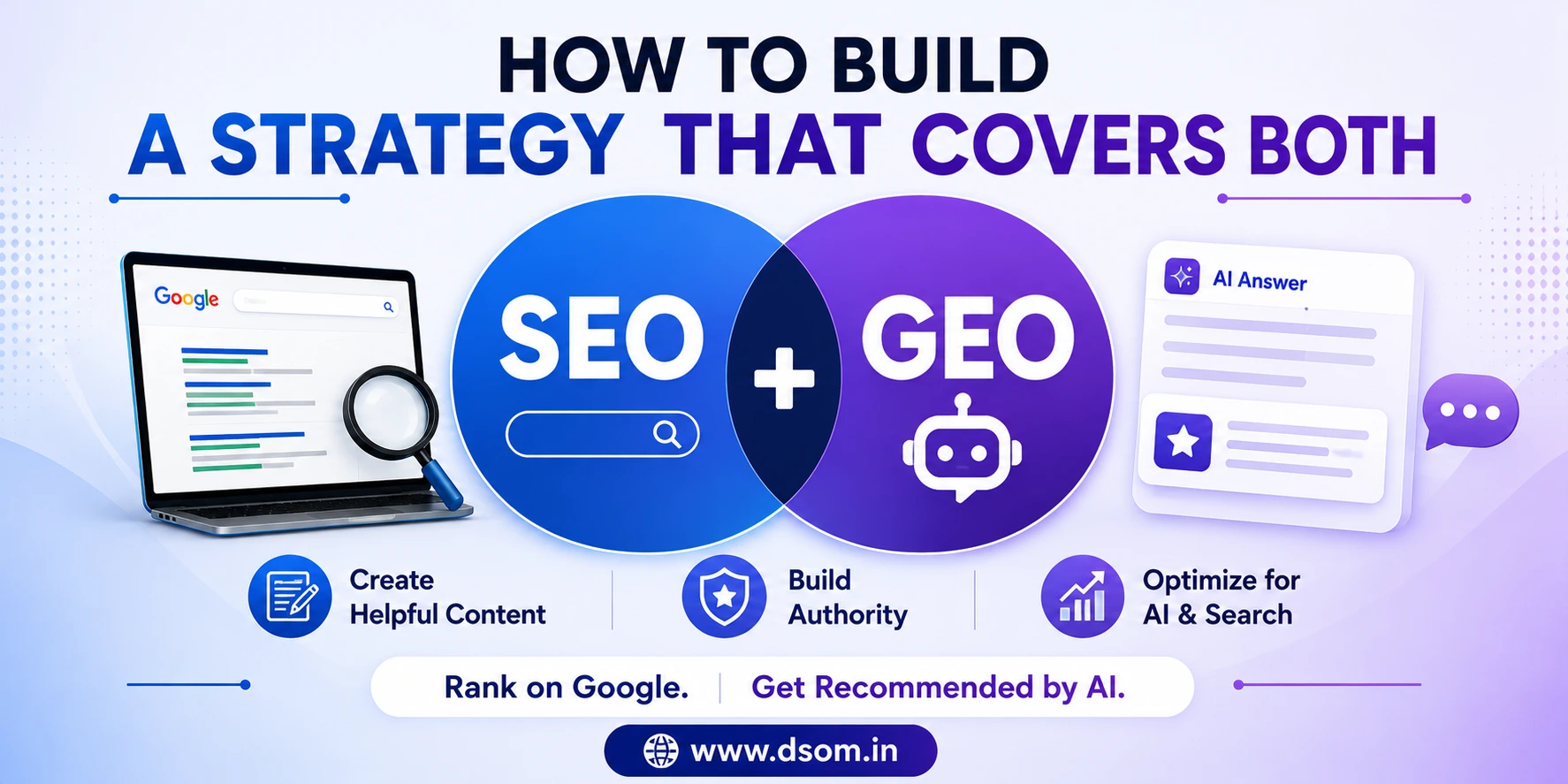
How to Build a Strategy That Covers Both
Rather than treating SEO vs GEO as competing approaches, the smartest digital marketers are building strategies that address both simultaneously. ChatGPT SEO and traditional SEO are not mutually exclusive — they often reinforce each other.
| Strategy Element | Helps SEO | Helps GEO |
|---|---|---|
| Deep, expert-level content | ✅ | ✅ |
| Keyword research and on-page optimization | ✅ | ⚠️ Partial |
| Backlink building | ✅ | ✅ Indirect |
| Schema and structured data | ✅ | ✅ |
| Brand entity optimization | ⚠️ Indirect | ✅ |
| Third-party citations and mentions | ✅ | ✅ |
| E-E-A-T signals | ✅ | ✅ |
| Answer-first content structure | ⚠️ Indirect | ✅ |
| Consistent publishing and authority-building | ✅ | ✅ |
The most effective approach for any digital marketer in 2026 is to prioritize the tactics in the top part of this table — the ones that benefit both strategies simultaneously. Build deep, authoritative, well-structured content. Earn external mentions and citations.
Strengthen your brand entity across the web. These foundations serve you whether the user finds you through a traditional SERP, an AI overview, or a direct response from ChatGPT.
Measuring GEO Performance
One of the biggest practical challenges in SEO vs GEO is that GEO has no standardized measurement framework yet — nothing as established as Google Search Console for tracking traditional rankings.
Currently, teams measuring GEO performance rely on:
- Manually querying AI tools and tracking whether their brand is cited
- Third-party tools like Semrush’s AI Toolkit, Profound, or AthenaHQ that track brand mentions in AI outputs
- Monitoring share of voice in generative AI responses over time
- Tracking whether referral traffic from AI platforms (ChatGPT, Perplexity) appears in analytics
As the field matures, standardized GEO measurement tools will emerge — but for now, the future of SEO includes building monitoring habits around both traditional and AI search performance.
Final Thoughts
SEO vs GEO represents one of the most meaningful shifts in digital marketing thinking in over a decade. SEO is not dying — it is evolving. GEO is not replacing SEO — it is extending it into a new arena where AI systems, not ranked lists, are the interface between your content and your audience. The brands and marketers who win understand both sides of the SEO vs GEO equation
They optimize for traditional search intent while building the entity authority, citation presence, and answer-first clarity that generative AI systems draw on. They treat SEO in the age of AI as an expansion of their strategy, not a disruption of it. At DSOM (Dehradun School of Online Marketing), we believe the future of search lies in balancing SEO and GEO strategies.
Start by auditing your content for E-E-A-T signals, improving your answer-first structure, building your brand entity across trusted sources, and beginning to monitor how AI systems reference your brand. Master the SEO vs GEO balance consistently, and you will be in a strong position regardless of how search continues to evolve.