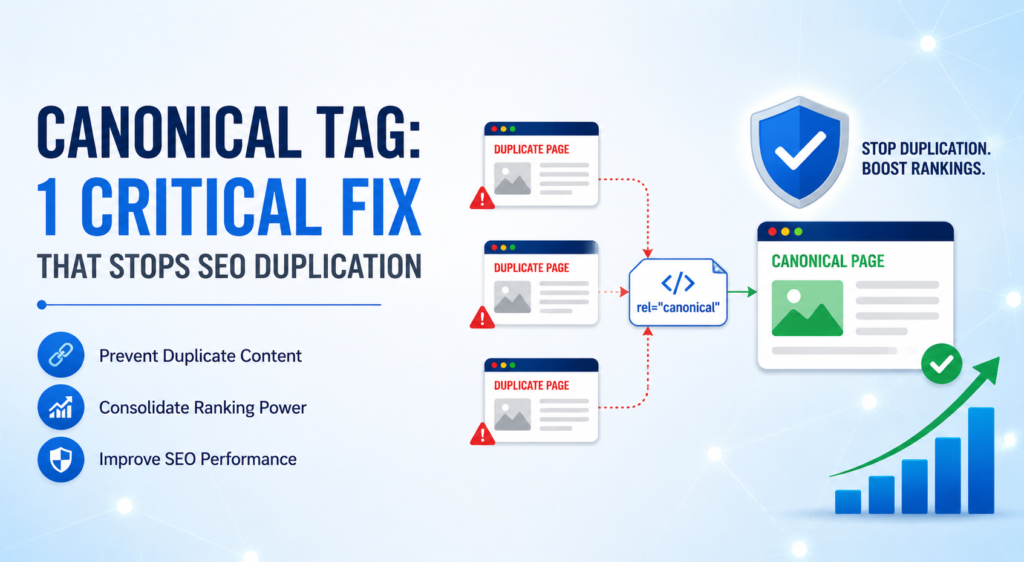
Introduction: The Day One Small Tag Saved an Entire Website
A few years ago, I worked on a website that was doing everything right.
Strong content.
Good backlinks.
Clean design.
Yet rankings were stuck.
Some pages competed with each other in search results. Traffic was split. Visibility suffered.
The problem wasn’t content quality.
It was duplication.
That’s when we implemented a Canonical Tag.
Within weeks, search engines stopped treating similar URLs as competitors. Rankings stabilized. Authority consolidated.
That moment taught me a powerful lesson: this single tag doesn’t change your content—it tells search engines which version matters. And when combined with solid on-page SEO, it quietly fixes problems most people never notice.
What Is a Canonical Tag?
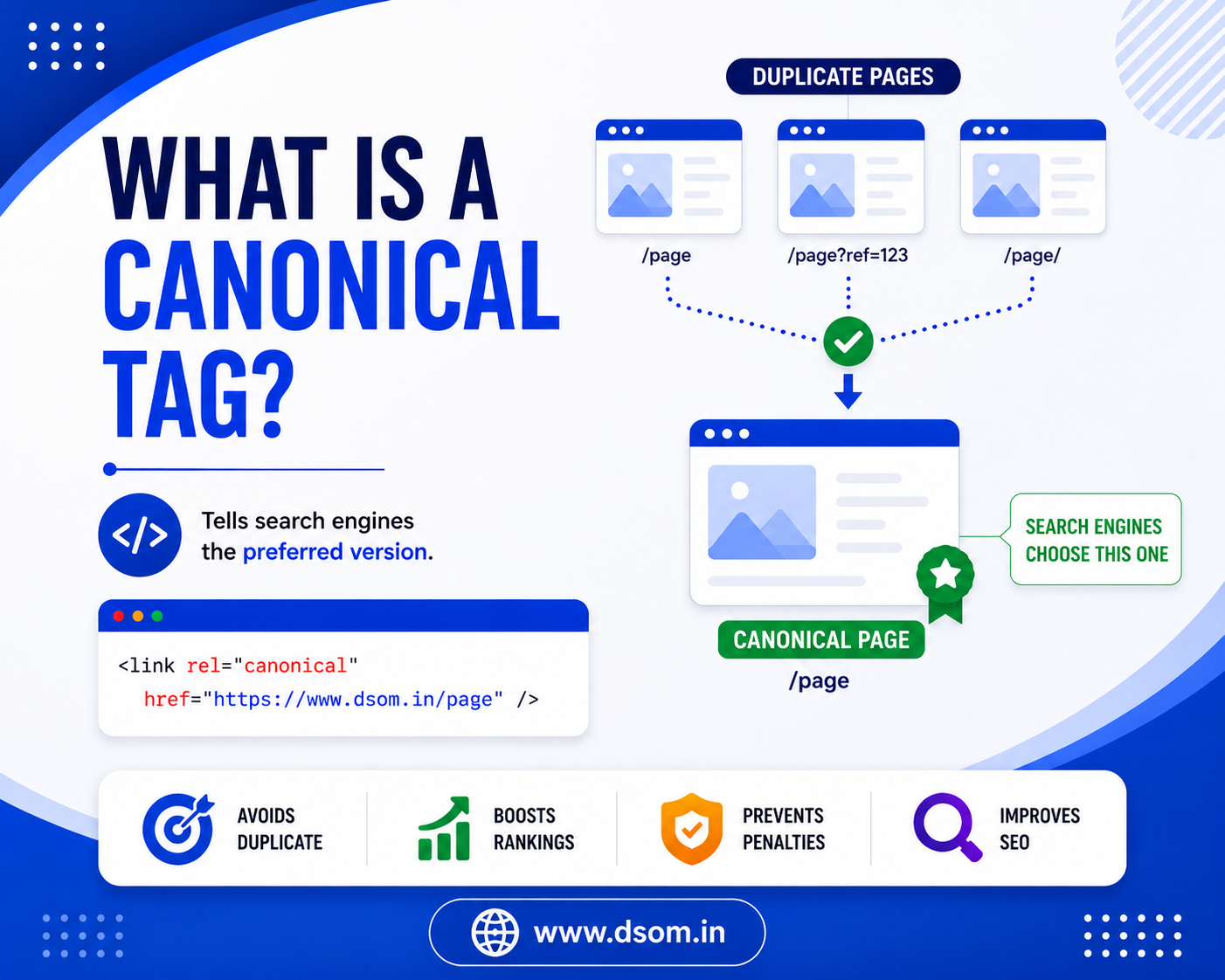
A Canonical Tag is an HTML element that tells search engines which version of a page should be considered the primary or “master” version.
When multiple URLs show similar or identical content, this tag prevents confusion.
In simple terms, it says:
“This is the version you should index and rank.”
It doesn’t redirect users.
It guides search engines.
And that distinction matters.
Why Duplicate Content Is a Silent SEO Killer
Duplicate content doesn’t always mean copied text.
It often comes from:
URL parameters
Session IDs
Pagination
Filtered pages
HTTP vs HTTPS versions
Without guidance, search engines may split ranking signals between URLs.
That’s where a canonical element becomes essential for protecting on page SEO performance.
Types of Canonical Implementations
There isn’t just one scenario where canonicalization is needed.
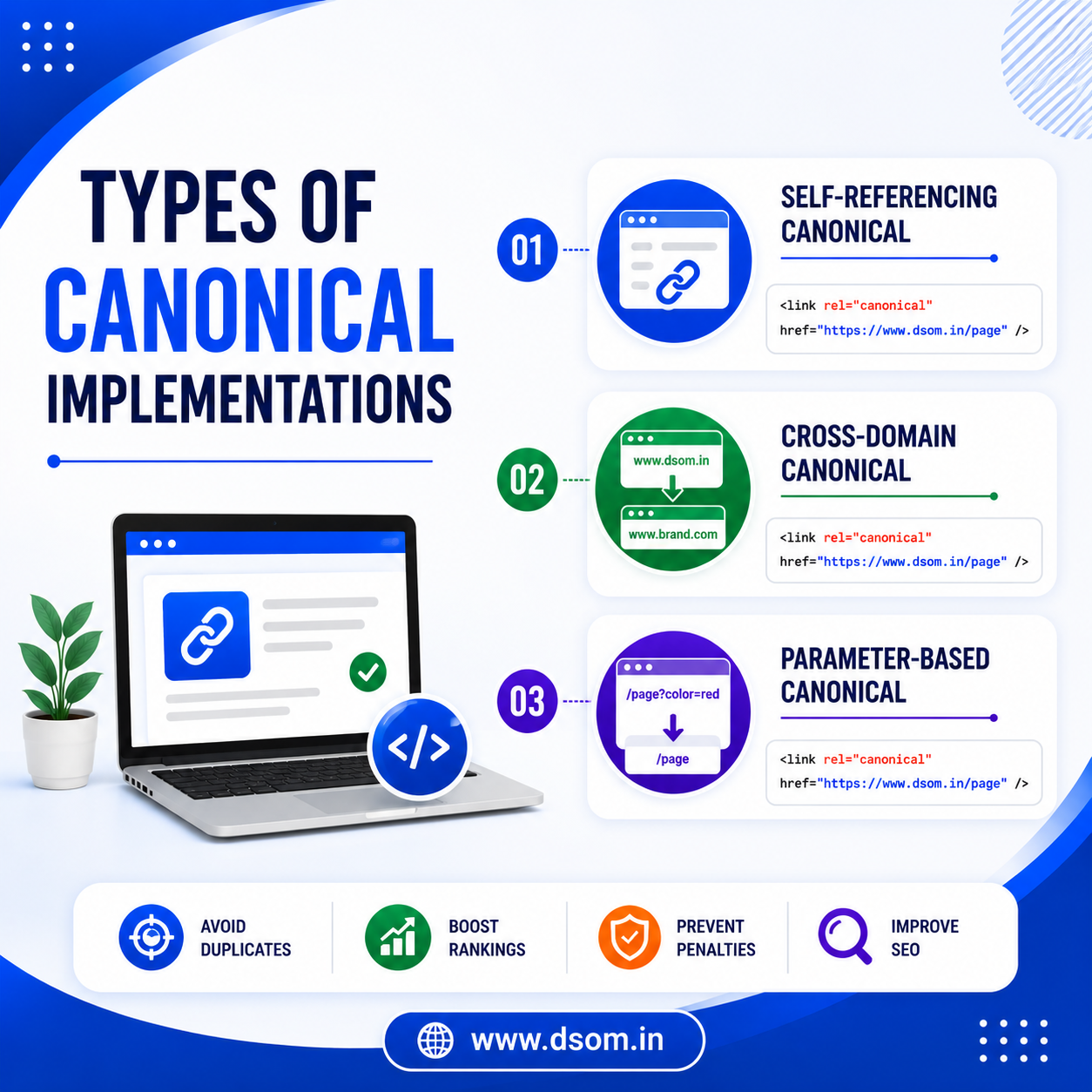
Common implementations include:
Self-Referencing Canonical
Used when a page points to itself as the preferred version.
Cross-Domain Canonical
Used when content is syndicated across multiple domains.
Parameter-Based Canonical
Used to handle tracking URLs and filters.
Each approach serves a different purpose—but all aim to consolidate authority correctly.
How to Implement Canonical Tag Correctly
A Canonical Tag is placed inside the <head> section of a webpage.
Best-practice guidelines include:
Point only to relevant, matching content
Use absolute URLs
Avoid conflicting signals (like canonical + noindex)
Keep it consistent across internal linking
Correct implementation ensures search engines understand your intent clearly.
Where a Canonical Tag Is Essential to Avoid Duplication
A Canonical Tag becomes critical in situations like:
E-commerce product variations
Blog posts with multiple category URLs
Pagination and sorting options
Content syndication
In these cases, it helps prevent internal competition and preserves ranking strength.
Avoiding Duplicate Content Without Changing UX
One of the biggest advantages of canonicalization is flexibility.
- You don’t need to remove pages.
- You don’t need to block users.
- You don’t need heavy redirects.
By using a Canonical Tag, you control how search engines interpret pages—while users still enjoy full functionality.
That balance is key to sustainable on page SEO.
Canonical vs Redirect: Know the Difference
A redirect sends users and bots elsewhere.
A canonical reference guides bots only.
Use redirects when pages should not exist.
Use a Canonical Tag when multiple versions must remain accessible but shouldn’t compete.
Knowing when to use which is a mark of advanced SEO understanding.
Common Canonical Mistakes to Avoid
Even experienced SEOs make mistakes here.
Avoid:
Pointing canonicals to unrelated pages
Using multiple canonical references
Forgetting to update them during site migrations
Blocking canonical URLs in robots.txt
One wrong setup can undo months of SEO work.
Canonical Tag and On Page SEO: The Hidden Connection
On page SEO isn’t just about keywords and headings.
It’s also about clarity.
A Canonical Tag provides that clarity by consolidating signals like:
Internal links
Backlinks
Engagement metrics
When search engines clearly understand which page matters, everything else performs better.
Final Thoughts: One Tag, Long-Term SEO Stability
Most SEO problems aren’t loud.
They’re subtle.
A Canonical Tag fixes one of the most common silent issues—duplicate content—without disrupting user experience.
- It protects rankings.
- It consolidates authority.
- It strengthens on page SEO.
And learning how to implement such technical yet practical SEO solutions is exactly what DSOM (Dehradun School of Online Marketing) focuses on—training students to master real-world SEO elements, technical foundations, and strategies that create long-term visibility and growth.