A few years ago, I published a blog post I was confident about.
The content was strong.
The keywords were optimized.
The structure was clean.
But something felt missing.
The article stood alone. It didn’t connect to anything beyond itself.
So I did something many site owners hesitate to do.
I added a few carefully selected outbound links to trusted industry sources.
The result surprised me.
- Engagement improved.
- Time on page increased.
- The content felt more credible.
That was the moment I understood something important.
When used correctly, outbound links don’t weaken SEO. They strengthen trust.
If you believe linking out hurts rankings, it’s time to rethink that assumption.
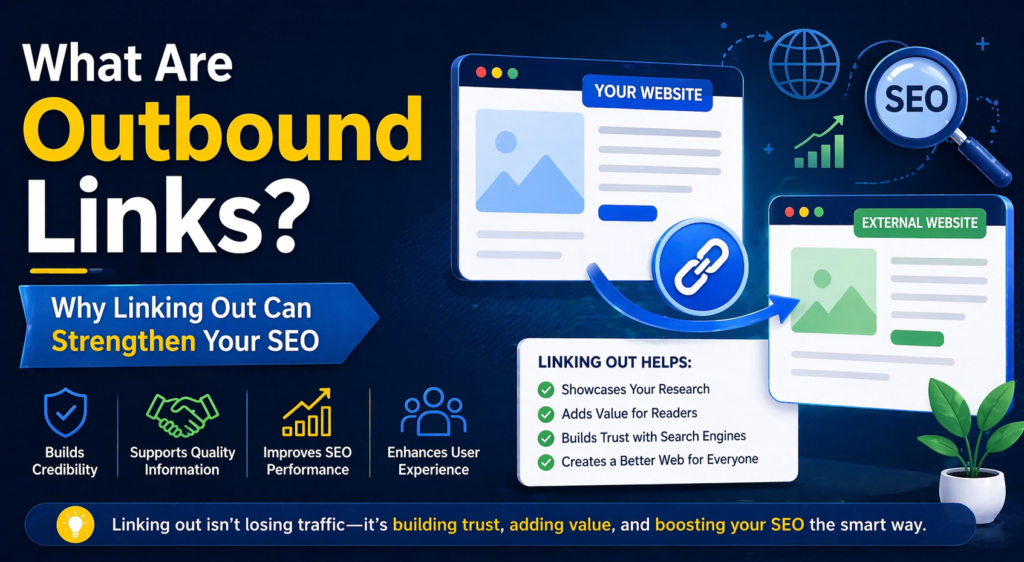
What Are Outbound Links?
Outbound links are hyperlinks that take users from your website to another website.
In simple terms, they send readers to an external source for additional context or verification.
Think of them like academic citations.

When you reference credible sources, you show that your content is supported, researched, and part of a larger knowledge ecosystem.
And search engines value connected information.
Why Linking Out Builds Credibility
Many beginners fear losing traffic when they link externally.
But search engines such as Google do not reward isolated content.
They reward relevance and helpfulness.
Google’s Search Quality principles emphasize experience, expertise, authority, and trust.
Linking responsibly supports those signals.
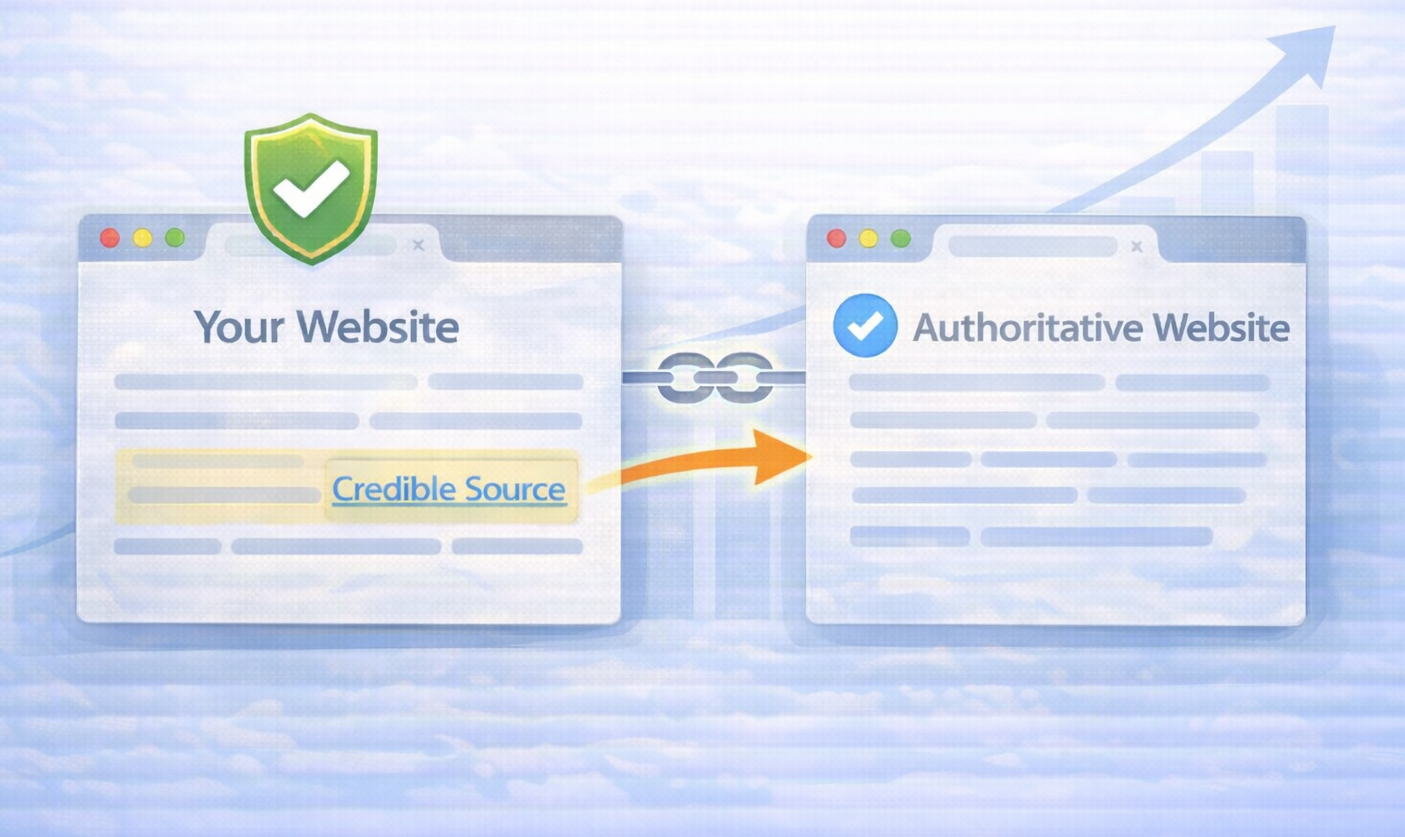
Strategic outbound links show that you are confident enough to reference credible sources instead of pretending your page is the only answer.
That builds trust.
The Real SEO Role of Outbound Links
Let’s clarify something.
Outbound links do not directly push your page to the top of search results.
However, they help search engines interpret your content more accurately.
Here’s how.
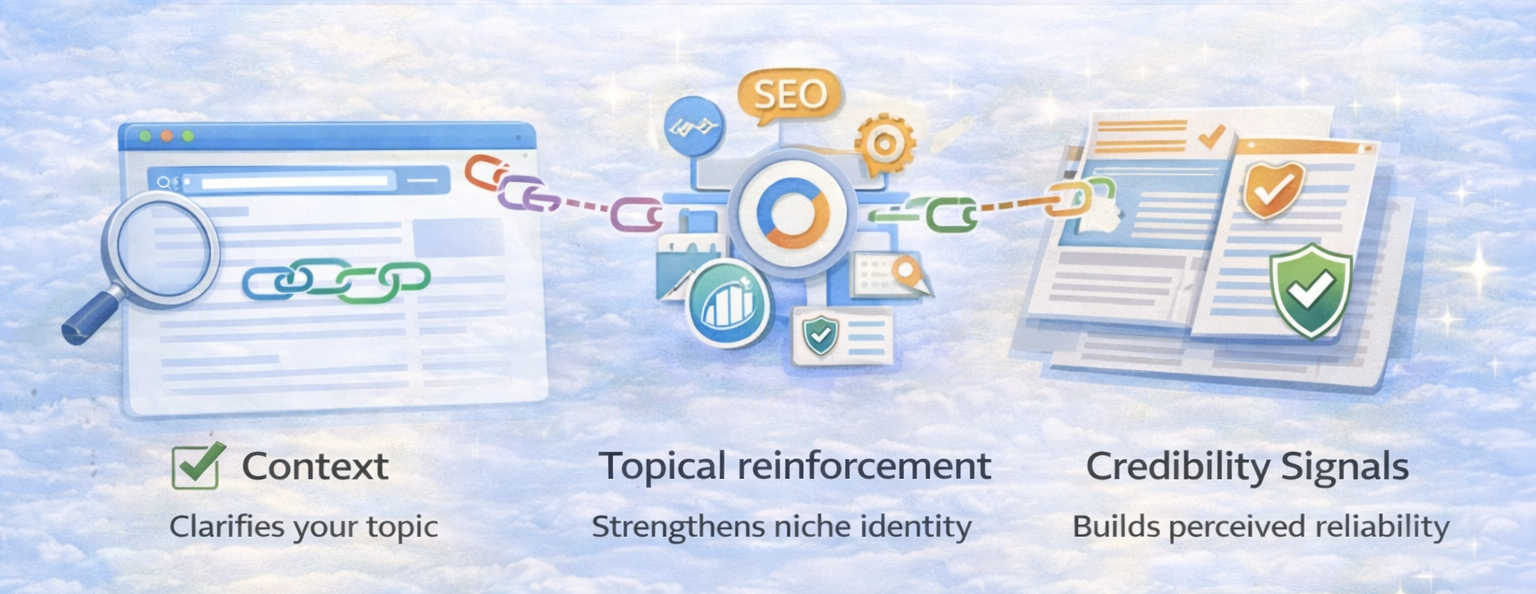
Context
Context means clarity about your topic.
When you link to relevant, authoritative sources, you help search engines understand what your content is truly about. If your article discusses SEO and you reference trusted SEO resources, it confirms your subject focus.
This reduces confusion and strengthens thematic alignment.
Topical Reinforcement
Topical reinforcement means strengthening your niche identity.
If your outbound links consistently relate to your main subject, your content appears focused and specialized. Instead of looking random, your page fits clearly within a specific topic cluster.
This consistency improves how search engines categorize your content.
Credibility Signals
Credibility signals relate to trust.
When you connect your content to reliable, authoritative sources, it shows responsible publishing behavior. Search engines evaluate not just who links to you, but also who you choose to reference.
Linking thoughtfully builds perceived reliability.
Search engines aim to understand how your page fits into the broader web ecosystem.
When your content connects logically to trustworthy sources, it appears grounded and relevant.
Understanding always comes before ranking.
Outbound Links vs Internal Links
Internal links connect your pages to each other.
Outbound links connect your page to the wider web.
Both matter.
Internal links strengthen structure and crawlability.
External links strengthen context and trust.
A healthy website uses both strategically.
Types of External Linking You Should Know
Not all links serve the same purpose.
Understanding the intent behind a link helps you use it strategically instead of randomly.
Here are the most common types and how they function.
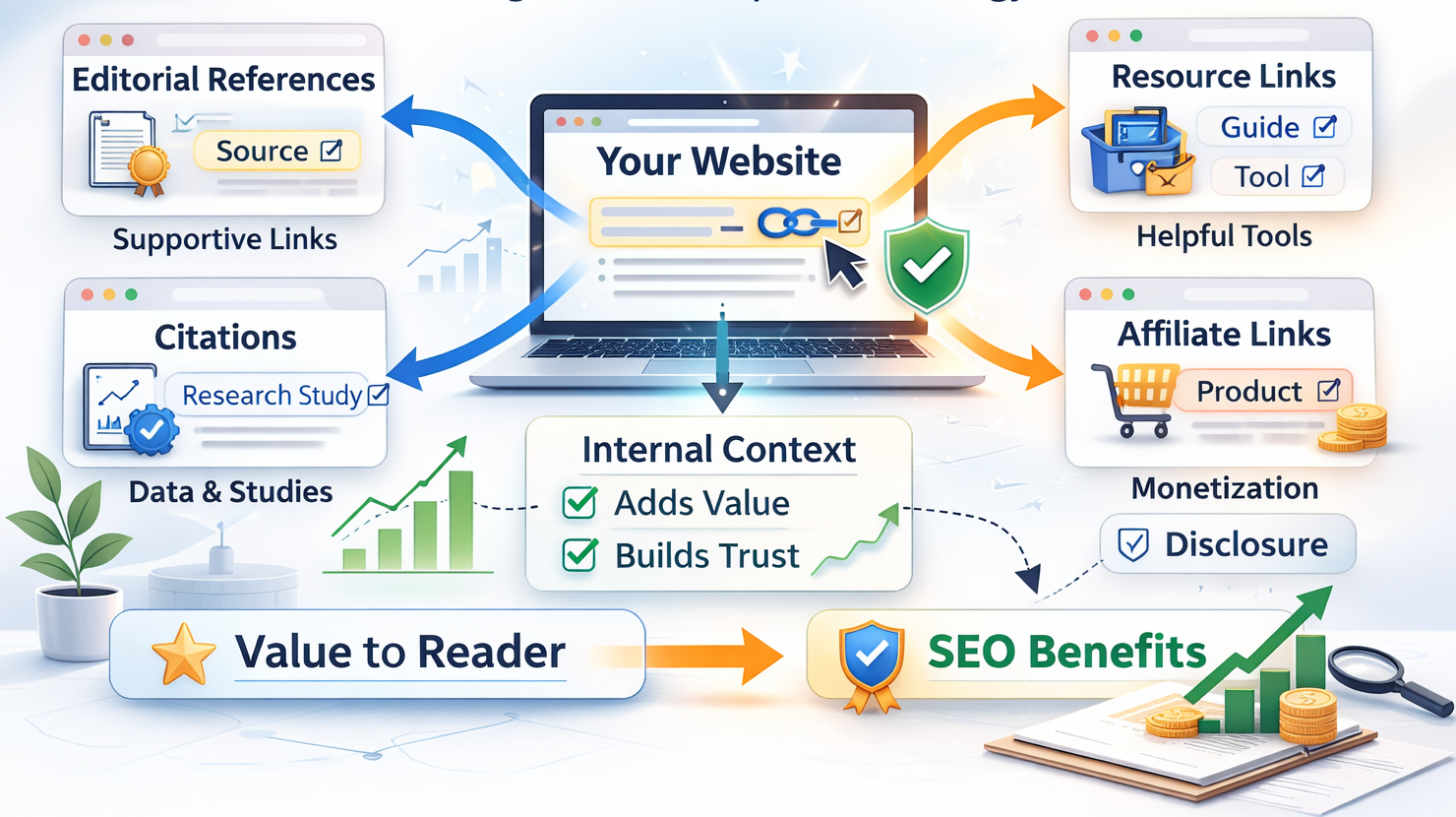
Editorial References
These are links naturally placed within your content to support an explanation.
For example, when you mention a concept, guideline, or framework, you may link to the original source to provide credibility.
Editorial references show that your content is researched and grounded in reliable information. They strengthen trust because they demonstrate transparency.
Search engines recognize contextual editorial linking as a quality signal.
Citations
Citations point to studies, statistics, reports, or official documentation.
When you reference data or make a factual claim, linking to the original source increases accuracy and authority.
This is especially important when discussing technical topics, trends, or guidelines. It reduces misinformation and builds reader confidence.
Well-placed citations make your content feel professional and responsible.
Resource Links
These links guide users to tools, tutorials, templates, or additional learning materials.
They improve user experience by helping readers go deeper into a topic without cluttering your page with excessive information.
Resource links show that your goal is to help, not just rank.
When users find value beyond your page, trust increases.
Affiliate or Partner Links
These links are used when recommending products or services that may generate commission.
Transparency is essential here.
Clear disclosure maintains credibility and protects your site from compliance issues. Ethical linking builds long-term trust, which is more important than short-term gains.
Every link should serve the reader first.
If a link does not add context, clarity, or value, it should not be there.
SEO benefits are a natural outcome of helpful, responsible linking, not the primary reason to add a link in the first place.
When value comes first, rankings tend to follow.
How Search Engines Interpret Linking Behavior
Search engines analyze linking patterns to understand content quality.
They do not just look at keywords. They examine how your page connects to other pages across the web.
For example, suppose your website focuses on health topics.
If you regularly link to official research reports, medical studies, or trusted health guidelines, search engines recognize that your content is connected to authoritative sources.
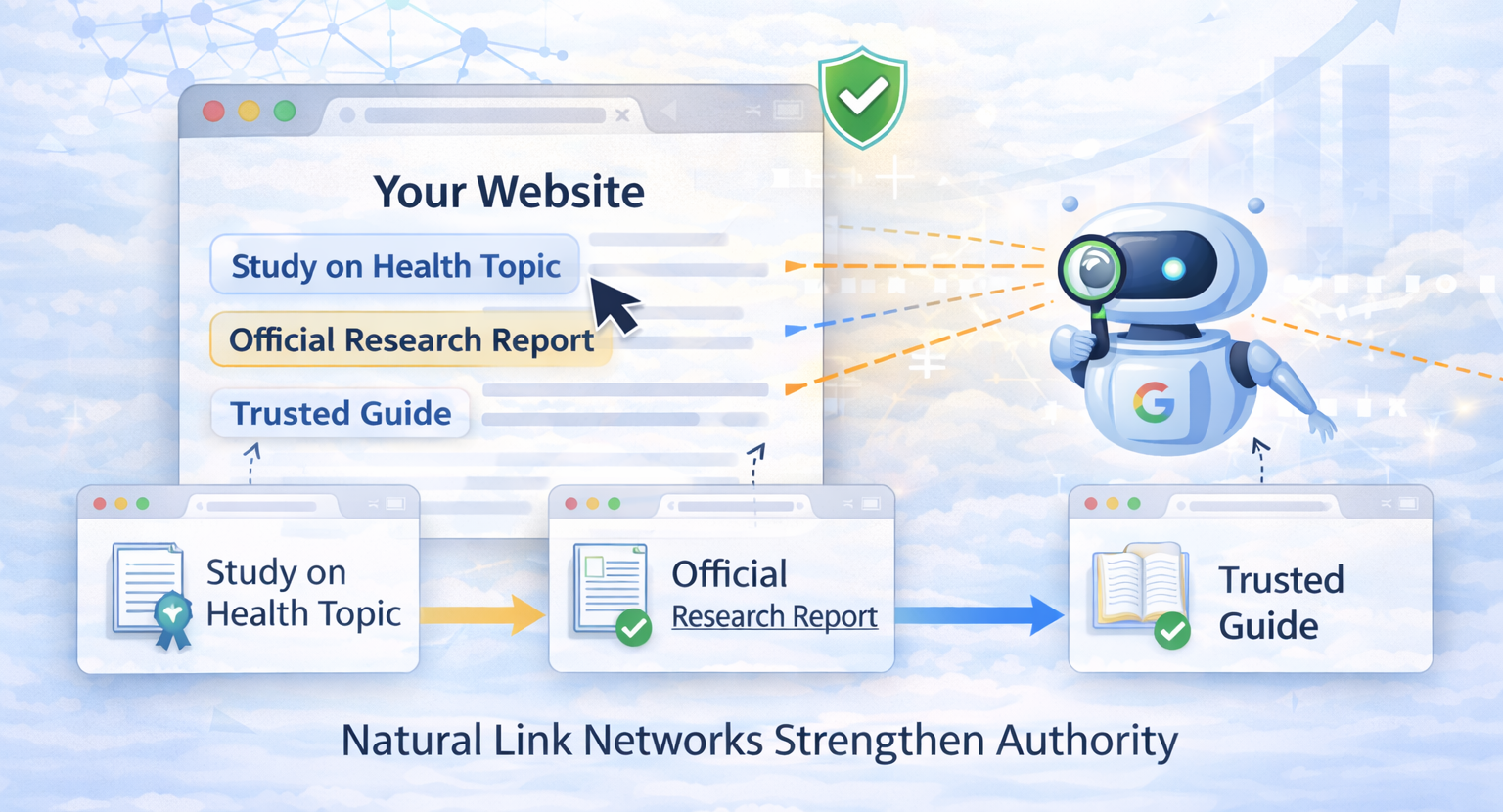
This pattern signals that your content is researched, responsible, and part of a broader information network.
On the other hand, pages with zero external references can appear isolated or incomplete.
Strategic outbound links show that your website participates in a larger ecosystem of credible information.
Over time, this strengthens perceived authority and trust.
How to Use Outbound Links Effectively
More links do not equal better SEO.
Better links do.
Best practices include:
- Link only to relevant and credible sources
- Avoid low-quality or outdated sites
- Use natural anchor text
- Open links in a new tab for user convenience
- Ensure affiliate links are disclosed
Responsible outbound links improve flow without pushing users away permanently.
Common Mistakes to Avoid
Even experienced bloggers misuse external linking.
Avoid:
- Linking to irrelevant content
- Adding excessive links in a single paragraph
- Referencing low-authority domains
- Hiding sponsored relationships
One well-placed outbound link strategy is more powerful than dozens of careless additions.
Quality beats quantity every time.
A Simple External Linking Checklist
Before publishing, pause and evaluate your links carefully.
Before publishing, ask yourself a few important questions.
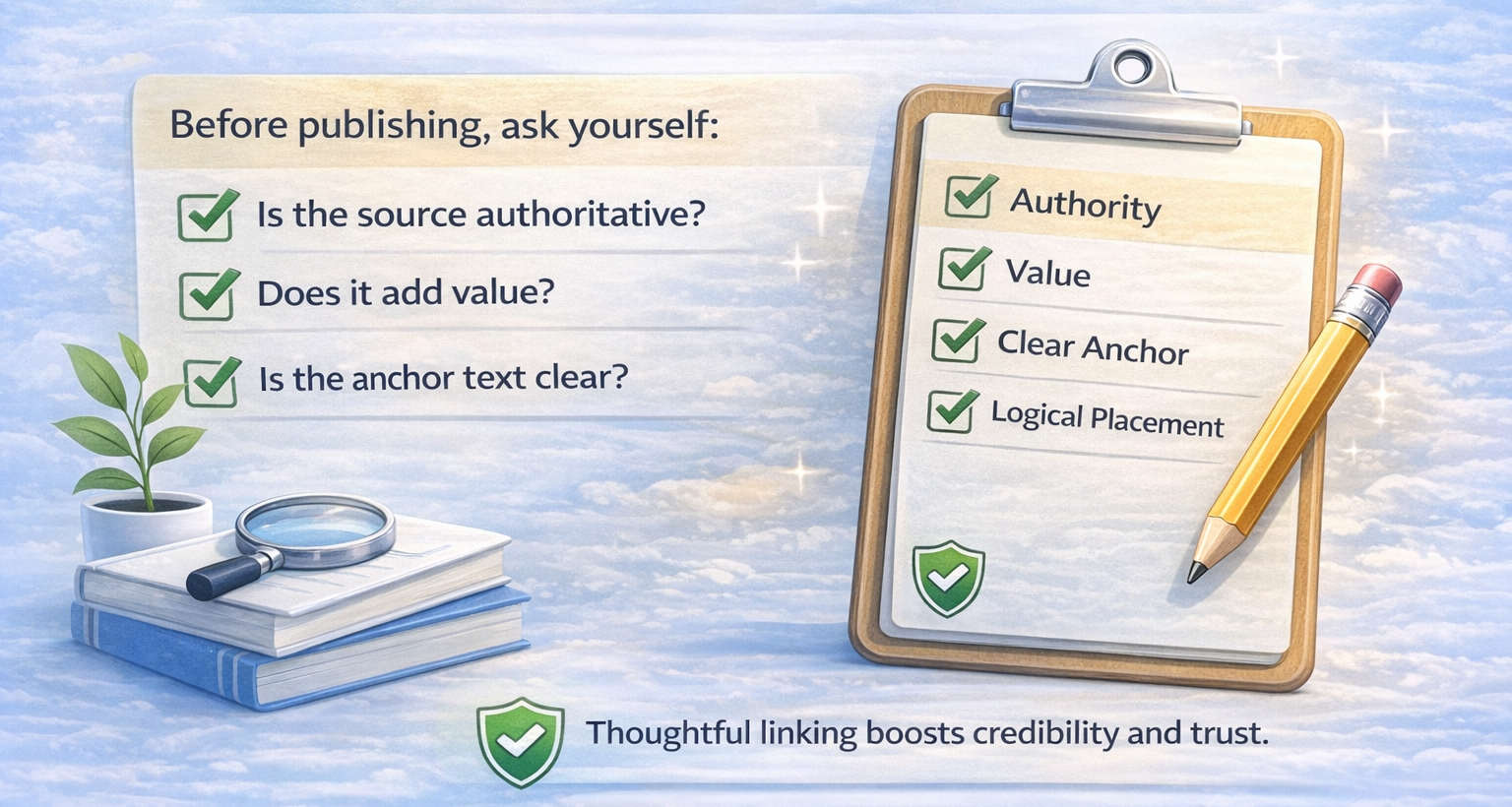
Is the source authoritative?
Make sure the website you are linking to is credible, relevant, and trustworthy. Official organizations, recognized experts, and well-established publications carry more weight than unknown or unreliable sites.
Does it genuinely add value?
Every link should improve understanding. It should provide deeper insight, supporting evidence, or helpful resources. If it does not strengthen the reader’s experience, it likely does not belong.
Is the anchor text clear and natural?
The clickable text should describe what users can expect when they click. Avoid vague phrases like “click here.” Instead, use descriptive wording that fits naturally within the sentence.
Is placement logical within the paragraph?
Links should feel seamless. They should appear where they support a point, not be randomly inserted. Proper placement improves readability and maintains flow.
Small, thoughtful adjustments can significantly improve credibility, clarity, and user trust.
Final Thoughts: Authority Is Built Through Connection
Most websites obsess over earning backlinks.
Few think about how they link outward.
Strategic outbound links are not an SEO risk.
They are a credibility signal.
They improve content depth, reinforce topical authority, and support on-page SEO when used thoughtfully.
And learning how to apply practical strategies like this is exactly what DSOM (Dehradun School of Online Marketing) focuses on. DSOM trains students to master real-world on-page SEO, ethical linking strategy, and optimization techniques that build long-term authority and sustainable growth.