Choosing between Google Ads vs Facebook Ads is one of the most debated questions in digital marketing. Marketers constantly ask which is better Google Ads or Facebook Ads — and the honest answer is: it depends on your goals, your audience, and where your customers are in the buying journey.
Both platforms are powerful. Both can drive real results. But they operate on fundamentally different principles, and choosing the wrong one for your goals is a fast way to burn through your budget without much to show for it.
This guide gives you a clear, practical comparison of Google vs Facebook Ads across targeting, cost, ad formats, and ROI — so you can make a confident decision about where to invest.
The Core Difference: Intent vs Discovery
The most important distinction in Google Ads vs Facebook Ads comes down to one word: intent.
Google Ads capture demand that already exists. When someone searches “emergency plumber Dehradun” or “best CRM for small business,” they are actively looking for a solution right now.
Google search ads put your business directly in front of that intent at the exact moment someone is ready to act — which is why google ppc advertising consistently performs well for transactional, high-intent searches.
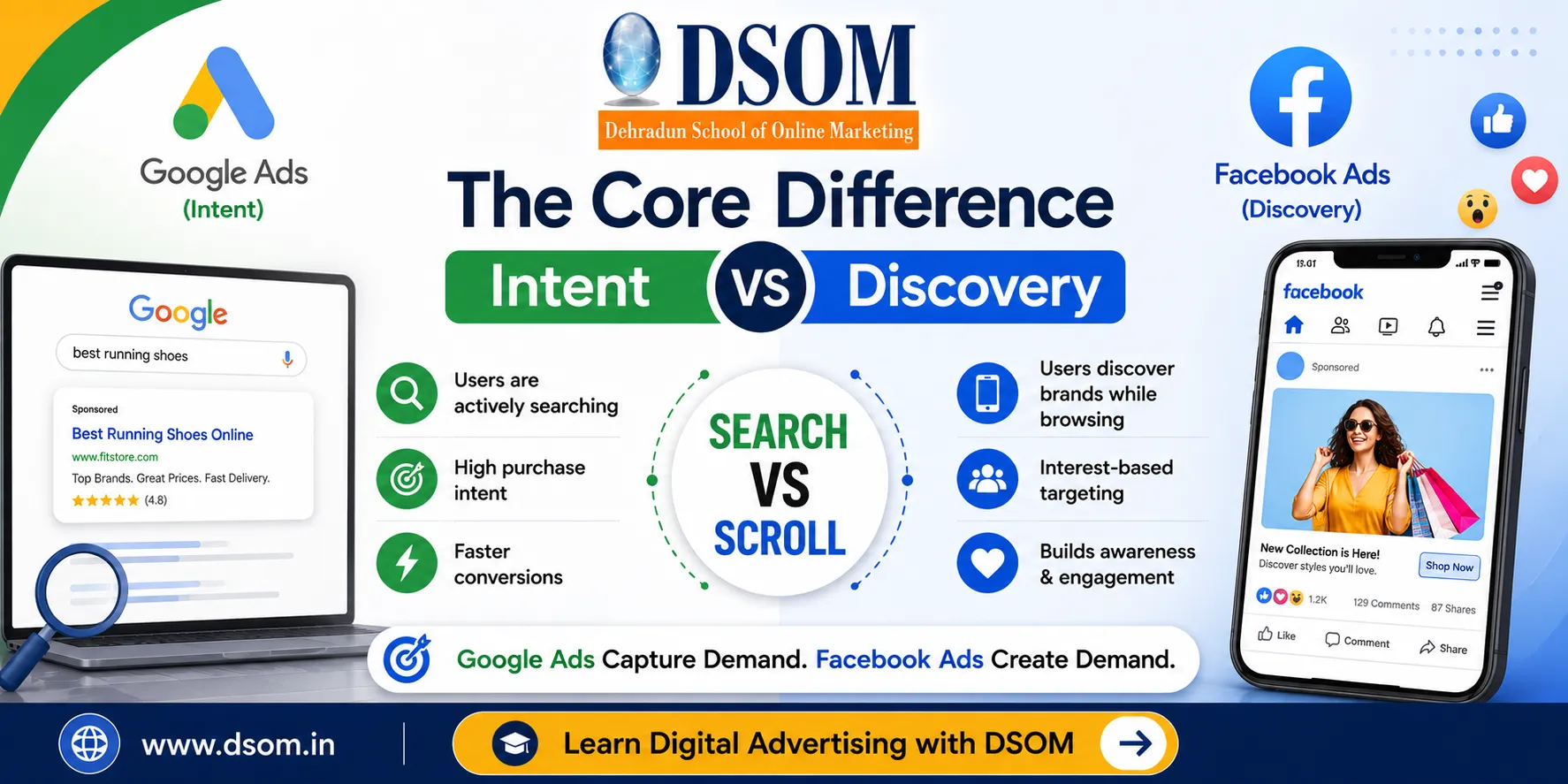
Facebook Ads create demand that does not yet exist. Facebook users are not searching for your product — they are scrolling feeds and catching up with connections. Social media paid campaigns on Facebook interrupt that experience with a well-targeted message that introduces your brand through powerful facebook ad targeting options before the customer even knows they need you.
Neither platform wins by default. Which is better Google Ads or Facebook Ads depends entirely on your campaign goals.
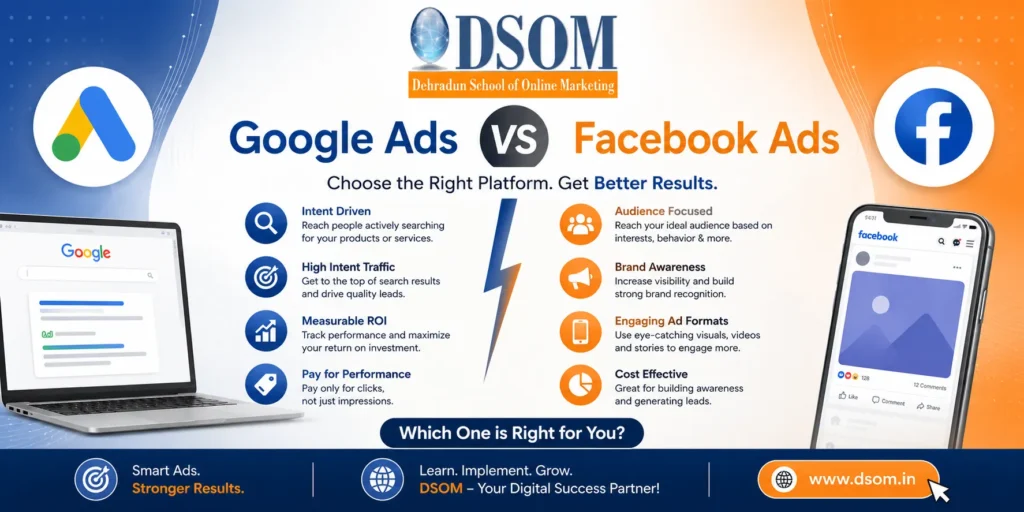
Google Ads vs Facebook Ads: Side-by-Side Comparison
| Feature | Google Ads | Facebook Ads |
| User Intent | High intent — active searching | Low intent — passive browsing |
| Ad Formats | Search, Display, Shopping, YouTube | Image, Video, Carousel, Stories, Reels |
| Targeting Basis | Keywords, location, in-market audiences | Demographics, interests, behaviors, lookalikes |
| Average CPC | $1–$10+ depending on industry | $0.50–$3.00 depending on audience |
| Best For | Bottom-funnel, transactional goals | Top-funnel, awareness, retargeting |
| Creative Required | No (text-based search ads) | Yes (visual content essential) |
| Retargeting | Yes — Google Display Network | Yes — Custom Audiences, Pixel |
| ROI Timeline | Fast for search intent | Faster for awareness, slower for conversions |
| Ideal Industries | Legal, finance, healthcare, SaaS | Ecommerce, fashion, lifestyle, B2C brands |
Ad Formats: What Each Platform Offers
Google Ads Formats
Google Ads covers several formats that serve different stages of the buyer journey — far more than the text listings at the top of search results.
- Google search ads are text-based ads triggered by specific keywords. They are the foundation of google ppc advertising for most businesses and the most direct way to capture active purchase intent. When someone is ready to buy, Google search ads are the first thing they see.
- Display Ads appear as visual banners across Google’s network of over two million partner websites — most effective for display advertising and retargeting ads for visitors who have not yet converted.
- Shopping Ads show product images, prices, and store names directly in search results — the highest-performing format for ecommerce businesses and a key part of any Google Ads vs Facebook Ads strategy for product-based brands.
- YouTube Ads deliver video content before or during YouTube videos, reaching 2.5 billion monthly users for both awareness and direct-response.
- Performance Max runs google ppc advertising across Search, Display, YouTube, Gmail, and Maps in a single AI-optimized campaign, automatically finding conversions across every Google surface.
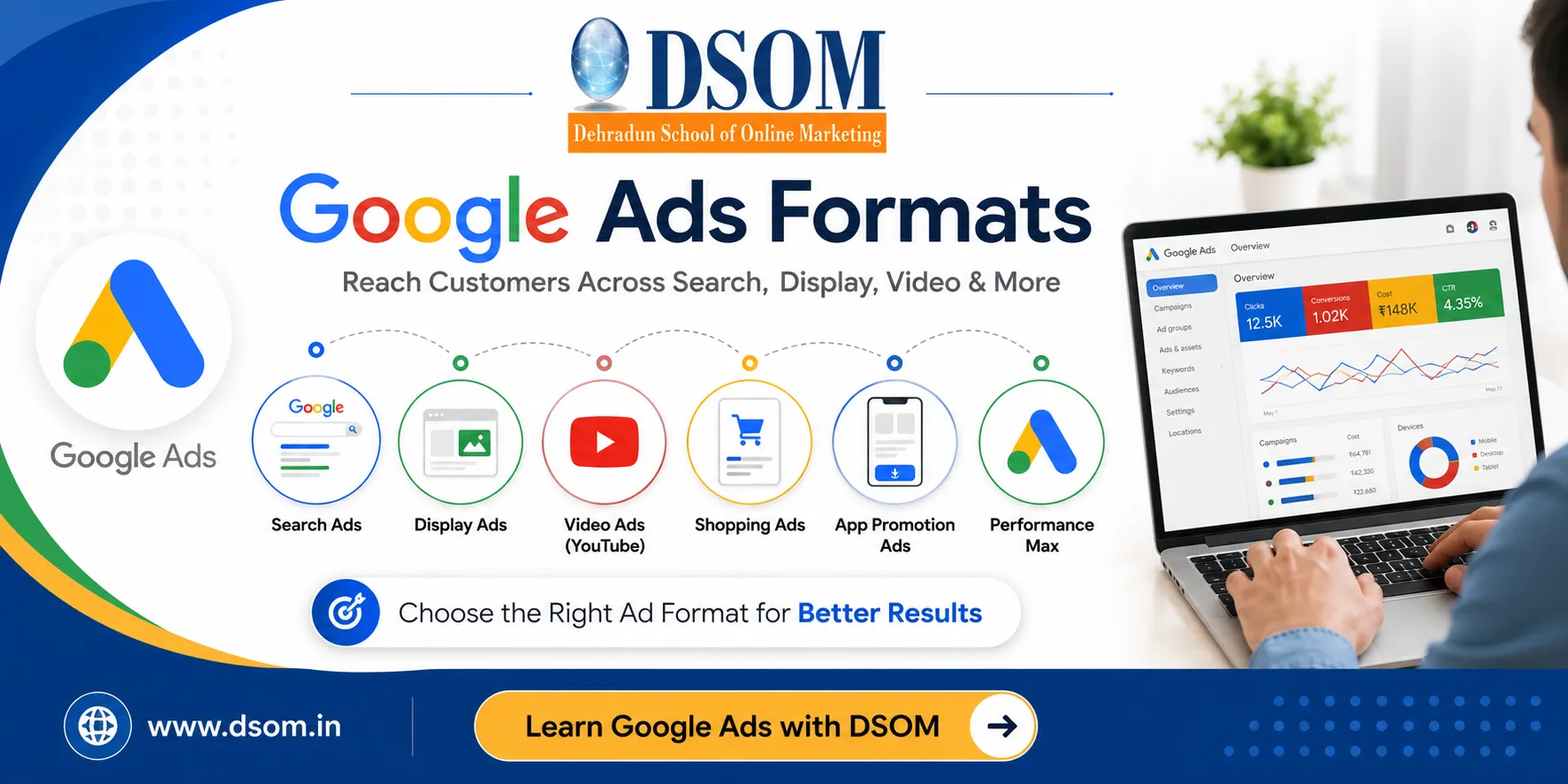
These format choices are central to understanding Google Ads vs Facebook Ads — Google covers intent across multiple surfaces while Facebook dominates the social feed through visual creative.
Facebook Ads Formats
Facebook Ads, which includes Instagram, Messenger, and the Audience Network, offers visual formats built for attention in a fast-scrolling feed.
- Image Ads — one static image, copy, and a call to action. With strong creative, one of the most cost-effective formats in social media paid campaigns.
- Video Ads — consistently the highest-engagement format. Short-form (15–30 seconds) works for awareness; longer formats suit product demos and testimonials.
- Carousel Ads — up to ten images or videos in one swipeable ad, ideal for ecommerce or sequential storytelling.
- Stories and Reels Ads — full-screen vertical format with strong Facebook Ads ROI for brands with mobile-first creative, especially on Instagram.
- Lead Generation Ads — a native form opens inside Facebook on click, no landing page required. Strong for service businesses running social media paid campaigns focused on contact capture.
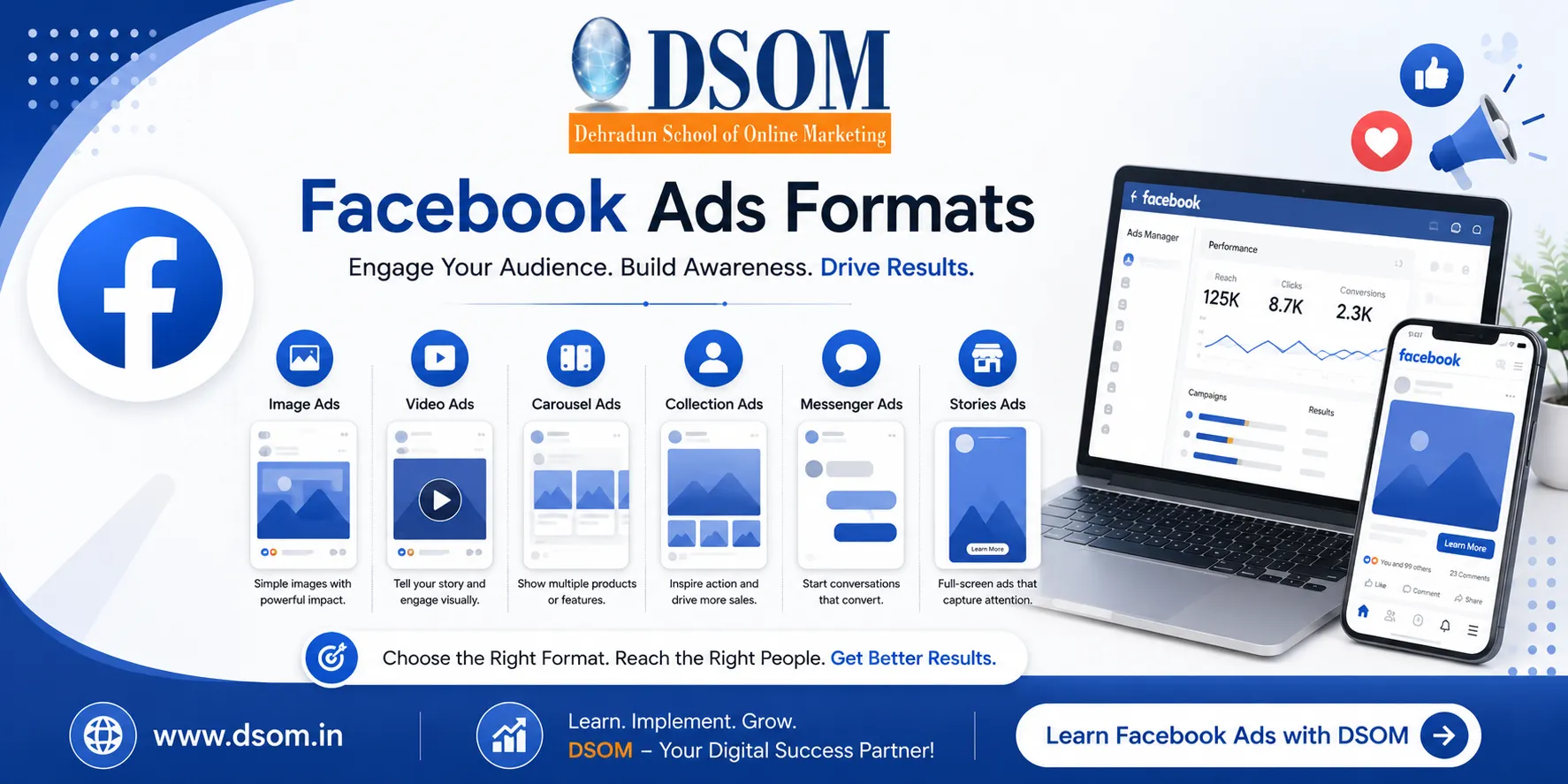
Running social media paid campaigns across these placements gives you access to over three billion monthly active users.
Targeting Capabilities
Targeting is where Google Ad vs Facebook Ad differ most dramatically — and where your platform choice has the biggest real-world impact on results. This is often the deciding factor when businesses are weighing which is better Google Ads or Facebook Ads.
Google Ads Targeting
Google Ads targeting is anchored to what people are searching for right now — real-time purchase intent. Your ad appears when a relevant keyword is triggered. Layer on location, device, in-market audiences, and demographic filters, and google ppc advertising delivers exceptional precision for bottom-of-funnel campaigns.
Facebook Ads Targeting
Facebook Ads targeting is built around who people are. The facebook ad targeting options available are unmatched — covering age, gender, location, interests, job title, purchase behaviors, and life events.
The most powerful facebook ad targeting options are Lookalike Audiences (finding new users who match your existing customers) and custom audiences, which enable retargeting ads for website visitors, video viewers, and email subscribers. Custom audiences are the backbone of any mid-funnel Facebook strategy and one of the strongest arguments for running social media paid campaigns alongside google ppc advertising.
Google Ads vs Facebook Ads Cost
Google advertising pricing varies significantly by industry. Legal, finance, and insurance sectors often see CPCs of $5 to $50+. Local service businesses typically pay $1 to $5 per click. Understanding google advertising pricing before building your budget prevents overspending and helps set realistic acquisition targets.
Facebook Ads typically offer a lower average CPC — often $0.50 to $3.00 — but that reflects lower intent. You need more touchpoints to convert from social media paid campaigns compared to a high-intent Google search ads click.
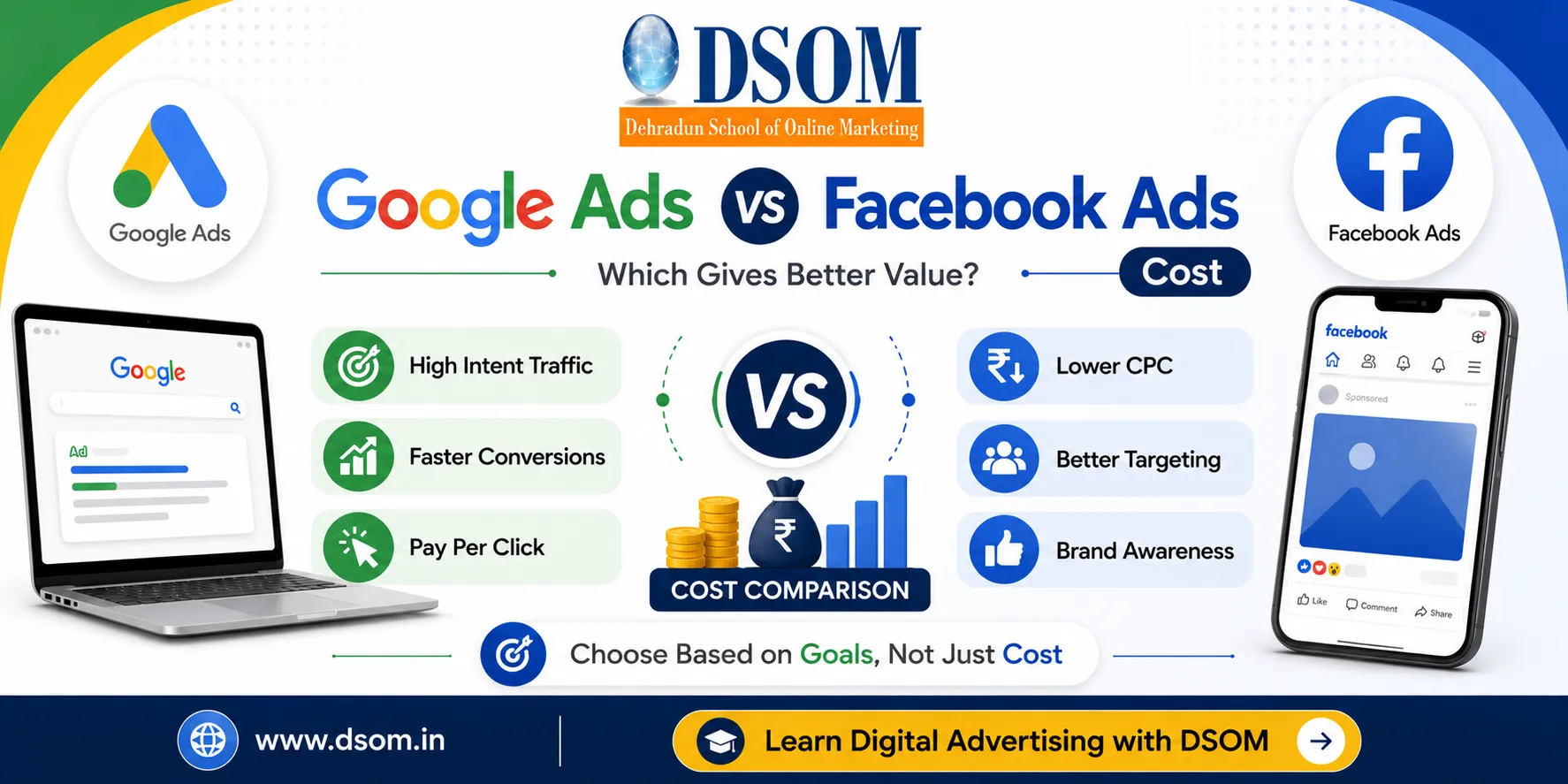
Cost per acquisition is what matters, not cost per click. A $10 Google click at 10% conversion = $100 per acquisition. A $1 Facebook click at 1% conversion = the same $100. Google vs Facebook Ads cost efficiency is always industry and campaign-specific — neither platform is universally cheaper.
Which Platform Should You Choose?
| Business Goal | Better Platform |
| Drive immediate sales from active searchers | Google Ads |
| Build brand awareness with cold audiences | Facebook Ads |
| Retarget visitors who did not convert | Both |
| Promote a visually driven ecommerce product | Facebook Ads |
| Capture local service leads | Google Ads |
| Generate B2B SaaS trial signups | Google Ads |
| Run lifestyle and fashion campaigns | Facebook Ads |
| Launch a new product to a defined demographic | Facebook Ads |
| Maximize full-funnel coverage | Both |
Choose Google Ads when customers are actively searching for what you offer and you want to intercept that intent with a google ppc advertising campaign at the moment of decision.
Choose Facebook Ads when your audience does not yet know your product exists, you have strong visual creative, and you want to reach precise profiles through facebook ad targeting options and custom audiences.
Use both for a full-funnel strategy — google search ads capturing bottom-of-funnel demand while Facebook social media paid campaigns build awareness and custom audiences bring warm visitors back. This combination consistently outperforms Google Ads vs Facebook Ads used in isolation.
Google Ads vs Facebook Ads: ROI by Industry
The right platform varies by industry. Use this table to see where Google vs Facebook Ads delivers the strongest return for your sector:
| Industry | Recommended Platform | Why |
| Legal & Finance | Google Ads | High search intent, immediate decision need |
| Ecommerce | Both | Shopping ads + custom audiences retargeting |
| Healthcare | Google Ads | Patients search for symptoms and services |
| Fashion & Lifestyle | Facebook Ads | Visual discovery, impulse buying |
| B2B SaaS | Google Ads | Decision-makers search for specific solutions |
| Local Services | Google Ads | Location-based Google search ads intent |
| Fitness & Wellness | Facebook Ads | Interest-based facebook ad targeting options |
| Real Estate | Both | Search intent + lifestyle demographic targeting |
| Restaurants | Both | Google Maps search + Instagram visual appeal |
Common Mistakes to Avoid
On Google Ads: Running broad match keywords without a negative keyword list burns through google advertising pricing budgets fast on irrelevant clicks. Build your negative keyword list on day one and review your search term report weekly.
On Facebook Ads: Using a single creative across all facebook ad targeting options leads to audience fatigue quickly. Test multiple creatives and refresh content every three to four weeks to protect Facebook Ads ROI.
On both platforms: Skipping conversion tracking before you spend is the most expensive mistake in paid advertising. Without data, you are optimizing Google vs Facebook Ads campaigns completely blind.
Final Thoughts
The Google Ads vs Facebook Ads question does not have one universal winner — it has the right answer for each business based on goals, industry, and audience.
Google Ads dominates when intent is high and customers are actively searching. At DSOM (Dehradun School of Online Marketing), we help businesses combine Google PPC advertising with high-performing social media campaigns to maximize ROI. By carefully managing ad spend, targeting the right audience, and tracking conversions effectively, businesses can achieve long-term, sustainable growth in 2026 and beyond.
The most successful advertisers in 2026 are not picking sides in the Google Ads vs Facebook Ads debate. They are running google ppc advertising alongside social media paid campaigns, managing google advertising pricing carefully, and measuring results at the acquisition level.