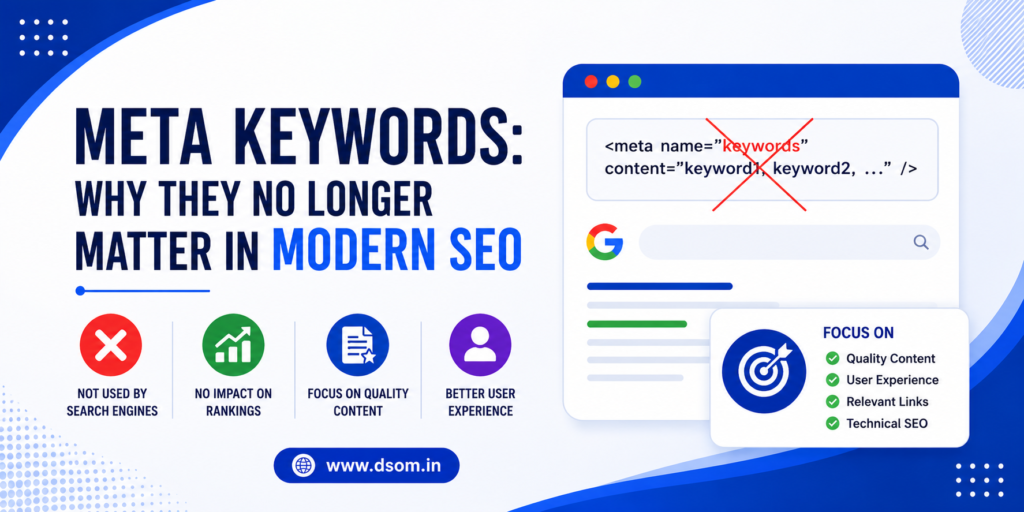
Introduction: When Meta Keywords Controlled Rankings
Meta Keywords were once the backbone of SEO.
I remember my early days in digital marketing.
You’d publish a page.
Add a long list of keyword terms.
And rankings would follow.
For a while, it worked.
Then everything changed.
- Search engines became smarter.
- Manipulation increased.
- Keyword stuffing exploded.
And suddenly, this once-powerful element lost its influence.
That shift taught an important lesson: SEO evolves, and understanding why things change matters just as much as knowing what to use.
What Are Meta Keywords?
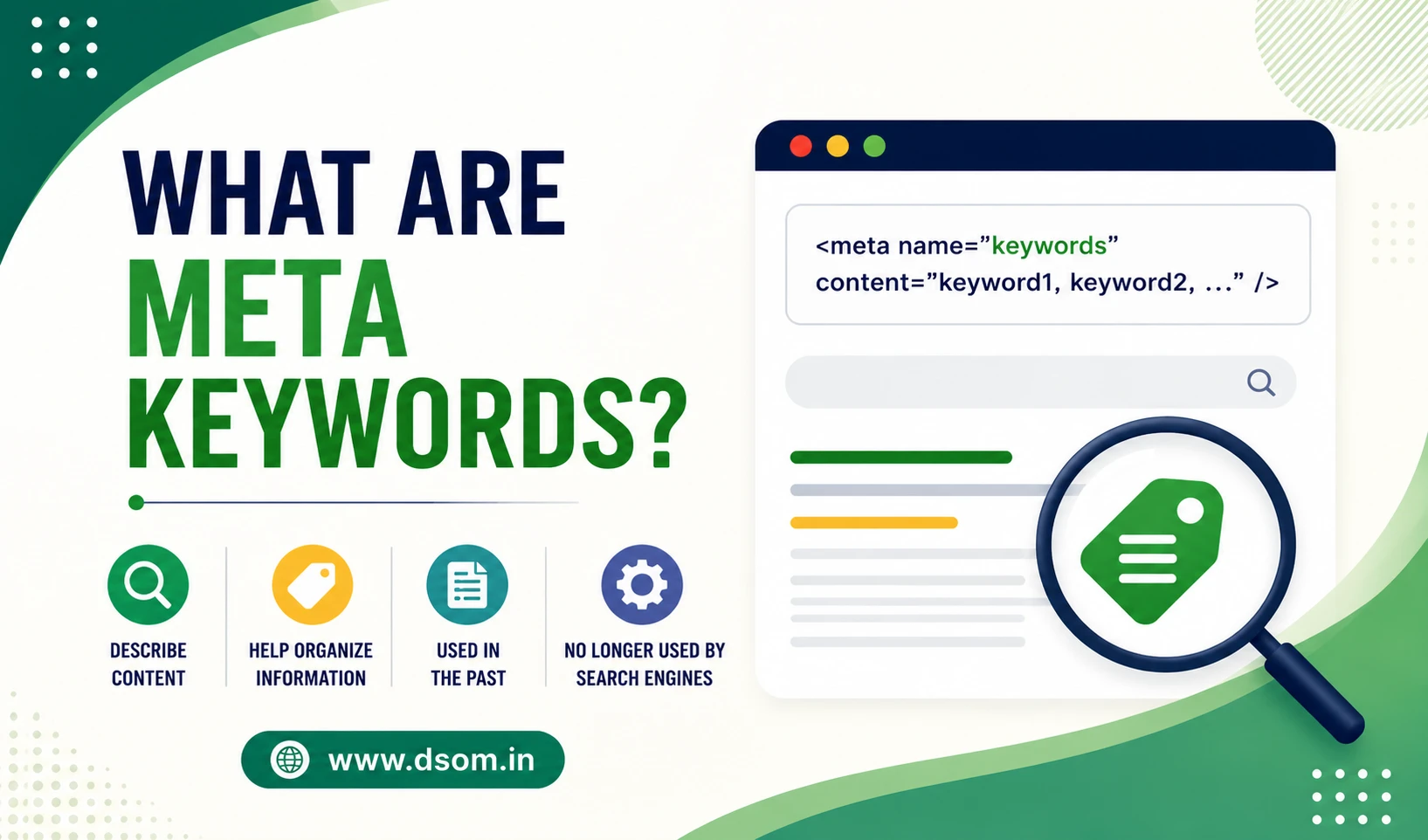
Meta Keywords are a type of HTML meta tag that allowed website owners to list keywords relevant to a page’s content.
These keyword tags were placed in the page’s source code and were originally used by search engines to understand topic relevance.
In simple terms, they acted as a signal telling search engines what the page was about—before algorithms became advanced enough to interpret content naturally.
Why Meta Keywords Were Important in Early SEO
In the early days of search engines, crawling technology was limited.
Search engines relied heavily on metadata to categorize pages.
At that time, meta keywords helped:
Define page topics
Influence ranking decisions
Organize search results
However, this reliance made them easy to manipulate.
And manipulation always leads to devaluation.
Types of Meta Keywords and Early Strategies
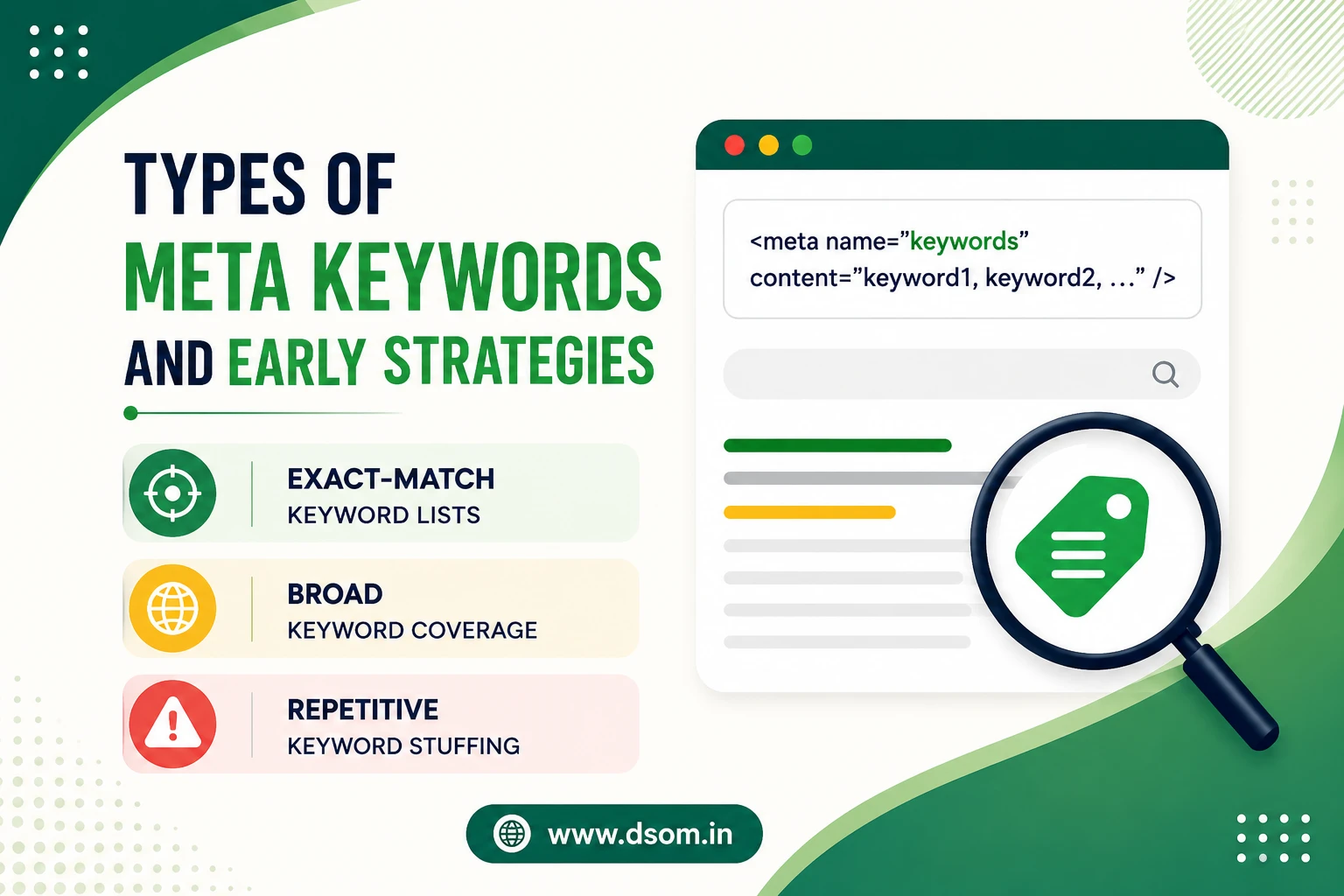
Back then, there were common approaches to keyword tag usage.
Exact-Match Keyword Lists
Pages listed primary search terms directly.
Broad Keyword Coverage
Websites added multiple variations hoping to rank for more queries.
Repetitive Keyword Stuffing
The most abused strategy—repeating terms excessively.
These tactics eventually led to abuse, which is why search engines began ignoring keyword tags entirely.
How to Choose the Right Keywords Today
Even though Meta Keywords are no longer used for ranking, keyword selection itself is still critical.
Modern keyword strategy focuses on:
Search intent
Topic relevance
Content depth
Semantic relationships
Instead of relying on hidden tags, search engines now analyze visible content, structure, and user behavior.
This shift aligns closely with strong on page SEO practices.
Where Meta Keywords Were Traditionally Placed
Meta Keywords were added inside the <head> section of a webpage’s HTML.
They were invisible to users but readable by search engines.
Today, while the tag still exists in HTML standards, major search engines no longer use it as a ranking factor.
Its placement remains purely informational—if used at all.
The Role of Meta Keywords in Modern SEO
Here’s the honest truth.
Meta Keywords have no direct impact on rankings today.
Major search engines like Google completely ignore them.
However, understanding their history helps SEO professionals avoid outdated practices and focus on what actually matters.
Modern SEO values:
Content quality
Relevance
User experience
Context
Not hidden keyword lists.
Why Search Engines Stopped Using Meta Keywords
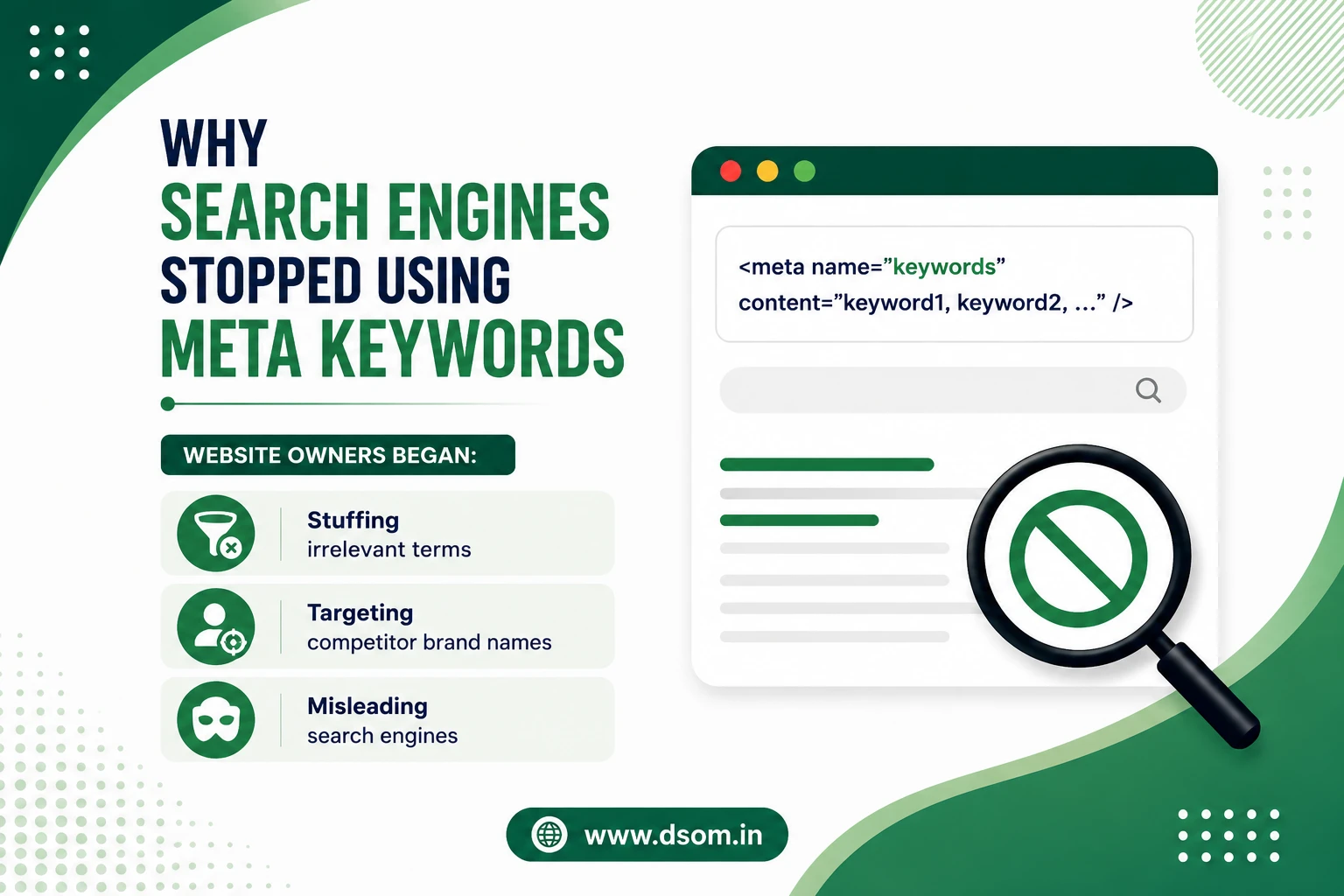
The reason is simple: abuse.
Website owners began:
Stuffing irrelevant terms
Targeting competitor brand names
Misleading search engines
To protect result quality, algorithms evolved.
Search engines now rely on machine learning, semantic analysis, and engagement signals instead of static keyword tags.
This evolution strengthened on page SEO standards overall.
Strategizing Keyword Selection Without Meta Tags
Even without Meta Keywords, keyword strategy is still essential.
Here’s what replaces them today:
Optimized titles and headings
Natural keyword usage in content
Internal linking
Structured data
User-focused writing
Keywords now support content—not control it.
Common Myths Around Meta Keywords
Let’s clear some confusion.
❌ They do not boost rankings
❌ They do not help indexing
❌ They do not influence visibility
The only value Meta Keywords offer today is educational—helping marketers understand how SEO has evolved.
Using them won’t hurt your site, but they won’t help either.
Should You Use Meta Keywords at All?
For most websites—no.
There’s no SEO benefit.
Some CMS platforms still include them by default, but they’re unnecessary.
Your effort is better spent on:
Content optimization
Page structure
Internal linking
User experience
These elements drive results in modern on page SEO.
Final Thoughts: Learn the History, Focus on What Works
SEO is full of outdated tactics.
Meta Keywords are one of the biggest examples.
They remind us that SEO is not about shortcuts—it’s about adaptation.
Understanding what no longer works is just as important as mastering what does.
And learning this evolution-based approach is exactly what DSOM (Dehradun School of Online Marketing) focuses on—training students to understand SEO fundamentals, modern on page SEO strategies, and real-world optimization techniques that actually drive traffic, rankings, and long-term growth.