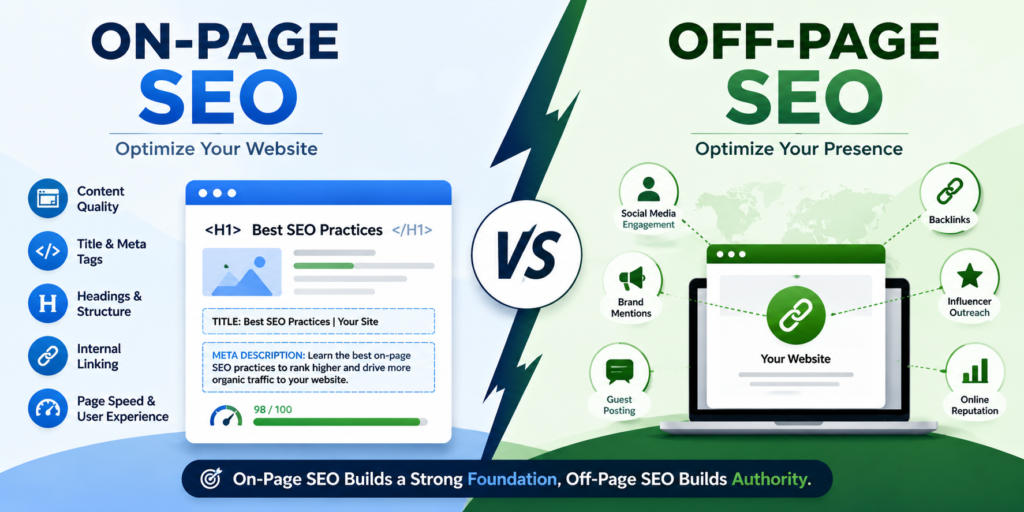
If you have been trying to improve your website’s search rankings, you have almost certainly come across the debate around on-page SEO vs off-page SEO. Both terms get used constantly in the SEO world, but they describe two completely different sets of activities. Understanding on-page SEO vs off-page SEO is not just a theory exercise — it shapes where you invest your time, how you build your strategy, and how quickly your website climbs in search results.
This guide breaks down what is on-page SEO, what is off-page SEO, how they differ, and exactly why on-page SEO vs off-page SEO is a distinction every serious marketer needs to understand in 2026.
What Is On-Page SEO?
On-page SEO refers to all the optimizations you make directly on your own website to help search engines understand and rank your pages. You have full control over every element — content, structure, speed, and code. That makes on-page SEO the foundation every site needs to get right before doing anything else.
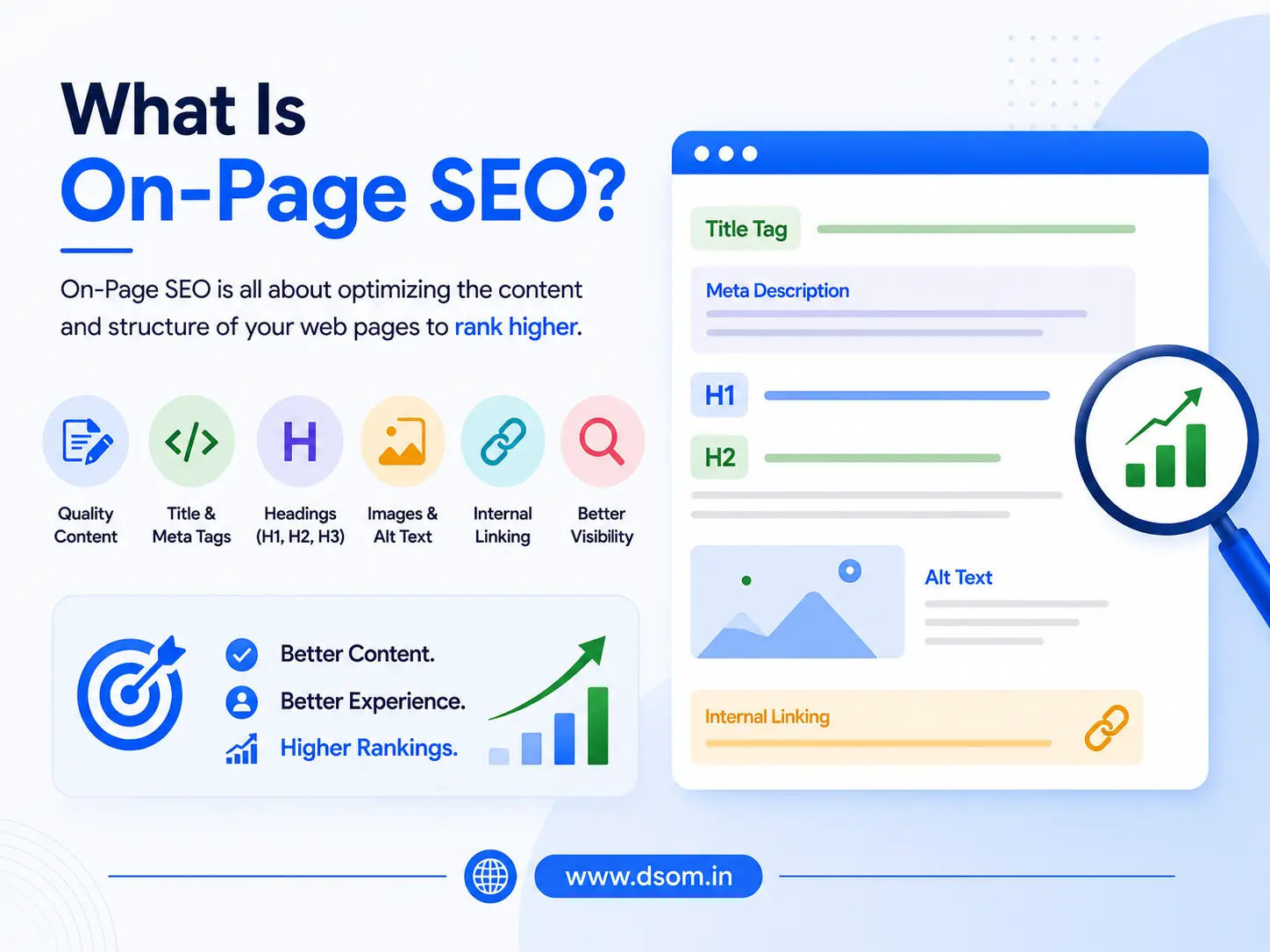
When Google crawls your website, it reads dozens of signals on each page to determine what it covers and whether it deserves to rank for specific search queries. These are the core on-page SEO techniques every marketer and website owner should know.
- Title Tags and Meta Descriptions: Your title tag is the most critical on-page SEO element. It communicates the page topic to both search engines and users in search results. Include your focus keyword naturally, keep it under 60 characters, and make it compelling enough to earn the click. Meta descriptions do not directly influence rankings, but strong ones improve click-through rates — which signals relevance to Google over time.
- Heading Structure (H1, H2, H3): Proper heading hierarchy is one of the most basic yet consistently overlooked on-page SEO techniques. Your H1 tag should contain your primary keyword and appear only once. H2 and H3 subheadings organize the page into clear sections and naturally incorporate supporting search terms. A logical structure helps both users and crawlers navigate your content efficiently.
- Keyword Placement and Density: On-page SEO requires placing your target keyword in the right spots — the title, opening paragraph, at least one subheading, and throughout the body at a natural frequency. Aim for a density between 1% and 1.5% for your focus keyword. Stuffing keywords into every sentence hurts readability and risks over-optimization penalties. Let related terms fill the content naturally around your primary keyword.
- Content Quality and Depth: Google consistently rewards content that thoroughly answers what the searcher is looking for. Thin, surface-level pages lose ground to detailed, well-structured content that addresses the full topic. Content quality is where on-page SEO and content marketing fully overlap — strong writing and smart SEO optimization tips work together, never separately.
- Internal Linking: Linking between related pages on your own site is one of the most underused on-page SEO techniques available. Internal links help search engines discover and index your content more efficiently, distribute link equity across pages, and improve overall site architecture. For blogs and ecommerce sites especially, a solid internal linking strategy compounds over time.
- Page Speed and Core Web Vitals: Page loading speed is a confirmed ranking factor. Slow pages, layout shifts during load, and poor interactivity all send negative signals to Google. Improving these technical SEO elements falls under on-page SEO because they live on your own server and codebase — and fixing them produces direct ranking benefits.
- URL Structure and Image Optimization: Clean, keyword-rich URLs communicate page relevance clearly. A URL like
/on-page-seo-vs-off-page-seooutperforms/page?id=482in both rankings and click-through rates. Similarly, every image should have descriptive alt text and a compressed file size — small details that collectively strengthen your on-page SEO profile.
What Is Off-Page SEO?
While on-page SEO covers what happens on your website, off-page SEO covers everything that happens elsewhere on the internet that influences how search engines perceive your website’s authority and credibility. You do not fully control it — but you can absolutely influence it through deliberate off-page SEO strategies.
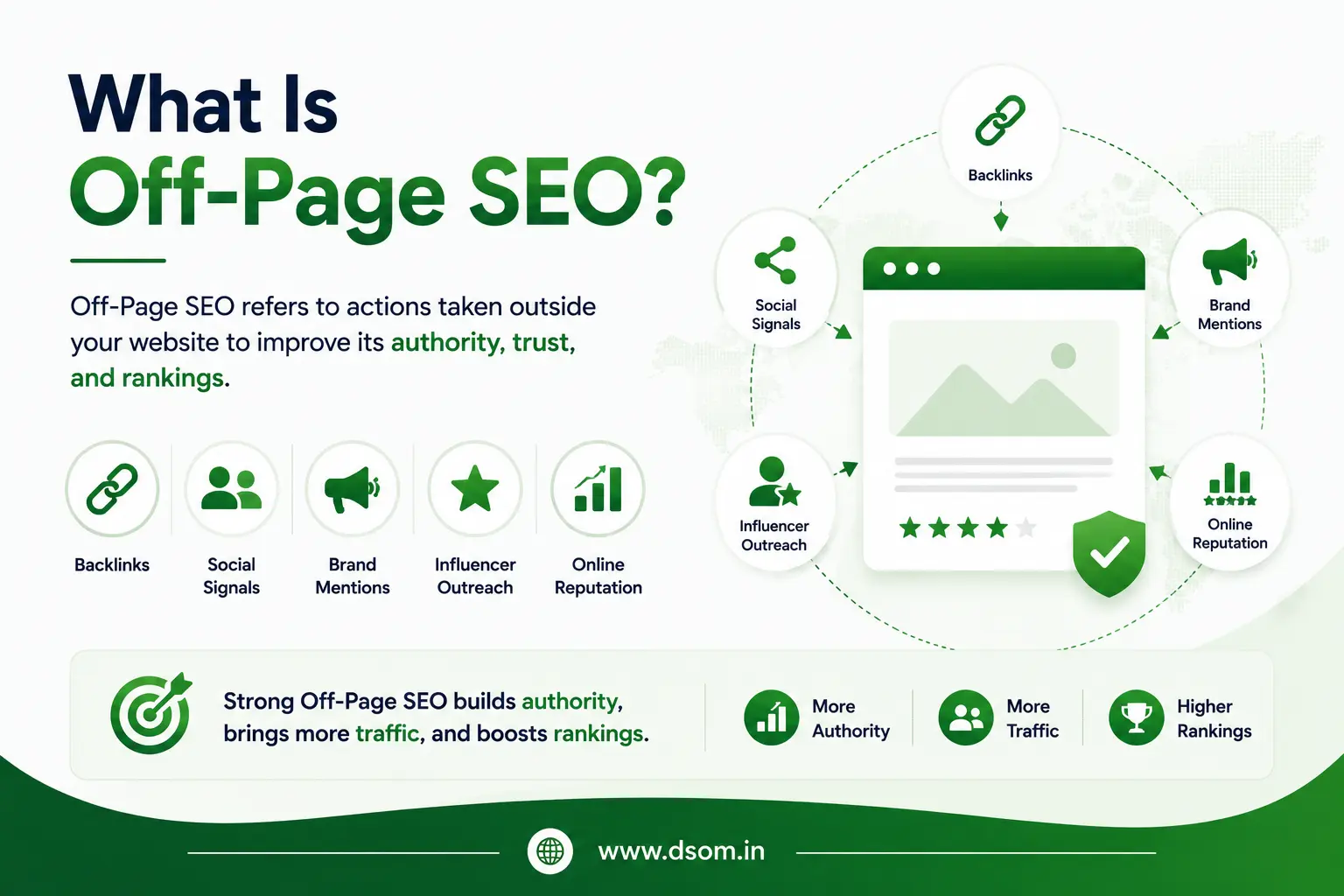
- Link Building for SEO: Backlinks — links from external websites pointing to yours — are the single most powerful off-page SEO ranking signal. When a reputable site links to your content, it is essentially casting a vote of confidence in your page’s quality. The most effective link building strategies focus on quality over volume.
- Domain Authority: Domain authority is a score that reflects the overall strength of your website’s backlink profile. Sites with high domain authority consistently outrank weaker competitors for competitive keywords, even when on-page SEO is comparable. Building domain authority is a long-term off-page SEO strategy.
- Brand Mentions and Online Reputation: Not every external reference to your brand includes a clickable link, but brand mentions still contribute to your off-page SEO standing. Google recognizes unlinked brand mentions as relevance and trust signals. Being cited in news coverage, industry roundups, podcast notes, and expert commentary all build the brand presence that supports how to improve search rankings sustainably.
- Social Signals and Content Distribution: Social media activity does not directly move Google rankings. However, strong distribution on social platforms puts your content in front of more people — which naturally generates more links, mentions, and referral traffic over time. Content that gets widely shared tends to earn backlinks organically, feeding your off-page SEO without additional outreach.
- Local Citations: For businesses with a physical presence, off-page SEO includes maintaining accurate citations — consistent business name, address, and phone number — across local directories, review platforms, and Google Business Profile. Citation consistency is a direct ranking factor for local search results and one of the most impactful off-page SEO strategies for location-based businesses.
On-Page SEO vs Off-Page SEO: Core Differences
The clearest way to understand on-page SEO vs off-page SEO is to think about control. On-page SEO is everything you own and can change today. Off-page SEO is influence you build through reputation and relationships over time.
| Factor | On-Page SEO | Off-Page SEO |
| Location | Your website | External sites and platforms |
| Control | Direct and immediate | Indirect and long-term |
| Key signals | Content, keywords, speed, structure | Backlinks, brand mentions, citations |
| Timeline | Faster results | Slower, compounding impact |
| Purpose | Establishes relevance | Builds authority and trust |
On-page SEO vs off-page SEO is not a competition. A page with flawless on-page SEO but no backlinks will struggle to rank for anything competitive.
A page with strong backlinks but weak content and structure will lose ground as Google’s quality signals improve. The most effective SEO strategies treat on-page SEO vs off-page SEO as two sides of the same equation — each strengthening what the other cannot do alone.
Which One Should You Prioritize First?
This is one of the most searched questions around on-page SEO vs off-page SEO, and the answer depends on where your site currently stands.
- For new websites: start with on-page SEO. Nail your title tags, structure your content correctly, optimize page speed, and build a sensible internal linking architecture. Without these foundations, even excellent off-page SEO strategies will not produce consistent rankings because Google cannot properly understand what your pages are actually about.
- For established sites with stagnant rankings: the problem is usually authority rather than relevance. This is when doubling down on off-page SEO strategies — link building, digital PR, and brand visibility — makes the most impact. At this stage, your on-page SEO is likely already solid enough to rank if the authority signals catch up.
- For most growing businesses: both run simultaneously. Content teams manage on-page SEO — producing, optimizing, and refreshing pages. SEO and PR teams handle off-page SEO — earning placements, building links, and growing domain authority. That balance is exactly how the sites dominating search results operate.
SEO Optimization Tips: Quick Wins for Both
Whether you are new to the on-page SEO vs off-page SEO conversation or refining an existing strategy, these SEO optimization tips deliver results on both sides:
- Audit every top-ranking page for missing, duplicate, or weak title tags and meta descriptions
- Add strategic internal links from your highest-traffic pages to pages you want to rank better
- Compress images and eliminate render-blocking scripts to improve Core Web Vitals scores
- Build a realistic outreach list of 10 to 15 industry-relevant sites for guest posting or link placement
- Publish at least one piece of original data, research, or insight per quarter — the kind of content that earns natural backlinks without aggressive outreach
- Use Google Search Console to find queries where you rank on page two, then strengthen those pages with deeper content and additional on-page SEO techniques
Final Thoughts
The on-page SEO vs off-page SEO conversation ultimately comes down to this: on-page SEO tells search engines what your content is about, and off-page SEO tells them whether it can be trusted. You need both to rank consistently, especially in competitive niches. At DSOM (Dehradun School of Online Marketing) Digital Marketing Institute, students learn practical SEO strategies, including on-page optimization, off-page SEO, and modern digital marketing techniques to build successful online careers and businesses.
Start with your on-page SEO foundations if you have not already. Then build your off-page presence systematically. That combination, applied consistently, is how you improve search rankings that last.