A few years ago, I worked on a blog that seemed to have everything going for it.
The content was well written.
The keywords were carefully researched.
Backlinks were slowly increasing.
Yet the pages barely stood out in Google Search results.
- There were no star ratings.
- No FAQ dropdowns.
- No enhanced visual features.
Just plain blue links.
Compared to competing pages, the site looked almost invisible.
That was when we implemented schema tags across the website.
Within weeks, the same pages began appearing with rich snippets, FAQ sections, and more detailed search listings. Click-through rates improved even though the content itself had not changed.
That experience revealed something important.
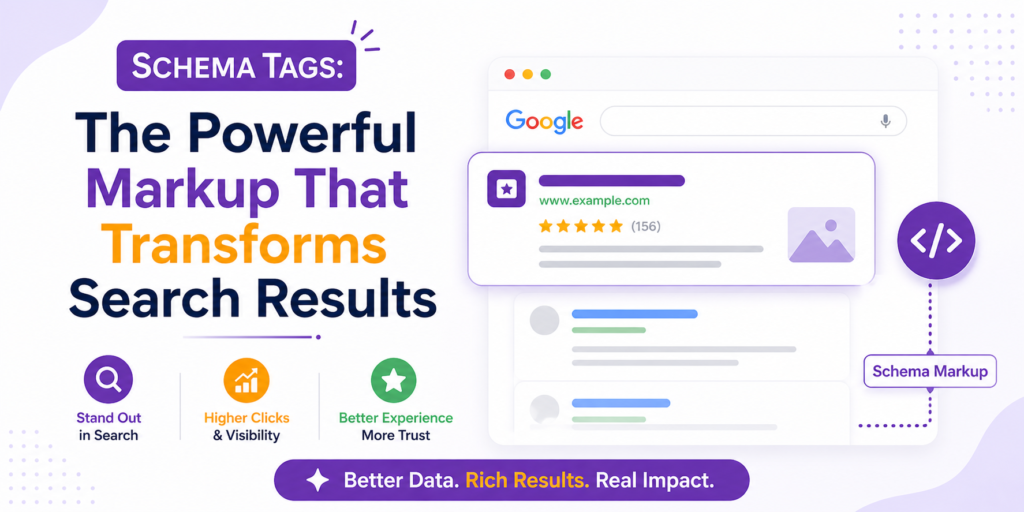
Visibility in search results is not only about ranking higher. It is also about how your pages appear. Schema tags help search engines interpret your content more clearly so it can be presented in richer and more engaging formats.
What Are Schema Tags?
Schema tags are structured data snippets added to a webpage’s code that help search engines understand the meaning of the content.
Without structured data, search engines must interpret pages using surrounding text and signals. With structured data, the information becomes clearer and more precise.
In simple terms, these tags act like labels attached to your content.
They tell search engines things such as the following:
- This page represents a product
- This section contains a review
- This page describes an event
- This content includes frequently asked questions
The vocabulary used for these labels comes from Schema.org, a collaborative project supported by major search engines.
When websites implement schema tags, they provide structured context that helps search engines interpret and display content more effectively.
Why Structured Data Matters More Than Ever
Search results are no longer just lists of links.
Today’s search results include enhanced features such as the following:
- Star ratings
- FAQ dropdowns
- Product prices
- Images
- Event details
Many of these features are powered by schema tags.
For example, imagine searching for a chocolate cake recipe. Some results simply display the page title and description. Others show star ratings, cooking time, calories, and even images directly within the search listing.
Even if both pages rank similarly, the richer result is far more likely to attract clicks.
From an on-page SEO perspective, structured data improves how search engines interpret content and display it to users.
Types of Schema Markup for Different Content
Structured data can be applied in many ways depending on the type of content on a page.
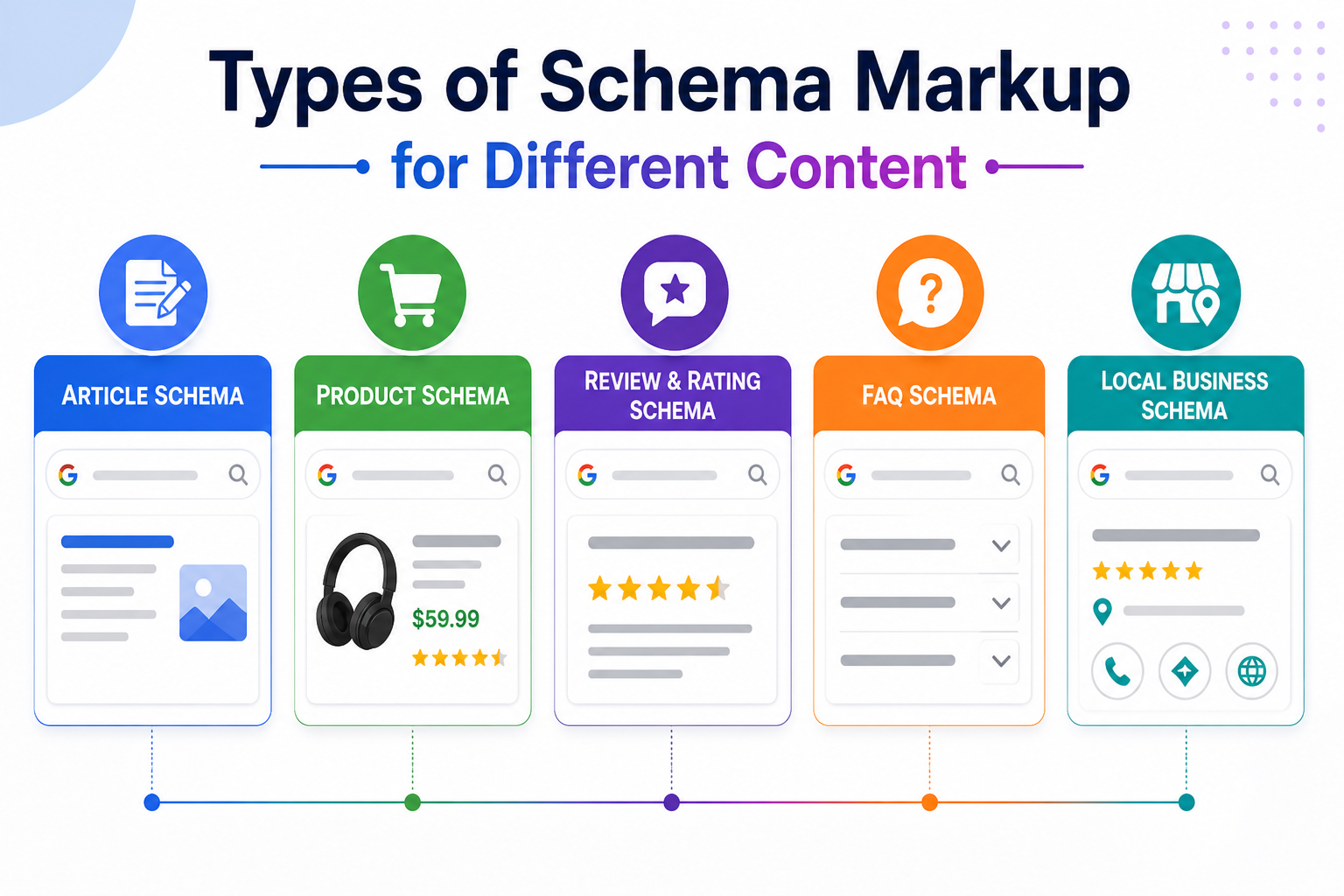
Here are several common uses.
Article Schema
Used for blog posts and news content. It helps search engines understand details such as headline, author, and publication date.
Product Schema
Displays product information like price, availability, and ratings directly in search results.
Review and Rating Schema
Adds star ratings that instantly capture user attention.
FAQ Schema
Allows questions and answers to appear directly in search results below a listing.
Local Business Schema
Helps businesses appear in local search results with important information like address, phone number, and opening hours.
Each implementation relies on schema tags to provide structured context for search engines.
How Schema Tags Work Behind the Scenes
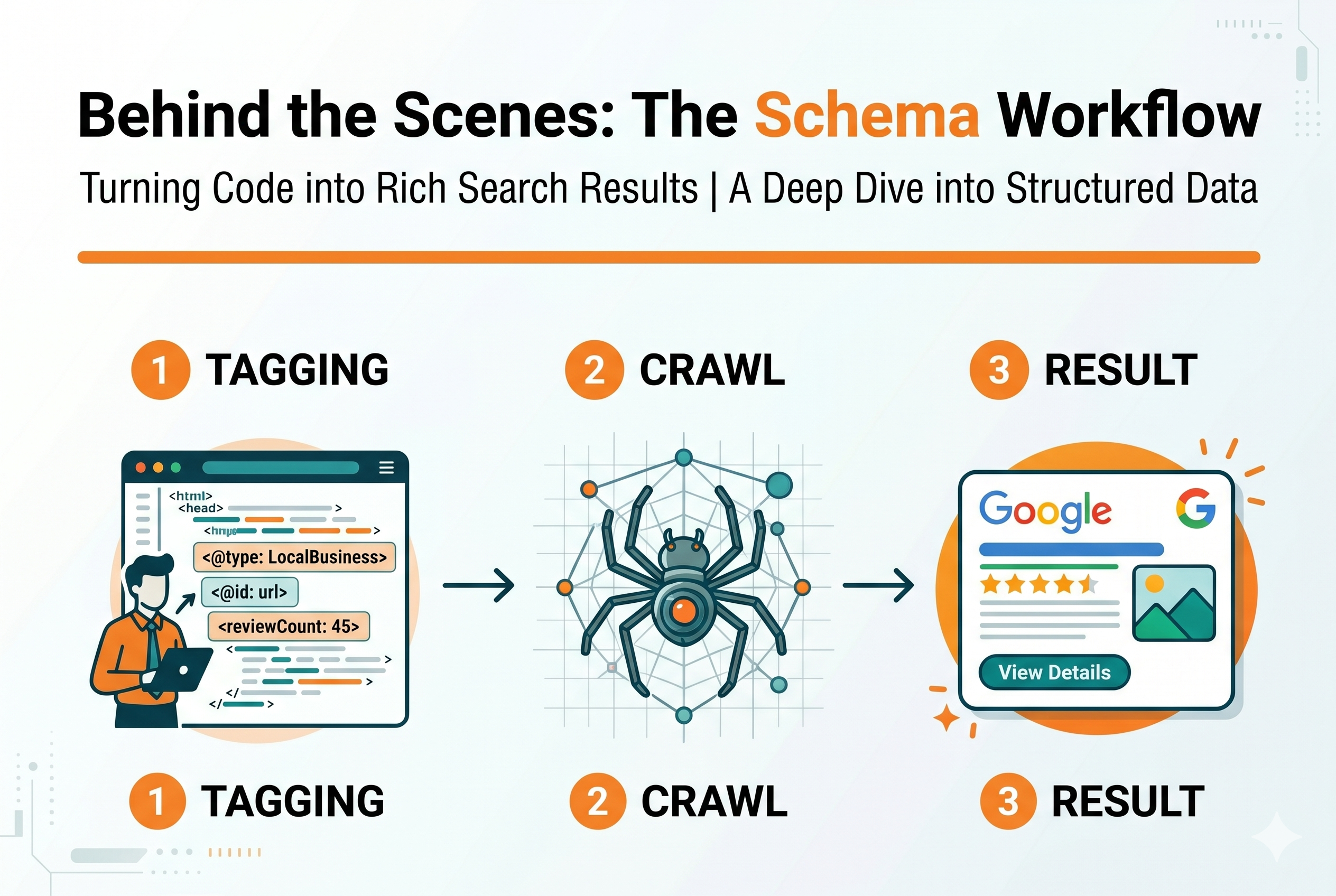
Structured data uses formats that search engines can easily read.
The most recommended format today is JSON-LD, although Microdata and RDFa are also supported.
A simple example looks like this:
When search engines crawl a page containing schema tags, they read this structured information to understand relationships between elements on the page.
Think of a website like a large library. Without labels, every book looks similar, and finding the right information becomes difficult. Structured data works like labeling each book with its category, author, and topic. In the same way, schema tags organize your content so search engines know exactly what each page represents.
How to Implement Schema Tags on Your Website

In the past, adding structured data required technical expertise.
Today, it is much easier.
You can implement schema tags in several ways:
- Adding JSON-LD scripts directly into your page header
- Using SEO plugins such as Rank Math or Yoast in WordPress
- Generating markup through Google’s Structured Data Markup Helper
After implementation, testing is essential.
Useful tools include:
Google Rich Results Test
Schema Markup Validator
Google Search Console enhancement reports
Testing ensures your structured data is valid and eligible for rich search features.
Where Schema Tags Influence Search Results
Structured data directly affects how your pages may appear in search results.
Pages using Schema Tags can become eligible for features such as:
- Rich snippets
- FAQ dropdown listings
- Knowledge panels
- Event results
- Product cards
These enhanced search results often attract more attention than standard listings.
Even when ranking positions remain unchanged, improved presentation can significantly increase click-through rates because users naturally trust results that provide more information.
Schema Tags and On Page SEO
Structured data does not directly increase rankings.
However, Schema Tags influence several signals that contribute to long-term SEO performance.
- They improve search appearance.
- They increase click-through rates.
- They help users find answers faster.
- They strengthen topical relevance.
Search engines monitor how users interact with search results, and improved engagement often supports stronger overall performance.
Common Mistakes to Avoid
Many websites misuse structured data without realizing it.
Avoid adding markup that does not match visible page content.
Avoid overusing FAQ or review schema on pages where it is not appropriate.
Avoid ignoring validation errors.
Avoid forgetting to update structured data when page content changes.
Incorrect use of Schema Tags can prevent pages from appearing in rich search features.
Accurate implementation always matters more than quantity.
Final Thoughts: Small Code, Big Visibility
SEO success is not only about writing good content or building backlinks.
It is also about helping search engines clearly understand your content.
Schema Tags bridge that gap by giving search engines structured information about what each page represents.
When implemented correctly, they help search engines display your content in richer formats that attract more attention and clicks.
In modern SEO, visibility is not just about ranking higher. It is about appearing more informative, more trustworthy, and more clickable than competing pages.
Learning how to implement Schema Tags effectively is one of the practical SEO skills taught at DSOM (Dehradun School of Online Marketing). DSOM trains students to master structured data, on page SEO, and real-world optimization techniques that help websites stand out and achieve sustainable search growth.