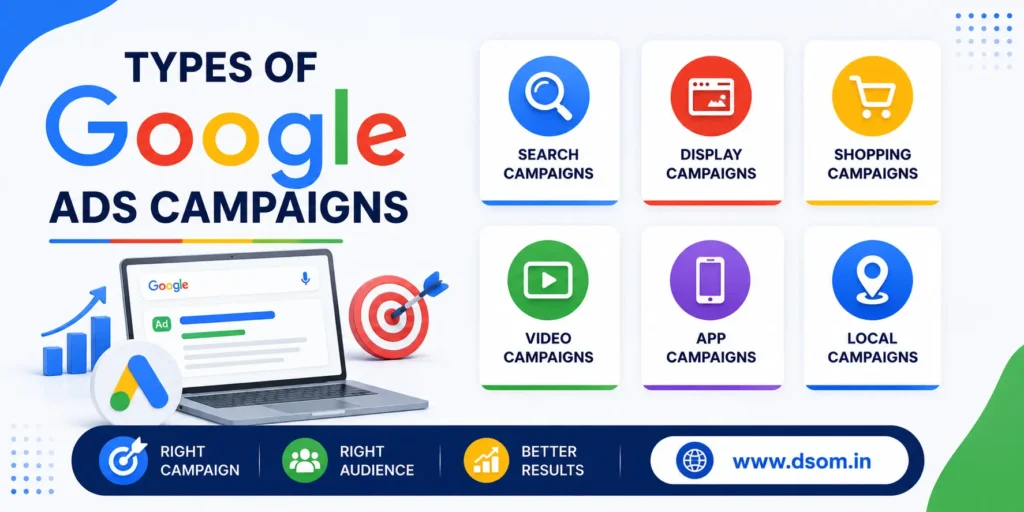
Every rupee, dirham, or dollar you spend on Google Ads without understanding the different types of Google Ads campaigns is money at risk. The most common mistake businesses make is setting up the wrong campaign type — running a Display campaign when they need search intent, or pushing a generic Search campaign when their product needs visual discovery.
The types of Google Ads campaigns each serve a specific purpose, and matching your objective to the right one is the single most important decision you make before spending a cent. This guide breaks down all types of Google Ads campaigns clearly, explaining how each works, what it is best for, and how to choose the right one for your business in 2026.
Why Understanding Types of Google Ads Campaigns Matters
Google Ads is not a single tool — it is a suite of campaign types built for different stages of the buyer journey, different business goals, and different audience behaviors. Running the wrong type of Google Ads campaign for your objective is one of the fastest ways to burn through a PPC campaign budget with minimal results. This guide to Google Ads campaign explained covers every option in plain language — whether you are a seasoned marketer or exploring Google Ads for beginners.
| Campaign Type | Primary Goal | Best Audience Moment |
|---|---|---|
| Search | Capture active buying intent | When users are actively searching |
| Display | Build awareness, retarget | When users are browsing other sites |
| Shopping | Drive product sales | When users search for specific products |
| Video (YouTube) | Brand awareness, engagement | When users are consuming video content |
| Performance Max | Maximize conversions across all channels | All moments simultaneously |
| App | Drive app installs and in-app actions | When users are likely to install or engage |
| Smart | Simplified automation for local businesses | Local intent searches and Maps |
| Demand Gen | Drive consideration and interest | Social-style feed browsing behavior |
Understanding these types of Google Ads campaigns at this level gives you a framework for every campaign decision that follows.
1. Google Search Campaign
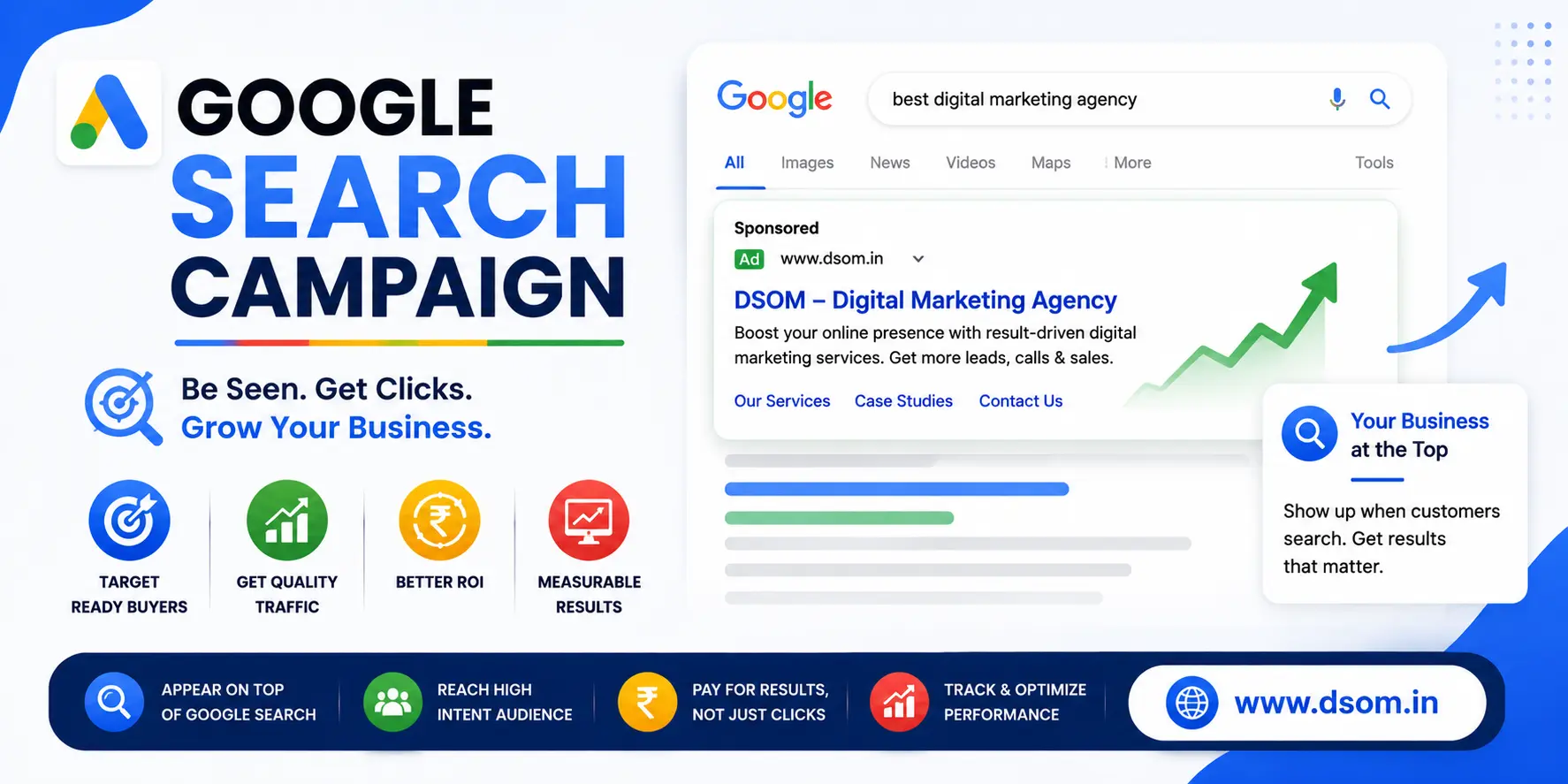
The Google Search campaign is the most widely used of all types of Google Ads campaigns. Ads appear as text listings at the top and bottom of Google search results pages when users actively search for keywords relevant to your business. Because the user is already searching for a solution, Search campaigns capture the highest-intent traffic of any campaign type.
How it works: You bid on keywords, write compelling ad copy with headlines and descriptions, and your ads appear when those keywords are triggered by a user search. You pay per click (PPC), not per impression.
Best for: Service businesses, local businesses, B2B companies, legal and medical practices, and any business where customers are actively searching to solve a problem or make a purchase.
Key considerations:
- Negative keywords are essential — without them, Search campaigns will match irrelevant queries and waste budget
- Responsive Search Ads (RSAs) are now the default format, combining multiple headlines and descriptions automatically
- Broad, phrase, and exact match keyword types require thoughtful strategy
Among all types of Google Ads campaigns, a well-managed Search campaign typically delivers the strongest direct return for businesses with clear, searchable intent behind their offerings. It is the first campaign type most Google Ads for beginners should learn and master.
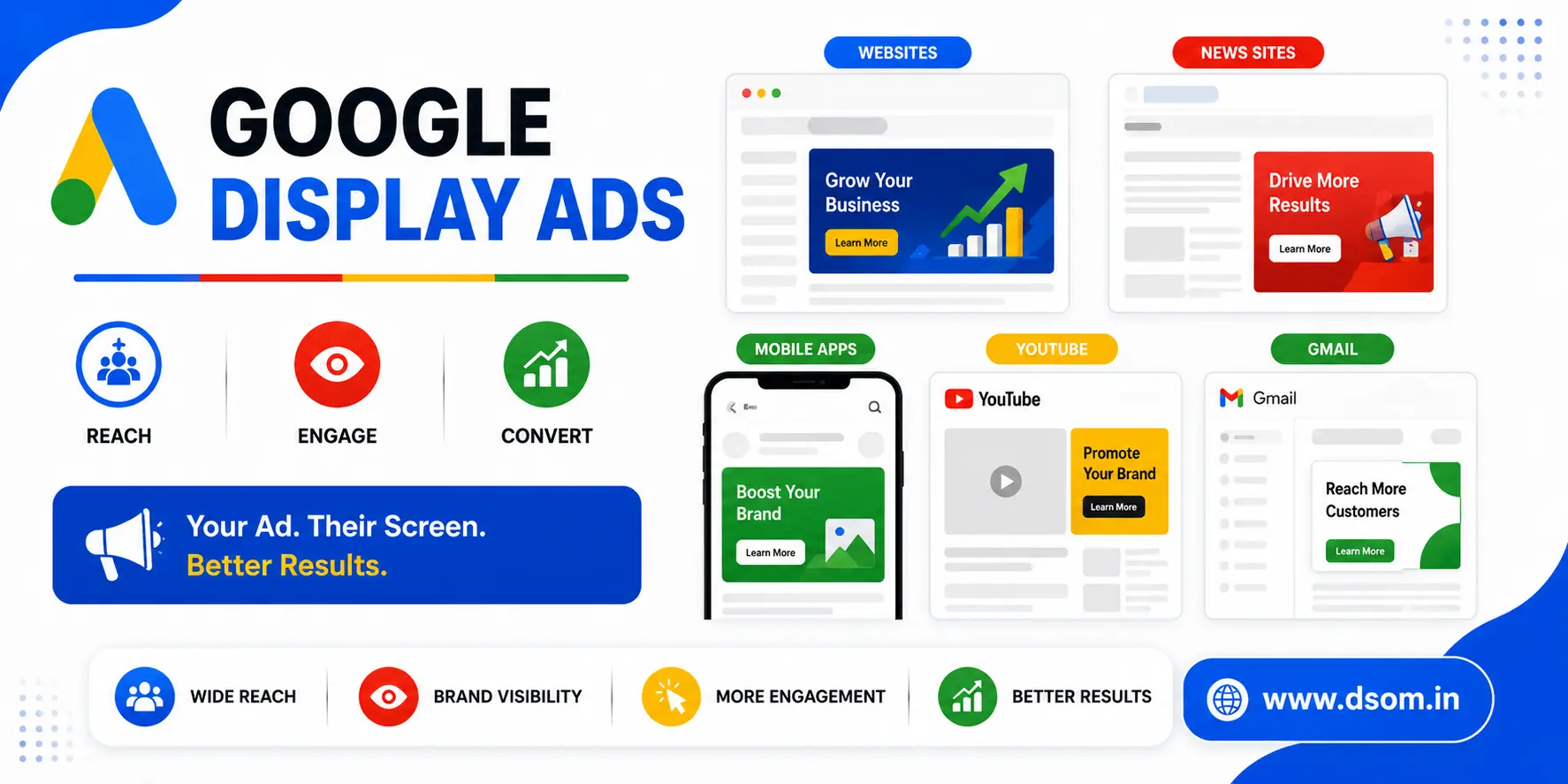
2. Google Display Ads
Google Display ads reach users across the Google Display Network — over two million websites, apps, and videos. Unlike Search campaigns, these ads appear to people browsing content, not actively searching. This makes Google Display ads a top-of-funnel and mid-funnel tool, and one of the most flexible types of Google Ads campaigns for building awareness.
How it works: Visual banner ads are shown to targeted audiences based on demographics, interests, in-market behavior, or remarketing lists.
Best for: Brand awareness, retargeting website visitors who have not converted, and keeping your brand top of mind during long consideration cycles.
Key considerations:
- Click-through rates are lower than Search, but impressions are much higher at lower cost
- Retargeting past website visitors is often the highest-ROI application
- Creative quality matters enormously — poor visuals significantly lower CTR
3. Google Shopping Ads
Google Shopping ads are purpose-built for ecommerce. They appear in Google search results as product cards — showing an image, price, product name, and store — making them highly effective for capturing purchase-ready traffic.
How it works: Ads are generated directly from your Google Merchant Center product feed rather than manually written ad copy. Google automatically matches your products to relevant search queries based on your feed data.
Best for: Ecommerce businesses of any size selling physical products online. Google Shopping ads are among the highest-converting types of Google Ads campaigns for direct product sales.
Key considerations:
- Product feed quality is everything — accurate titles, descriptions, pricing, and high-quality images drive better placement
- Shopping campaigns now operate primarily through Performance Max, though Standard Shopping remains available
- Competitive pricing visibility can be a double-edged sword — your price appears directly in the ad
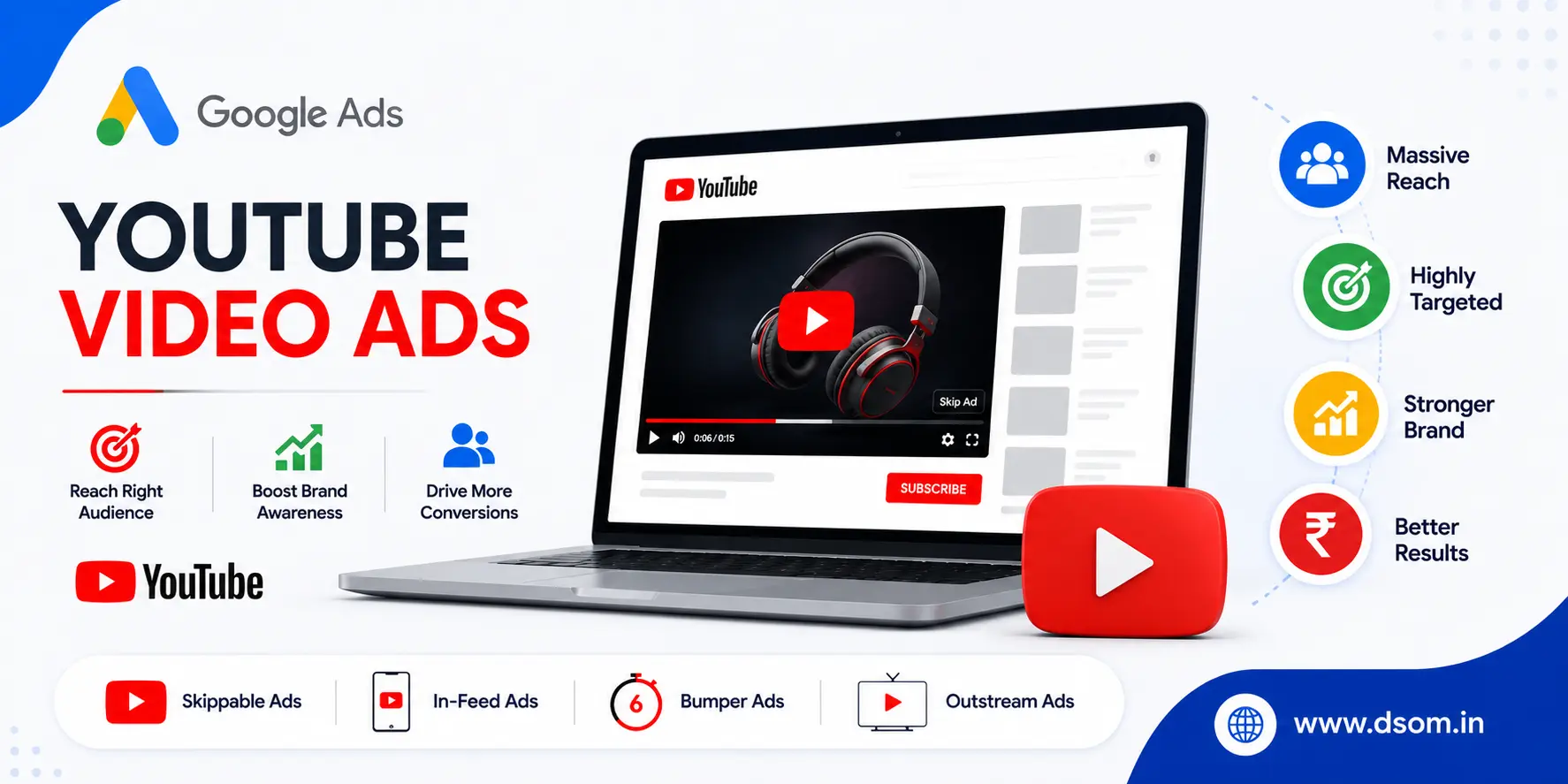
4. Google Video Ads (YouTube)
Google Video ads run on YouTube and across the broader Google video partner network. As the world’s second-largest search engine with over 2.5 billion users, YouTube offers reach that few platforms can match.
How it works: Video ads appear before, during, or after YouTube videos. Formats include skippable in-stream ads (skippable after 5 seconds), non-skippable in-stream ads (15 seconds), bumper ads (6 seconds), and in-feed video ads that appear in YouTube search results.
Best for: Brand awareness campaigns, product launches, storytelling-based marketing, and businesses where video demonstrations add meaningful value (software, fitness, beauty, food).
Key considerations:
- Skippable ads only charge when viewers watch for at least 30 seconds — highly cost-efficient for awareness
- Bumper ads are effective for retargeting and reinforcing messages
- Audience targeting through YouTube’s interest, behavioral, and custom intent audiences is highly precise
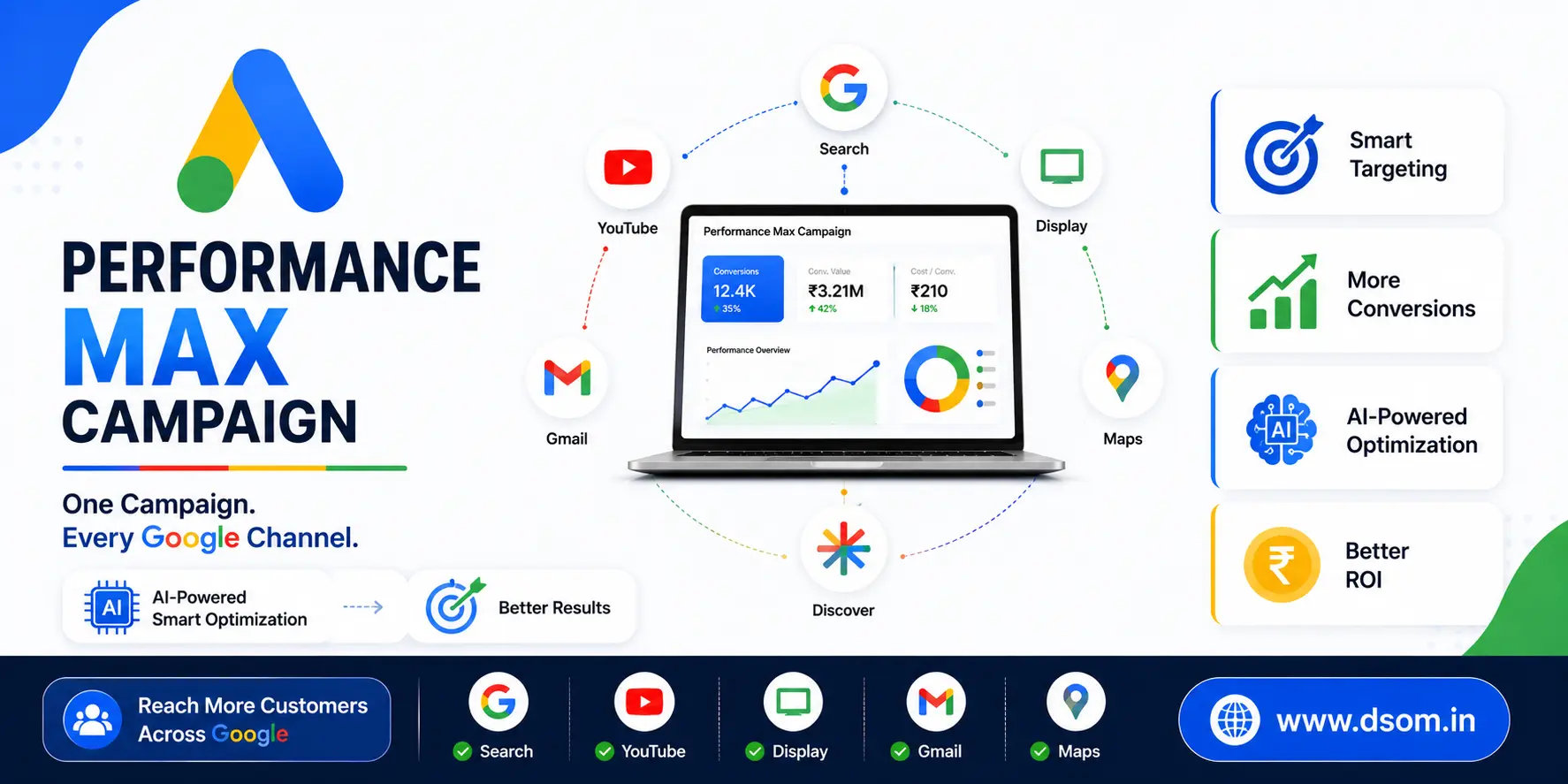
5. Performance Max Campaign
Performance Max (PMax) is Google’s AI-driven campaign type that runs ads across every Google channel simultaneously — Search, Display, YouTube, Gmail, Maps, and Discover — using machine learning to maximize conversions.
How it works: You provide Google with creative assets (headlines, descriptions, images, videos, logos) and a conversion goal. Google’s AI automatically determines where, when, and to whom to show your ads across all its channels to achieve the best results.
Best for: Businesses with clear conversion goals, established conversion tracking, and sufficient historical data for Google’s AI to optimize against. It is particularly powerful for ecommerce brands running alongside Google Shopping ads.
Key considerations:
- PMax requires good conversion tracking setup — without it, the AI has nothing to optimize toward
- Less manual control than other types of Google Ads campaigns — campaigns run largely on automation
- Asset quality matters more than ever; provide as many creative variations as possible
- Insights reporting is limited compared to standard campaign types
Performance Max has become one of the most discussed types of Google Ads campaigns since its rollout, precisely because it represents the largest shift toward full automation in Google Ads history.
For businesses still learning the platform, it is worth understanding how it differs from other types of Google Ads campaigns before running it as your primary campaign.
6. App Campaign
App campaigns are specifically designed to promote mobile app installs and in-app actions across Google Search, Google Play, YouTube, and the Display Network simultaneously — one of the most automated types of Google Ads campaigns available.
How it works: You provide app details, ad text, images, and videos. Google’s AI automatically assembles and serves the most effective combinations to drive installs or in-app conversions.
Best for: Mobile app developers and businesses with dedicated apps looking to grow their user base or drive in-app purchases.
Key considerations:
- Manual control is very limited — the AI handles placement and optimization
- Provide diverse creative formats to give the algorithm maximum flexibility
- Define your goal clearly: installs, in-app actions, or pre-registration
7. Smart Campaign
Smart campaigns are Google’s simplified, fully automated campaign type for small businesses with limited PPC experience. They are the default option Google suggests when creating a new account, but they are one of the most misunderstood types of Google Ads campaigns — often enabled by default before businesses understand what they are opting into.
How it works: You provide basic business information, a budget, and a few lines of copy. Google handles targeting, bidding, and placement — primarily on Search and Maps.
Best for: Very small local businesses wanting simple visibility with minimal management. For anyone with a meaningful budget or specific conversion goals, Smart campaigns offer limited transparency.
Key considerations:
- Limited keyword-level visibility makes optimization difficult
- Graduating to standard Search campaigns is advisable as budget grows
8. Demand Gen Campaign
Demand Gen is Google’s newest campaign type, designed to run visually engaging ads across YouTube, YouTube Shorts, Gmail, and Google Discover feeds. It reaches users in a browsing mindset — similar to Meta ads — and is a growing addition to the types of Google Ads campaigns available for visual-first brands.
How it works: You provide image and video creative assets, audiences, and a budget. Ads appear in social-style feed environments rather than traditional search results.
Best for: Businesses looking to generate interest before users begin actively searching — particularly effective for lifestyle, consumer, and ecommerce brands with strong visual creative.
How to Choose the Right Campaign Type
Choosing the best Google Ads campaign type for your business requires matching your objective to the right tool. Use this table as your reference:
| Your Goal | Recommended Campaign Type |
|---|---|
| Capture people actively searching for your product | Google Search campaign |
| Drive ecommerce product sales | Google Shopping ads or Performance Max |
| Build brand awareness on a large scale | Google Display ads or Video ads |
| Retarget past website visitors | Google Display ads (remarketing) |
| Promote a mobile app | App campaign |
| Maximize conversions with AI automation | Performance Max campaign |
| Create social-style visual awareness | Demand Gen campaign |
| Simple, low-maintenance local visibility | Smart campaign |
The best-performing Google Ads accounts rarely rely on a single campaign type. A layered approach — Search campaigns capturing active intent, Display campaigns retargeting engaged visitors, and Shopping or Performance Max driving product conversions — typically outperforms any single type of Google Ads campaign used in isolation.
Understanding the Google Ads campaign types available to you and building a complementary multi-campaign strategy is how serious advertisers consistently outperform single-channel setups.
Final Thoughts
Understanding the types of Google Ads campaigns is the first step toward running successful advertising campaigns. Each campaign type is designed for a specific goal, whether it’s increasing brand awareness, driving website traffic, or generating leads and sales. Choosing the right campaign helps you reach the right audience and achieve better results.
To build a strong foundation, many beginners choose professional training programs like DSOM (Dehradun School of Online Marketing), where they learn campaign selection, targeting, bidding strategies, and optimization techniques from industry experts.
Start by identifying your marketing goal and selecting the campaign type that best supports it. Focus on learning a few campaign types well, track your performance, and let data guide your decisions. Consistent testing and optimization are the keys to long-term Google Ads success.