Guest Posting: 10 Powerful Ways to Boost Digital Marketing (A Positive SEO Boost)

Digital Marketing: Why Guest Posting Still Dominates Off-Page SEO in 2026? Digital marketing keeps evolving—but pause for a moment. What’s one strategy that still gets more traffic, authority, and trust than most modern tactics? Yes… Guest Posting is still effective. But why does it continue to move the needle in off-page SEO when hundreds of marketers are chasing trends? What makes it so powerful? And how do you use it the right way? Let’s break it down step by step. What is Guest Posting in SEO? – A Complete Breakdown If you’re doing digital marketing in 2026, you already know one thing: Google loves authority. But how do you build authority when you’re new or trying to scale? That’s where Guest Posting comes in. It simply means writing and publishing a blog post on another website to get: A backlink Referral traffic Brand visibility Trust & credibility But wait… isn’t it old? Yes, it’s old. But so is email marketing—and both still work brilliantly. Why? Because guest posting taps into something that will never change: People trust websites that already have audiences. When you publish on authority sites, that trust transfers to you. That’s why it remains a powerful pillar of off-page SEO, especially in digital marketing. Why Guest Posting Matters in Digital Marketing Today Here’s a simple truth: Without authority, your digital marketing efforts struggle. Guest posting builds the authority your brand needs. Guest posting solves this by: Building high-authority backlinks Helping Google understand your niche Sending real traffic from relevant blogs Strengthening your brand identity Positioning you as an expert Think about it… Isn’t it easier to convince someone when you already have credibility? That’s what it does for your SEO and brand. How to Find and Select Blogs for Guest Posting Finding guest posting sites isn’t tough—but finding quality ones? That requires strategy. Here’s how you do it. 1. Start with Google Search Operators Use these queries: “Your niche” + write for us “Your niche” + guest post guidelines “Your niche” + submit article “Your niche” + become a contributor Example: digital marketing writes for us SEO guest post guidelines These pages usually show high-quality sites actively accepting guest posting submissions. 2. Check Authority and Traffic Never write for weak websites. Evaluate a blog using tools like Ahrefs or Semrush: Domain Authority (DA) Organic traffic Backlink profile Spam score A strong blog gives you stronger SEO value. 3. Analyze Content Quality Ask yourself: Does the site publish well-researched, updated, and valuable content? If yes, it’s a good fit. If not, stay away. Low-quality sites can hurt your off-page SEO. 4. Check Niche Relevance Relevance matters more than DA. A backlink from a niche-related blog boosts your digital marketing results faster than a link from an irrelevant blog. For example: If you’re writing about digital marketing, don’t publish on a food or travel site. Google values relevancy—always. 5. Observe Engagement Look for: Real comments Social shares Reader activity Community interaction Blogs with active readers send better referral traffic. Types of Content for Effective Guest Posting Not all guest posts perform equally. Some attract hundreds of backlinks and thousands of readers… while others barely get noticed. So, what works best? Let’s break down the top-performing content types for guest contributions in digital marketing. The right content makes guest posting unstoppable. 1. How-To Guides People love problem-solving content. Example topics: How to improve Off-Page SEO in 30 days How digital marketing beginners can build authority fast These posts build trust and offer value instantly. 2. Ultimate Guides These are long, detailed, and actionable. Why do they work? Because blogs want valuable content… and readers love in-depth, practical tutorials. Example: The Ultimate Guide to guest contributions for Digital Marketing 3. Case Studies Case studies attract attention because they show real results. Ideas: How we increased organic traffic by 300% using guest contributions How digital marketing brands use Off-Page SEO to rank faster Readers and editors both love case studies. 4. Expert Roundups You can contribute expert tips to popular roundup posts. This is great because: It takes less effort You get exposure You get an authority backlink You build relationships 5. Thought Leadership Articles These position you as an expert. Topics like Future of digital marketing Why it will matter even more in 2025 Thought leadership builds your brand identity. 6. Listicles Simple. Shareable. Easy to write. Examples: 10 Tips for Digital Marketers 15 Off-Page SEO Strategies to Boost Rankings Listicles often perform extremely well. How to Write a High-Quality Guest Post Once you find the right blog, your content MUST stand out. Here’s what to keep in mind: 1. Follow the Blog’s Guidelines Editors reject most submissions because authors ignore instructions. Always read: Word count Tone Formatting Linking rules 2. Research Their Top-Performing Posts Understand: What style they use What topics performed well How they structure articles Mirror their tone, but add your own value. 3. Provide ORIGINAL Insights Don’t rewrite existing content. Ask yourself: What unique angle can I offer? What personal experience can I add? Originality = Approval + Better SEO. 4. Add Actionable Steps Readers want results, not theory. Make your content: Practical Step-by-step Easy to apply 5. Add Relevant Internal Links Most sites require you to link to their existing articles. Do it naturally. This increases your acceptance rate. 6. Add Your Author Bio Smartly Keep it: Short Clear Benefit-focused Include one backlink to your website—your most important page. Things to Keep in Mind While Guest Posting Guest posting works beautifully… but only when done right. Avoid these mistakes: 1. Don’t Buy Links Buying guest posts can: Get your site penalized Lead to spammy backlinks Hurt your digital marketing strategy Always earn links through quality. 2. Don’t Post on Low-Quality Sites Sites with: No traffic High spam score Duplicate content Irrelevant niche …will harm your off-page SEO. 3. Avoid Over-Optimized Anchors Don’t use forced anchor texts. Use natural variations like Read more here Learn about Guest Posting Understand digital marketing better This is safer for long-term SEO. 4. Be Consistent One guest
Profile Backlinks: 9 Powerful Ways to Boost Your Digital Marketing Rankings Fast

Introduction Want your website to rank faster and crush the competition? Then you need to pay attention to something most marketers overlook: profile backlinks. Here’s the truth: Google doesn’t just look at your website content. It looks at who’s linking to you and how trustworthy those links are. That’s why even a small backlink from a high-authority profile can have a bigger impact than dozens of low-quality links scattered across the web. Profile Backlinks are different from regular backlinks. Instead of relying on guest posts or blog comments, you create links through your profiles on social media sites, forums, professional communities, and business directories. Each profile you build is a signal to Google that your brand exists, is credible, and is trusted by real communities. In this guide, we’re going to show you exactly what Profile Backlinks are, why they matter, and how to build them the right way. No fluff. No shortcuts. Just proven strategies that actually work in 2025. By the time you finish reading, you’ll have a step-by-step blueprint to strengthen your off-page SEO, boost your rankings, and create a digital footprint that Google can’t ignore. Digital Marketing: How Profile Backlinks Strengthen Your Off Page SEO Strategy Ever wondered why some websites rank insanely fast while others struggle for months? In digital marketing, one small but powerful tactic silently fuels higher rankings: Profile Backlinks. Yes, those simple profile links you create on trusted platforms can dramatically elevate your authority — if you use them the right way. But what exactly are these backlinks? How do you build them effectively? And which platforms give the best results? Let’s break everything down step-by-step. What Are Profile Backlinks? – A Basic Understanding If you’re serious about digital marketing, understanding Profile Backlinks is non-negotiable. But what are they? Profile Backlinks are links that you place inside user profiles on various platforms — such as forums, business directories, Q&A sites, social networks, and professional communities. Whenever you sign up on a website and fill out your personal or business profile, you usually get an option to add your website URL. This URL becomes a backlink pointing directly to your site. Sounds simple, right? But here’s what makes profile backlinks important: 1. They Help Build Trust Instantly Google values websites that appear in trusted communities. When your brand consistently shows up across verified platforms, it sends a strong trust signal. 2. They Increase Online Visibility More profiles = more visibility. Users searching for your services may discover your brand from multiple sources. 3. They Support Your Off-Page SEO Structure Profile backlinks add diversity to your backlink profile—an important part of off-page SEO. 4. They Lay the Foundation for Future Link Building Many platforms allow posting, commenting, and community engagement. Your profile link becomes your identity. So, are Profile Backlinks alone enough to rank a site? Not always — but they provide an excellent starting point in your digital marketing strategy. How to Create Effective Profile Backlinks Creating profile backlinks isn’t rocket science. But creating effective, high-quality, and SEO-friendly ones? That’s where most people go wrong. Here’s a step-by-step blueprint to help you build strong profile backlinks for off-page SEO. 1. Start With High-Authority Platforms Ask yourself: “If this platform shut down tomorrow, would it affect thousands of users?” If the answer is yes, it’s a good platform. Only use profile creation websites that: Have high domain authority (DA) Are trusted by Google Have real users Are active communities Examples include: Medium Reddit Quora Behance Crunchbase GitHub These platforms pass better trust signals. 2. Use Complete Profile Information Why do most profile backlinks fail? Because users leave profiles half-filled. A complete profile looks trustworthy and sends a positive signal to both platforms and search engines. Fill in everything: Full name or brand name Profile picture Bio Social links Website URL Location Skills or expertise Search engines treat complete profiles as authentic sources. 3. Add Your Focus Keywords Naturally in Your Bio You’re doing digital marketing, so why skip keyword optimization? Include terms like: digital marketing SEO expert content strategist online marketing specialist off-page SEO professional A keyword-optimized profile sends topical relevance to Google. 4. Use Branded URLs Instead of Exact-Match Keywords Avoid spammy URLs like Best-digital-marketing-services-cheap.com Buy-SEO-now.com Instead, use clean branded URLs. Search engines trust brands more than keyword-stuffed domains. 5. Ensure Profiles Are Public Many platforms allow you to hide your profile. If Google cannot crawl the page, the backlink becomes useless. Always check if the profile is: Public Indexed Visible without login This single step can double your SEO value. 6. Don’t Create Too Many Profiles in One Day You’ve seen people create 200+ profile links overnight. Is it smart? Absolutely not. It looks spammy and unnatural. Stick to this safe pattern: 5 to 10 profile backlinks per week Spread activity across different platforms Avoid footprints (same bio everywhere) Slow and steady wins the SEO race. 7. Use Real Information—Not Fake Data Fake names, fake images, fake bios? Google hates fake signals. Authenticity wins. Even if you’re using a brand name, keep details real and consistent. 8. Track Your Profiles Using a Single Sheet Too many profiles? You’ll forget where you created them. Maintain a simple spreadsheet including: Website name URL of your public profile Login email Password DA of platform Indexed status Organization is part of digital marketing excellence. 9. Build Contextual Trust by Engaging on the Platform Many platforms allow: Community engagement Posting content Asking questions Sharing opinions The more active you are, the stronger your profile authority becomes. And stronger profiles = more powerful profile backlinks. Where to Build Profile Backlinks for Best Results Want to know the million-dollar secret? Not all profile backlinks are equal. Some platforms move rankings faster because they’re extremely trusted by Google. Here’s a carefully curated list of categories and platforms to build high-impact profile backlinks. Build profile backlinks where Google already trusts. 1. Social Platforms Social sites have strong authority and trust by default. Examples: Facebook LinkedIn Twitter (X) Pinterest Instagram YouTube Don’t underestimate these links—they boost online visibility significantly. 2. Business Directories Great for
Off-Page SEO Overview: Boost Your Rankings Beyond the Website

What is Off-Page SEO? When most people think of SEO, they imagine tweaking titles, optimizing meta tags, or adding keywords—but that’s only half the game. The real power of SEO comes from what happens outside your website—that’s off-page SEO. In simple terms, off-page SEO refers to all the activities you do beyond your website to improve your search engine rankings. It’s how you build your website’s reputation, authority, and trust across the internet. Search engines like Google look at off-page signals to decide if your site deserves to rank higher. Think of it as online word-of-mouth—the more other reputable sites talk about you (through backlinks, mentions, or shares), the more credible your site appears. Why Off-Page SEO Matters Here’s the truth: You can have the best on-page SEO in the world, but without strong off-page signals, you’ll rarely reach page one. Off-page SEO tells Google three important things: Trustworthiness: Are other credible sources linking to you? Authority: Are you seen as an expert in your field? Popularity: Are people talking about your brand online? In the world of digital marketing, this makes off-page optimization an essential pillar—not just for rankings, but for long-term brand growth and credibility. Where to Implement Off-Page Techniques—Identifying Key Areas While on-page SEO focuses on your own website, off-page SEO builds your presence elsewhere. Let’s look at the most effective channels for implementing off-page strategies. 1. Backlink Sources Backlinks are still the backbone of off-page SEO. When authoritative websites link to your pages, it signals Google that your content is trustworthy and valuable. Where to get backlinks: Guest Blogging: Write high-quality posts for reputable blogs in your niche. Business Directories: Submit your website to relevant directories (like Clutch, Justdial, or Google Business Profile). Resource Pages: Get listed on curated “best tools” or “useful resources” pages. Broken Link Building: Find dead links on authority sites and suggest your relevant page as a replacement. Pro Tip Don’t chase quantity. A single link from a top authority site (like HubSpot or Moz) is worth more than 100 low-quality backlinks. 2. Social Media Platforms Social media doesn’t directly boost rankings, but it helps you earn brand exposure, engagement, and indirect links. Key platforms for off-page SEO include: LinkedIn (for professional credibility) Instagram (for brand personality) Facebook Groups (for community engagement) X/Twitter (for authority sharing) Pinterest (for visual traffic) Each share, mention, or save tells Google your content is popular and relevant—signals that indirectly support your ranking. 3. Forums and Online Communities Platforms like Reddit, Quora, and niche-specific forums can drive powerful off-page results. Engaging genuinely in discussions and linking your resources (where relevant) builds both traffic and authority. Example: If you’re into digital marketing, answering SEO-related questions on Quora with detailed insights and linking back to your blog builds credibility and referral traffic. 4. Influencer Collaborations Influencer marketing has evolved into an essential off-page channel. Partnering with niche influencers—whether on YouTube, LinkedIn, or Instagram—helps your content reach new audiences and increases brand mentions (a key ranking factor). Tip: Prioritize influencers with trust and engagement, not just big follower counts. 5. Brand Mentions and Citations Even when someone mentions your brand without linking, Google takes notice. These unlinked mentions act as trust signals for your site’s reputation. You can track brand mentions using tools like Google Alerts Ahrefs Alerts Brand24 The more your brand is mentioned across the web, the stronger your digital footprint becomes. 6. Content Syndication & PR Republishing your articles or stories on platforms like Medium, LinkedIn Articles, or news sites helps expand visibility. Press releases on credible news platforms can also boost off-page signals—especially when they include backlinks to your primary pages. Types of Off-Page SEO Strategies—Exploring Different Approaches Let’s break down the major off-page SEO strategies that can transform your digital marketing game in 2026. 1. Link Building The classic—and still king of off-page SEO. Link building means getting other websites to link to your pages. But in 2026, quality and relevance matter more than ever. Popular techniques: Guest posting HARO (Help a Reporter Out) for media mentions Skyscraper Technique (update and improve existing popular content) Podcast Guesting for authority backlinks Niche Edits (adding links to existing high-authority articles) 2. Social Media Engagement Social signals like shares, likes, and comments may not be direct ranking factors, but they amplify your reach. The more people engage with your content, the more likely it is to earn backlinks and organic mentions. Create “share ”triggers”—emotionally resonant or highly practical content that people naturally want to share. 3. Local SEO & Citations For businesses, local visibility is everything. Citations (mentions of your business name, address, and phone number) on platforms like Google Business Profile, Yelp, and Justdial help your local SEO. Ensure NAP consistency (Name, Address, Phone number) across all listings to improve trust and ranking. 4. Content Marketing Content isn’t just for your own website. Publishing valuable, sharable, and insightful content on other platforms builds backlinks, credibility, and visibility. Formats that work well: Data-driven blog posts Infographics Case studies Industry reports Interactive tools or templates 5. Influencer & Blogger Outreach Collaborate with niche influencers and bloggers to review, share, or link to your product, course, or tool. This strategy merges PR, trust-building, and SEO power—all in one move. 6. Forum & Community Marketing By offering genuine advice (not spamming links), you position yourself as an expert. That’s exactly how Backlinko’s founder, Brian Dean, built early authority—by adding value in SEO communities. 7. Video & Podcast SEO Platforms like YouTube and Spotify are goldmines for off-page growth. Optimized video and podcast descriptions with backlinks to your main site can send referral traffic and enhance authority. How to Evaluate Off-Page SEO Success – Measuring Impact You’ve implemented your off-page strategies—now, how do you know if they’re working? Here’s how to measure off-page SEO performance effectively. 1. Domain Authority (DA) and Domain Rating (DR) Use tools like Ahrefs, Moz, or SEMrush to track your site’s authority score. A steady increase means your off-page signals are strengthening. 2. Backlink Profile Growth Analyze:
What is an Open Graph? How 1 Tag Controls Your Social Media First Impression
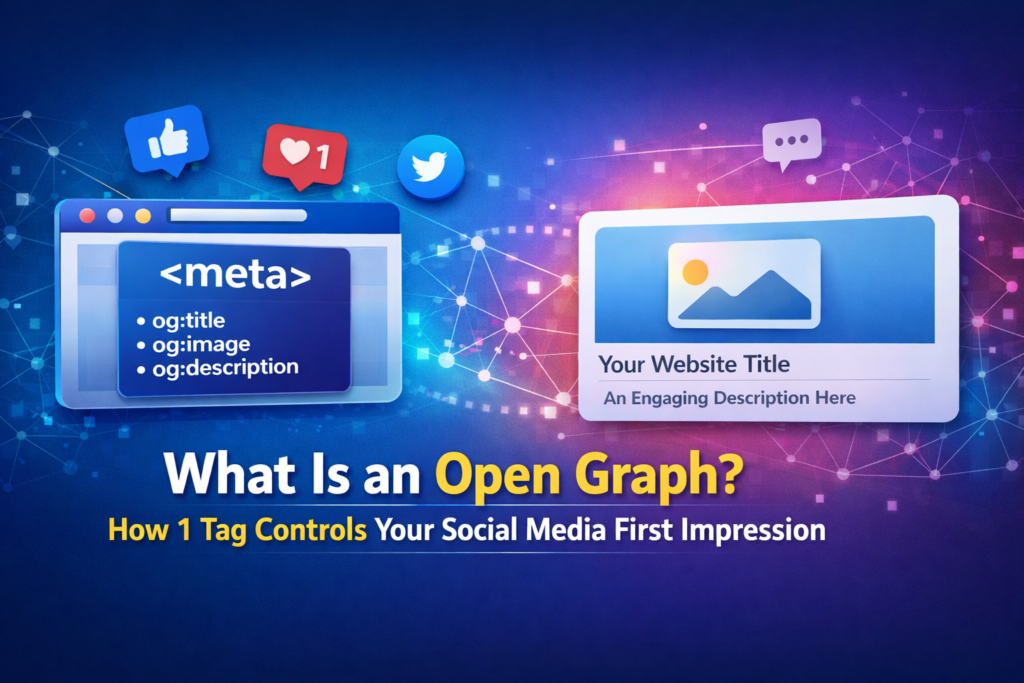
A few years ago, I shared a blog post on social media expecting traffic. The content was strong.The headline was optimized.The page followed on-page SEO best practices. But the preview looked terrible. The image was broken.The title felt random.The description made no sense. No one clicked. That experience taught me something simple but powerful. The issue was not the quality of the content.It was how the content was being presented. That is when I truly understood what an Open Graph is. It does not change what you write.It changes how your content appears when it is shared. And in a scroll-first world, appearance is often what determines whether someone clicks or keeps scrolling. What Is an Open Graph in Simple Words It is a protocol that tells social media platforms exactly how your webpage should appear when someone shares it. Instead of letting platforms decide what to show, you define: The title The description The image The URL The content type Think of it like the cover of a book. The content inside may be excellent.But if the cover looks messy, people ignore it. Why Social Media Previews Matter People do not click links blindly. They scan. They judge. They decide within seconds. When your link appears messy or incomplete, users scroll past. When your preview looks clean and intentional, users pause. Platforms like Facebook and LinkedIn use Open Graph tags to generate link previews. A strong preview builds trust instantly. More trust leads to more clicks. More clicks lead to better engagement. That engagement supports your overall on-page SEO performance. How Sharing Looks With and Without Open Graph Without proper configuration, the platform may select a random image from your page. The title can appear cut off. The description might pull unrelated or incomplete text. With a correctly implemented Open Graph setup, the preview displays a clear headline, a high-quality image, and a concise description that aligns perfectly with your message. The content itself does not change. But the way it appears changes dramatically. That is the real power of structured sharing metadata. It gives you control over how your content is presented, instead of leaving it up to guesswork. When you control the presentation, you control the first impression, and first impressions determine clicks. Important Open Graph Tags You Should Know Open Graph works through meta tags placed inside the head section of your HTML. Here are the most important ones. og:title This controls the headline that appears in the social preview. og:description This defines the short preview text shown below the title. og:image This specifies the image that appears with the shared link. og:url This ensures the correct page URL is shared. og:type This defines the content type, such as article or website. These tags work together to shape your first impression on social platforms. How Open Graph Works Behind the Scenes When someone shares your link, the platform scans your webpage. If Open Graph metadata exists, the platform reads it directly. If the metadata is missing, the platform tries to guess what to display. Guessing often leads to incorrect images, incomplete titles, and poorly formatted descriptions. That is why understanding how it works becomes essential for anyone serious about digital visibility. Does Open Graph Help With SEO Open Graph does not directly increase your Google rankings. However, it supports on-page SEO indirectly. When your link preview looks professional and intentional, more users are likely to click. When more users click, engagement improves. Higher engagement signals that your content is relevant and valuable. As engagement improves, your content begins to perform better overall. Better performance strengthens your brand credibility and attracts higher-quality traffic. In this way, structured sharing metadata improves visibility through better presentation and stronger user interaction, even if it does not directly influence rankings Open Graph and Other Platforms Most major platforms use Open Graph for link previews. For example, Facebook and LinkedIn rely heavily on it. X uses Twitter Cards, which function slightly differently. However, if Twitter-specific tags are missing, the platform typically falls back to the available sharing metadata on your page. Because of this fallback behavior, structured preview tags become the backbone of social sharing optimization. They ensure consistency across platforms and prevent unpredictable or poorly formatted previews when your content is shared. Recommended Image Size for Best Results Images play a major role in social previews. For best performance, use: 1200 by 630 pixels Minimum 600 by 315 pixels Aspect ratio close to 1.91 to 1 High-resolution images create a stronger visual impact and increase clicks. Avoid blurry or text-heavy images when optimizing Open Graph previews. How to Add Open Graph Tags Easily You do not need advanced coding skills. You can add Open Graph tags in several ways: Using WordPress SEO plugins such as Yoast SEO or Rank Math Adding meta tags manually inside your HTML head section Using built-in theme settings Once added, your previews become consistent and controlled through Open Graph. How to Test Your Open Graph Setup Always test before sharing publicly. Use tools such as the Facebook Sharing Debugger and the LinkedIn Post Inspector to preview and verify how your Open Graph tags appear when your content is shared. Testing ensures your sharing configuration works properly and prevents unexpected images, incorrect titles, or outdated descriptions from appearing. A quick check before publishing helps you catch errors early, maintain consistency, and present your content exactly the way you intended across social platforms. Common Mistakes to Avoid Many websites completely ignore social metadata. They focus only on keywords and rankings but forget how their content appears when it is shared. That is a mistake. Avoid these common errors: Missing image tag If no image is defined, platforms may choose a random graphic from your page. This can look unprofessional or unrelated to your topic. Using low-quality images Blurry, stretched, or poorly designed images reduce trust instantly. Social media is highly visual, and image quality directly affects clicks. Copying SEO title without adjusting for social A title written
On-Page SEO Made Simple—Secrets to Rank #1 on Google
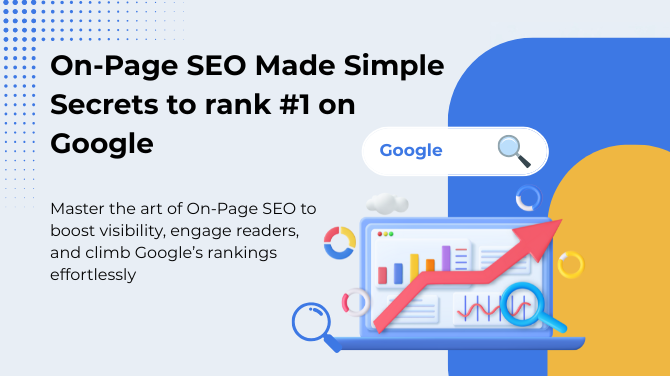
Introduction: What Is On-Page SEO? On-Page SEO is the process of optimizing individual web pages so search engines can understand them—and rank them higher. That’s it. No hype. No hacks. It’s everything you do on your website itself to improve visibility, including: Content quality and keyword usage Page titles and meta descriptions Headings, URLs, and internal links Page speed, mobile-friendliness, and user experience Unlike Off-Page SEO (which depends on backlinks and external signals), On-Page SEO is 100% under your control. Here’s why that matters: Google doesn’t “see” your page the way humans do. It relies on signals—your content structure, HTML elements, and engagement data—to answer two critical questions: What is this page about? Is this the best result for the searcher? Strong On-Page SEO makes those answers obvious. When your pages are properly optimized, Google understands your content faster, users stay longer, and rankings follow naturally. In short:On-Page SEO turns good content into content that actually ranks. Why On-Page SEO Matters More Than Ever Google’s algorithms are smarter than ever.They understand search intent, context, quality, and content experience — all of which are essential pillars of modern digital marketing. That’s why your content needs to be structured, clear, and aligned with real search intent. And the numbers prove it: 53% of all website traffic comes from Google search The #1 result gets nearly 30% of all clicks Without strong On-Page SEO, even the best digital marketing campaigns struggle. With it, your page becomes: Easy for users to read, and Easy for Google’s bots to understand It’s not about stuffing keywords — it’s about creating a smooth, helpful, trustworthy experience that Google wants to rank. Types of On-Page SEO Elements To simplify, On-Page SEO can be divided into three main categories: content, HTML, and site architecture. Each plays a different but essential role in how Google and users perceive your page. Content Elements Content is the heart of On-Page SEO and the backbone of every digital marketing strategy. Here’s what strong content optimization looks like: Keyword Research: Find keywords that your audience — and potential digital marketing clients — actually search for. Search Intent Alignment: Your content must match what the user expects. For example, if they search “how to do On-Page SEO,” they want steps – not theory. Quality & Depth: Go beyond surface-level answers. Offer depth, examples, visuals, and clear explanations. Internal Links: Connect your articles to each other. This keeps users exploring and helps Google crawl your site. Google loves when a page solves the user’s problem completely. So always aim to educate, not just inform. HTML Elements HTML elements are the signals you give to search engines to explain your content. They include: Title Tag: The clickable blue text in search results. It should include your keyword and attract clicks. Example: “On-Page SEO: A Complete Guide to Boost Your Rankings.” Meta Description: A short summary below your title. It doesn’t directly impact ranking but can boost click-through rates. Headings (H1, H2, H3): Help both users and crawlers understand the structure. Each section should have a clear purpose. URL Structure: Keep it short, readable, and keyword-rich. For example: /on-page-seo-guide/ Image Alt Text: Describe images so Google and visually impaired users can understand them. Think of HTML elements as the grammar rules of your website – invisible, but critical. Site Architecture & UX Elements Even the best content can fail if your site is hard to navigate. Site structure, user experience, and speed are powerful ranking signals. A clean layout, fast loading time, and mobile optimization make your website friendly for both people and bots. Follow these golden rules: Use short URLs with proper hierarchy. Optimize your site for mobile users. Make sure all pages are interlinked logically. Keep navigation simple and intuitive. Google measures how users interact with your site. If people stay longer, scroll deeper, and bounce less – you win. How to Implement On-Page SEO Step-by-Step Here’s a step-by-step process that top SEO experts swear by. Step 1: Start with Intent Before writing a word, identify your reader’s goal. Are they looking to learn, compare, or buy? When your content matches their intent, it automatically performs better. Google rewards relevance above all else. Step 2: Choose and Place Keywords Wisely Use tools like Serpsuggest, Ahrefs, Semrush, or Google Keyword Planner to find your main and related keywords. Add the main keyword in: The title tag The first 100 words At least one subheading Meta description Naturally in the content Keep keyword density around 1%. That’s enough for search engines without sounding spammy. Step 3: Craft a Compelling Title and Meta Description Your title is your first impression. It should grab attention and make people want to click. Example: “On-Page SEO Made Simple – Secrets to Rank #1 on Google” Your meta description should summarize the value of your content in under 160 characters. Both together can dramatically increase your click-through rate. Step 4: Optimize Your Headings and Structure Break your content into scannable sections using H1, H2, and H3 tags. Readers love clarity, and search engines love order. Each heading should introduce one main idea. Example: H1: On-Page SEO Mastery H2: What Is On-Page SEO? H3: Why It Matters for Your Business This structure keeps readers engaged and bots happy. Step 5: Improve Readability Use short sentences, active voice, and bullet points. Add visuals and infographics where possible. Good formatting increases “dwell time” – the time users spend on your page – which signals quality to Google. Step 6: Add Internal and External Links Linking to your own content keeps readers exploring your site. This reduces bounce rate and boosts page authority. Linking to authoritative sites, like Google adds trust and credibility. It shows you’ve done your research. Step 7: Optimize Images and Media Compress images before uploading to speed up your page. Use descriptive filenames and alt text like “on-page-seo-checklist.jpg”. Remember: fast-loading, accessible images improve user experience and SEO. Step 8: Check Page Speed & Mobile Optimization A slow site can kill your rankings.
Career in Digital Marketing After Graduation

Introduction to Career in Digital Marketing After Graduation For students today, Digital Marketing After Graduation is quickly becoming one of the most preferred career options. After completing graduation, many students feel uncertain about their next move. Traditional career paths are no longer the only option, and the rise of online businesses has opened new doors. This is where digital marketing comes in—a field that focuses on skills, creativity, and real-world results rather than just degrees. What is Digital Marketing? Digital marketing means promoting anything online with the help of the internet. For example: When you see ads on Instagram, YouTube, or Google—that is digital marketing. When a business posts on social media or shows up on Google search, that is also digital marketing. In simple words, it is a way to connect with people online and sell products or services. There are a few basic parts of digital marketing: Search Engine Optimization (SEO): Helping a website appear on Google Social media: Promoting on Instagram, Facebook, etc. Content: Writing blogs, posts, or making videos Ads: Running paid ads helps to reach more people Email: Sending offers and updates to customers You don’t need any technical knowledge to start. If you can use a phone and internet, you can begin learning Digital Marketing After Graduation easily. Why Choose Digital Marketing After Graduation? Choosing Digital Marketing can be a gamechanger because businesses today heavily depend on internet platforms to engage and connect with their customers. From small startups to large companies, everyone needs digital marketing to grow. Here are some strong reasons to consider it: High demand across industries No restriction of academic background Opportunity to work creatively and analytically Freelancing and remote work options Fast career growth with practical skills Career Options in Digital Marketing When you step into Digital Marketing After Graduation, you unlock a variety of career paths based on your interests: SEO Specialist Focuses on improving website rankings on search engines like Google using keywords, backlinks, and optimization techniques. Social Media Manager Handles platforms like Instagram, Facebook, and LinkedIn by creating engaging content and building brand awareness. Content Marketer Creates blogs, articles, and website content that attract and educate the audience. PPC (Paid Ads) Expert Runs paid campaigns on Google Ads and social media to generate leads and conversions. Email Marketing Specialist Designs email strategies to nurture customers and increase engagement. Digital Marketing Manager With experience, you can manage complete marketing strategies and lead teams. Benefits of Digital Marketing Career Flexible working environment Opportunities to work with global clients Continuous learning and growth High demand in the job market Unlimited earning potential Skills Required to Start and Succeed To build a strong career in Digital Marketing After Graduation, you should start developing these skills: Basic SEO and keyword research Content creation and communication Social media management Analytical thinking and data understanding Creativity and adaptability How to Start Digital Marketing After Graduation Starting your journey in Digital Marketing After Graduation may feel confusing at first, but the good news is—it’s actually simple if you follow the right steps. You don’t need a technical background or prior experience. With the right approach and consistency, you can build a strong career in this field. 1. Learn the Fundamentals Begin by understanding the basics of digital marketing. You can start with free resources like YouTube, blogs, and online tutorials, or enroll in a professional course for structured learning. Focus on key areas like SEO, social media marketing, content creation, and paid ads to build a solid foundation. 2. Choose Your Niche Digital marketing is a wide field, so it’s important to find what suits you best. Explore different areas such as SEO, social media management, content writing, or PPC advertising. Once you identify your interest, focus on mastering that specific skill. 3. Gain Practical Experience Learning alone is not enough—you need hands-on practice. Start working on small projects like managing your own Instagram page, creating a blog, or helping a local business. You can also apply for internships or freelance gigs to gain real-world experience. 4. Build a Strong Portfolio In digital marketing, your work speaks louder than your degree. Create a portfolio that showcases your projects, campaigns, or results. This will help you stand out when applying for jobs or pitching clients. 5. Apply for Jobs or Start Freelancing Once you have basic knowledge and some practical experience, start applying for entry-level jobs or internships. You can also explore freelancing platforms to earn independently. With time and experience, you can move towards higher-paying roles or even start your own digital marketing agency. Reasons to Join Digital Marketing The world is going online Social media is used by almost everyone The Internet has no bounds; it has a global presence. Digital marketing helps to get both national and international clients. With everyone scrolling through the Internet, businesses are doing huge online promotion and the need of digital marketers is increasing each year. All you need is a computer/laptop and an internet connection to build a career in digital marketing. Challenges to Consider in Digital Marketing While Digital Marketing After Graduation offers many benefits, there are some challenges: Requires consistent learning High competition at the beginner level Results may take time to achieve However, with dedication, effort and practice, these challenges can be overcome. Future Scope The future of Digital Marketing After Graduation looks extremely promising. As more businesses go online, the demand for skilled professionals will continue to grow. Emerging technologies like AI and automation will further enhance this field. Salary Expectations One of the biggest advantages of Digital Marketing After Graduation is the earning potential: Freshers: ₹15,000 – ₹30,000/month 1–3 years: ₹30,000 – ₹70,000/month Experienced: ₹1,00,000+/month Freelancers can make even more depending on their skills. Conclusion Digital Marketing After Graduation is not just a career option—it is a future-ready choice. It offers flexibility, creativity, and strong growth opportunities without requiring a specific degree. If you are willing to learn and adapt, this field can help you build a successful and rewarding career.
What is Experimental Graphic Design?

Introduction An extraordinary path beckons artists and designers in the dynamic field of graphic design, where creativity knows no bounds and innovation thrives: the world of experimental graphic design. This thrilling strategy questions established norms and invites us to travel in a world where artistic expression is unrestricted. We set out on a visual exploration of the world of experimental graphic design in this blog post, learning about its significance and sharing eye-catching examples that continue to push the boundaries of the visual storytelling medium. What Experimental Graphic Design Is All About A compelling tapestry of unconventional thinking, audacious creativity, and fearless design is what defines experimental graphic design. It’s a creative playground where designers can channel their inner alchemist by fusing various components like colour, typography, composition, and imagery to produce something wholly original and unexpected. This strategy defies expectations and invites us to observe how chaos and innovation interact. Experimental graphic design is fundamentally about pushing the boundaries of design and discovering untapped potentials and aesthetics. Designers create a link between the mind and the canvas by stepping outside of the ordinary, fostering a vibrant creative dialogue. This strategy encourages viewers to interact more deeply, evoking ideas and conversations that upend the status quo. Significance and Purpose Additionally, experimental graphic design has the ability to redefine design trends and reshape the visual lingo of various industries, so its significance goes beyond individual projects. A culture of innovation and exploration is fostered as experimental concepts have an impact on conventional design methodologies. David Carson: Carson is renowned for his innovative work in the field of typography, and his unconventional designs defied expectations. His bold typography and creative layouts in publications like Ray Gun revolutionized the industry. Milton Glaser: A design legend, Glaser challenged conventions with his experimental approach to typography and illustration. His famous “I NY” logo exemplifies how experimentalism and simplicity can come together to produce designs that stand the test of time. Jessica Walsh is a co-founder of Sagmeister & Walsh and is known for her experimental work that combines surrealism, art, and design. Her dynamic compositions and strong colour schemes invite interpretation and confound perception. Fanette Mellier: Mellier’s experimental typography experiments with form, pushing boundaries of legibility and visual poetry. Her designs are an invitation to decode and engage with the unexpected. Non-Format: The creative duo of Kjell Ekhorn and Jon Forss consistently push the envelope with experimental color, shape, and texture combinations. Their designs are visual narratives that redefine the limits of visual communication.
Ashutosh ( DSOM Ex- student)- To DSOM’s Trainers I’ll give 10/10

Q1.Welcome, Ashutosh! Please introduce yourself to our readers? I am graduate in b.com (honors),I have completed my graduation in year 2020.then my friend referred me DSOM as I wanted to pursue a career in digital marketing. I have done 3months course of digital marketing from DSOM and now I m doing training from AdxVenture. Q2.Please Tell Us, why you decided to go for Digital Marketing? As the internet and electronic devices become increasingly important in our lives, the need for digital marketing increases. Businesses are using digital more than ever, and opportunities in the sector are excellent.so I decided to go for digital marketing. Q3.Why you decided to join DSOM? As I told you before that my friend told me about DSOM then I decided to take the demo classes of 3 days and the way of teaching was very impressive for me Q4.How was your experience with DSOM? I have a great experience in DSOM as faculty members are very helpful. They helped and supported me throughout my course. I have learned many things from my colleagues. Still I am learning experiencing many things in DSOM. Q5.Tell us the readers, How Digital Marketing helped in your Career? Digital marketing encompasses more roles and skills than ever before, in me and it’s helped me becoming more flexible, versatile in nature that makes it so fascinating and exciting. Q6.How would you rate DS0M’s training program on a scale of 1-10? To DS0M’s course l’ll give 9/10 and to DS0M’s Trainers I’ll give 10/10. Q7.What would you say to Digital Marketing Aspirants? In digital marketing you need to be more patience and cool minded because success doesn’t come in a night, you have to keep on doing what you are doing with more focus and hard work and you should not quit if you are not getting the immediate result.
A Dynamic Duo: Review of DSOM’s Digital Marketing and Graphic Designing Courses
I recently completed DSOM’s nine-month courses in both Digital Marketing and Graphic Designing, and let me tell you, it’s been an incredible journey that has truly broadened my horizons and skill set. DSOM’s approach to teaching digital marketing is top-notch. From day one, we delved into a comprehensive curriculum covering everything from SEO and social media marketing to email campaigns and analytics. The course structure was well-paced and easy to follow, ensuring that even as a beginner, I could grasp the concepts and techniques effectively. The hands-on projects were particularly beneficial, allowing me to apply what I learned in real-world scenarios and develop practical skills that are invaluable in today’s digital landscape. But DSOM didn’t stop there. Alongside digital marketing, I also enrolled in their Graphic Designing course, and it was a game-changer. Over the nine months, I honed my creativity and design skills under the guidance of experienced instructors. From mastering Adobe Creative Suite to learning about typography and color theory, the course covered all the essentials of graphic design in a way that was engaging and practical. The combination of digital marketing and graphic design expertise has equipped me with a versatile skill set that I can leverage across various projects and industries. One of the highlights of my experience at DSOM was the caliber of the instructors. Both in digital marketing and graphic design, the instructors were industry professionals who brought a wealth of knowledge and real-world experience to the classroom. Their guidance, mentorship, and personalized feedback were instrumental in my learning journey, and I always felt supported and motivated to push myself further. Moreover, DSOM fosters a vibrant learning community where students can connect, collaborate, and learn from one another. Whether through group projects, discussions, or networking events, I had the opportunity to engage with like-minded individuals and expand my professional network. The sense of camaraderie and support within the DSOM community made the learning experience even more enriching and enjoyable. Overall, my nine months with DSOM’s Digital Marketing and Graphic Designing courses have been nothing short of transformative. I’ve not only gained valuable skills and knowledge but also developed a newfound passion for both fields. Whether you’re looking to kickstart your career in digital marketing, graphic design, or both, I highly recommend DSOM’s courses for their comprehensive curriculum, experienced instructors, and supportive learning environment. It’s truly a dynamic duo that will set you up for success in today’s competitive job market.
Digital Marketing: The Key to Student Career Growth and Earning Potential in Lakhs
In today’s fast-paced, technology-driven world, digital marketing has emerged as a powerful force, offering students not only an opportunity for career growth but also the potential to earn substantial incomes. As the digital landscape continues to evolve, the demand for skilled digital marketers has never been higher. This article explores how digital marketing can benefit students in their career pursuits and introduces the Dehradun School of Online Marketing as a potential destination to master the art of digital marketing. The Digital Revolution Digital marketing is a multi-faceted field encompassing various strategies and tactics to promote products, services, or brands on digital platforms. These platforms include websites, social media, email, search engines, and more. With the rapid growth of internet usage and the prevalence of smartphones, the digital space has become an integral part of people’s lives. Consequently, businesses have shifted their focus towards online marketing strategies to reach and engage their target audience effectively. Career Growth Opportunities for Students 1.Diverse Career Options: Digital marketing offers a wide range of career options to students. These include roles such as content marketing, social media management, SEO (Search Engine Optimization), PPC (Pay-Per-Click) advertising, email marketing, and analytics. As a student, you can choose a specialization that aligns with your interests and skills. 2.High Demand: The digital marketing industry is experiencing rapid growth, and the demand for skilled professionals is outpacing the supply. This translates to job security and competitive salaries. A skill set in digital marketing can open doors to a variety of opportunities in different industries. 3.Flexibility and Remote Work: Many digital marketing jobs offer the flexibility to work remotely, making it an attractive option for students looking to balance work and study. You can work from anywhere, which is especially beneficial in the current global scenario where remote work has become the norm. Earning Potential in Lakhs Digital marketing professionals often have a higher earning potential compared to many other fields. Here’s how students can leverage their digital marketing skills to earn significant incomes: Freelancing: Many digital marketers start their careers by offering freelance services. With expertise in areas like content writing, social media management, or SEO, you can find clients who require your skills and pay you on a project basis. As you gain experience, your rates can increase substantially. Affiliate Marketing: Affiliate marketing involves promoting products or services and earning commissions on sales generated through your referrals. This can be a lucrative source of passive income once you’ve built a strong online presence. E-commerce: As an e-commerce business owner, you can use digital marketing to drive traffic and sales to your online store. The earnings potential here is unlimited, with many e-commerce entrepreneurs earning substantial incomes. Digital Marketing Agencies: Joining a digital marketing agency can provide a stable income and growth potential. Agencies often work with a diverse client base, giving you exposure to various industries and marketing strategies. Entrepreneurship: With a deep understanding of digital marketing, you can start your own online business, whether it’s an e-commerce store, a blog, a YouTube channel, or an app. Effective digital marketing will be crucial to its success. Dehradun School of Online Marketing (DSOM): Your Path to Mastery As the digital marketing industry grows, the need for quality education and training also increases. Dehradun School of Online Marketing (DSOM) stands as a beacon for students looking to master digital marketing. Here are some reasons why DSOM is an excellent choice: 1.Comprehensive Curriculum: DSOM offers a comprehensive digital marketing curriculum that covers the latest industry trends and tools. You’ll learn everything from SEO and SEM to social media marketing, content creation, email marketing, and analytics. 2.Experienced Faculty: DSOM boasts a team of experienced professionals who are actively involved in the digital marketing field. Their insights and expertise are invaluable in providing students with real-world knowledge. 3.Practical Learning: he program at DSOM focuses on hands-on, practical learning. Students get the chance to work on live projects, gaining experience and building a portfolio that’s invaluable when entering the job market. 4.Certifications: DSOM offers certifications that are recognized in the industry. These certifications can give you a competitive edge and enhance your credibility in the job market. 5.Placement Support: DSOM has a strong network with numerous companies in the digital marketing industry. They provide placement assistance to help students secure rewarding jobs or internships. 6.State-of-the-Art Facilities: DSOM is equipped with state-of-the-art facilities to ensure students have access to the latest tools and technologies in digital marketing. In conclusion, digital marketing presents a world of opportunities for students. The field not only offers diverse career options but also the potential to earn substantial incomes. Whether you are looking to launch your own online business, work as a freelancer, or join a digital marketing agency, the skills you gain in digital marketing will be in high demand. DSOM is an institution dedicated to providing students with the knowledge and training needed to excel in this ever-evolving industry. If you’re considering a career in digital marketing, DSOM could be your gateway to success and earning lakhs in the digital world. Embrace the digital revolution, and secure your future in the dynamic world of digital marketing.